 Seattle Siding
 Exterior Work in Bellevue: What the Climate Actually Does to a Home
Bellevue sits in the same wet, mild, marine-influenced weather system as the rest of the Puget Sound region, and that shapes almost every exterior decision a homeowner here makes. Winters are long and damp rather than cold and dry. Rain doesn't usually come down in short, hard bursts — it settles in for days at a time, often pushed sideways by wind off the Sound and Lake Washington. That driving rain finds every gap, seam, and undersized flashing detail on a house, and it does it slowly, over years, which is exactly why so much exterior damage in this area goes unnoticed until it's serious.
Add to that the tree canopy that gives Bellevue's neighborhoods their character. Mature conifers and big-leaf maples keep yards shaded and cool in summer, but they also keep siding, roofs, and decks damp longer after a storm. Combine shade, moisture, and mild temperatures and you get an extended moss and algae season — in much of this area it's not really seasonal at all, it's closer to year-round on north-facing walls and shaded rooflines. Homes closer to the water pick up salt-tinged marine air on top of all that, which accelerates corrosion on fasteners, flashing, and any material that isn't built to handle it.
None of this makes Bellevue an unusually harsh place to own a home. It makes it a place where the details matter more than they would in a drier climate. Materials that tolerate occasional wetting can still fail here if they stay wet. Installation shortcuts that would be forgivable in Arizona show up as rot, staining, or mold within a few Pacific Northwest winters.
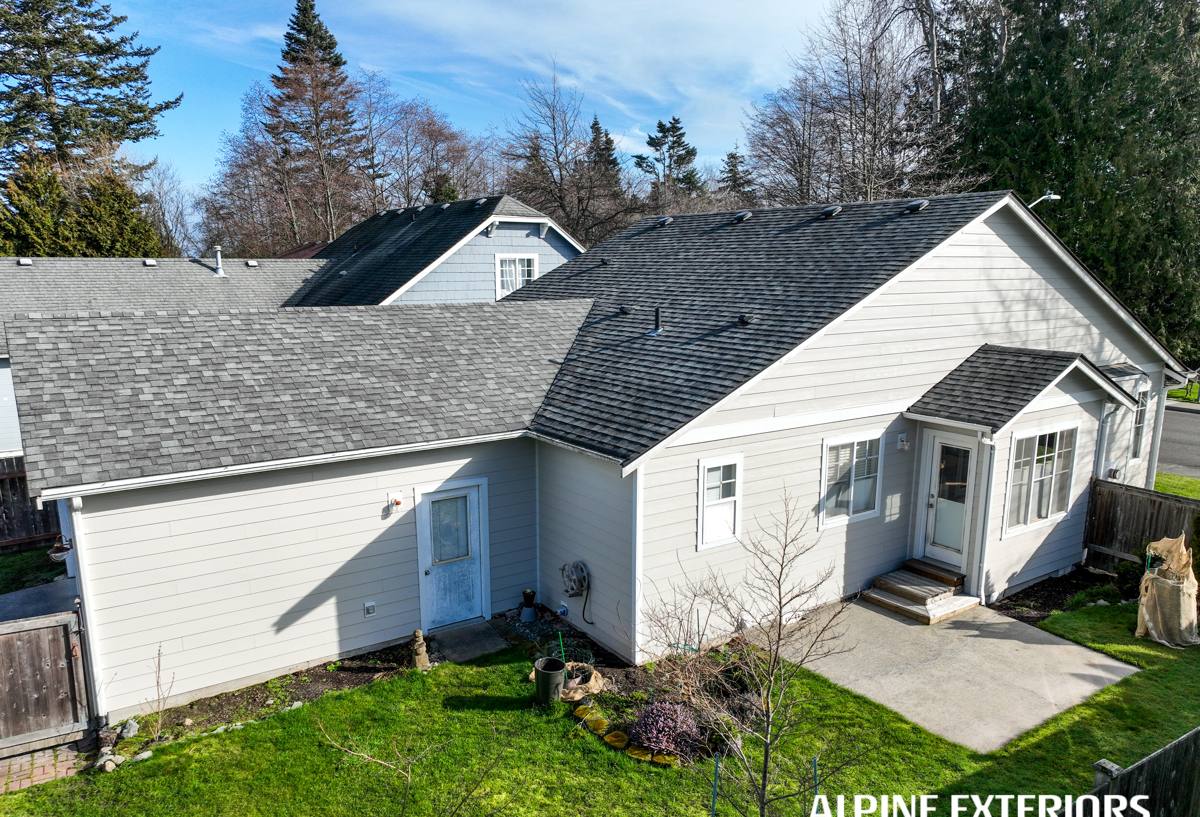
Siding That's Built for This Climate
We install James Hardie fiber cement siding exclusively. That's not a marketing position — it's a decision we made after years of exterior work in this region, watching which materials actually hold up to sustained Northwest moisture and which ones need constant babysitting to look decent after a decade.
Why We Standardized on One Product
Fiber cement doesn't absorb water the way wood-based products do, and it doesn't warp, delaminate, or feed mold growth the way some engineered wood siding can when it stays damp for extended periods — which, in Bellevue, is a real possibility for a meaningful chunk of the year. James Hardie's ColorPlus finish is baked on at the factory under controlled conditions, which gives it far better fade and moisture resistance than field-applied paint, and it holds up better in the low, filtered light and heavy shade many Bellevue lots have. The HZ5 product line is engineered specifically for climates like ours — freeze-thaw cycles, sustained humidity, and wind-driven rain.
We get asked fairly often why we don't install vinyl, LP SmartSide, or cedar. The honest answer is trade-offs. Vinyl can crack in a hard freeze and it expands and contracts enough with our temperature swings that seams and caulk lines open up over time. LP SmartSide is a wood-strand product, and wood-strand products are only as good as their sealed edges — one missed cut, one gap at a joint, and moisture gets a foothold. Cedar is beautiful and we understand the appeal, but it demands a maintenance schedule (staining, sealing, moss treatment) that most homeowners underestimate when they choose it. None of these are bad products used correctly in the right context. We simply found that fiber cement gives Bellevue homeowners the best balance of low maintenance, moisture resistance, and long-term appearance, backed by a strong transferable warranty.
What Correct Installation Involves
Siding performance in this climate is at least as much about the installation as the material. We pay particular attention to a few things that matter more here than in drier regions:
- Proper rainscreen gap or drainage plane behind the siding so any moisture that gets past the surface can drain and dry rather than sitting against the wall
- Correct flashing at every window, door, and horizontal trim intersection — this is where the majority of Northwest moisture intrusion actually starts
- Factory-cut and sealed edges wherever possible, minimizing field cuts that expose the substrate
- Fastener spacing and placement to manufacturer spec, since under-fastened siding moves, and movement opens joints
- Caulking and sealant chosen for long-term flexibility, not just initial adhesion
Roofing: Moss, Moisture, and Long-Term Protection
A roof in Bellevue works harder than a roof almost anywhere else in the country that isn't also this wet. Persistent moisture and shade create ideal conditions for moss, and moss doesn't just look bad — it holds water against shingles, lifts edges, and accelerates granule loss. Left unaddressed, a mossy roof section can shave years off a roof's service life.
We handle full roof replacement as well as targeted repair, and we pay close attention to ventilation and underlayment detail — proper attic airflow reduces the condensation that contributes to moss growth and premature shingle aging from the inside out. Where moss is already established, we address it as part of the job rather than leaving it to spread back across new material.
Signs a Bellevue Roof Needs Attention
- Visible moss or dark streaking, especially on north-facing or shaded slopes
- Granules collecting in gutters after rain
- Soft spots, sagging, or visible daylight in the attic
- Interior ceiling stains, particularly after a heavy storm
- Curling, cracked, or missing shingles
Windows: Sealing Out Driving Rain
Old, poorly sealed windows are one of the most common sources of moisture intrusion we find in Bellevue homes, and they're also one of the biggest quiet contributors to heating bills through a long, wet winter. Wind-driven rain doesn't need a large gap to find its way in — a failed seal or degraded flashing around a window opening is enough over time.
When we replace windows, we treat the flashing and integration with the surrounding siding as seriously as the window unit itself. A high-quality window installed with poor flashing will still leak. We size, flash, and seal every opening to shed water the way the wall assembly around it is designed to, and we make sure new window work integrates cleanly with Hardie siding rather than creating a seam that becomes a future problem.
Decks: Built to Handle a Wet Climate
Outdoor living is part of life in Bellevue even with the rain, and decks here take a beating from standing moisture, shade-driven mold and mildew, and the freeze-thaw cycles that happen more often than most people expect in a "mild" climate. We build and repair decks with attention to drainage, ledger flashing (a common failure point and safety issue if done wrong), and materials suited to sustained dampness rather than occasional summer sun.
Whether that means a low-maintenance composite deck or a well-detailed wood structure, the fundamentals are the same: water needs somewhere to go, and every connection point needs to be sealed against the kind of slow, repeated wetting this region delivers.
Why a Local Crew Matters
Exterior work in the Puget Sound region isn't interchangeable with exterior work anywhere else. A crew that mostly works in drier climates will make different assumptions — about how much ventilation a wall assembly needs, how aggressive moss and algae growth will be, how much movement to expect from wind-driven rain, how long materials actually need to dry between coats or steps. Those assumptions matter, and getting them wrong shows up as callbacks, premature failures, and homeowners paying twice for the same job.
We work throughout the greater Seattle area and King County, which means we see the same climate conditions, the same tree cover, and the same moisture patterns on every job. That consistency is what lets us build a maintenance schedule, a flashing detail, or a drainage plan that's actually right for a Bellevue property rather than a generic approach borrowed from somewhere with a different climate.
What Affects the Cost of Exterior Work in Bellevue
Every home and every project is different, but a few factors consistently drive cost across siding, roofing, window, and deck work in this area:
| Factor | Why It Matters Here |
|---|---|
| Existing moisture or rot damage | Extended wet seasons mean hidden damage is common; remediation adds scope before new material goes on |
| Tree cover and shade | Heavier moss/algae exposure can call for additional prep, treatment, or ventilation detailing |
| Home size and complexity | Roof pitch, wall height, and the number of window/door openings all affect labor and flashing detail |
| Material selection | Fiber cement, composite decking, and quality roofing systems cost more upfront but reduce long-term maintenance in this climate |
| Access and site conditions | Sloped lots, mature landscaping, and tight urban setbacks common in Bellevue can affect staging and labor time |
Maintaining Your Exterior Between Projects
New siding, a new roof, new windows, or a new deck all perform better and longer with a bit of regular attention — especially in a climate that stays damp for so much of the year.
- Keep gutters clear so water isn't overflowing against siding or fascia
- Trim back tree limbs and shrubs that keep exterior surfaces shaded and damp
- Have moss and algae treated before it spreads, rather than after it's established
- Inspect caulking and sealant around windows and doors annually
- Walk the roof (or have it inspected) after major storms for shifted or missing material
- Check deck ledger boards and fasteners for signs of moisture damage each spring
Getting Started
If you're weighing a siding replacement, a roof that's showing its age, windows that leak or fog, or a deck that's starting to feel soft underfoot, we're happy to take a look and walk you through what we're seeing — no pressure, no obligation. Request a free estimate below and we'll schedule a time to assess your home and talk through options that make sense for your property and your budget.