 Seattle Siding
 Primed spruce siding — sold as bevel lap, channel rustic, or board-and-batten stock at most Seattle-area lumberyards — is one of the most common materials we get asked to repair, not install. It's affordable, it's easy for framing crews to work with, and it gives a house that clean, traditional wood-lap look a lot of Pacific Northwest homeowners want. We understand the appeal. But after years of tear-offs on homes across King County, we stopped installing it, and we think every homeowner comparing siding materials deserves to know exactly why.
What Primed Spruce Siding Actually Is
Primed spruce siding is solid-sawn softwood — typically finger-jointed or clear spruce/pine/fir boards — milled into lap or panel profiles and coated with a factory or job-site primer before installation. The primer is meant to seal the wood and give paint something to grip, but it is not a moisture barrier in the way many homeowners assume. It's a base coat, not a shield.
Because it's a natural wood product, primed spruce siding moves with humidity and temperature the way any lumber does. It expands, contracts, cups, and checks (small surface cracks) as it dries unevenly. That's normal behavior for wood — it's also exactly the behavior that causes problems once the siding is on a wall facing Seattle weather.
Why It's Still Sold So Widely
- Lower material cost than fiber cement or engineered wood
- Familiar to framing crews and easy to cut with standard tools
- Can be special-ordered in wide boards for a traditional look
- Accepts a wide range of paint colors and can be re-primed on site
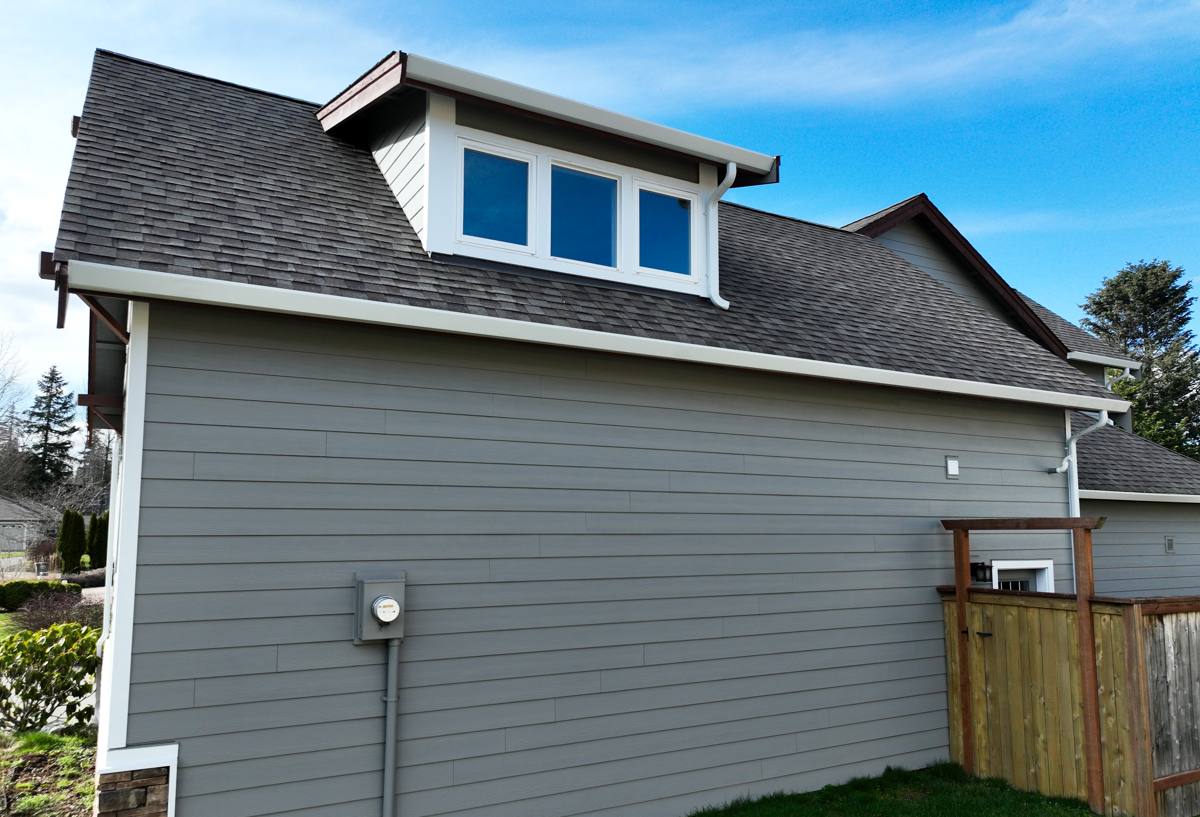
Where Primed Spruce Struggles in Our Climate
Seattle doesn't get the harshest winters in the country, but it gets something arguably tougher on wood siding: months of low-intensity moisture exposure with limited drying time in between. King County sees driving rain off the Sound, salt-laden air in neighborhoods close to Puget Sound, and long stretches — especially November through March — where surfaces simply don't fully dry out before the next system rolls through.
Spruce is a softer, more open-grained wood than cedar or fir, which means it absorbs and releases moisture faster. Every cycle of swelling and shrinking works against the paint film and the joints between boards, and eventually against the primer's ability to keep water out of the wood fibers.
The Failure Pattern We See Most
| Symptom | Typical Cause | Timeline We See |
|---|---|---|
| Peeling or bubbling paint at butt joints | Water wicking into end grain | 3-6 years |
| Soft or spongy board sections | Trapped moisture behind paint film | 5-8 years |
| Cupping and warping boards | Uneven drying, moisture cycling | 4-7 years |
| Moss and algae staining on north faces | Extended damp periods, low sun exposure | 2-4 years |
| Visible finger joints or cracking | Seasonal expansion/contraction | 3-5 years |
Note these are general patterns from repaint and repair work in this region, not guarantees — actual performance depends heavily on installation quality, board orientation, roof overhang, and how consistently the paint film is maintained.
Moss, Shade, and the Seattle Tree Canopy
This is a regional issue as much as a material one. Much of King County's housing stock sits under mature Douglas fir, cedar, and bigleaf maple canopy, which means large sections of exterior wall spend most of the year in partial shade. Combine that with our long wet season and you get near-ideal conditions for moss and algae growth on any porous or lightly textured surface — and painted wood siding is exactly that.
Moss doesn't just look bad. It holds moisture directly against the siding surface for extended periods, which accelerates paint breakdown and, on wood products, feeds the same cycle of swelling and softening described above. Homeowners on shaded lots or near-water lots (common around Lake Washington, the Sound, and wooded King County suburbs) tend to see these issues show up faster and more severely than homes in open, sunny locations.
The Maintenance Burden Nobody Mentions at Purchase Time
Primed spruce siding is a "finish it yourself" product in the sense that the primer coat is not the final protective layer — it's a step, not a solution. To get a normal service life out of it, the siding needs:
- A full top-coat of quality exterior paint within weeks of installation, not months
- Recaulking of joints and seams on a regular cycle, typically every few years
- Repainting on roughly a 5-8 year interval in wet Western Washington conditions, sometimes sooner on sun- or rain-exposed elevations
- Prompt attention to any chip, crack, or exposed end grain before water gets behind the paint film
None of that is unusual for painted wood siding — it's simply what wood requires. The issue is that many homeowners are quoted the low material and install cost up front without a clear picture of what the next 15-20 years of upkeep actually costs in paint, labor, and board replacement.
Realistic Long-Term Cost Factors
| Factor | Primed Spruce | James Hardie Fiber Cement |
|---|---|---|
| Initial material cost | Lower | Moderate to higher |
| Factory finish option | Primer only — paint required | ColorPlus factory-baked finish available |
| Typical repaint interval, our climate | 5-8 years | 15+ years with ColorPlus finish |
| Moisture-driven swelling/warping risk | Higher — natural wood | Low — engineered cement composite |
| Combustibility | Combustible | Non-combustible |
| Manufacturer warranty | Varies by primer/paint manufacturer | Long-term, transferable Hardie warranty |
Installation Sensitivity Is Part of the Problem
Wood lap siding is far less forgiving of installation shortcuts than most homeowners realize. Back-priming (coating the hidden face and cut ends of each board before installation) is essential to slow moisture absorption, but it's a step that gets skipped constantly on cost-driven jobs because it adds labor time nobody sees once the siding is up. Improper flashing at butt joints, insufficient clearance from grade, and tight caulking that traps rather than sheds water all compound the wood's natural vulnerabilities.
We're not willing to install a product where the difference between a 10-year siding job and a 25-year siding job comes down almost entirely to invisible prep steps and a maintenance schedule that depends on the homeowner's follow-through. That's not a standard we can guarantee, so it's not one we build our business on.
What We Install Instead: James Hardie Fiber Cement
We install James Hardie fiber cement exclusively, and it's a direct response to the pattern above. Hardie siding is engineered from cement, sand, and cellulose fiber — it doesn't absorb and release moisture the way solid wood does, it won't feed rot, and it's non-combustible. For a region like ours, Hardie also makes a HZ10 product line specifically engineered for wetter, more humid climate zones, which the Puget Sound region qualifies as.
The bigger practical difference for most homeowners is the factory ColorPlus finish: a baked-on, UV-cured color coat applied under factory conditions rather than a field-applied paint job exposed to Seattle's on-and-off drizzle during installation. That finish is backed by its own warranty and is built to hold color and resist fading, chipping, and cracking far longer than a job-site paint system on wood — which directly addresses the repaint cycle that drives most of the long-term cost and hassle with primed spruce.
Where Hardie Still Requires Good Installation Practice
- Correct fastener type, spacing, and embedment per Hardie's published specs
- Proper water-resistive barrier and flashing details behind every board
- Manufacturer-specified clearances from grade, decks, and roof lines
- Field-cut edges primed or sealed per Hardie installation guidance
No siding product is installation-proof. The difference is that Hardie's engineered composition gives you a much wider margin for error and a much longer runway before neglect turns into a real problem — which matters in a climate that doesn't give wood siding much room to dry out.
Our Honest Take
Primed spruce siding isn't a scam or a bad product in every application — it has a long history in traditional Pacific Northwest architecture, and with disciplined maintenance it can look great for years. But "disciplined maintenance" is doing a lot of work in that sentence, and King County's combination of driving rain, salt air near the water, shade from mature tree cover, and a moss season that runs most of the year is a tough environment to ask painted softwood to hold up in without constant attention. We'd rather install a product engineered for exactly these conditions than sell a homeowner a siding job that quietly becomes a recurring paint-and-repair project.
If you're weighing siding options for a home in Seattle or anywhere in King County, we're happy to walk your property, point out where sun, shade, and moisture exposure will affect material choice, and give you a straight comparison between what you're considering and what we install. Reach out for a free, no-pressure estimate — there's a quick form below to get started.