 Seattle Siding
 Capitol Hill's Climate Is Harder on Siding Than It Looks
Capitol Hill sits close enough to Puget Sound and Lake Washington that homes here deal with a steady mix of salt-tinged air, driving rain that comes in sideways off winter storms, and a moss season that can stretch from October through April in a wet year. None of that is dramatic on any single day. It's the accumulation that wears exteriors down — moisture that gets pushed under lap joints during a windy front, organic growth that holds dampness against a wall for weeks at a time, and freeze-thaw cycles that are mild by national standards but still enough to stress caulk, paint film, and any siding material that isn't dimensionally stable.
Seattle's marine climate means the humidity rarely lets up. Even in a dry stretch, morning dew and overnight condensation keep exterior surfaces damp longer than homeowners moving here from drier states expect. Siding on Capitol Hill isn't just decorative — it's the first line of defense against a climate that stays wet more months than it doesn't, and King County's building codes reflect that with moisture-management requirements that go beyond what a lot of siding products were designed to handle.
Why the Neighborhood's Density and Age Matter
Capitol Hill is one of Seattle's older, denser neighborhoods, with a mix of early-1900s houses, mid-century infill, and newer construction packed close together. Older homes here often have layers of siding history — original wood, a vinyl re-side from decades back, maybe a patch job here and there. That history matters when we're scoping a project, because what's underneath the visible surface (sheathing condition, old flashing, prior water intrusion) drives the real scope of work far more than the surface material does.
Why We Install Only James Hardie Fiber Cement Siding
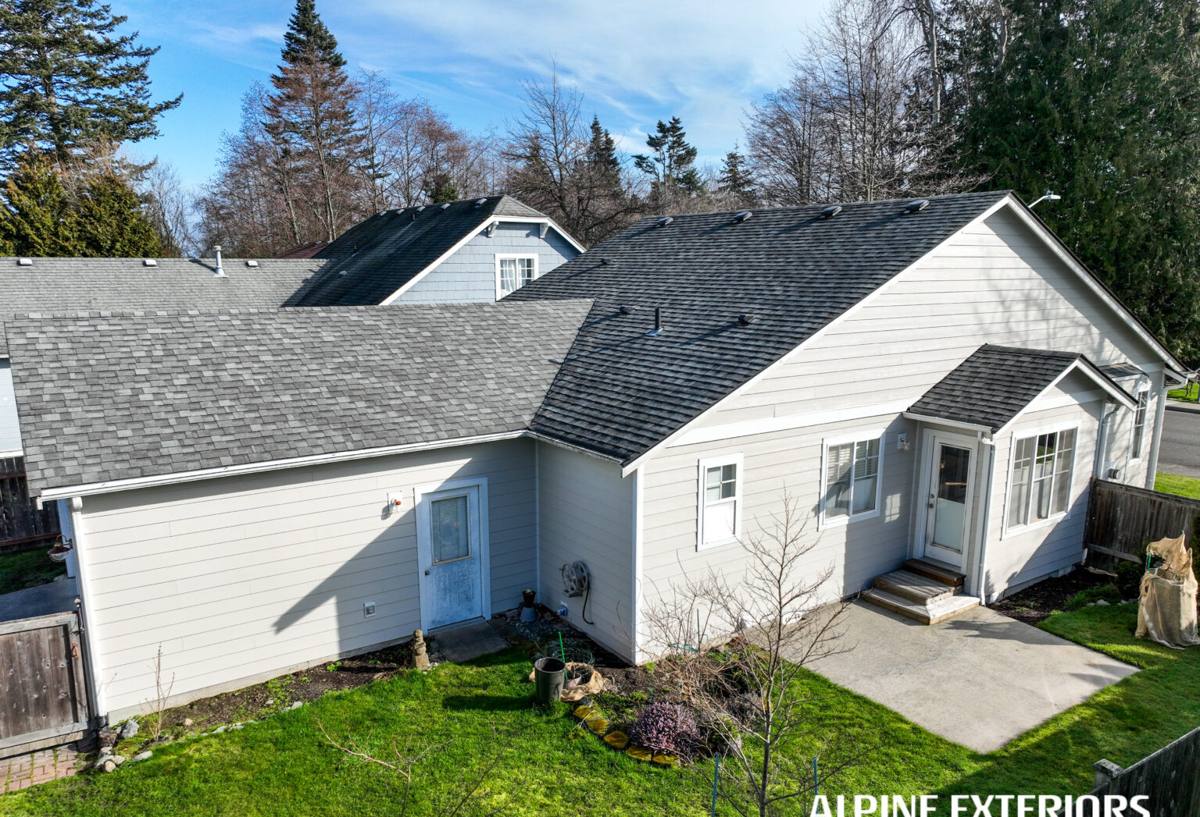
We made a decision a while back to standardize on one siding system: James Hardie fiber cement. We don't install vinyl, LP SmartSide, Cemplank, Allura, primed spruce, or cedar. That's not a marketing gimmick — it's a practical response to what actually holds up in this climate over the long run.
Vinyl siding expands and contracts with temperature swings and can warp or bow when it's installed tight against sheathing that's already retaining moisture, which is a real risk in a wet region like ours. Wood products — cedar and primed spruce included — look great on day one but demand a maintenance schedule (recoating, caulking, moisture checks) that most homeowners underestimate, and any lapse in that schedule shows up fast in a climate this damp. Engineered wood products like LP SmartSide perform reasonably well when installation details are followed exactly, but they're more sensitive to edge sealing and moisture exposure than fiber cement, and a missed detail during install can shorten their service life significantly.
James Hardie fiber cement is non-combustible, dimensionally stable across our temperature range, and its ColorPlus factory finish is baked on rather than field-applied, which means the color holds up to UV and moisture exposure far longer than a job-site paint job. Hardie's HZ5 product line is engineered specifically for climates like ours — freeze-thaw cycling, high moisture exposure — and the company backs it with a strong, transferable limited warranty. When it's installed to manufacturer spec, it's the product we've found holds up best against everything Capitol Hill's weather throws at it.
What Correct Installation Actually Involves
Fiber cement siding is only as good as its installation. Hardie's warranty coverage depends on the product being installed to their published specifications, and in a wet climate the details that get overlooked are usually the ones that matter most.
- Proper weather-resistive barrier and rainscreen or drainage plane behind the siding so any moisture that gets past the surface has somewhere to go
- Correct flashing at windows, doors, and roof-to-wall transitions — the most common failure point on any re-side, regardless of material
- Manufacturer-specified fastener type, spacing, and penetration depth
- Proper clearance between siding and grade, decks, and roof lines to keep the bottom edge from sitting in standing moisture
- Factory-cut and factory-primed edges used wherever possible, since field cuts need to be sealed correctly to maintain warranty coverage
- Caulking and sealant only at the joints Hardie specifies — over-caulking can trap moisture instead of shedding it
Any one of these done wrong can undercut everything the material itself is capable of. That's why installation crew experience matters as much as the siding brand on the invoice.
Signs a Capitol Hill Home Needs Exterior Attention
Because of how gradually moisture damage develops here, a lot of homeowners don't notice a problem until it's already significant. A few things worth checking on a regular basis:
- Soft or spongy spots when you press on siding, especially near the bottom courses or around windows
- Persistent moss or algae growth that keeps coming back after cleaning
- Paint that's peeling, bubbling, or chalking faster than expected
- Visible gaps, warping, or separation at seams and corners
- Water stains on interior walls near exterior corners, which often trace back to failed flashing outside
- Caulking that's cracked, shrunk, or pulled away from joints
Catching these early usually means a repair. Waiting on them usually means a full re-side, because sheathing damage spreads underneath the surface long before it's visible from the street.
Roofing, Windows, and Decks: The Full Exterior Picture
Siding doesn't work in isolation — it's one part of a building envelope that includes the roof, windows, and any attached decks, and in Seattle's climate those systems are constantly interacting with moisture together. A roof that's shedding water incorrectly at the eaves can send runoff straight down a wall and undermine even well-installed siding. Windows with failed flashing or worn seals are one of the most common sources of the hidden water intrusion we find when we open up a wall during a re-side. Decks attached to the house create a transition point where waterproofing has to be done correctly on both sides, or moisture works its way into the structure behind the ledger board.
Because we handle siding, roofing, windows, and decks, we can look at a Capitol Hill home's exterior as one connected system rather than treating each component as a separate job with separate contractors who never talk to each other. That matters most at the transitions — where a roofline meets a wall, where a window sits in a siding field, where a deck ties into the house — because that's where the majority of real-world water damage actually starts.
What Drives the Cost of a Capitol Hill Siding Project
| Factor | Why It Matters |
|---|---|
| Home size and wall complexity | More corners, gables, and dormers mean more cuts, flashing details, and labor hours |
| Condition of existing sheathing | Hidden moisture damage found during tear-off adds repair scope before new siding goes up |
| Access and site constraints | Narrow lots, shared walls, and limited staging space are common on Capitol Hill's denser blocks |
| Siding profile and color selection | Lap width, shingle-style panels, and factory ColorPlus finishes vary in material cost |
| Existing trim, window, and flashing work | Whether trim and flashing are being replaced or reused affects both cost and long-term performance |
| Permitting and code requirements | Older homes may need updated moisture barriers or code-driven upgrades during the re-side |
We walk every one of these through with a homeowner before giving a number, because a generic square-footage estimate rarely reflects what's actually involved once a crew opens up an older Capitol Hill wall.
Why a Local Crew Matters on Capitol Hill
A crew that works across Seattle and King County regularly knows how this neighborhood's housing stock is built, what King County permitting expects, and how to sequence a project around the parking and access realities of a dense urban neighborhood. That's not something a crew unfamiliar with the area picks up quickly. It also means faster response if something needs a second look after installation — a local company isn't driving in from out of the region to handle a warranty question or a follow-up inspection.
Local experience also shows up in material staging and scheduling decisions. Knowing that Capitol Hill sees a wetter stretch from fall through spring means planning tear-off and dry-in sequencing to minimize how long a wall sits exposed, rather than treating every job on a generic statewide timeline.
Maintenance After Your Siding Is Installed
James Hardie fiber cement is low-maintenance compared to wood or vinyl, but "low-maintenance" doesn't mean "no maintenance," especially in a climate as damp as ours.
- Rinse siding periodically to keep moss, algae, and pollen from building up, particularly on north-facing walls that stay shaded and damp longer
- Inspect caulking at joints and trim annually and have any cracked or shrunk sealant redone
- Keep gutters clear so overflow doesn't run down the siding face repeatedly
- Trim back vegetation and landscaping that holds moisture against exterior walls
- Watch for any soft spots or discoloration after major storms and have them checked before they spread
Because the ColorPlus finish is factory-applied, most homeowners never need to repaint — a real difference from wood siding, which needs recoating on a recurring schedule in a climate this wet.
Get a Straightforward Estimate
If you're noticing wear on your Capitol Hill home's siding, roof, windows, or deck, we're glad to take a look and give you an honest read on what's going on and what it would take to fix it — no pressure, no inflated scope. Request a free estimate below and we'll walk the property with you.