 Seattle Siding
 Shoreline's Exterior Climate Problem
Shoreline sits directly north of Seattle along Puget Sound, in King County, which means it gets the full marine weather package: long wet winters, a short dry summer window for exterior work, mature tree canopy that keeps yards and siding shaded and damp, and a steady breeze off the water in the neighborhoods closest to the shoreline. None of that is unusual for this part of Washington. What is worth paying attention to is how that combination wears on the outside of a house, year after year, in ways that are easy to miss until the damage is already inside the wall.
Most exterior siding problems we see in Shoreline aren't dramatic. They're slow — moisture that never fully dries between rain events, moss that gets a foothold in a shaded north-facing wall, paint that starts failing a few years early because the substrate underneath never gets a real chance to breathe. A house doesn't fail all at once here. It erodes, quietly, until a homeowner notices soft trim, a musty smell near an exterior wall, or siding that looks tired despite being repainted more than once.
Moss, Mildew, and the Long Wet Season
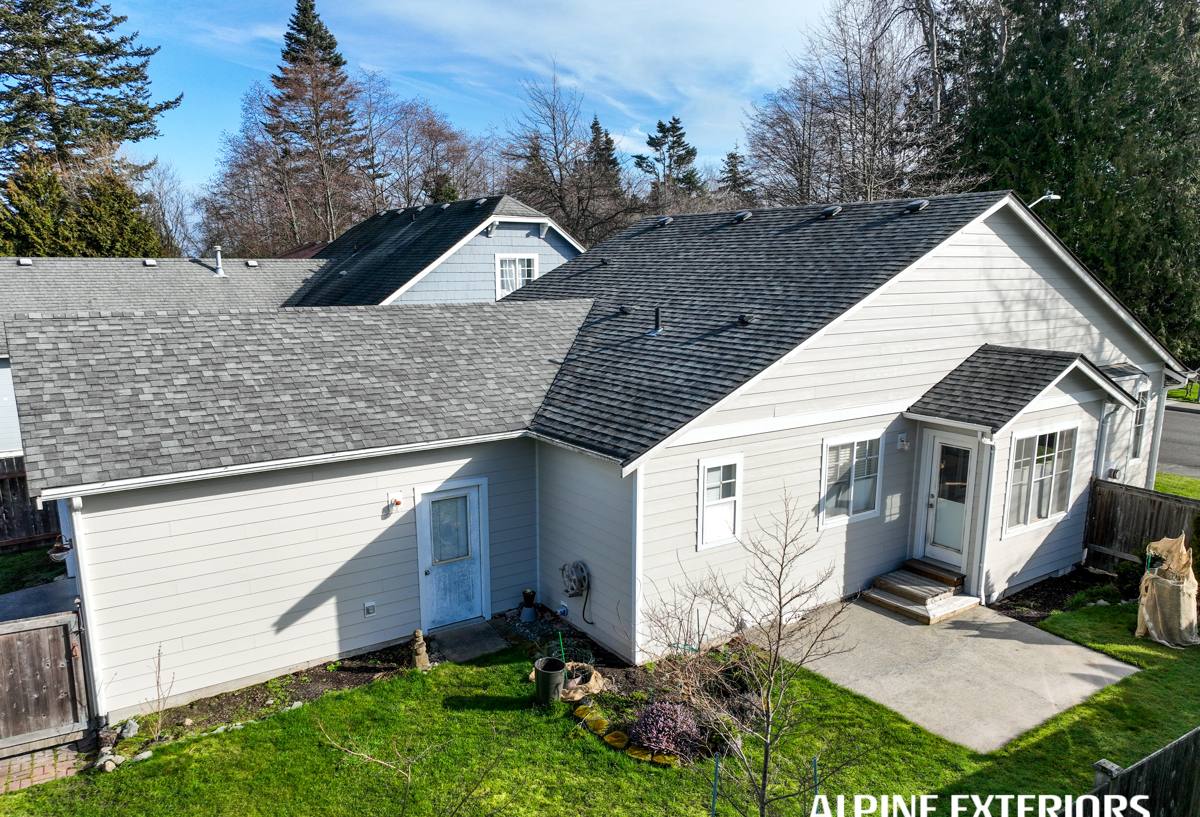
Shoreline's weather pattern isn't just rainy — it's persistently damp. The Puget Sound lowlands get drizzle and overcast skies for extended stretches where surfaces simply don't dry out, and mature trees common throughout Shoreline's older neighborhoods add shade that slows drying even further. That's a near-perfect environment for moss, algae, and mildew to establish themselves on exterior surfaces, particularly on north- and west-facing walls and anywhere siding sits close to landscaping or overhangs that block sun and airflow.
Moss itself isn't just cosmetic. Once it takes hold on a wood-based or fiber-based siding product, it holds moisture directly against the surface, which accelerates whatever moisture-related breakdown that material is already prone to. On siding that isn't dimensionally stable or that swells and softens when wet, a moss problem left untreated for a few seasons can turn into a rot problem underneath the paint.
What This Means Practically
- Shaded, low-airflow wall sections need siding that tolerates sustained moisture without swelling or softening
- Factory-applied, baked-on finishes hold up better here than field-applied paint, which fails faster under repeated wet-dry cycling
- Gutter and drainage details around the house matter as much as the siding material itself — water management is half the battle
- Annual or biannual gentle washing keeps moss from establishing a long-term foothold, regardless of siding type
Salt Air and Coastal Exposure
Shoreline's western edge runs along Puget Sound, and neighborhoods closer to the water — including areas near Richmond Beach — deal with a mild but real dose of salt-laden air on top of the standard Pacific Northwest rain load. Salt air accelerates corrosion on exposed metal fasteners and trim, and it can be harder on certain paints and coatings than inland exposure alone. It's not the aggressive coastal exposure you'd see on the open coast, but it's enough that we account for it when specifying fastener types and trim details on homes closer to the shoreline.
Shoreline's Housing Stock and Why So Much of It Needs Attention Now
Shoreline has a lot of mid-century housing — ranch-style and split-level homes built during the postwar growth years, many still wearing original or once-replaced siding that's now decades old. A lot of that stock was built with materials that were reasonable choices at the time but were never engineered for the moisture cycling we now understand Puget Sound siding needs to survive long-term. Original wood siding, old hardboard products, and early cement-fiber panels from decades ago are reaching or past the point where patch-and-paint repairs stop making financial sense.
At the same time, Shoreline has seen real investment and infill development in recent years, which means a mix of older homes due for their first full exterior renovation sitting right next to newer builds. Whichever category a home falls into, the same climate rules apply — what changes is whether we're doing a full siding replacement or protecting a newer install with the right maintenance plan.
Why We Install Only James Hardie Fiber Cement Siding
We don't install vinyl siding, LP SmartSide, Cemplank, Allura, primed spruce, or cedar. That's a deliberate standard, not a marketing line, and it comes directly out of what we see fail — and what doesn't — on homes in exactly this kind of climate.
Wood-based siding, including cedar and engineered wood products, needs consistent maintenance to stay ahead of moisture in a climate like Shoreline's — regular repainting, caulking, and vigilance against the kind of sustained dampness described above. Vinyl siding can warp or become brittle over time and doesn't offer the same fire-resistance or long-term dimensional stability. Other fiber cement brands may perform reasonably, but we've standardized on one system so we can guarantee installation quality, warranty coverage, and product consistency across every job we do — rather than juggling multiple manufacturers' specs and callback policies.
James Hardie fiber cement is non-combustible, resists moisture-driven swelling and rot far better than wood-based alternatives, and comes with a factory-applied ColorPlus finish that's engineered to hold color and resist the kind of fading and chalking that field-applied paint suffers under years of Pacific Northwest rain and UV cycling. Hardie's HZ5 product line in particular is engineered for climate zones dealing with sustained moisture exposure — which describes Shoreline well. The finish is backed by a real transferable warranty, and because it's a factory finish rather than a jobsite paint job, it doesn't depend on weather conditions at the time of installation to cure correctly.
How Hardie Compares to What We Don't Install
| Material | Moisture Behavior | Finish Durability | Maintenance Burden |
|---|---|---|---|
| James Hardie fiber cement | Resists swelling, rot, and moss-related degradation | Factory ColorPlus finish, long color retention | Low — periodic washing, no repainting cycle |
| Cedar / primed spruce | Absorbs moisture, prone to rot without vigilant upkeep | Field-applied paint fails faster in wet cycling | High — regular repainting, caulking, inspection |
| Vinyl | Doesn't rot but can warp, crack in cold snaps | Color molded in but fades and chalks over time | Low, but limited repair options when damaged |
| LP SmartSide / other engineered wood | Better than raw wood but still moisture-sensitive at cut edges and seams | Varies by finish system and installer care | Moderate — edge sealing and caulking upkeep matters |
Beyond Siding: Roofing, Windows, and Decks in the Same Climate
Siding doesn't work in isolation — it's one piece of an exterior envelope that has to work together to keep moisture out. We also handle roofing, windows, and decks, and in Shoreline those trades face the same underlying pressures as siding does.
Roofing
A roof that's shedding granules, holding onto moss, or letting moisture track under flashing is often the real source of a "siding problem" that shows up lower on the wall. We look at roof condition and drainage as part of any siding conversation, not as a separate afterthought.
Windows
Old or poorly flashed window openings are one of the most common places water finds its way behind siding, regardless of what siding material is installed. When we replace siding around existing windows, proper flashing and sealing at those transitions is non-negotiable — it's often the difference between a repair lasting five years or twenty.
Decks
Decks in Shoreline deal with the same wet-season punishment as siding — moss on decking boards, ledger board rot where a deck meets the house, and fasteners that corrode faster near the water. A deck built or repaired without attention to drainage and ledger flashing becomes a moisture entry point for the house itself.
Why a Local Crew Matters Here
Puget Sound siding work is genuinely different from siding work in a dry climate. Installation sequencing, drying windows between weather systems, and where moisture barriers and flashing details go all matter more when a project might sit through a rain event mid-install. A crew that works this region regularly knows how to sequence a Shoreline job around the weather, how to detail transitions for a climate that never really dries out completely, and what King County permitting and inspection expects on an exterior renovation. That local familiarity shows up in the finished product years down the road, not just on installation day.
Planning a Siding Project in Shoreline
Every property is a little different — sun exposure, tree cover, proximity to the water, and the age and condition of the existing siding all factor into scope and cost. A few of the variables that typically move a project's cost and timeline:
| Factor | Why It Matters |
|---|---|
| Existing siding condition | Full tear-off vs. installing over sound sheathing changes labor scope significantly |
| Moisture or rot found during removal | Hidden sheathing damage behind old siding is common on older Shoreline homes and must be repaired before new siding goes on |
| Home size and wall complexity | Dormers, gables, and multiple stories add labor time and material cuts |
| Trim and color package | ColorPlus finish options and trim details affect material cost |
| Access and site conditions | Mature trees, tight lots, and sloped yards common in Shoreline can affect staging and scaffolding needs |
What to Look For Before You Sign With Any Contractor
- Washington state contractor license and proof of insurance, verifiable independently
- Manufacturer-recognized installation credentials for the specific siding product being proposed
- A written scope that specifies moisture barrier, flashing details, and fastener type — not just "siding replacement"
- A clear plan for what happens if rot or moisture damage is found once old siding comes off
- A warranty that's explained in plain terms, including what's covered by the manufacturer versus the installer
If your Shoreline home has siding showing its age, moss that keeps coming back no matter how often it's cleaned, or you're planning ahead for a full exterior refresh, we're glad to take a look and talk through what we're seeing. Reach out for a free, no-pressure estimate — there's a form right below this page.