 Seattle Siding
 Why Seattle Siding Fights a Different Battle
Siding in Phoenix has to survive UV and heat cycling. Siding in Seattle has to survive something slower and, in some ways, more dangerous: months of sustained moisture. Between the fall rains that start in October, the low winter sun angles that leave north-facing walls damp for days at a time, and a marine layer that keeps humidity high even on dry afternoons, King County homes spend a large part of the year with wet exterior walls. Add driving rain off Puget Sound that hits siding sideways instead of straight down, and a moss and algae season that can run eight months or longer on shaded elevations, and you have a climate that rewards good materials and good installation more than almost anywhere else in the country.
Most siding failures we get called out for in Seattle are not dramatic. Nobody's wall falls off. Instead, a homeowner notices a soft spot near a window, a paint bubble that won't go away, or a musty smell in a closet on an exterior wall. By the time those symptoms show up, moisture has usually been working behind the siding for one to three years. Understanding how that happens is the first step to preventing it.
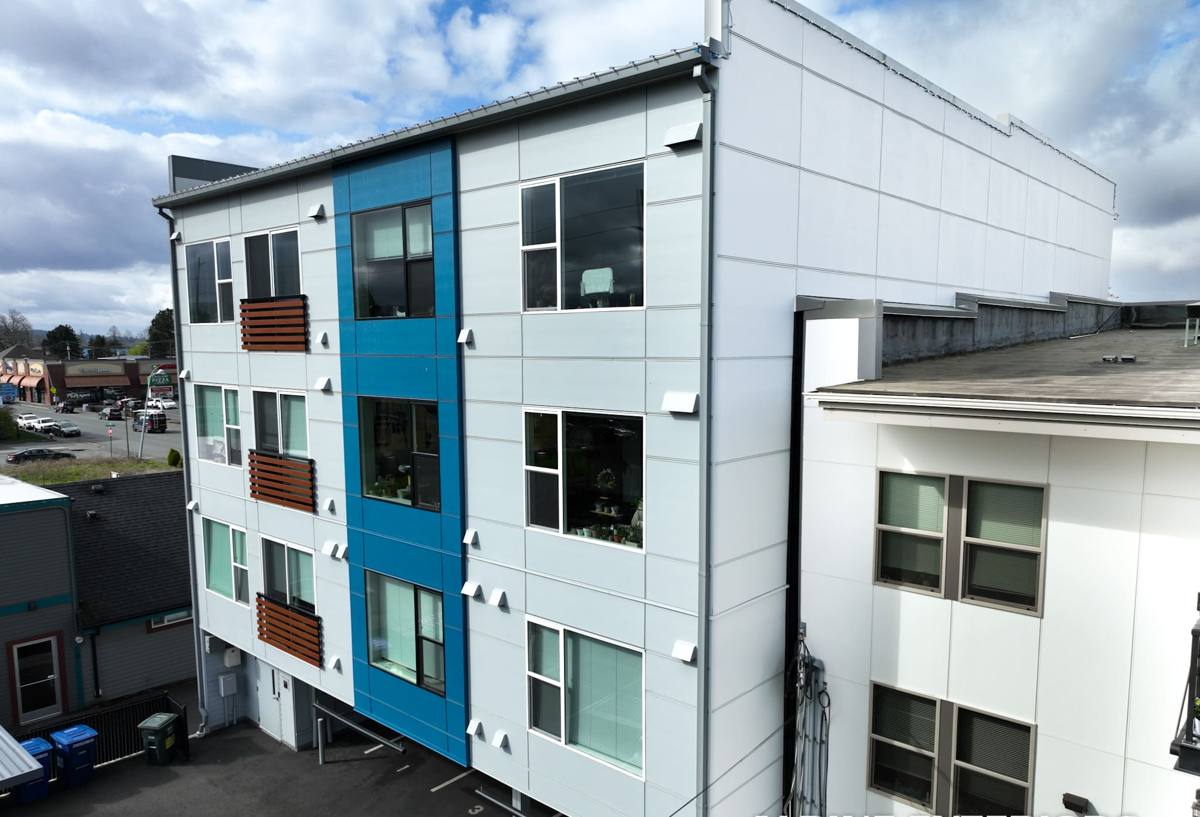
How Water Actually Gets Behind Siding
Siding is not supposed to be perfectly waterproof — it's supposed to be a first line of defense that sheds the vast majority of water while a secondary weather-resistive barrier (housewrap or building paper) handles what gets through. Problems start when that system is compromised. The most common entry points we find in this area are:
- Butt joints and seams that were not properly flashed or caulked, especially on horizontal lap siding
- Window and door trim where flashing was skipped or installed backward, letting water run behind the siding instead of over it
- Deck ledger boards and roof-to-wall intersections, which are notorious weak points on Pacific Northwest homes
- Nail penetrations that were overdriven, cracking the siding material and creating a wick point
- Missing or clogged kick-out flashing at roof lines, which dumps gutter overflow directly down the wall
- Caulk failure at panel edges and corners, particularly on the south and west sides where sun cycling breaks down sealant faster
None of these are exotic problems. They're standard installation details that matter more here than in drier climates, because a mistake that would dry out in a week in Denver stays wet for months in Seattle.
The Role of Moss, Algae, and Organic Growth
Moss and algae get treated as a cosmetic nuisance, but on siding they're a moisture problem wearing a green coat. Moss holds water against the surface of the siding long after the rain has stopped, extending the amount of time any given panel stays saturated. On wood-based products, that constant dampness accelerates rot directly. On any siding, moss root structures and the grime layer beneath them trap moisture at seams and fastener heads — exactly the spots where water intrusion starts.
North-facing walls, siding under mature trees, and anything shaded by a neighboring structure are the highest-risk zones in King County. If you're seeing a green or black film return within a few months of cleaning, that's a sign the wall isn't drying out between rain events, which is worth investigating rather than just pressure-washing again.
What Rot Actually Looks Like Before It's Obvious
By the time siding is visibly crumbling, the damage has usually spread into the sheathing behind it. Catching problems earlier saves real money. Signs worth checking for, especially each fall before the rainy season sets in:
| Early Warning Sign | What It Usually Means |
|---|---|
| Paint or finish bubbling and peeling in one localized spot | Moisture is pushing out from behind the siding at that location |
| Siding that flexes or feels soft when pressed | Underlying material has begun to break down — common on wood and some fiber-based products |
| Dark streaking below a window or trim piece | Water is running behind flashing instead of over it |
| Musty odor in an interior room on an exterior wall | Moisture has likely reached the wall cavity, not just the exterior surface |
| Visible gaps or separation at panel seams | Caulk or sealant has failed and water has a direct path inward |
| Persistent moss regrowth within weeks of cleaning | The wall isn't drying between rain events, raising rot risk over time |
If you catch two or more of these on the same wall section, it's worth having someone open up a small area rather than waiting for it to become obvious.
How Different Siding Materials Handle Seattle's Moisture
Not all siding responds to sustained moisture the same way, and this is where material choice matters as much as installation quality.
Wood and Primed Spruce Products
Solid wood and primed spruce panel siding look good going in, but they're organic material, and organic material in a climate with months of sustained dampness is fighting its own composition. Once the factory finish or field-applied paint is breached — at a nail hole, a cut edge, or a caulk failure — the substrate itself can absorb water and begin to break down. Re-painting and caulk maintenance on a schedule isn't optional with these products here; it's the only thing standing between the wood and rot.
Vinyl Siding
Vinyl doesn't rot because it isn't organic, but it isn't a moisture barrier either — it's a rain screen that relies entirely on what's behind it. Vinyl panels are also installed with expansion gaps and rely on lapped, not sealed, joints, which means the housewrap and flashing behind them are doing all the real work. In a climate with this much sustained rain, any gap in that secondary barrier goes undetected for a long time because the vinyl itself gives no visible warning sign — it doesn't stain, swell, or soften the way wood-based products do.
Fiber Cement (Unfinished or Field-Applied Coatings)
Fiber cement resists rot because it's cement-based, not wood-based, but not all fiber cement is finished the same way. Products that rely on a field-applied paint job, rather than a factory-cured finish, have a coating that's only as good as the crew that applied it and the maintenance schedule afterward — with the same caulk and paint vulnerabilities as wood siding, just on a more moisture-stable substrate.
Where This Leaves Us
This is the core reason we install James Hardie fiber cement exclusively. The fiber cement substrate itself doesn't rot, swell, or support the kind of organic decay that wood and primed spruce are vulnerable to, and Hardie's ColorPlus factory finish is baked on under controlled conditions rather than sprayed on site — which matters enormously in a market where field-applied finishes have to cure between rain events that can be days apart. We're not saying every other product fails here; plenty of vinyl and wood siding perform fine when installed correctly and maintained on schedule. We're saying that after years of tear-offs and repair calls in this specific climate, fiber cement with a factory finish has consistently given homeowners the least maintenance burden and the fewest moisture-related surprises.
Ventilation and Drainage: The Part Nobody Sees
Good siding material installed without a drainage plane is still a moisture risk. A rainscreen gap — a small air space between the siding and the weather-resistive barrier — lets any water that gets past the siding drain down and out instead of sitting against the sheathing. It also lets the wall assembly dry from both sides instead of just one. This detail matters more in Seattle than in drier regions because our walls get fewer dry stretches to recover from a soaking. When we quote a siding job, the drainage plane and flashing details are as much a part of the estimate as the siding material itself — a bad installation of a great product still leads to rot.
Maintenance That Actually Prevents Damage
Regardless of what's currently on your home, a few habits meaningfully reduce moisture-related siding problems in this climate:
- Walk the exterior every fall before the rains set in and every spring after, looking for the warning signs in the table above
- Keep gutters clear — overflowing gutters are one of the most common causes of localized siding rot in King County
- Trim back vegetation and tree branches touching or shading the siding to reduce moss growth and let walls dry
- Recaulk seams, trim joints, and penetrations every few years rather than waiting for visible gaps
- Address moss and algae growth promptly with a gentle wash rather than aggressive pressure washing, which can force water behind panels
- Check kick-out flashing at every roof-to-wall intersection, especially above entryways and decks
- Have any soft, bubbling, or discolored area inspected before it spreads — small repairs are inexpensive compared to sheathing replacement
When to Call Someone In
Not every issue needs a professional visit, but a few situations are worth getting looked at rather than watching and waiting: soft spots larger than a few inches, recurring interior odors, staining that keeps returning after cleaning, or any siding that's been in place more than 20 years without a full inspection. Salt air near the Sound, combined with our rain volume, means coastal-facing and low-lying King County properties tend to see moisture issues develop a bit faster than homes further inland, so location is worth factoring into how often you check.
If you're noticing any of the warning signs above, or you're simply due for a look at your siding before another wet season, we're happy to come out for a free, no-pressure estimate and tell you honestly what we see — no obligation either way.