 Seattle Siding
 Siding in Wallingford: A Different Kind of Wear
Wallingford sits in a part of Seattle where the housing stock skews older — a mix of early-to-mid-20th-century bungalows, Craftsman-style homes, and infill construction tucked among mature trees. That combination of age, tree canopy, and Puget Sound-region weather creates a specific set of problems for exterior siding that a contractor who only works in drier climates simply doesn't see as often.
Seattle's marine air carries moisture and salt inland from the Sound and Lake Washington, and King County's wet season stretches for months at a time. Add in the shade from established trees along many Wallingford blocks, and you get siding that rarely gets a full day of direct sun to dry out between storms. That's the exact environment where moss, mildew, and slow moisture intrusion take hold — and where the choice of siding material matters more than most homeowners realize until they're dealing with a problem.
Driving Rain and Wind-Driven Moisture
Seattle rain isn't usually a downpour — it's a long, low-intensity soak that can come in sideways off the water during winter storms. That kind of driving rain finds every gap, seam, and hairline crack in a siding system over time. Materials that swell, warp, or absorb water repeatedly lose their shape and their paint bond faster in this pattern of exposure than they would in a climate with occasional heavy but brief storms.
Moss, Mildew, and the Long Wet Season
Wallingford's tree cover is part of what makes the neighborhood pleasant to live in, but it also means shaded siding that stays damp longer after every rain. Moss and algae growth on siding isn't just cosmetic — on wood-based products it can trap moisture against the substrate and accelerate rot at seams, butt joints, and anywhere caulk has started to fail. A siding material that resists moisture absorption in the first place is a real advantage here, not a marketing point.
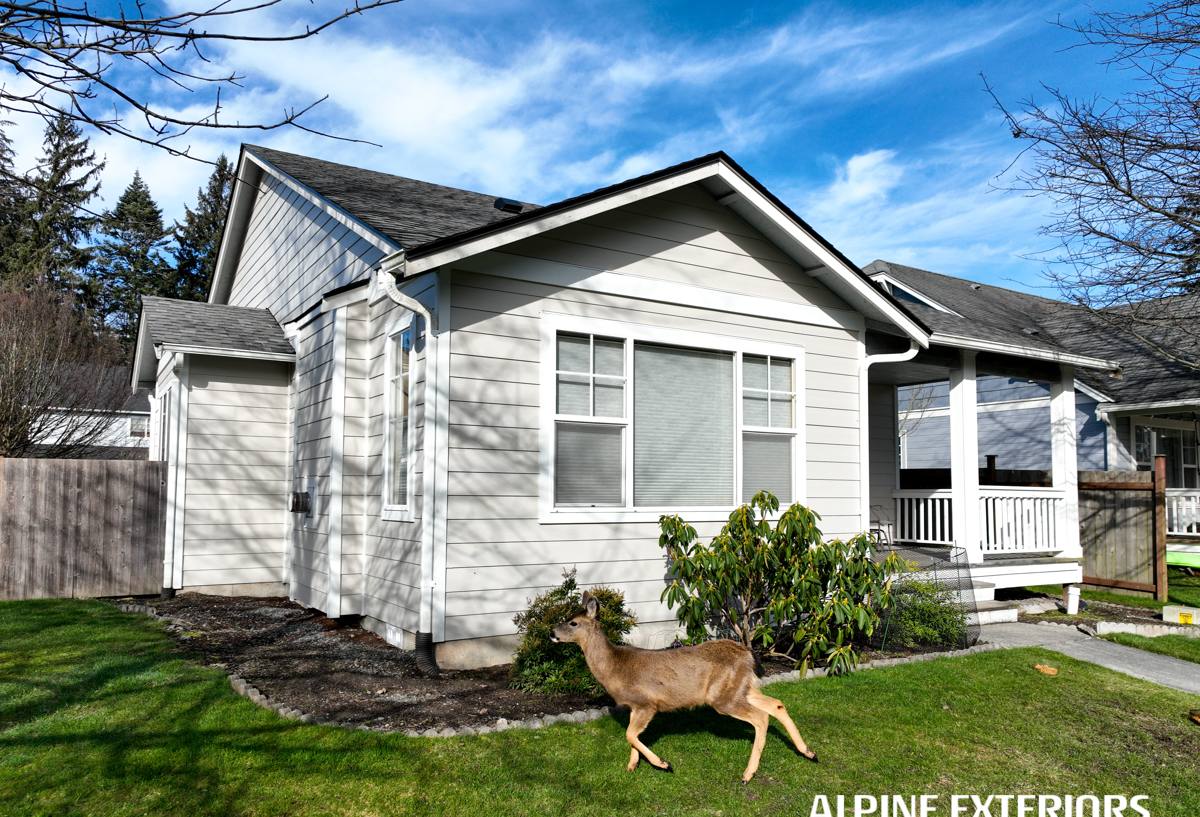
Why Fiber Cement Holds Up Where Wood-Based Products Struggle
James Hardie fiber cement is engineered from cement, sand, and cellulose fibers — there's no wood pulp for moisture to swell, no organic material for rot or insects to feed on. That matters directly in a neighborhood like Wallingford, where siding spends a lot of the year damp rather than dry.
Hardie also makes climate-specific product lines — HZ5 and HZ10 formulations engineered for different moisture and freeze-thaw exposure levels. For a house in western Washington, that means the product arriving on site has already been engineered for a wet Pacific Northwest climate rather than a generic national spec.
ColorPlus Factory Finish
A lot of siding failure in this climate isn't the substrate — it's the paint. Field-applied paint on wood or fiber cement is only as good as the prep, weather conditions, and coats applied on install day, and it starts breaking down years before the underlying board does. Hardie's ColorPlus finish is baked on in a factory-controlled process before the boards ever reach the jobsite, which gives it better adhesion and UV resistance than a job-site paint job, and a longer finish warranty as a result.
What We See on Wallingford Siding Inspections
When we walk a Wallingford property, the issues tend to fall into a short list, most of them tied directly back to the moisture and shade pattern of the neighborhood:
- Moss and algae staining on north-facing and shaded walls, especially under eaves or near mature trees
- Soft or delaminating spots on old wood or engineered wood siding, usually starting at butt joints and bottom edges
- Failed caulk joints that have let water track behind the siding for months before showing on the surface
- Peeling or chalking paint on older wood siding that hasn't been repainted on schedule
- Warping or cupping boards on the sun-exposed sides of the house, where wet-dry cycling is most extreme
Material Comparison for This Climate
| Material | Moisture Behavior | Typical Maintenance | Finish Durability |
|---|---|---|---|
| James Hardie Fiber Cement | Non-combustible, doesn't swell or rot; engineered for wet climates | Occasional wash; repaint only if desired, decades later | Factory ColorPlus finish, long transferable warranty |
| Cedar / Primed Spruce | Absorbs moisture; prone to rot at joints and end grain | Regular repainting or staining, caulk upkeep | Field-applied finish wears faster in wet shade |
| Vinyl | Doesn't rot, but can warp, crack in cold, and trap moisture behind panels | Low, but damage often means full panel replacement | Color molded in, but fades and can't be repainted well |
| LP SmartSide / Engineered Wood | Wood-strand core is sensitive to sustained moisture exposure if seams or edges fail | Caulk and seam maintenance is important | Factory finish, but installation sensitivity is a real factor |
This isn't a knock on any of these products across the board — vinyl and engineered wood both have legitimate use cases. But for a neighborhood with Wallingford's mix of shade, wet-season length, and older housing stock, we've made fiber cement our standard because it's the option that holds up with the least long-term maintenance burden on the homeowner.
Why We Install Only James Hardie
We don't install vinyl, LP SmartSide, Cemplank, Allura, primed spruce, or cedar siding. That's a deliberate standard, not a lack of options. Each of those products has genuine strengths — vinyl is inexpensive and low-maintenance in the right application, engineered wood has a warmer look, cedar is a classic material with real character. But we've seen enough installations and enough climate-driven failures over enough years in this region to land on one system we trust completely: James Hardie fiber cement, installed to Hardie's own specifications.
That means one crew that knows one product system deeply, one warranty structure we can stand behind, and no guesswork about how a given material will perform after its fifth Puget Sound winter.
How We Approach a Wallingford Siding Job
Assessment First
Before we talk about siding, we look at what's underneath it. Moisture-damaged sheathing, failed flashing, or old vapor barrier issues are common on older Wallingford homes and need to be addressed before new siding goes on — otherwise you're covering a problem instead of fixing it.
Correct Installation to Spec
Fiber cement performs the way it's rated to perform only when it's installed correctly — proper clearances from grade and roof lines, correct fastener pattern and spacing, factory-mitered or properly sealed joints, and flashing details that actually shed water instead of trapping it. This is where a lot of the real-world difference between a good and bad fiber cement job comes from, and it's a big part of why installation quality matters as much as product choice.
Built for the Neighborhood
Wallingford's older homes often have original trim details, window proportions, and roof lines worth preserving. We work around those details rather than stripping a house down to a generic look, matching board exposure and trim profiles to what fits the home.
More Than Siding
Siding doesn't work in isolation — it's one part of a building envelope that includes the roof, windows, and any attached structures like decks. We handle all of them, which matters in a climate like this one because water problems rarely respect trade boundaries: a roof leak can show up as siding rot, and a failed deck ledger connection can lead to moisture getting behind exterior walls. Having one contractor who understands how these systems interact, rather than three separate trades pointing at each other, tends to produce better long-term results.
Hiring the Right Crew in Wallingford
Seattle has plenty of siding contractors, and not all of them are set up to do fiber cement work correctly. A few things worth checking before you hire anyone for a siding project in this neighborhood:
- Ask specifically about their experience with James Hardie fiber cement — not siding in general
- Confirm they carry current Washington state contractor licensing and insurance
- Ask how they handle flashing and moisture barrier details, not just the visible siding
- Get a written estimate that specifies the exact Hardie product line and profile, not just "fiber cement"
- Ask about warranty terms — both the manufacturer's product warranty and the contractor's labor warranty
Get a Local Estimate
If you're weighing a siding project in Wallingford — whether it's a full replacement, repair work after storm damage, or you're just trying to understand your options before your current siding fails outright — we're happy to take a look and walk you through what we see, with no pressure to book anything on the spot. Use the form below to request a free estimate.