 Seattle Siding
 Ravenna's Housing Stock Meets a Tough Climate
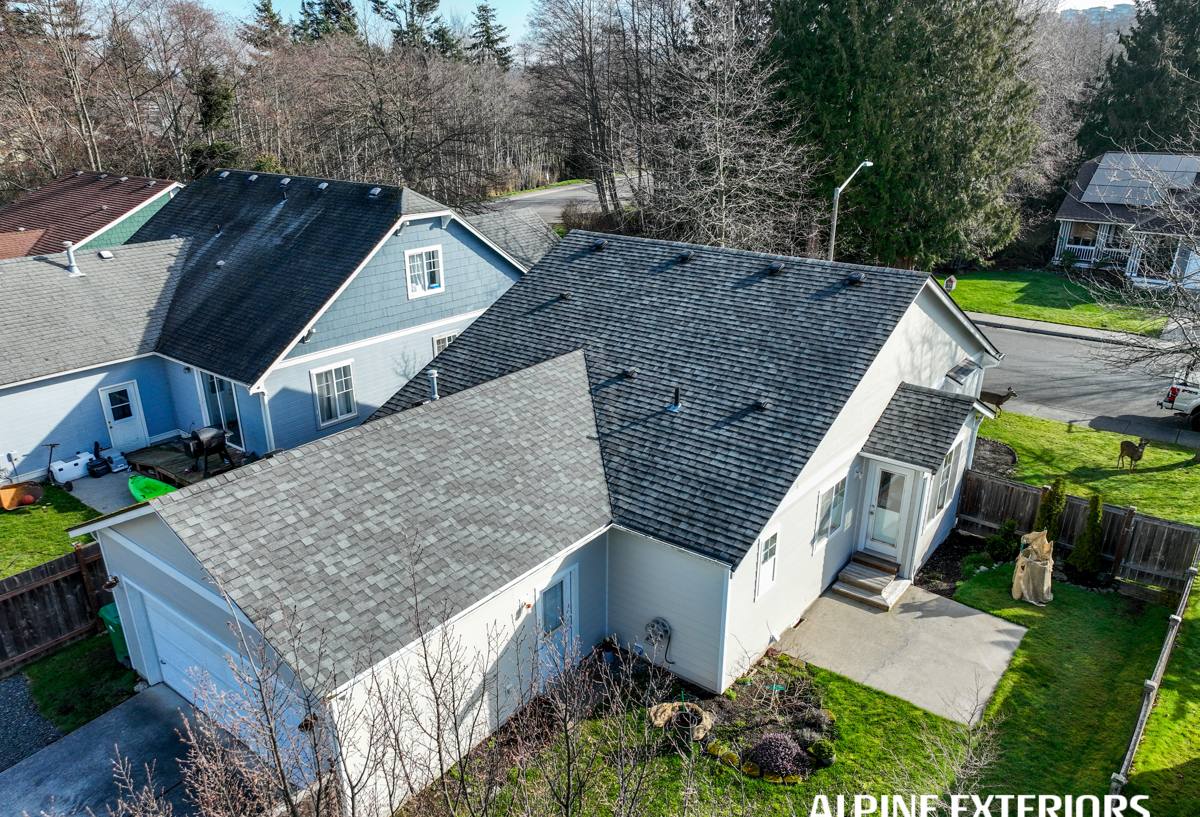
Ravenna is one of Seattle's older, more established neighborhoods, and it shows in the housing stock: craftsman bungalows, Tudor-influenced homes, and a good number of mid-century builds tucked under a heavy tree canopy near Ravenna Park and the Ravenna Creek ravine. That canopy is part of what makes the neighborhood desirable, but it's also part of what makes exterior siding work here different from, say, a newer subdivision out in the sun.
Mature trees mean more shade, more leaf litter in gutters and on roof valleys, and slower drying times after every rain. Combine that with Seattle's marine-influenced climate — moisture-laden air moving in off Puget Sound, long stretches of driving rain through fall and winter, and short winter days that don't give surfaces much chance to dry out — and you get a set of conditions that are genuinely hard on exterior building materials over a couple of decades.
What "Driving Rain and Moss Season" Actually Does to a House
Homeowners in King County hear about our rainy season constantly, but the practical siding problems are more specific than "it rains a lot":
- Wind-driven rain gets pushed sideways into wall assemblies, especially on west and southwest-facing elevations, finding its way behind poorly flashed trim, window edges, and butt joints.
- Extended moss and algae season runs long here because shaded, damp surfaces rarely get enough direct sun to fully dry — north-facing walls and anything under tree cover are the usual trouble spots.
- Freeze-thaw cycling is milder than inland climates but still real; a handful of hard freezes a year is enough to stress siding that's already holding moisture.
- Organic buildup from surrounding trees — pollen, needles, leaf debris — holds moisture against the wall longer than a clean, open exposure would.
None of this means a house in Ravenna is doomed. It means the siding material and the installation details matter more here than they would in a drier climate, because the margin for error is smaller.
Why This Shows Up as Rot Before It Shows Up as a Leak
Most siding failures we see in older Seattle neighborhoods aren't dramatic. They're slow — a soft spot at the bottom of a wall, swelling at a butt joint, paint that won't hold anymore no matter how many coats go on. By the time it's visible from the street, moisture has often been working on the sheathing underneath for years. Wood-based siding products are the most vulnerable to this pattern because they absorb and hold water; once that cycle starts, it rarely reverses on its own.
Why We Install Only James Hardie Fiber Cement
Seattle Siding Company made a deliberate decision to install James Hardie fiber cement siding exclusively — not LP SmartSide, not vinyl, not Cemplank or Allura, not primed spruce or cedar. That's not a marketing position; it's a standard we hold because of what we've seen these products do, and not do, in exactly the climate Ravenna sits in.
- It doesn't feed the moisture problem. Fiber cement doesn't swell, rot, or delaminate the way wood-based and engineered-wood sidings can when they take on water repeatedly over a rainy season.
- It's non-combustible. Fiber cement's makeup (cement, sand, cellulose fibers) gives it a fire-resistance advantage that engineered wood products can't match.
- The factory finish is built for this exposure. James Hardie's ColorPlus finish is baked on in a controlled factory environment and backed by its own finish warranty — it holds color and resists the moss, mildew staining, and UV fading that hit field-painted siding harder in a shaded, damp climate.
- The HZ5 product line is engineered for climates like ours, with formulations designed around freeze-thaw and moisture exposure rather than a one-size-fits-all national spec.
- The warranty is real and transferable, which matters in a neighborhood like Ravenna where homes turn over and buyers want documented exterior condition.
To be fair to the alternatives: vinyl is inexpensive and low-maintenance in the sense that it doesn't need painting, and engineered wood products can look good and install quickly when everything goes right. Cedar has genuine curb appeal that some homeowners specifically want. Our issue isn't that these products are worthless — it's that in a climate with this much sustained moisture exposure, the long-term maintenance burden and failure risk outweigh the upfront savings, and we're not willing to put our name on installations we don't think will hold up over the decades homeowners expect.
Comparing Siding Options for a Ravenna Home
| Material | Moisture Behavior in Wet Climates | Maintenance Over Time | Fire Resistance | Typical Warranty Structure |
|---|---|---|---|---|
| James Hardie Fiber Cement | Doesn't absorb and swell; engineered HZ5 line for wet regions | Low — factory finish holds up for years | Non-combustible | Long, transferable product + finish warranty |
| LP SmartSide / Engineered Wood | Wood-based core can swell or delaminate if moisture gets in | Moderate to high — edge sealing and paint upkeep matter | Combustible (wood-based) | Varies; often more conditions on moisture-related claims |
| Vinyl | Doesn't rot, but can warp, crack in cold snaps, and trap moisture behind it if not detailed well | Low, but limited repair options if damaged | Combustible/melts under heat | Often prorated over time |
| Cedar / Primed Wood | Absorbs moisture readily; needs consistent sealing to perform | High — regular refinishing required | Combustible | Typically none beyond installer workmanship |
Beyond Siding: The Full Exterior Envelope
Siding doesn't work in isolation, and in a neighborhood with mature tree cover like Ravenna, the roof, windows, and even decks are all part of the same moisture-management system. We handle all four:
Roofing
A roof that's shedding water properly — clean valleys, intact flashing, gutters that aren't backed up with leaf litter from the neighborhood's tree canopy — protects the siding below it. Roof and siding problems often show up together because they share the same root cause: water finding a way in.
Windows
Window flashing and integration with the siding plane is one of the most common failure points on older Seattle homes. When we replace siding, we look closely at window flashing details rather than just cutting new siding around old, potentially compromised window trim.
Decks
Decks take the same driving rain and shade exposure as walls, often with less protection. Rot at ledger boards and support posts is a common issue we find on older properties in shaded lots.
What a Ravenna Project Looks Like With Our Crew
Working in an established neighborhood like Ravenna comes with its own practical considerations: narrower lots, mature landscaping close to the house, older sheathing that may need attention once old siding comes off, and homes where the original construction predates current moisture-barrier standards. A crew that works across King County regularly sees this pattern and knows what to check for before it becomes a surprise mid-project — things like:
- Sheathing condition once old siding is removed, especially near grade and under window sills
- Existing flashing and house-wrap integration, not just the visible siding
- Trim and butt-joint detailing sized for actual driving-rain exposure, not just the minimum code requirement
- Ventilation and rainscreen gaps that let the wall assembly dry between storms
A local crew also means someone who's already dealt with Seattle permitting norms, knows how weather windows actually behave here (not in theory), and isn't guessing at how a north-facing wall under a big maple is going to perform five years out.
Maintenance Checklist for Ravenna Homeowners
Whatever siding is currently on a home, a few habits make a real difference in this climate:
- Keep gutters and downspouts clear of leaf debris at least twice a year, more often under heavy tree cover
- Trim back branches and shrubs that keep a wall section shaded and damp longer than the rest of the house
- Check caulking and trim joints annually, particularly around windows and at the base of walls
- Look for soft spots, bubbling paint, or dark staining — early signs of moisture getting behind the siding
- Have a roof inspection when siding work is being considered; the two systems are connected
Getting an Honest Look at Your Home
Every home in Ravenna sits a little differently — sun exposure, tree cover, age of construction, and prior repairs all change what we'd recommend. Rather than guessing from a photo, we start with an in-person look at the actual conditions on your walls. If you're noticing early signs of wear, planning ahead, or just want a straight answer on where your siding stands, we're happy to walk the property and give you a clear, no-pressure estimate using the form below.