 Seattle Siding
 Siding for University District Homes
University District sits close to two of Seattle's biggest bodies of water — Lake Union and Lake Washington — and that proximity shapes what happens to a house's exterior over time. The neighborhood's housing stock is a mix: early-1900s craftsman bungalows, mid-century infill, and a growing number of newer townhomes and multifamily builds serving the area's dense, university-adjacent population. What almost all of them share is exposure to the same Puget Sound weather pattern that defines exterior work across King County — long stretches of damp, overcast days, driving rain off and on for months at a time, and air that carries a faint edge of salt inland from the Sound even this far from open water.
We install siding, roofing, windows, and decks across Seattle, and University District is one of the neighborhoods where we see the clearest evidence of what that climate does to a building over 20, 40, or 80 years. This page walks through what local homes are up against, how we approach siding replacement here, and why we install one product — James Hardie fiber cement — instead of the wider menu of options most contractors offer.
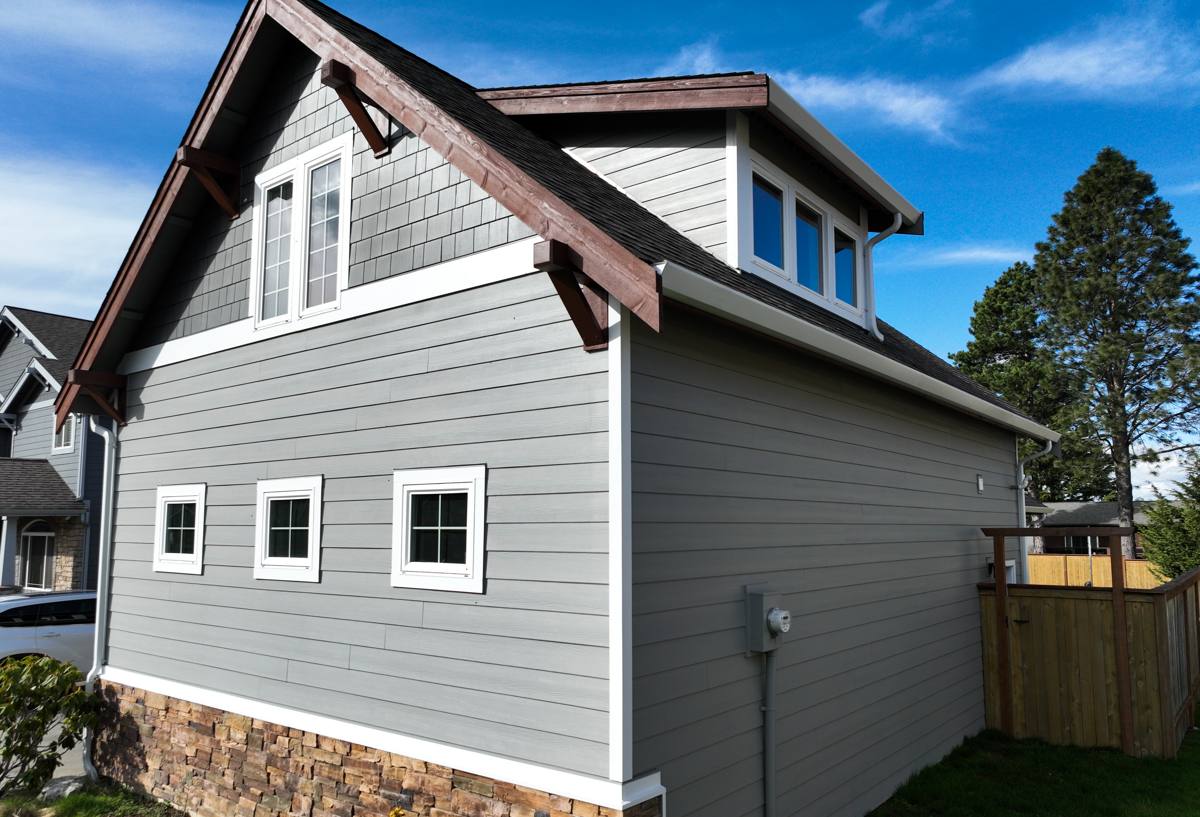
What the Climate Does to Exterior Siding Here
Moss and Sustained Moisture
Seattle doesn't get a lot of heavy downpours compared to other parts of the country — it gets persistence. Rain falls in long, low-intensity stretches from fall through spring, and the region rarely gets enough sun or wind in that window to fully dry exterior surfaces between storms. That's the exact condition moss and algae need to take hold. On siding, sustained dampness doesn't just look bad — it holds moisture against the substrate longer, which accelerates rot in wood-based products and can compromise paint and caulking well before their expected lifespan.
Salt-Tinged Air
Homes right on Puget Sound deal with salt air most directly, but the influence reaches well inland across Seattle, including neighborhoods near Lake Union and Lake Washington. Salt-laden moisture accelerates the breakdown of metal fasteners, caulking, and paint film, and it's part of why generic, one-size-fits-all siding products underperform here compared to drier climates.
Temperature Swings and Wood Movement
King County doesn't have brutal winters, but it does have a lot of freeze-thaw and wet-dry cycling through the shoulder seasons. Wood-based siding products expand and contract with moisture content, and repeated cycling opens hairline gaps at seams and fastener points — exactly where water gets in.
Why This Matters More on Older U-District Homes
A large share of University District's housing predates modern building science. Original wood siding on these homes was never engineered for a 70-plus-year service life under constant coastal moisture — it survived this long because of diligent repainting and patching, not because the material was inherently suited to the climate. When we're called out to a craftsman bungalow in this neighborhood, we're often looking at:
- Soft or delaminating siding boards at the bottom courses, where splash-back moisture concentrates
- Paint failure on the south and west exposures, where sun and rain cycling are most aggressive
- Moss buildup in shaded areas near mature trees or narrow side yards, common in this densely built neighborhood
- Gaps and warping at butt joints from decades of wood movement
- Water intrusion around window trim and corner boards that's gone unnoticed until interior damage shows up
None of that is a reflection of bad original construction — it's what happens to wood siding in this climate over a long enough timeline. It's also exactly the failure pattern we try to prevent with the product we replace it with.
Why We Only Install James Hardie Fiber Cement
We don't offer vinyl siding, LP SmartSide, Cemplank, Allura, or primed wood products, even though most exterior contractors carry at least a couple of these. That's a deliberate standard, not a limitation on what we know how to install. Here's the reasoning:
It's Non-Combustible
James Hardie siding is fiber cement — primarily sand, cement, and cellulose fiber — and it doesn't burn. Wood-based and polymer-based siding products do, to varying degrees. In a region where wildfire smoke and periodic regional fire risk have become a bigger part of the conversation, non-combustible cladding is a real, tangible advantage.
It's Engineered for Wet Climates
Hardie's HZ5 product line is specifically formulated for regions with extended damp seasons and freeze-thaw cycling — which describes Seattle and King County almost exactly. Fiber cement doesn't absorb and release moisture the way wood does, so it doesn't swell, cup, or warp at the same rate, and it holds paint and factory finish far longer under sustained moisture exposure.
The Factory Finish Matters
Most Hardie siding we install goes on with ColorPlus, a baked-on factory finish that's more UV- and moisture-stable than field-applied paint. That matters directly in a climate where field-painted wood siding on this same street would need repainting every five to eight years. It also means color consistency and a longer stretch before any repainting is needed at all.
The Warranty Is Real and Transferable
James Hardie backs its siding with a strong, transferable limited warranty — a meaningful detail in a university-adjacent neighborhood where properties change hands relatively often, whether that's owner-occupants or landlords selling investment property.
How Hardie Compares to the Alternatives
| Product | Combustibility | Moisture Behavior in PNW Climate | Finish Longevity | Typical Maintenance |
|---|---|---|---|---|
| James Hardie fiber cement | Non-combustible | Doesn't swell/warp with moisture cycling | ColorPlus factory finish, long-lasting | Low — occasional wash, no repainting for years |
| LP SmartSide (wood strand) | Combustible | Engineered to resist moisture, but still wood-based | Field or factory paint, shorter cycle than Hardie | Moderate — edge sealing and paint upkeep matter |
| Vinyl siding | Combustible, can deform under heat | Doesn't rot, but traps moisture behind panels if installed loose | Color can fade/chalk over time, not repaintable easily | Low, but repair options are limited if damaged |
| Primed cedar / spruce | Combustible | Most moisture-sensitive of the group; prone to cupping and rot here | Field paint only, shortest repaint cycle | High — regular repainting and caulking required |
This isn't a claim that the other products are poorly made — LP SmartSide and vinyl both have legitimate use cases, and cedar has real aesthetic appeal that some homeowners specifically want. It's that, weighed against what University District's climate does to a home's exterior over decades, fiber cement is the product we're willing to stand behind with our own installation crew.
How We Approach a Siding Job in University District
Assessment First
Every job starts with a walk-around of the existing siding, looking specifically for moisture intrusion, soft sheathing, and problem areas around windows, corners, and roof-to-wall transitions — the spots that fail first in this climate.
Water Management Behind the Siding
Correct installation in a wet climate is as much about what's behind the siding as the siding itself. That means proper weather-resistant barrier, flashing at every penetration and horizontal transition, and rain-screen or drainage detailing where the assembly calls for it. Hardie performs as designed only when the water management behind it is done right — this is the step that separates a durable install from a callback.
Hardie-Specific Installation Standards
James Hardie publishes specific fastener, clearance, and caulking requirements, and we follow them to spec rather than treating fiber cement like a drop-in replacement for wood. Ground clearance, gutter overflow management, and proper gapping at butt joints all matter more in a climate that stays wet as long as ours does.
Beyond Siding: Roofing, Windows, and Decks
Siding rarely fails in isolation. On older University District homes, a siding replacement often surfaces related issues:
- Roofing: Roof-to-wall flashing and gutter performance directly affect how much water siding is exposed to — we handle roofing work so these systems get coordinated rather than treated as separate projects
- Windows: Failing window flashing is one of the most common hidden causes of siding damage we find once old siding comes off
- Decks: Ledger board connections and deck-to-wall flashing are another frequent point of water intrusion into the exterior wall assembly
Because we do all four, we can flag and address these connected issues during a siding project instead of leaving a homeowner to coordinate multiple contractors.
Why a Local Crew Is Worth Insisting On
Exterior work in Seattle isn't generic exterior work. A crew that mainly builds in drier climates will under-detail flashing and moisture management because they've never had to answer for what happens when a house sits under six months of intermittent rain. A local Seattle crew that works King County's climate week in and week out knows where water actually gets in on homes like the ones in University District, and builds accordingly — not from a manual, but from repeated, direct experience with this specific weather pattern.
A Practical Checklist Before You Replace Siding
- Walk the exterior and note any soft spots, especially at the bottom few feet of siding and around windows
- Check for moss or algae concentration in shaded or low-airflow areas
- Look at gutters and downspouts — poor drainage accelerates siding damage more than almost anything else
- Ask any contractor you're considering what specific moisture barrier and flashing details they use, not just what siding brand they install
- Confirm whether the warranty offered is manufacturer-backed and transferable, especially if you might sell the property
- Get more than one estimate, and ask each contractor why they recommend the product they're proposing
Get a Free Estimate
If you're noticing paint failure, moss buildup, or soft siding on a University District home, we're happy to take a look and give you a straightforward, no-pressure assessment of what's going on and what it would take to fix it right. Fill out the form below to schedule a free estimate.