 Seattle Siding
 Why Wallingford Roofs Age Differently Than Roofs Inland
Wallingford sits close enough to Puget Sound and Lake Union that homes here deal with a specific combination of wear: a long, wet moss season, driving rain that comes in sideways during winter storms, and enough salt-tinged marine air off the Sound to accelerate corrosion on fasteners, flashing, and vent components. None of these are dramatic events on their own. It's the accumulation over years that gets homeowners — a roof that would coast for another five years in a dry inland climate is often already showing granule loss, moss colonization, and soft decking in a neighborhood like this one.
A lot of Wallingford's housing stock is older — craftsman bungalows and early-to-mid-century homes with roof framing and ventilation that was never designed around today's insulation levels or today's rainfall patterns. That mismatch is one of the most common reasons we get called out for a "surprise" leak that turns out to be years in the making.
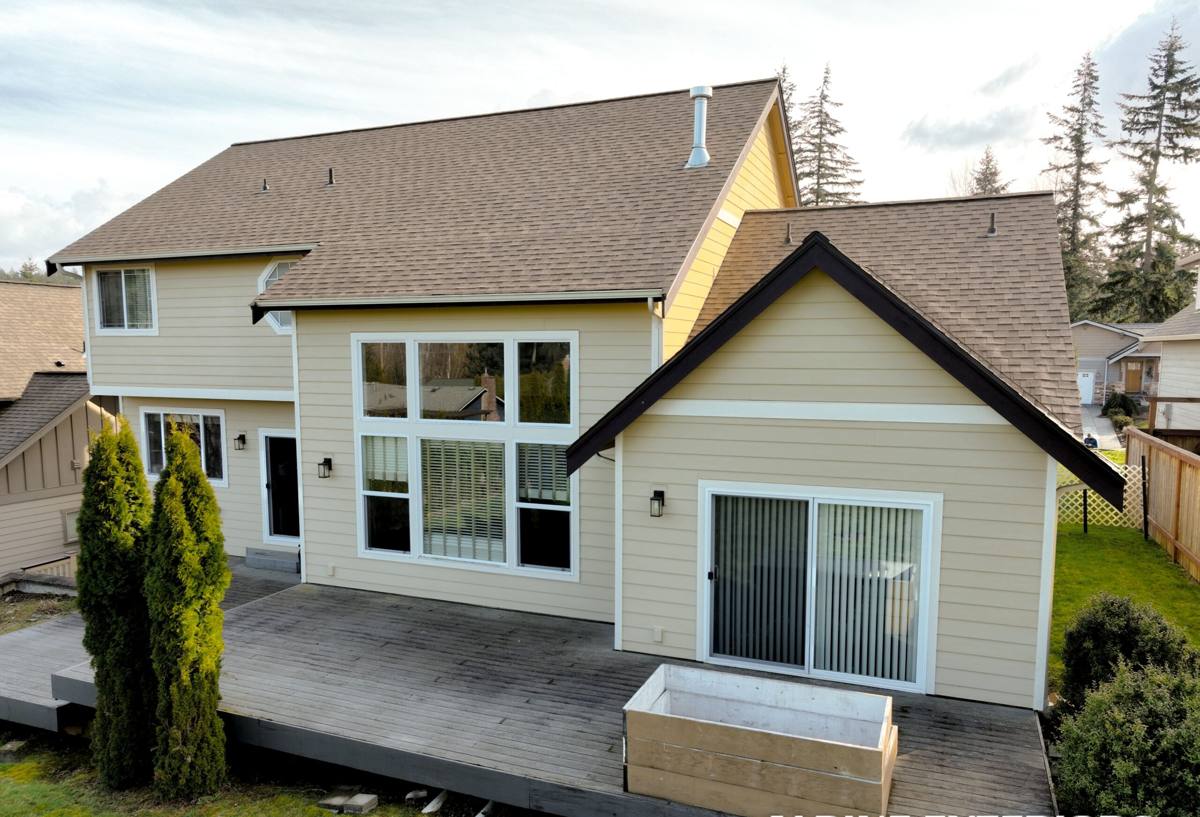
Signs a Wallingford Roof Needs Replacement, Not Another Patch
Roof repair has its place, but there's a point where patching becomes throwing money at a system that's simply worn out. Here's what tends to signal that point in this climate:
- Moss established in the shingle mat itself, not just sitting on the surface — lifting edges and holding moisture against the roof deck
- Granule loss heavy enough that you can see bare asphalt in valleys or on south-facing slopes
- Soft or spongy decking felt underfoot during inspection, usually near valleys, chimneys, or eaves
- Daylight visible through the attic at roof boards, or water staining on rafters
- Flashing that's rusted, lifted, or was never properly stepped at walls and chimneys
- Multiple past repairs in the same area — a sign the underlying problem was never fixed, only covered
- A roof past 20–25 years old (asphalt) with no documented tear-off since original installation
If you're only seeing one or two of these, repair may still make sense. Several together, especially soft decking or attic daylight, usually means replacement is the more honest recommendation.
Roofing Materials That Actually Hold Up Here
Every material has trade-offs. What matters is picking one that matches Seattle's rainfall totals, King County's building code expectations, and how much upkeep you're willing to do.
| Material | Moss/Moisture Behavior | Typical Lifespan Here | Maintenance |
|---|---|---|---|
| Architectural asphalt shingle | Good with proper ventilation; moss-resistant granule options available | 25–30 years | Periodic moss treatment, gutter clearing |
| Standing seam metal | Excellent — sheds moisture fast, minimal moss growth on smooth panels | 40–50+ years | Low; occasional fastener/sealant check |
| Synthetic composite (shake/slate look) | Very good; engineered to resist moisture absorption | 30–50 years | Low |
| Cedar shake | Requires disciplined maintenance to resist moss and rot in this climate | 20–30 years with upkeep | High — regular treatment and inspection |
Cedar shake has real curb appeal and suits a lot of the older architecture in this neighborhood, but we're upfront with clients about what it demands here: in a climate this wet, untreated or under-maintained shake is one of the fastest paths back to a moss and moisture problem. If a homeowner wants that look, we talk through a realistic maintenance plan before installation, not after.
Underlayment Matters as Much as the Surface Material
Whatever shingle or panel goes on top, the underlayment and ice-and-water shield at eaves, valleys, and penetrations are what actually keep wind-driven rain out during a real Puget Sound storm. This is one of the most commonly under-specified parts of a cheap roof job, because it's invisible once the job is done.
What a Correct Roof Replacement Actually Involves
A roof replacement is more than swapping old shingles for new ones. Done right, it includes:
- Full tear-off to bare decking — never a layover on top of existing shingles, which traps moisture and voids most manufacturer warranties
- Decking inspection and repair — replacing any plywood or sheathing that's soft, delaminated, or water-stained before anything new goes down
- Ice-and-water shield at eaves, valleys, and around every penetration, sized for our rainfall rather than the manufacturer's national minimum
- Synthetic underlayment across the full field for wind and rain protection during construction and for the life of the roof
- Proper flashing at chimneys, walls, skylights, and valleys — step flashing and counter-flashing, not just caulk
- Balanced attic ventilation — intake at the eaves, exhaust at the ridge, sized to the attic volume
- New roofing material installed to manufacturer specification, including correct nailing pattern and exposure
- Cleanup and magnetic sweep of the property for stray nails and debris
Ventilation and Moisture: The Part Homeowners Rarely See
This is worth its own section because it's the single most common corner cut on budget roof jobs, and it's the reason a roof can fail from the inside out even with good shingles on top. In a marine climate like Seattle's, an attic without balanced intake and exhaust ventilation traps warm, moist air against the underside of the roof deck. Over a wet winter, that moisture condenses, soaks into the sheathing, and creates the exact soft-decking and rot conditions that shorten a roof's life — regardless of how good the shingles are.
Older Wallingford homes are especially prone to this, since many were framed before modern ventilation standards and have since been insulated without revisiting airflow. Part of a proper roof replacement is evaluating whether the existing ventilation is adequate, and correcting it if it isn't — not just replacing the surface and leaving the underlying problem in place.
Our Roof Replacement Process for Wallingford Homes
1. On-Site Inspection and Honest Assessment
We walk the roof and the attic, not just look at it from the ground. You get a straight answer on whether you need a repair or a replacement, with photos showing why.
2. Material Selection Based on Your Home and Budget
We'll talk through the trade-offs in plain terms — what performs best here, what fits the style of your home, and what upkeep each option realistically requires.
3. Permitting and Scheduling
Roof replacements in Seattle typically require a permit through the city; we handle that paperwork and schedule around weather windows rather than pushing a job into a storm.
4. Tear-Off, Deck Repair, and Installation
Full removal, deck inspection, and installation following manufacturer specs — with daily site protection so an unexpected downpour mid-project doesn't become your problem.
5. Final Walkthrough
We review the finished roof with you, confirm ventilation and flashing details, and make sure you understand your warranty coverage before we consider the job done.
What Drives the Cost of a Wallingford Roof Replacement
We won't quote a price without seeing the roof, but these are the factors that move the number up or down:
| Factor | Why It Matters |
|---|---|
| Roof size and pitch | Steeper roofs take longer, need more safety setup, and use more material for coverage |
| Number of layers to remove | Multiple existing layers mean more tear-off labor and disposal cost |
| Decking condition | Rot or soft sheathing found during tear-off requires repair before install can proceed |
| Material choice | Asphalt, metal, synthetic, and cedar carry different material and labor costs |
| Roof complexity | Valleys, dormers, skylights, and multiple chimneys add flashing detail and time |
| Access | Mature trees, tight lot lines, or limited staging space common in close-in neighborhoods can affect setup time |
Why a Crew That Already Works Wallingford Matters
Roofing is local knowledge as much as it is technical skill. A crew that regularly works this neighborhood knows what the older framing tends to look like once you open it up, understands how King County permitting and inspection typically runs, and has a realistic sense of how a roof here needs to be built to handle a genuinely wet climate rather than a national-average one. That's the difference between a roof that's technically installed to code and one that's actually built for the weather it will face for the next 30 years.
It also matters for moss control after the job is done. A crew familiar with the area's tree canopy and shade patterns can advise on realistic maintenance intervals instead of a generic recommendation that doesn't account for how much shade your specific roof gets.
After Replacement: Keeping a New Roof Performing
A new roof still needs basic upkeep in this climate to hit its full lifespan:
- Clear gutters and downspouts at least twice a year, more often under heavy tree cover
- Have moss growth treated before it establishes in the shingle mat, not after
- Keep overhanging branches trimmed back to reduce shade and debris buildup
- Schedule a professional inspection every couple of years, especially after major storms
If you're seeing moss, granule loss, soft spots, or you're simply not sure how much life is left in your Wallingford roof, we're glad to take a look. Fill out the form below for a free, no-pressure estimate — we'll give you a straight assessment of what your roof actually needs, not a sales pitch.