 Seattle Siding
 Siding in Renton: Built for What This Climate Actually Does to a House
Renton sits at the south end of Lake Washington, close enough to Puget Sound and the region's marine air to feel its effects on a home's exterior year-round. Homes here deal with a specific combination of moisture problems: long stretches of steady rain, humid air that never fully dries out siding and trim, and a mossy, shaded understory in older neighborhoods with mature tree cover. None of that is dramatic weather. It's slow, steady wear, and it's exactly the kind of wear that separates siding products that hold up for decades from siding products that need constant upkeep.
We're a Seattle-based exterior contractor working throughout King County, and Renton is part of our regular service area. We install siding, roofing, windows, and decks, and on the siding side we've made a deliberate choice: we only install James Hardie fiber cement. This page explains why that matters for a house in Renton specifically, not just in general terms.
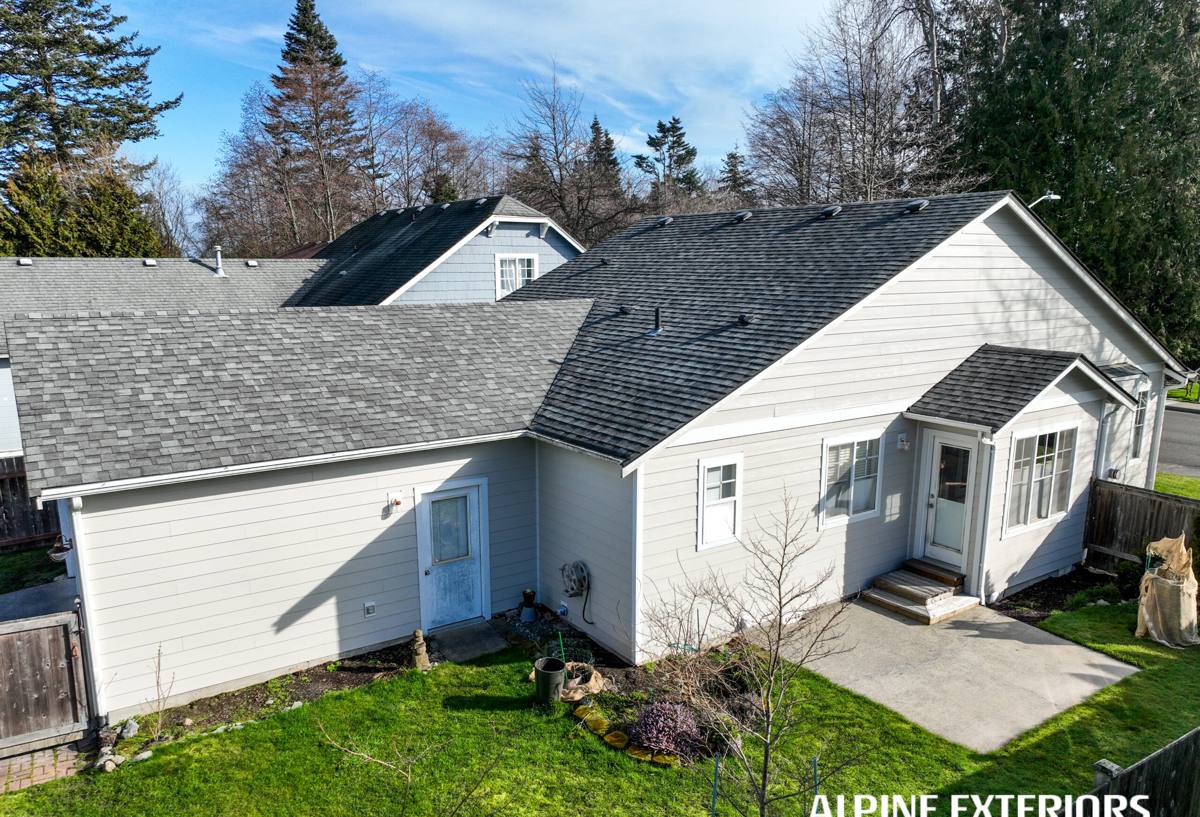
What King County's Climate Does to Exterior Siding
Driving rain and constant moisture exposure
Western Washington doesn't get flash floods or hurricane-force wind very often, but it gets something arguably harder on a building: months of low-intensity rain that keeps exterior surfaces damp for days at a time. Siding that absorbs water, swells, or traps moisture behind it will show problems faster here than in a drier climate — bubbling paint, soft spots, delamination, and rot at seams and butt joints.
Salt-influenced air near the water
Renton's proximity to Lake Washington and the broader Puget Sound basin means the air carries more moisture and mineral content than it would further inland. This doesn't corrode siding the way ocean salt spray does on the immediate coast, but it does accelerate the breakdown of lower-grade paints, caulks, and wood fibers over years of exposure. Materials and finishes that are marginal in a dry climate tend to fail noticeably sooner here.
Moss, algae, and shaded exteriors
Renton has plenty of mature tree cover and neighborhoods where north-facing walls rarely see direct sun. Combine that shade with our wet season and you get ideal conditions for moss and algae growth on roofs, siding, and decking. Moss holds moisture against a surface long after the rain stops, which is one of the more common causes of premature siding and roof failure in this region — not the moss itself, but what it traps underneath.
Why We Only Install James Hardie Fiber Cement
We used to install a broader range of siding products. Over time, watching how different materials actually perform in Puget Sound conditions — not in a showroom, but ten and twenty years into a Renton winter — we narrowed our siding offering to one product line: James Hardie fiber cement.
What Hardie gets right for this climate
- Fiber cement doesn't absorb water the way wood-based or wood-fiber composite products can, which matters directly given how long surfaces stay damp here
- It's non-combustible, which is a genuine safety advantage regardless of climate
- Hardie's ColorPlus factory finish is baked on under controlled conditions, so it resists the fading and cracking that field-applied paint often shows within a few years in wet, low-sun climates
- Hardie manufactures climate-specific HZ product lines engineered for regions with heavy moisture exposure, which the Pacific Northwest qualifies as
- The product carries a strong, transferable warranty when installed to manufacturer specification — useful if you sell the home before you're done owning it
We're not going to claim other products are junk. Vinyl, LP SmartSide, cedar, primed spruce, and other fiber cement brands like Cemplank or Allura all have legitimate use cases and reasonable installations elsewhere. Our decision to standardize on Hardie is about what we're willing to warranty our workmanship on, in this specific climate, for the long haul. We'd rather install one product extremely well than install five products adequately.
Siding, Roofing, Windows, and Decks: How They Work Together
Siding doesn't fail in isolation. In a house's exterior envelope, siding, roofing, windows, and decks all interact with the same water. A roof that sheds water poorly onto a wall, a window that's flashed incorrectly, or a deck ledger board that traps moisture against the house band board can all cause siding problems that look like a siding defect but actually start somewhere else.
Because we handle all four trades, we look at a Renton home as one connected system rather than four separate jobs. That matters most at the transitions: where a roof edge meets a wall, where a window opening is flashed into new siding, and where a deck attaches to the house. These transition points are where the majority of long-term moisture problems start in this climate, and they're easy to get wrong if the person installing the siding isn't thinking about how the roofer or window installer handled their side of the joint.
What a Siding Job Looks Like at a Renton Home
Assessment and moisture check
Before we talk about products or pricing, we look at the existing siding, the condition of the sheathing underneath where accessible, and any signs of past moisture intrusion — staining, soft trim, or failed caulk joints. This tells us whether we're dealing with a straightforward re-side or whether there's underlying repair work to address first.
Removal and inspection
Old siding comes off in sections so we can inspect the weather-resistive barrier and sheathing as we go, rather than discovering problems after everything is already covered back up.
Water management details
This is the part that matters most in a rainy climate and gets skipped most often on rushed jobs: proper flashing at windows, doors, and penetrations, correctly lapped weather-resistive barrier, and rainscreen or drainage gap detailing so bulk water and incidental moisture can drain and dry rather than sit against the sheathing.
Hardie installation to manufacturer spec
Fastener spacing, joint treatment, clearances from grade and roofline, and factory-finish touch-up all follow Hardie's published installation requirements. Installing outside of spec is one of the most common ways a warranty gets voided, so we don't cut corners here even when it slows the job down.
Cost Factors for a Renton Siding Project
Every home is different, and we don't quote a job without seeing it, but these are the main variables that move the price up or down on a typical siding project in this area:
| Factor | Why it matters |
|---|---|
| Home size and wall complexity | More corners, gables, and dormers mean more cutting, flashing, and labor time |
| Existing siding removal | Removing old wood, aluminum, or vinyl siding adds labor and disposal cost versus a simpler overlay situation |
| Sheathing or framing repair | Moisture damage found during removal needs to be repaired before new siding goes on |
| Hardie product line and profile | Lap siding, panel systems, and shingle-style profiles carry different material and labor costs |
| Trim and accessory scope | Fascia, soffit, trim boards, and factory-finished accessories add up depending on how much is being replaced |
| Access and site conditions | Steep lots, limited driveway access, or tight side yards common in some Renton neighborhoods can affect staging and labor time |
Roofing, Windows, and Decks: Region-Specific Considerations
Roofing
A roof in this climate needs to shed water efficiently and resist moss buildup, especially under tree cover. Roof condition also directly affects siding longevity, since poor roof drainage is a frequent cause of premature siding rot at the top of walls.
Windows
Window replacement is one of the most common triggers for a siding project, since old flashing and failed seals around windows are a major source of hidden water intrusion. When we replace siding around existing windows, we make sure flashing is corrected as part of the job, not just patched over.
Decks
Deck ledger boards attach directly to the house structure, and in a wet climate a poorly flashed ledger connection is a well-documented source of structural rot. If your deck was built or attached before current flashing standards were common, it's worth having it checked as part of any exterior work.
Why a Local Crew Matters
Renton isn't generic siding territory — the mix of lake-adjacent humidity, shaded lots, and older housing stock with decades of prior repairs (some done well, some not) means a crew needs to actually know King County conditions to install correctly the first time. A crew that mostly works in a dry climate and treats every job the same way will miss the drainage and flashing details that matter here. We work throughout the Seattle area, including Renton, and we see the same climate patterns and the same common failure points repeatedly, which shapes how carefully we handle the water-management details other crews might treat as optional.
A Simple Pre-Project Checklist
- Walk the exterior and note any staining, soft trim, bubbling paint, or visible moss buildup
- Check gutters and downspouts are clear and draining away from the foundation and walls
- Look at window and door trim for gaps, cracked caulk, or discoloration
- Note any areas where tree branches keep siding or roofing shaded and damp longer than the rest of the house
- If you have a deck, check where the ledger board meets the house for staining or soft wood
- Write down how old the current siding is, if known — this helps us estimate what's underneath
If you're weighing a siding project in Renton — whether it's a full re-side, repair work after storm damage, or you're bundling siding with roofing, window, or deck work — we're happy to take a look and give you a straightforward, no-pressure estimate. There's a form below to get that conversation started.