 Seattle Siding
 Siding in Kirkland: Built for the Eastside's Wet Winters and Long Moss Season
Kirkland sits right on Lake Washington, and that lakefront position shapes what happens to a house's exterior over the years. Homes here deal with a long, wet fall-through-spring stretch, humidity that lingers off the water, and enough shade from mature trees on many lots that north- and east-facing walls rarely get a chance to dry out fully between rain events. Add in King County's driving rain during winter storms, and you have an exterior environment that punishes anything less than a genuinely weather-resistant siding system. We're a Seattle-area exterior contractor that works throughout the region, including Kirkland, and we install siding, roofing, windows, and decks. This page focuses on siding, but all of it works together to keep water out of a house.
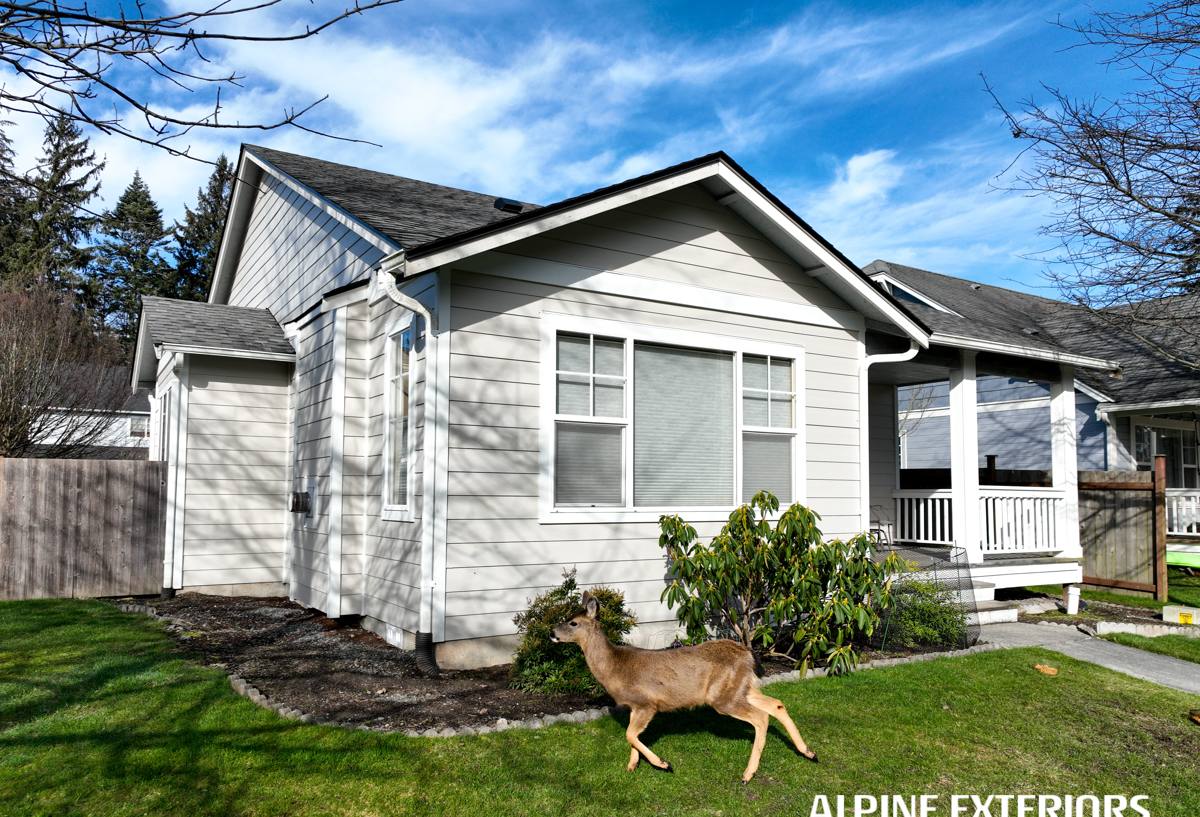
What Kirkland's Climate Actually Does to a House
It helps to be specific about the mechanisms, not just say "it rains a lot."
Moisture Cycling
The Puget Sound region doesn't get extreme cold, but it gets long stretches of damp weather. Siding that absorbs moisture — even a little, even slowly — stays wetter for longer here than it would in a drier climate, because there's less sun and airflow to dry it back out between storms. Repeated wet-dry cycling is what breaks down siding over time: it drives paint failure, swelling at butt joints and cut ends, and eventually rot in wood-based products.
Moss and Algae Growth
Shaded, north-facing walls and anything near overhanging trees or gutters that don't drain well are prime real estate for moss and algae growth on the Eastside. This isn't just cosmetic — moss holds moisture directly against the siding surface, which extends the time any given panel stays wet after a storm. Siding that's more absorbent, or that has seams and edges where moss can get a foothold, ages faster in this kind of environment.
Wind Off the Lake
Kirkland's lakefront and near-lake properties can see stronger, more direct wind-driven rain than homes further inland. That matters for how siding is flashed and lapped at every horizontal joint, window, and corner — installation quality determines whether wind-driven rain gets forced behind the siding or sheds off the face like it's supposed to.
Why We Only Install James Hardie Fiber Cement
We made a decision as a company to install one siding system: James Hardie fiber cement. We don't install vinyl, LP SmartSide, Cemplank, Allura, primed spruce, or cedar. That's not because those products have no legitimate use — it's because after years of doing exterior work in this climate, we concluded that fiber cement from Hardie gives homeowners the best combination of moisture resistance, factory finish durability, fire performance, and long-term value for what this region does to a house.
The Trade-Offs With Common Alternatives
Wood-based siding products (cedar, primed spruce, and engineered wood like LP SmartSide) rely on a factory or site-applied coating to keep moisture out. That coating is the weak point — once it's compromised at a cut edge, a fastener hole, or a scratch, the substrate underneath can absorb water and begin to swell or rot, and that process is faster in a climate that stays damp as long as ours does. Vinyl siding is low-maintenance in the sense that it doesn't rot, but it's a thin plastic product that can warp in temperature swings, fade unevenly with UV exposure over the years, and it doesn't hold paint if a homeowner ever wants to change color. It also has open seams and a rely-on-overlap installation method that leaves more room for wind-driven rain to work its way behind the panel over time. Fiber cement alternatives to Hardie, like Cemplank and Allura, are legitimate fiber cement products, but we standardized on Hardie specifically for its factory-applied ColorPlus finish and its HZ5 product engineering, which is built for exactly this kind of marine, high-moisture climate.
What Hardie Gets Right
James Hardie fiber cement is dimensionally stable — it doesn't expand and contract with moisture the way wood does, so joints stay tighter and paint lines stay cleaner over time. It's non-combustible, which matters for fire code and insurance in a lot of jurisdictions. The ColorPlus factory finish is baked on under controlled conditions, which holds up better and fades more evenly than field-applied paint. And Hardie backs the product with a genuinely transferable warranty, which matters if you sell the house before the siding's functional life is up.
How Our Siding Process Works in Kirkland
Every project starts with a real inspection, not a sales pitch. We look at the existing siding condition, the state of the water-resistive barrier and flashing underneath if it's exposed, window and door transitions, and any trouble spots — areas with visible moss, staining, soft spots, or paint failure. Given how much of Kirkland's tree canopy shades certain walls, we pay particular attention to those north- and east-facing elevations where moisture sits longest.
Tear-Off and Prep
We remove the old siding down to the sheathing, inspect for hidden rot or moisture damage, and repair or replace any compromised sheathing before anything new goes up. This step gets skipped by contractors trying to save time, and it's the single most common source of siding failures we see when we're called in to fix someone else's work.
Weather Barrier and Flashing
A correctly lapped weather-resistive barrier and properly integrated flashing at every window, door, and horizontal joint is what actually keeps wind-driven rain out — the siding itself is the second line of defense, not the first. This is especially important on lakefront-adjacent Kirkland properties where wind off the water can drive rain harder than in more sheltered inland neighborhoods.
Hardie Installation to Spec
James Hardie publishes detailed installation requirements — fastener spacing and placement, minimum clearances from grade, decking, and roofing, proper caulking at joints, and correct panel gapping. Installing to spec is what keeps the manufacturer's warranty valid and what actually delivers the performance the product is engineered for. We follow those specs on every job, not as an upsell but as the baseline.
Comparing Siding Options for a Kirkland Home
| Factor | James Hardie Fiber Cement | Vinyl | Wood / Engineered Wood |
|---|---|---|---|
| Moisture resistance | Engineered for wet climates (HZ5) | Doesn't rot, but seams can let water behind panel | Depends entirely on coating integrity |
| Moss/algae resilience | Dense, low-absorption surface | Resistant but can trap moisture behind panels | More absorbent, moss holds moisture against surface |
| Finish durability | Factory-baked ColorPlus finish | Color molded in, but fades and chalks over time | Field-applied paint, needs repainting cycles |
| Fire performance | Non-combustible | Combustible plastic | Combustible |
| Warranty | Long, transferable manufacturer warranty | Varies by manufacturer | Typically shorter, coating-dependent |
Why a Local Crew Matters
Siding installation quality depends on understanding the specific site conditions of a job — how much shade a wall gets, which direction the prevailing wind and rain come from, whether a lot is close enough to the lake to see more direct wind-driven exposure, and how the local building department handles inspections. A crew that works throughout the Seattle area regularly, rather than one that's unfamiliar with King County's coastal-adjacent conditions, is going to make better calls on flashing details and moisture management in the field. We're not a national franchise cycling through unfamiliar cities — this is the climate we work in every week.
Maintenance: What to Actually Expect
One advantage of switching to Hardie fiber cement is a lower long-term maintenance burden compared to wood-based siding, but "low-maintenance" doesn't mean "no maintenance," especially in a climate like Kirkland's.
- Rinse siding periodically to knock off dirt, pollen, and early moss growth, particularly on shaded north and east walls
- Keep gutters clear so overflow doesn't run down the siding face and hold moisture against it
- Trim back trees and shrubs that keep siding shaded and damp longer than necessary
- Inspect caulking at joints and trim every couple of years and recaulk where it's cracked or pulled away
- Watch for any soft spots, staining, or paint issues near ground level, which often signal a drainage or grading issue rather than a siding defect
Roofing, Windows, and Decks: The Rest of the Envelope
Siding doesn't work in isolation. A roof that's shedding water properly, windows that are flashed and sealed correctly, and a deck that's built to drain away from the house all affect how well the siding performs. We handle all four trades, which means when we're on a Kirkland property we're looking at the whole exterior envelope, not just the walls — a leaking roof valley or a poorly flashed deck ledger board can cause siding and sheathing damage that looks like a siding problem but isn't.
Get a Free Estimate
If you're weighing a siding replacement in Kirkland — whether you're dealing with visible moss, paint failure, soft spots, or you're just planning ahead — we're happy to come take a look and give you a straightforward, no-pressure assessment of what your home actually needs. Use the form below to request a free estimate.