 Seattle Siding
 Capitol Hill's Climate Is Hard on Roofs
Capitol Hill sits close enough to Puget Sound and Lake Washington that salt-laden air, near-constant fall and winter rain, and a long moss season all show up in the condition of local roofs. Metal fasteners and flashing corrode faster here than they would inland. Driving rain off the water gets pushed sideways under shingle edges and around chimneys and skylights, which is why so many "mystery leaks" in this part of Seattle actually start at a flashing seam rather than in the middle of a roof slope. And because King County stays damp and shaded for much of the year, moss gets a long runway to establish itself on north-facing slopes and under tree cover — lifting shingles, holding moisture against the roof deck, and quietly shortening the life of an otherwise sound roof.
None of this means Capitol Hill roofs fail faster than roofs anywhere else in the region. It means repairs here need to account for a specific set of stresses, and a roof that "looks fine from the sidewalk" can still have real damage building underneath.
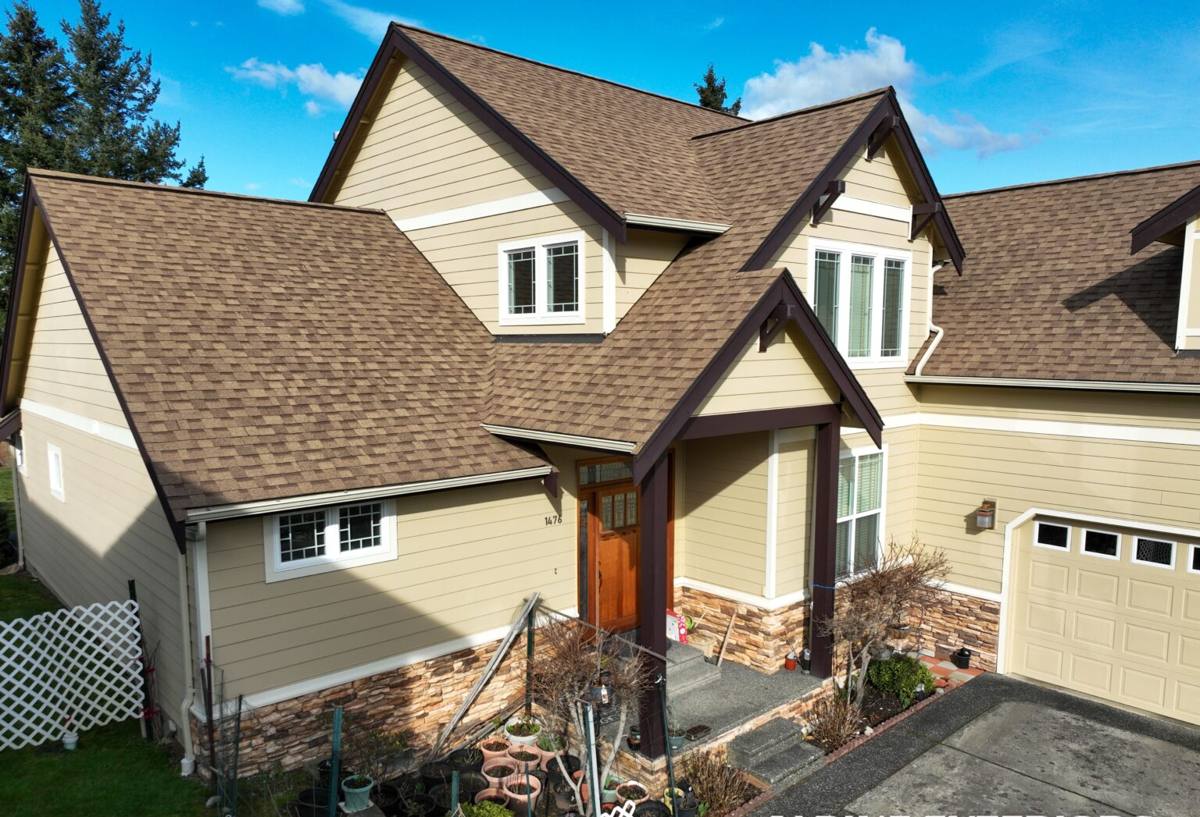
The Roofs You'll Find Across Capitol Hill
Capitol Hill is one of Seattle's older, denser neighborhoods, and the roofing stock reflects that mix of eras and building types:
- Craftsman bungalows and early-1900s houses with moderate to steep pitched roofs, often composition (asphalt) shingle over the original roof deck
- Older Victorian and Foursquare-style homes with more complex rooflines — dormers, multiple valleys, and chimneys that all create extra flashing points
- Mid-century and later infill homes with simpler gable or hip roofs
- Apartment buildings and additions with low-slope or flat roof sections, which need a different repair approach than steep-slope shingle roofs
Because so many homes here are original construction with additions and re-roofs layered on over the decades, it's common to find more than one roofing system on a single house — a shingle roof over the main structure with a flat membrane roof over a back addition or porch, for example. A repair on one section shouldn't be treated the same way as a repair on the other.
Signs Your Roof Needs Repair, Not Just a Look
Roof problems in this climate are often gradual, so homeowners tend to notice the after-effects — a stain on a ceiling, a musty smell in an upstairs closet — well after the actual leak started. Worth checking for, ideally before the next heavy rain system moves through:
- Water stains or discoloration on interior ceilings, especially near chimneys, skylights, or where two roof planes meet
- Shingles that are cracked, curling at the edges, or visibly missing granules
- Thick moss growth or dark streaking, particularly on shaded or north-facing slopes
- Daylight visible through the attic roof deck, or damp insulation in the attic
- Rusted, lifted, or separated flashing around chimneys, vents, and skylights
- Sagging spots on a roof slope, which can indicate a soft or rotting deck underneath
- Granules collecting in gutters or at downspout outlets
Any one of these on its own might be minor. Several together, or anything paired with an active interior leak, is worth having looked at before it turns into a deck-replacement job instead of a repair.
Common Repair Issues We See in This Neighborhood
| Issue | Typical Cause | What Repair Usually Involves |
|---|---|---|
| Flashing leaks at chimneys/skylights | Corrosion from salt air and age, or original flashing that was never counter-flashed correctly | Remove and replace flashing, reseal transitions, sometimes rebuild the surrounding shingle course |
| Moss-related shingle lift | Long wet season, shade from mature trees common on the Hill | Careful moss removal, treatment, and replacement of any shingles damaged underneath |
| Wind-driven rain intrusion | Exposure to storms off the Sound, gaps at rake and eave edges | Reseal or replace edge flashing and starter courses, check underlayment condition |
| Localized shingle damage | Age, wind gusts, falling branches from neighborhood trees | Spot replacement matched to existing shingle type and color as closely as possible |
| Flat/low-slope membrane wear | Ponding water, seam separation, age on addition or apartment roofs | Patch or reseal seams, address drainage, replace failed membrane sections |
What a Correct Roof Repair Actually Involves
Diagnosis First
The most common mistake in roof repair isn't bad workmanship — it's fixing the wrong spot. Water travels along the underlayment and roof deck before it shows up as a stain inside the house, so an interior leak over the kitchen might actually originate several feet away, near a chimney or valley. A proper repair starts with tracing the water back to its actual entry point, not just patching where the stain appears.
Flashing and Transitions
Most leaks on older Capitol Hill roofs happen at transitions — where a chimney, skylight, vent pipe, or dormer meets the main roof plane — rather than in the open field of shingles. Flashing at these points needs to be layered correctly with the surrounding shingles (not just caulked over) so water sheds outward instead of working its way underneath.
Moss and Debris Management
Moss removal has to be done carefully. Scraping too aggressively can damage the shingle surface underneath, which shortens the roof's remaining life instead of extending it. The right approach removes moss without stripping granules, treats the area to slow regrowth, and checks for any shingle damage the moss was hiding.
Matching Materials
For spot repairs on an older roof, we try to match the existing shingle type, profile, and color as closely as available products allow. On a roof that's aged and weathered for 10-plus years, a perfect match usually isn't possible — we'll be upfront about that rather than promising a seamless blend that a specific shingle line can't actually deliver.
Repair or Replace?
Not every roof problem calls for a full re-roof, and not every leak can be permanently solved with another patch. The honest answer usually comes down to a few factors:
| Factor | Leans Toward Repair | Leans Toward Replacement |
|---|---|---|
| Roof age | Under roughly 15 years, materials still have life left | Approaching or past the shingle's expected lifespan |
| Extent of damage | Isolated to one area — a flashing point or a few shingles | Widespread across multiple slopes |
| Roof deck condition | Solid, dry decking under the damaged area | Soft, rotted, or repeatedly wet decking |
| Repair history | First or second repair on this roof | Recurring leaks in different spots each year |
| Budget timing | Homeowner wants to extend the roof's life a few more years | Planning a longer-term hold and wants to stop deferring |
We'll give a straight recommendation either way — including telling you when a repair is the smarter money even if a bigger job would be more profitable for us, and telling you when a repair would just be a short-term patch on a roof that needs to be replaced.
Our Process, Start to Finish
Inspection and Estimate
We inspect the roof itself — not just the ceiling stain inside — walk the attic if accessible, and check flashing, vents, and roof edges. You get a written estimate that explains what we found, what we recommend, and why, in plain language.
The Repair Day
We protect landscaping and walkways, remove and replace only what needs it, and match materials as closely as reasonably possible. On Capitol Hill's tighter lots and street parking, we plan access and material staging ahead of time so the job doesn't spill into a neighbor's space or block a shared driveway longer than necessary.
Cleanup and Follow-Up
Old material and debris — including any moss and granule buildup — leaves the site with us. We do a magnetic sweep for stray nails around the work area and walk the repair with you before we consider the job done.
Why a Crew That Already Works Capitol Hill Matters
Capitol Hill's housing stock is older and denser than a lot of newer Seattle neighborhoods, which means more roofs with layered additions, tighter lot lines, and less staging room than a typical suburban job. A crew that regularly works this neighborhood already knows how to plan access on narrow streets and shared driveways, what to expect from a century-old roof deck, and how the neighborhood's tree cover and shade patterns affect moss and drainage on a given house. That familiarity shows up in fewer surprises mid-job and a more accurate estimate up front, rather than a change order once the tarps come off.
It also matters for permitting and code compliance — Seattle has its own permitting process through the city, and a contractor who works locally knows when a repair needs a permit and when it doesn't, rather than guessing.
If you're dealing with a leak, visible moss buildup, or damaged shingles on a Capitol Hill roof, we're happy to take a look and give you a straight, no-pressure assessment of what's actually going on and what it would take to fix it. Use the form below to request a free estimate.