 Seattle Siding
 Why Bellevue Roofs Wear Out Faster Than the Brochures Suggest
Most roofing material is rated for 25, 30, even 50 years of service life. Those numbers come from lab testing, not from a roof sitting under Bellevue's tree canopy through eight months of driving rain a year. In the real world, Puget Sound weather shortens those numbers considerably if the roof wasn't built for this specific climate. Constant moisture, shaded north-facing slopes, and the marine air that moves in off the Sound all combine to attack roofing systems in ways that dry-climate installers simply don't plan for.
A roof that would last three decades in a dry inland state can start showing real problems in half that time here if ventilation, underlayment, and moss resistance weren't treated as priorities during installation. That's the gap we build for.
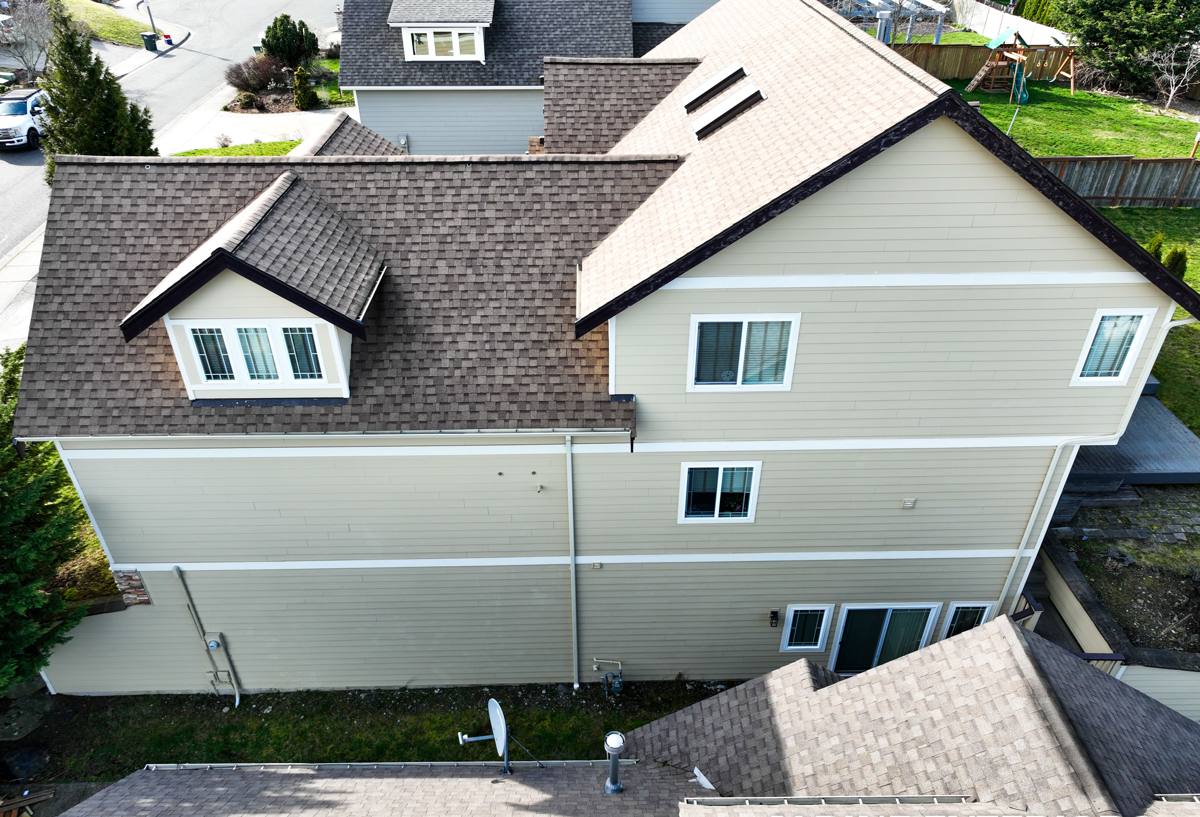
The Three Things That Break Roofs in This Region
Driving Rain
Seattle-area storms don't just fall straight down — wind pushes rain sideways and up under shingle tabs, flashing edges, and vent boots. A roof detailed for a calmer climate can pass every inspection and still leak in a King County windstorm because the underlayment and flashing weren't built with wind-driven water in mind.
Moss and Organic Growth
Shaded roof sections and anything near overhanging trees stay damp for days after a storm passes, which is exactly what moss and moss-adjacent growth need to take hold. Once moss establishes itself on a roof, it works its way under shingle edges, lifts them, and holds moisture against the deck — turning a cosmetic issue into a structural one if it's left alone through a full moss season.
Salt-Laden Marine Air
Homes closer to the water deal with airborne salt that accelerates corrosion on exposed metal — flashing, fasteners, and vent hardware in particular. It's a slower process than moss or rain damage, but it's steady, and it's why fastener and flashing material matter more here than in a landlocked climate.
Signs You Need a Full Replacement, Not Another Repair
Not every roof problem calls for a full tear-off. But there's a point where patching starts costing more than it saves. Some signs worth taking seriously:
- Granule loss heavy enough that you're finding grit in gutters and downspouts every season
- Shingles that are curling, cupping, or cracking across multiple slopes, not just one isolated area
- Soft spots or sagging when you walk the roof or view it from a ladder
- Moss coverage that comes back within a year of cleaning, even after treatment
- Daylight visible through the roof deck from inside the attic
- Water staining on interior ceilings that shows up after storms, not just heavy rain events
- A roof already past 20-25 years old with multiple prior repairs
If you're seeing two or more of these, a replacement estimate is usually worth getting even if the roof still "looks fine" from the ground.
Roofing Materials That Actually Hold Up Here
Material choice matters more in this climate than in most. The table below reflects how common options actually perform under Puget Sound conditions, not just their national averages.
| Material | Moisture & Moss Resistance | Typical Lifespan Here | Maintenance Burden |
|---|---|---|---|
| Architectural (dimensional) asphalt shingle | Good, especially with algae-resistant granules | 20-30 years | Low to moderate |
| 3-tab asphalt shingle | Fair — thinner profile sheds less water at edges | 15-20 years | Moderate |
| Standing seam metal | Excellent — moss and moisture have little to grip | 40-50+ years | Low |
| Cedar shake | Requires ongoing upkeep in a wet climate | 20-25 years with maintenance | High |
| Synthetic/composite shingle | Good — engineered to resist moisture absorption | 30-40 years | Low |
We install architectural asphalt and metal roofing most often on Bellevue homes because they offer the best balance of moss resistance, wind performance, and long-term cost for this specific climate. Cedar shake can still be the right call for homeowners committed to its look and upkeep, but we're upfront that it's a higher-maintenance material once you factor in moisture cycling and periodic treatment. That's a trade-off decision, not a knock on the product — it just needs to be made with eyes open.
What a Correct Installation Actually Involves
Tear-Off and Deck Inspection
Every old layer comes off down to the deck. This is the point where hidden rot, soft sheathing, or old moisture damage gets found — and where a lot of corner-cutting installers skip straight past problems because opening up the deck slows the job down. We inspect and replace damaged sheathing before anything new goes down, because covering a compromised deck just hides the problem for the next owner to find.
Underlayment and Ice-and-Water Barrier
In a climate with sideways rain, underlayment quality matters as much as the shingle on top of it. We use synthetic underlayment across the full roof and self-adhering ice-and-water shield at eaves, valleys, and roof penetrations — the spots where wind-driven rain and ice dams are most likely to force water backward under the shingle line.
Flashing
Flashing around chimneys, skylights, walls, and valleys is where most roof leaks actually originate — not the field of the roof itself. We use corrosion-resistant flashing material appropriate for this region's marine air and detail it to shed water outward at every transition, rather than relying on sealant alone to do the work.
Ventilation
A roof that can't breathe traps moisture in the attic, which shortens the life of the deck from underneath even if the shingles up top look fine. Balanced intake and exhaust ventilation keeps attic humidity in check year-round and reduces the conditions moss and mold need to establish themselves.
Moss-Resistant Details
On shaded slopes and roofs near mature trees, we discuss options like algae-resistant shingle granules and, where appropriate, zinc or copper strip installation near the ridge — a low-maintenance way to inhibit moss regrowth on the slopes most prone to it.
Our Installation Process, Start to Finish
- On-site inspection and estimate. We walk the roof, check the attic, and give you a written scope and price — no guessing from the ground.
- Material selection. We go over the options above based on your budget, roof slope, shade exposure, and how long you plan to stay in the home.
- Permitting. We handle the King County or City of Bellevue permit paperwork so it's not on your plate.
- Property protection. Landscaping, siding, and windows get covered before tear-off begins.
- Tear-off and deck repair. Old roofing comes off, the deck gets inspected, and any damaged sheathing is replaced.
- Underlayment, flashing, and ventilation installation. The parts that don't show but determine whether the roof actually performs.
- New roofing installation. Installed to manufacturer spec so warranty coverage stays valid.
- Cleanup and magnetic nail sweep. Full site cleanup, including a sweep for stray fasteners.
- Final walkthrough. We review the finished roof with you before calling the job done.
Permits and Bellevue-Specific Considerations
A full roof replacement in Bellevue typically requires a building permit, and inspection requirements can vary depending on your specific jurisdiction within King County. If your property is part of an HOA, there may also be design guidelines around shingle color or material — worth checking before you commit to a look you love but can't get approved. We factor permitting and any known local requirements into the process so you're not the one chasing down paperwork mid-project.
Mature tree coverage is common across many Bellevue neighborhoods, which is a real asset to a property but also means more shade, more debris, and more moss pressure on certain roof slopes. That's factored into both the material recommendation and the long-term maintenance conversation we have with you.
Why Hiring a Crew That Already Works This Area Matters
A roofing crew that mainly works drier, sunnier markets can still install a technically correct roof — but "technically correct" and "correct for this climate" aren't always the same thing. Underlayment coverage, ventilation balance, and moss-resistant detailing are the kind of decisions that get made differently by a crew that deals with Puget Sound rain and moss season every year versus one that doesn't.
A local crew also means someone who knows the permitting process for your specific jurisdiction, has already worked through similar tree-coverage and shade conditions on nearby homes, and is easy to reach if a question comes up two years after installation — not a phone number tied to a job that wrapped up and moved on.
Before You Hire: A Quick Checklist
- Ask for proof of current WA state contractor licensing and liability insurance
- Confirm whether the estimate includes deck repair as a line item or as a surprise change order later
- Ask what underlayment and ice-and-water shield coverage is included, not just the shingle brand
- Ask how ventilation will be handled — this gets skipped more often than it should
- Get the manufacturer warranty terms in writing, and understand what voids them
- Ask how moss and shaded slopes on your specific roof will be addressed
- Confirm cleanup and nail sweep are part of the scope
If a contractor can't answer these clearly, that's useful information on its own.
If your Bellevue roof is showing its age or you're planning ahead rather than waiting for a leak, we're happy to take a look and walk you through honest options for your specific roof and budget. The estimate is free, there's no pressure, and you'll get a straight answer about whether you need a full replacement or just a repair — just fill out the form below.