 Seattle Siding
 Why Magnolia's Setting Is Hard on Siding
Magnolia sits out on a peninsula with water on three sides — Puget Sound, Elliott Bay, and the Shilshole/Ballard side toward the ship canal. That geography is part of what makes the neighborhood beautiful, and it's also exactly what wears down exterior siding faster than it would a few miles inland. Homes here take on salt-laden air coming off the Sound, wind-driven rain that hits walls at an angle instead of falling straight down, and long stretches of damp, low-sun weather that keep exterior surfaces wet for days at a time.
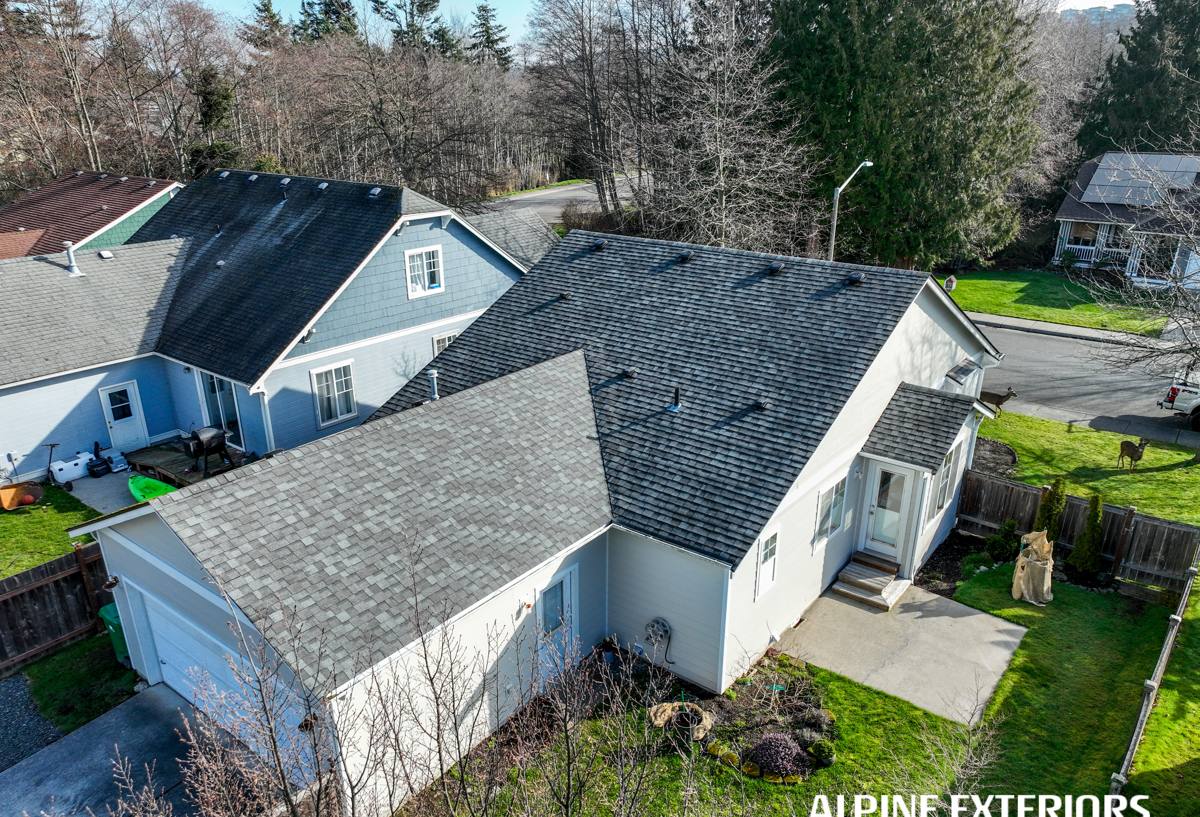
Add in the tree canopy that shades a lot of Magnolia's older lots — plenty of mature evergreens and broadleaf trees throughout the neighborhood — and you get siding that rarely gets a full afternoon of direct sun to dry out. That combination of salt exposure, driving rain, and shade is a specific set of conditions, and it's one we plan for every time we bid a Magnolia job, not something we treat as a generic "Seattle" job.
What Magnolia Homes Actually Need From Their Siding
Three things matter more here than in a drier, sunnier part of King County:
- Water management behind the cladding — not just a good-looking surface, but a wall assembly that lets moisture drain and dry instead of getting trapped.
- A finish that resists the freeze-thaw and moss cycle — Seattle winters aren't brutally cold, but repeated damp-and-dry cycles over many years stress paint film and seams.
- Material that doesn't feed mold, algae, or moss growth — organic-based sidings give moss and algae something to root into over time; a non-organic material doesn't.
This is exactly the case for James Hardie fiber cement, and it's why we don't install anything else.
Why We Install Only James Hardie
We get asked fairly often why we don't offer vinyl, LP SmartSide, cedar, or primed spruce as options. The honest answer is that we looked at the trade-offs for a marine climate like Magnolia's and standardized on one product system instead of stocking several.
Wood-based products — cedar, primed spruce, engineered wood like LP SmartSide — perform fine when they're kept dry and maintained on schedule, but Magnolia's wet season doesn't give them much of a break. Any wood-based siding with a broken paint seal or an open seam is an entry point for moisture, and moisture in wood-based cladding leads to swelling, rot, and eventually replacement. Vinyl sidesteps the rot issue but it flexes, fades, and can crack in cold snaps, and it doesn't offer the same fire performance or resale perception as fiber cement.
James Hardie fiber cement is cement, sand, and cellulose fiber — it doesn't rot, it isn't a food source for moss or insects, and it's engineered specifically for climates like ours (Hardie's HZ5 product line is rated for exactly this kind of wet, marine weather). Factory-applied ColorPlus finish is baked on under controlled conditions rather than field-painted, which matters a lot when your painting season is short and wet. That's the whole reason we put it on every home we side, including in Magnolia.
What a Correct Installation Involves
Fiber cement siding is only as good as the wall assembly behind it. A rushed or undersized crew can install Hardie board and still leave a house vulnerable to moisture problems — the product isn't the whole story, the installation is. On a Magnolia home, a correct job includes:
- A weather-resistive barrier installed and lapped correctly, with all penetrations (pipes, vents, hose bibs, light fixtures) properly flashed and sealed.
- A rainscreen air gap between the siding and the wall so any moisture that does get behind the boards can drain and the wall can dry out both ways.
- Correct fastener placement and spacing per Hardie's published installation specs — this affects both the warranty and how the boards hold up to wind-driven rain.
- Proper flashing and kickout diverters at every roof-to-wall intersection, so runoff gets directed away from the siding instead of down behind it.
- Factory-cut and factory-primed edges kept intact wherever possible, with any field cuts sealed per manufacturer spec.
- Correct clearance between the bottom edge of the siding and grade, decks, or paving — a common shortcut on lower-budget jobs that causes wicking and early failure at the base of the wall.
None of this shows up in a photo of finished siding. It shows up ten or fifteen years later, in whether the wall behind it is still dry.
Choosing the Right Hardie Product for a Magnolia Home
James Hardie makes several distinct product lines, and the right one depends on the home's style and exposure, not just personal taste. For a peninsula neighborhood with a mix of view homes, hillside lots, and more sheltered inland streets, we typically walk clients through:
| Product | Best fit | Notes for Magnolia's climate |
|---|---|---|
| HardiePlank lap siding | Most single-family homes, traditional and craftsman styles | Available in HZ5 formulation engineered for wet, marine-influenced climates like ours |
| HardiePanel vertical siding | Modern builds, accent walls, gable ends | Fewer horizontal laps means fewer potential water-entry points on high-exposure walls |
| HardieShingle | Homes wanting a cedar-shake look without the maintenance | Gives the shingle appearance without the moisture sensitivity of real wood shakes |
| HardieTrim | Corners, window and door trim, fascia | Pairs with any of the above to keep the whole envelope non-combustible and consistent |
On more exposed sites — direct wind off the Sound, west- or south-facing walls with little tree cover — we lean harder on panel systems and tighter detailing at every joint. On more sheltered, tree-shaded lots the priority shifts toward moss and algae resistance, since those walls stay damp longer even when they're protected from direct wind-driven rain.
Moss, Algae, and the Long Wet Season
Seattle's siding season, in the practical sense, is short — a few reliable months of dry weather bracketed by a long stretch of drizzle, low clouds, and shaded, slow-drying surfaces. On tree-covered Magnolia lots, north-facing walls in particular can stay damp for extended periods, which is exactly the environment moss and algae need to establish themselves.
James Hardie's ColorPlus finish and fiber cement substrate don't feed organic growth the way wood-based siding or bare wood trim can, but moss and algae can still form a surface film on any exterior material if it never dries out and is never cleaned. That's a maintenance question, not an installation defect — a periodic gentle wash (never high-pressure blasting directly at seams or up under laps) keeps the finish looking right without shortening its life.
Simple Maintenance Habits That Matter Here
- Keep gutters clear so overflow doesn't run down the wall face repeatedly in the same spot.
- Trim back vegetation and branches that keep a wall section shaded and damp longer than the rest of the house.
- Rinse visible moss or algae buildup with a soft wash rather than a pressure washer.
- Walk the exterior once a year and look at caulk lines around windows, doors, and trim — caulk fails well before the siding does.
Our Process, Start to Finish
We keep the process the same on every Magnolia job because skipping steps is where problems start:
- On-site assessment — we look at exposure, existing siding condition, trim and flashing details, and any moisture or rot already present before quoting anything.
- Written scope and product selection — you get a clear plan for which Hardie product, profile, and color line fits the house, plus what trim and flashing work is included.
- Removal and inspection of the wall behind the old siding — this is where hidden rot or missing flashing gets found and addressed, before it's covered up again.
- Weather barrier, rainscreen, and flashing installation — the unglamorous part that determines how the house performs for the next several decades.
- Hardie installation to manufacturer spec — correct fastening, clearances, and joint treatment throughout.
- Final walkthrough — we go over the finished job with you in person before calling it done.
What It Typically Costs
Every Magnolia home is different — square footage, number of stories, existing siding removal, trim complexity, and access all move the number. In general terms, the main cost drivers break down like this:
| Factor | Why it matters |
|---|---|
| Removal of existing siding | Tear-off and disposal of old material adds labor before any new siding goes up |
| Wall condition underneath | Rot repair or sheathing replacement found during removal adds scope |
| Home height and access | Multi-story homes and steep or hillside lots common in Magnolia require more staging and time |
| Product line and profile | Panel, plank, and shingle profiles carry different material and labor costs |
| Trim and detail work | Corner boards, window trim, and fascia work add labor beyond the flat wall area |
We don't quote a job without seeing it — anything else is a guess. What we can promise is a written estimate that breaks the scope down so you know exactly what you're paying for.
Why a Crew That Already Works Magnolia Matters
Magnolia's building stock and terrain aren't identical to other Seattle neighborhoods — the peninsula's hillside lots, the mix of older and newer construction, and the specific way wind and rain move across the point all affect how a siding job should be detailed. A crew that has already worked houses in the area knows where extra flashing attention pays off, how local permitting and inspection tends to run, and what typical wall assemblies look like once the old siding comes off.
That familiarity doesn't replace a proper site assessment on your specific home, but it does mean fewer surprises and a crew that isn't learning the neighborhood's quirks on your project.
Questions Worth Asking Any Siding Contractor Before You Hire
- Are you a certified James Hardie installer, and can you explain your flashing and rainscreen approach?
- What happens if you find rot or moisture damage once the old siding is off?
- Is the manufacturer's warranty transferable, and is it registered in my name after the job?
- Can I see your written scope of work before I sign anything?
- How do you handle disposal of the old siding material?
If you're weighing siding options for a Magnolia home, we're happy to take a look and walk you through what we'd recommend and why — no pressure, no obligation. Use the form below to request a free estimate.