 Seattle Siding
 Why Green Lake Homes Take a Beating From Seattle's Climate
Green Lake sits inland from Puget Sound, but that doesn't spare it from the marine air that defines Seattle weather. Salt-tinged moisture moves through the whole region, and combined with King County's long wet season, it settles into anything porous — wood trim, old paint film, gaps at seams — and stays there. Add the driving rain that comes sideways off winter storms, and siding here isn't just getting wet, it's getting saturated on the side facing the weather.
The neighborhood's tree canopy and proximity to the lake add another layer to the problem. Mature trees around residential streets keep large sections of many homes in shade for much of the day, which means siding on those elevations doesn't get the sun exposure it needs to dry out between rain events. That's exactly the kind of environment moss and algae thrive in, and it's why so many Green Lake homes show green-black staining on north-facing walls and anywhere overhangs are shallow.
None of this is unique to one house. It's a pattern we see block after block, and it's the reason siding choice and installation quality matter more here than in drier parts of the country.
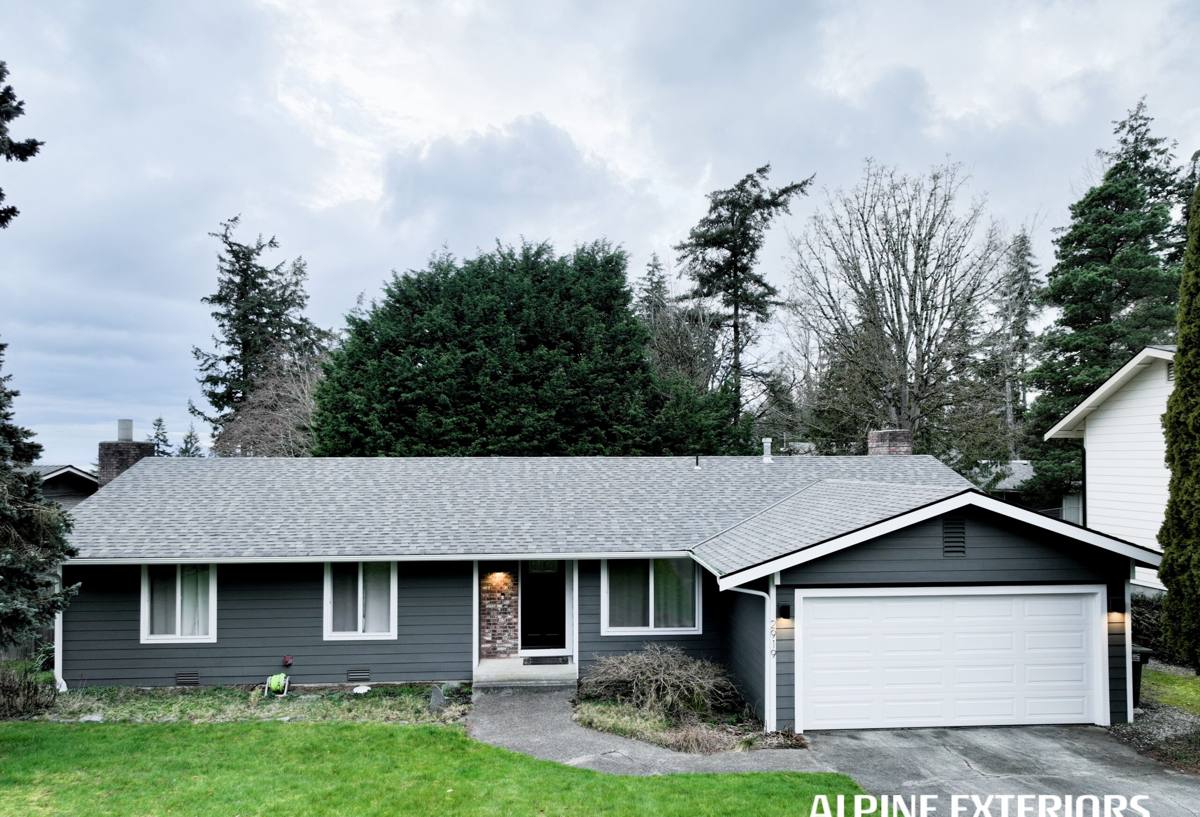
Signs a Green Lake Home Needs Siding Replacement
Homeowners often assume moss or a little paint fade is cosmetic. Sometimes it is. But in a climate this wet, surface symptoms are frequently a sign of something happening underneath. Before deciding whether you need a repair, a repaint, or a full replacement, walk your exterior and look for these:
- Moss or algae that regrows within weeks of scrubbing, especially on shaded or north-facing walls
- Soft or spongy spots when you press on the siding, particularly near the bottom courses and around windows
- Paint that's peeling, bubbling, or chalking well before the usual repaint interval
- Visible cracking, warping, or separation at panel joints and butt seams
- Gaps opening up at trim boards or corner boards that weren't there a few years ago
- A musty smell along exterior walls inside the home, which can point to moisture getting past the cladding
- Siding that's original wood, cedar, or an engineered wood product and is approaching 20-25 years old
If you're seeing two or more of these, it's worth a professional assessment before another wet season passes.
What a Correct Siding Replacement Actually Involves
Full Tear-Off, Not an Overlay
In a climate that punishes moisture the way ours does, installing new siding directly over old siding is a mistake we won't make. An overlay traps whatever moisture, rot, or hidden damage already exists behind a fresh face, and it shows up again a few years later — worse, and harder to reach. A correct job starts with full removal down to the sheathing.
Inspecting What's Underneath
Once the old siding is off, the sheathing and framing get inspected for water damage, soft wood, and any signs that moisture has been working its way in. This is the point where problems that caused the original failure get fixed, not covered up. Skipping this step is how homeowners end up paying for the same repair twice.
Weather-Resistive Barrier and Drainage Plane
A weather-resistive barrier goes over the sheathing before any siding touches the wall. In a region with this much rainfall, we also build in a drainage gap — a rain screen — behind the siding so that any moisture that does get past the surface has somewhere to go instead of sitting against the wall assembly. This one detail is a big part of why some siding jobs last decades and others fail in ten years.
Flashing and Fastening
Every window, door, and penetration needs proper flashing so water is directed out and down, never trapped behind the cladding. Fasteners get placed and spaced to the manufacturer's specification — not just "close enough" — because incorrect fastening is one of the most common causes of premature siding failure, especially on a product engineered to perform in wet climates.
Why We Install Only James Hardie Fiber Cement
We made a deliberate decision to install one product system: James Hardie fiber cement, in the HZ5 formulation engineered for regions with our climate profile. That's not a marketing preference — it's a response to what we consistently see happen to other materials in Seattle's weather.
Wood siding, whether cedar or primed spruce, looks great on day one, but it needs an ongoing maintenance commitment — regular repainting, sealing, and vigilance against rot — that a lot of homeowners don't want to sign up for, especially on a home with heavy shade and slow drying conditions. Engineered wood products can be more forgiving on labor but are sensitive to sustained moisture exposure at cut edges and seams, which is a real concern here. Vinyl siding is low-maintenance in the sense that it doesn't rot, but it can warp or crack in temperature swings and doesn't offer the same fire resistance or paintable, factory-cured finish.
Fiber cement addresses the specific failure points we see most in this climate: it's non-combustible, it doesn't feed moss and mildew the way organic wood fibers do, and it holds its shape and finish through repeated wet-dry cycles. The ColorPlus factory finish is baked on under controlled conditions, which gives it a longer color life than field-applied paint and cuts down how often a homeowner needs to repaint at all. Combined with a strong transferable warranty, it's the product we're comfortable standing behind on every home we side — including the older housing stock common around Green Lake.
Our Process for a Green Lake Siding Replacement
- On-site assessment. We walk the whole exterior, paying close attention to shaded and lake-facing elevations where moss and moisture damage tend to concentrate first.
- Material and color selection. We help you choose the Hardie plank profile, texture, and color that fits the home's style and the neighborhood's character.
- Permitting. Seattle requires permits for full siding replacement in most cases, and we handle that paperwork so it doesn't fall on you.
- Tear-off and structural check. Old siding comes off, and any sheathing or framing damage found underneath gets addressed before anything new goes up.
- Barrier and rain screen installation. The weather-resistive barrier and drainage gap go in per code and manufacturer spec.
- Hardie installation. Panels or planks go up with correct fastening, flashing, and joint treatment.
- Trim, caulking, and cleanup. Final detail work and a thorough site cleanup close out the job.
- Walkthrough. We go over the finished work with you before we consider the job done.
Cost Factors for Siding Replacement
Every home is different, and we won't quote a number without seeing the property, but these are the factors that most often move the price up or down on a Green Lake job:
| Factor | Why It Affects Cost |
|---|---|
| Home size and elevation count | More square footage and more wall complexity means more material and labor |
| Condition of existing sheathing | Hidden rot found after tear-off requires repair before new siding goes on |
| Siding profile and trim detail | Lap siding, shingle-style panels, and detailed trim work vary in labor time |
| Number of stories and access | Multi-story homes and tree-lined or tight lots near the lake can require more equipment and care |
| Window and door count | Each opening needs individual flashing and trim work |
| Color and finish choice | Factory ColorPlus finishes vary slightly in cost by color line |
Why Hiring a Crew That Already Works Green Lake Matters
Green Lake's residential streets are dense, tree-lined, and built up with a mix of older bungalows, craftsman-style homes, and newer infill construction. A crew that regularly works this neighborhood already understands the practical realities: tight lot access, protecting mature landscaping during tear-off, and working around parking and street conditions that are different from a suburban cul-de-sac job.
Just as important is climate familiarity. A contractor who works across King County day in and day out knows which elevations on a given block tend to hold moisture longest, how local permitting timelines typically run, and what installation details actually hold up through a full Seattle wet season rather than just looking good at handoff. That local pattern recognition is hard to substitute with a crew that's unfamiliar with the area.
Keeping Your New Siding Performing for the Long Run
Fiber cement dramatically reduces the maintenance burden compared to wood, but no siding is entirely maintenance-free in this climate. A yearly rinse-down of shaded and lake-facing walls helps keep moss and algae from taking hold. Keeping gutters clear and downspouts directed away from the foundation prevents water from splashing back up onto lower courses. And an occasional look at caulking around windows and trim catches small gaps before they become bigger problems. These are simple habits, and they go a long way toward protecting the investment.
If your Green Lake home is showing signs of wear, or you'd simply like an honest opinion on whether repair or full replacement makes more sense, we're happy to take a look. Reach out for a free, no-pressure estimate using the form below.