 Seattle Siding
 Roof Repair Built for Wallingford's Older Homes and Wet Winters
Wallingford sits close enough to Puget Sound and Lake Union that its roofs deal with a specific combination of stresses: salt-tinged marine air moving in off the water, long stretches of driving rain through fall and winter, and a moss season that can run nearly year-round under the neighborhood's mature tree canopy. Add in the fact that a lot of Wallingford's housing stock is older — craftsman bungalows, older Seattle box homes, and mid-century additions with roofs that have been patched, re-roofed, or added onto more than once — and you get a neighborhood where roof problems tend to be more layered than a simple missing shingle.
Roof repair here isn't just about closing a hole. It's about understanding how moisture moves through an aging roof system, where moss and organic debris have quietly done damage under the surface, and how a repair needs to tie into whatever roofing and flashing details are already on the house — some of which may not match current standard practice. That's the kind of work we focus on for Wallingford homeowners: targeted, honest repairs that solve the actual problem instead of just covering it up.
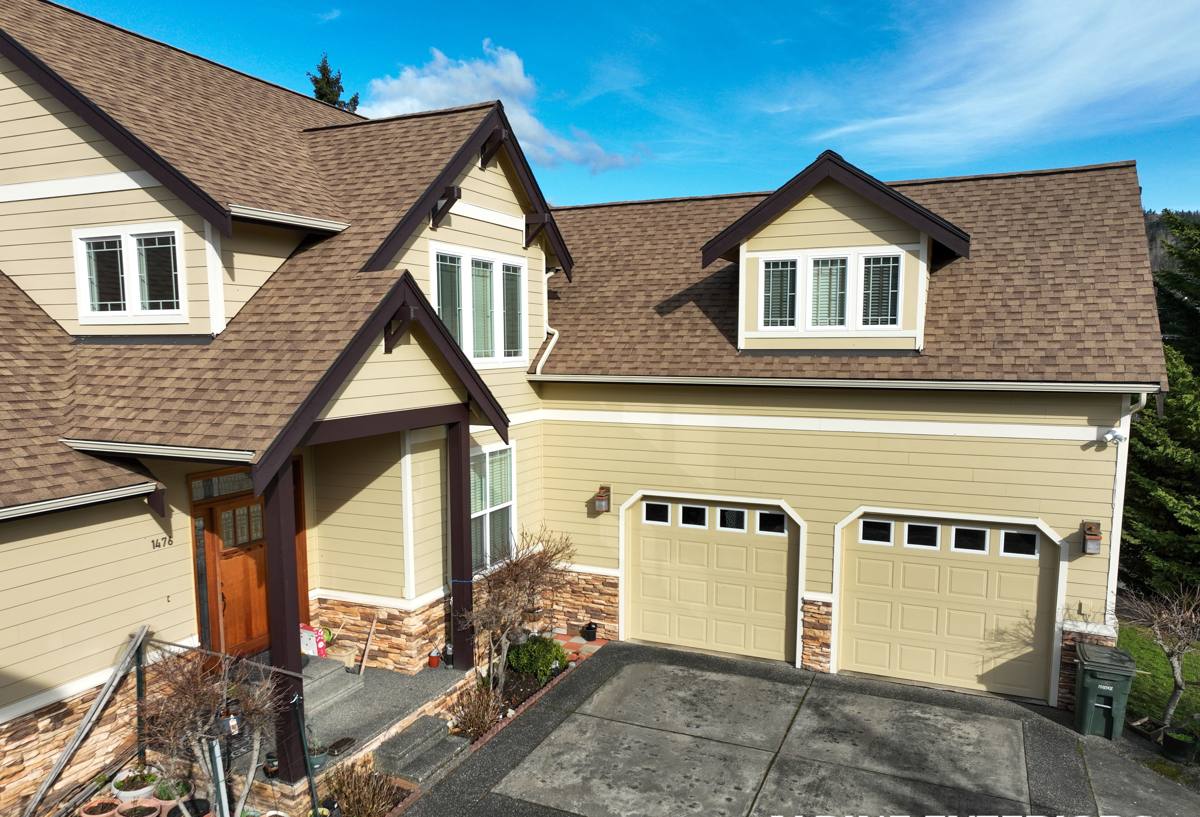
Signs a Wallingford Roof Needs Repair, Not Just a Look
Roof damage in this climate is often quiet at first. Water finds the smallest gap and works from the inside out, so by the time a homeowner notices something, the underlying damage is usually further along than the visible symptom suggests. Here's what we'd want you to check for, or have us check for you:
- Dark streaking, green film, or thick moss growth on north-facing or shaded slopes
- Granules collecting in gutters or at downspout outlets (a sign asphalt shingles are wearing thin)
- Curling, cupping, or lifted shingle edges, especially on slopes that get the most wind-driven rain
- Soft spots, sagging, or a spongy feel when walked on (never walk a roof yourself to check this)
- Water stains on interior ceilings or upper-floor walls, particularly near chimneys, skylights, or where a roofline changes pitch
- Rusted, lifted, or missing flashing around chimneys, vents, and roof-to-wall intersections
- Daylight visible through the attic roof deck, or damp insulation in the attic
- Gutters pulling away from the fascia, or fascia boards that look swollen or discolored
Any one of these on its own might be minor. Several together, or anything paired with an interior stain, usually means water has already gotten past the roofing surface and into the structure underneath.
Why Moss Is the Long-Term Enemy Here
Tree Canopy and Shade
A lot of Wallingford's streets have significant tree cover, and older lots often have decades-old trees close to the house. That shade keeps roofs damp longer after every rain, which is exactly the environment moss and moss spores need to establish. Roofs that face away from direct afternoon sun, or that sit under overhanging branches, will almost always show heavier moss growth than a comparable roof on a more exposed lot.
What Moss Actually Does to a Roof
Moss doesn't just sit on top of shingles looking unattractive. Its root-like structures work into the granule surface and shingle mat, holding moisture against the roof far longer than plain rain would. Over a full moss season, that constant dampness breaks down the asphalt and adhesive strip beneath the moss, lifts shingle edges, and creates channels where wind-driven rain can get pushed backward under the shingle line instead of running off. On older roofs, moss buildup at valleys and eaves is one of the most common causes of slow leaks that don't show up as an obvious hole — the water is getting in around the moss, not through it.
Because Wallingford's tree cover and marine humidity don't really let up for long, moss isn't a one-time cleanup. It's an ongoing maintenance item, and a repair that doesn't also address moss growth at the repair site tends to fail again within a season or two.
Salt Air, Driving Rain, and Roof Wear in Seattle
Being close to Puget Sound means Wallingford roofs get a low but steady dose of salt-laden air, which accelerates corrosion on exposed metal — flashing, nail heads, gutter hardware, and vent stacks all wear faster here than they would further inland. On top of that, King County's fall and winter storms don't just bring volume of rain, they bring wind-driven rain that gets pushed sideways and upward under roof edges, ridge caps, and valley flashing in a way that straight-down rain never would. That combination is why so many of the repairs we see in this neighborhood aren't in the middle of a roof slope — they're concentrated at the edges, valleys, and penetrations, exactly where wind-driven rain and corroding metal do the most damage over time.
What a Correct Roof Repair Actually Involves
Diagnosis Before Patching
The most common mistake in roof repair — anywhere, not just here — is fixing the spot where the water showed up inside the house rather than where it actually entered the roof. Water travels along the underside of roof decking and rafters before it drips somewhere visible, so a ceiling stain in one room can trace back to a failure point several feet away, often higher up the slope or off to one side. A correct repair starts with tracing that path, checking the attic if accessible, and confirming the actual entry point before any shingles or flashing come off.
Matching Materials and Techniques
Once the source is confirmed, the repair itself needs to account for what's already on the roof. Older Wallingford homes sometimes have roofing layers, decking, or flashing details that don't match what's typical on a newer build, and a patch that doesn't respect that can create a new weak point right next to the old one. That might mean matching an older shingle profile as closely as possible, replacing an entire section rather than a single course so the repair blends and sheds water correctly, or rebuilding flashing at a valley or wall intersection rather than just resealing it with caulk. Caulk and roofing cement have their place, but they're not a substitute for proper flashing and shingle work — used as a shortcut, they tend to fail again within a year or two, especially under this area's rain load.
Roofing Materials Common on Wallingford Homes
Different roofing materials fail differently, which changes both what a repair looks like and how urgently it needs attention. Here's a general comparison of what we typically encounter and repair in this neighborhood:
| Material | Typical Repair Issues Locally | Repair Approach |
|---|---|---|
| Asphalt composition shingle | Granule loss, curling, moss lift at shaded slopes, nail pop-through | Section replacement matched to existing exposure and color where possible |
| Wood shake (older homes) | Splitting, moss and moisture retention, accelerated rot under shade | Selective shake replacement plus attention to ventilation, since trapped moisture is usually the root cause |
| Metal roofing/flashing components | Corrosion from salt air, fastener backout, seam separation | Corrosion-resistant fastener and flashing replacement rather than surface coating alone |
| Flat or low-slope sections (additions, porches) | Ponding water, membrane seam failure, moss in low spots | Membrane patch or section replacement with corrected drainage slope |
Many Wallingford homes actually have more than one of these on the same roof — a main asphalt shingle field with a lower-slope addition or porch roof in a different material — which is another reason a repair needs to be assessed as a full system rather than treated as one uniform surface.
Our Repair Process, Step by Step
- Inspection and diagnosis — We look at the roof from the ground, from the attic where accessible, and up close where it's safe to walk, tracing any interior symptoms back to their actual source rather than assuming the obvious spot.
- Honest scope and explanation — We explain what we found, what's causing it, and whether it's a contained repair or a sign of broader wear that's worth knowing about, even if it's not something we're recommending you address right now.
- Repair or replacement of the affected area — This includes removing moss and debris from the work area, replacing damaged shingles, decking, or flashing as needed, and rebuilding the affected section so it sheds water the way the rest of the roof does.
- Flashing and detail work — Special attention to valleys, chimneys, vent boots, and wall intersections, since these are the points that fail most often under Seattle's wind-driven rain.
- Cleanup and final check — We clear debris, check gutters near the repair area for obstruction, and confirm the repair is watertight before we consider the job done.
What Affects the Cost of a Roof Repair
Every roof and every repair is different, so we don't quote a number without seeing the actual damage, but the factors that move a repair from simple to more involved are fairly consistent:
| Factor | Why It Matters |
|---|---|
| Extent of hidden damage | A small visible spot can mean rotted decking or rafters underneath, which changes the scope significantly |
| Roof pitch and accessibility | Steeper roofs and hard-to-reach areas take longer and require more safety setup |
| Material match availability | Older or discontinued shingle profiles and colors can be harder to match, sometimes requiring a larger section replacement to blend properly |
| Number of penetrations involved | Chimneys, skylights, and multiple vents each add flashing detail work beyond a plain shingle patch |
| Moss and organic buildup | Heavier buildup means more removal and cleaning time before the actual repair can even begin |
| Layers of prior roofing or repairs | Homes with a history of patch jobs sometimes need old work removed before a proper repair can be done |
Why a Crew That Already Works Wallingford Matters
A roofer who works this neighborhood regularly already knows the general housing stock, the common roof ages, and the typical failure points tied to the local tree cover and marine climate — that means less time spent diagnosing from scratch and fewer surprises once the roof is opened up. It also means familiarity with Seattle and King County permitting expectations where a repair crosses into replacement territory, and a realistic sense of how weather windows work here: Wallingford's wet season isn't a reason to delay a needed repair, it's the reason to get ahead of it, since a small leak left through one more winter of driving rain rarely stays small.
Just as important, a crew that knows the neighborhood tends to give straighter answers about what's actually urgent versus what can reasonably wait, rather than defaulting to the most expensive recommendation. That's the standard we hold ourselves to on every roof we look at, whether the fix ends up being a single afternoon's work or something more involved.
Simple Maintenance to Stretch the Life of a Repair
A good repair should last, but a few habits make a real difference in a climate like this one:
- Clear gutters and downspouts at least twice a year, more often if there's heavy tree cover over the roof
- Trim back branches that overhang or touch the roof surface to reduce shade, debris, and physical abrasion
- Have moss growth addressed before it spreads across a full slope, not after
- Check the attic occasionally for damp insulation, daylight gaps, or musty odors between scheduled inspections
- Have the roof looked at after any significant windstorm, even if nothing looks obviously wrong from the ground
If you're noticing moss buildup, a slow stain on a ceiling, or you just want an honest read on how much life is left in a roof section before winter rains set in, we're happy to take a look. We offer free, no-pressure estimates for Wallingford homeowners — use the form below to get started.