 Seattle Siding
 Ballard's Roofs Work Harder Than Most
Ballard sits close to Salmon Bay and the Puget Sound shipping lanes, which means homes here catch a steady dose of salt-tinged air on top of everything else Seattle weather throws at a roof. That combination is tougher on roofing materials than a typical inland King County neighborhood. Salt air accelerates corrosion on exposed metal fasteners and flashing, driving rain finds its way into any gap in the underlayment or flashing detail, and Ballard's tree cover and damp shade keep moss and algae active for most of the year instead of just a few wet months.
None of that means a Ballard roof is doomed to fail early. It means the installation has to account for these conditions from the start, not treat them as an afterthought. A roof put on the same way you'd install one in a drier, inland climate will show its weaknesses here faster — usually in the form of moss buildup, granule loss, or slow leaks around penetrations that go unnoticed until there's water damage inside the attic.
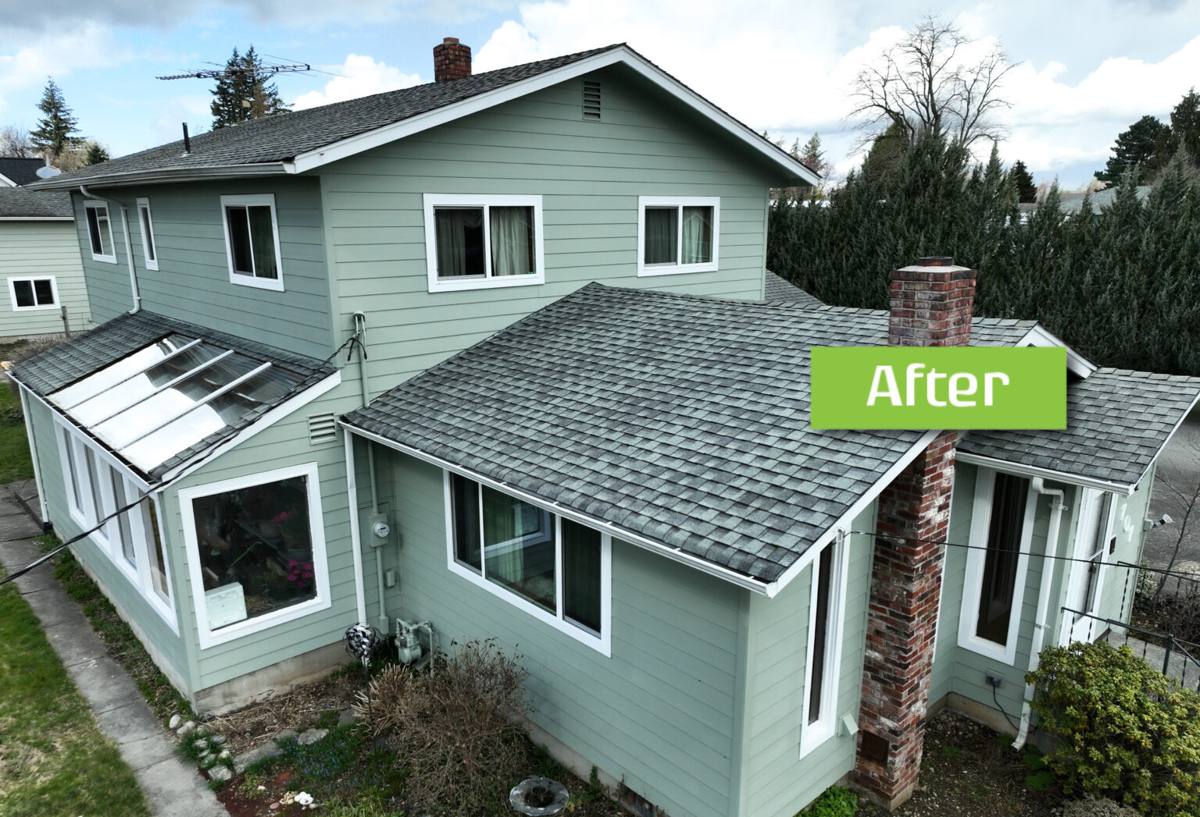
Signs a Ballard Home Needs a New Roof, Not Another Repair
Roof repairs make sense when the damage is isolated and the roof still has useful life left. A full replacement becomes the smarter call once the roofing material itself is wearing out broadly, rather than failing in one or two spots. Here's what we look for when deciding which side of that line a home falls on:
- Shingles that are cupping, curling, or losing granules across large sections of the roof, not just one slope
- Persistent moss growth that keeps returning within a season or two of cleaning
- Soft or spongy decking felt underfoot in the attic, a sign moisture has already gotten past the roofing layer
- Daylight visible through the roof deck from inside the attic
- A roof original to a home built more than 20-25 years ago, especially with standard asphalt shingles
- Repeated leaks around the same chimney, vent, or valley despite prior patch repairs
- Visible sagging along the roofline, which can point to structural issues beneath the roofing material
If a roof is showing two or more of these signs, a patch is usually a short-term fix that delays a replacement rather than avoiding one.
What a Correct Roof Installation Actually Involves
Tear-Off and Deck Inspection
A proper reroof starts with removing the old roofing material down to the deck — not layering new shingles over old ones. Layering hides problems and voids most manufacturer warranties. Once the deck is exposed, it gets inspected for rot, delamination, or soft spots, particularly around chimneys, skylights, and any area where past leaks were suspected. Any compromised decking gets replaced before anything new goes down; skipping this step is one of the most common causes of early roof failure.
Underlayment and Water Barrier
Given how much rain Ballard sees, the underlayment layer matters as much as the visible roofing material. Self-adhered waterproof membrane belongs at eaves, valleys, and around every penetration — the places wind-driven rain is most likely to find a way in. A synthetic underlayment across the rest of the deck provides a secondary water barrier if wind or ice ever gets under the primary roofing material.
Flashing
Flashing around chimneys, skylights, walls, and vent pipes is where most roof leaks actually originate — not in the open field of shingles. New flashing, properly stepped and sealed rather than just caulked over old metal, is a non-negotiable part of a correct installation.
Ventilation
Balanced intake and exhaust ventilation keeps the attic dry and temperature-regulated, which slows moss growth on the roof surface and prevents moisture buildup that rots decking from underneath. This gets covered in more detail below because it's one of the most overlooked parts of a reroof.
Choosing a Roofing Material for Ballard's Weather
There isn't one right answer for every home — the right material depends on the home's style, roof pitch, budget, and how much long-term maintenance the homeowner wants to take on. Here's how the common options stack up against Ballard's specific conditions:
| Material | Moss/Moisture Resistance | Salt Air Durability | Typical Lifespan | Maintenance |
|---|---|---|---|---|
| Architectural asphalt shingles | Good with proper ventilation; needs periodic moss treatment | Good — minimal exposed metal | 25-30 years | Low to moderate |
| Standing seam metal | Excellent — sheds moisture, resists moss | Depends on coating quality; requires corrosion-resistant fasteners near the water | 40-50+ years | Low |
| Synthetic cedar shake | Good — won't rot like real cedar | Good | 30-50 years | Low |
| Low-slope membrane (TPO/EPDM) | Depends heavily on correct seaming and drainage | Good when properly installed | 20-30 years | Moderate — needs periodic inspection |
We steer most Ballard homeowners away from traditional wood shake and toward synthetic alternatives or well-ventilated asphalt or metal systems. Real cedar shake looks great, but in a climate with this much sustained moisture, it demands a maintenance schedule most homeowners underestimate — regular treatment and monitoring to keep it from retaining water and hosting moss and rot. That's a trade-off worth knowing about upfront rather than discovering after the fact.
Ventilation and Moisture Control Deserve Special Attention
Moss doesn't just grow because a roof sits in shade — it grows where moisture lingers. A roof deck that's too warm and humid from poor attic ventilation creates ideal conditions for moss and algae to take hold, even on materials rated to resist them. Correct ventilation balances intake at the eaves with exhaust at or near the ridge, letting air move continuously through the attic space.
This does two things for a Ballard home: it keeps the underside of the roof deck dry, which protects the wood structure, and it keeps the roof surface itself drier and less hospitable to moss. We check existing ventilation on every reroof and correct it as part of the installation rather than leaving an undersized or blocked system in place under new shingles.
Our Installation Process
- On-site inspection and estimate. We look at the current roof, attic ventilation, decking condition, and any problem areas before quoting the job.
- Material selection. We walk through the options above based on the home's style, budget, and how much upkeep the homeowner wants going forward.
- Permitting. Reroofing in Seattle typically requires a permit; we handle that process so it's not left to the homeowner.
- Tear-off and deck repair. Old material comes off, the deck is inspected, and any damaged sections are replaced.
- Underlayment, flashing, and ventilation work. The waterproofing and airflow systems go in correctly before the finish material is installed.
- Installation of the new roofing material. Installed to manufacturer specifications, including proper fastener patterns and exposure.
- Final walkthrough and cleanup. We inspect the completed roof with the homeowner and clear the site of debris and old material.
Why a Crew That Already Works Ballard Matters
Ballard has a mix of older craftsman-style homes, mid-century houses, and newer infill construction, often on tighter lots with mature trees overhead. A crew that regularly works this neighborhood knows what that older housing stock tends to need — decking that may be undersized by current code, ventilation systems that were adequate decades ago but aren't now, and roof lines that back up close to neighboring structures where careful tear-off and material staging matter.
There's also the practical side: familiarity with Seattle's permitting process, an understanding of how weather windows work in this part of King County, and a track record of jobs completed in similar homes nearby. A contractor guessing at these things for the first time on your roof is more likely to miss something a locally experienced crew catches automatically.
What Drives the Cost of a Ballard Reroof
Every roof is priced individually, but the same handful of factors tend to move the cost up or down. Rather than quote numbers that won't reflect your actual home, here's what to weigh:
| Factor | Why It Matters |
|---|---|
| Roof size and number of planes | More square footage and more valleys/hips mean more material and labor |
| Current number of layers | Removing multiple old layers adds tear-off time and disposal cost |
| Decking condition | Rotted or soft decking sections need replacement before new roofing goes on |
| Roof pitch and access | Steeper roofs and tight lot access require more safety setup and time |
| Material choice | Asphalt, metal, and synthetic products carry different material and labor costs |
| Ventilation upgrades | Adding or correcting intake/exhaust vents is worth the added cost long-term |
The only way to get an accurate number is a site visit — anyone quoting a firm price over the phone without seeing the roof is guessing.
After Installation: Keeping Moss and Moisture Under Control
A correctly installed roof still benefits from basic seasonal attention in a climate like this one. Keeping gutters and valleys clear of debris prevents standing water from sitting against the roofing material. A light moss treatment once a year, timed before the wet season sets in, keeps growth from establishing itself in the first place rather than removing it after it's taken hold. Trimming back overhanging branches where reasonable also cuts down on the shade and debris that feed moss growth. None of this is heavy maintenance — it's the difference between a roof that reaches its full lifespan and one that needs early attention because moisture was allowed to sit.
If your Ballard roof is showing its age or you're planning ahead rather than waiting for a leak, we're glad to take a look and walk you through what we see — no pressure, no obligation. Use the form below to request a free estimate.