 Seattle Siding
 Siding Repair Is a Different Job in Wallingford Than It Looks Like
Wallingford is one of Seattle's older, more established residential neighborhoods, and that shows in the housing stock: a lot of craftsman bungalows and early-to-mid-century homes on narrow lots, many shaded by mature trees that have been growing since the houses went up. That combination — older siding systems, big tree canopies, and a wet Pacific Northwest climate — creates a repair environment that's different from a newer subdivision on more open ground. A siding repair here isn't just "find the damaged board and swap it." It's understanding why that board failed in the first place, because in a neighborhood like this, the same conditions that damaged one section are working on the rest of the wall too.
We work throughout Seattle and King County, but a crew that has repaired siding on Wallingford's older homes specifically knows what to expect before the ladder goes up: where moisture tends to collect on these lot layouts, how much moss growth is normal versus a sign of a bigger problem, and how to patch a repair into existing siding without leaving an obvious mismatched scar on a home that's been well cared for.
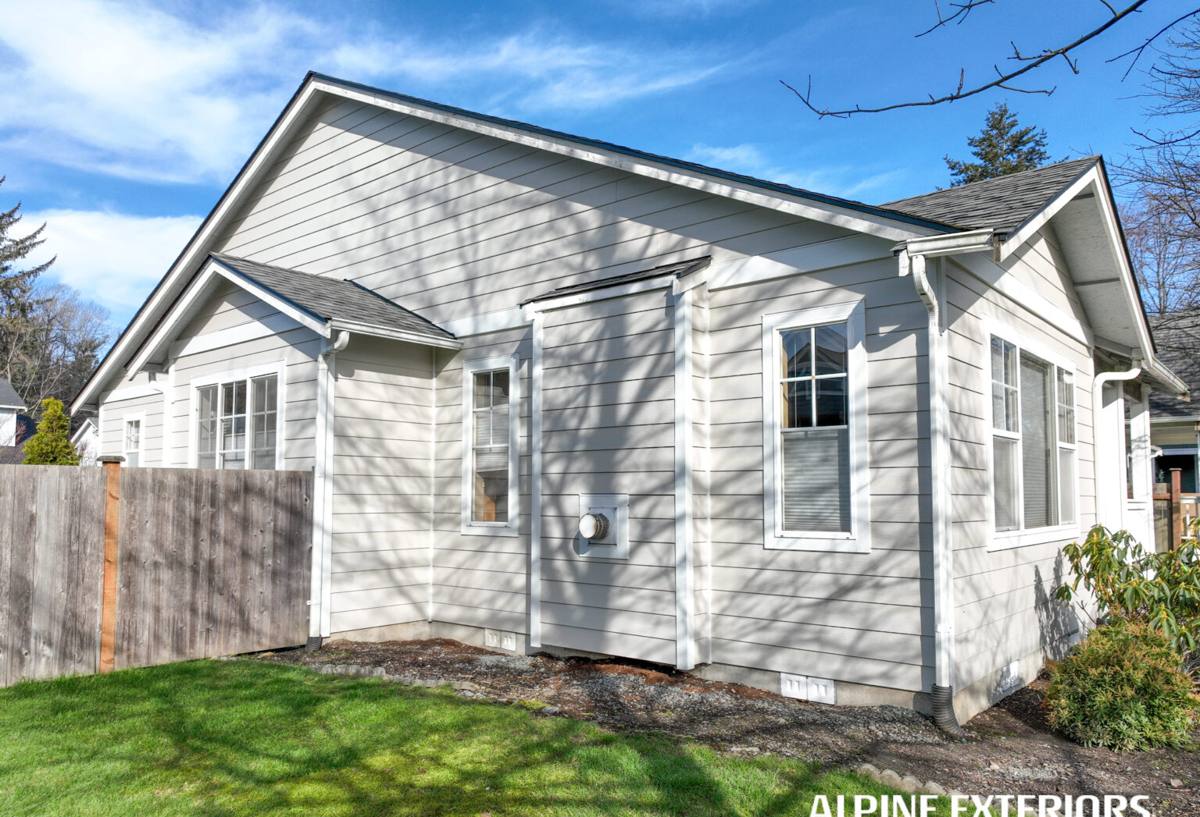
What the Local Climate Does to Siding Over Time
Seattle's siding problems are almost never about a single dramatic event. They're about years of steady, unglamorous exposure. Three factors do most of the damage in this region:
- Driving rain: Wind-driven rain off Puget Sound weather systems doesn't just fall straight down — it gets pushed sideways into seams, laps, and trim joints that were never designed to handle water moving horizontally.
- Long moss season: Cool, damp weather for much of the year means moss and algae get a long runway to establish themselves, especially on north-facing walls and anywhere tree cover keeps a surface from drying out between rain events.
- Extended humidity: Even without rain falling, the air here holds enough moisture that siding rarely gets a long, dry stretch to fully release the water it's absorbed — which matters a lot for wood-based products.
In Wallingford specifically, mature street trees and tightly spaced lots often mean certain wall sections stay shaded and damp longer than the rest of the house. That's usually where we find the earliest signs of trouble: moss creeping up from the bottom of a wall, soft spots near ground level, or paint that's failing faster on one side of the house than the others.
Reading the Damage: Signs Your Wallingford Home Needs Repair
Most homeowners notice siding problems only after they've become visible from the street, but the earlier signs are usually there first if you know where to look:
- Soft, spongy, or crumbling spots when you press on the siding, especially near the bottom of walls or below windows
- Paint that's peeling, bubbling, or repeatedly failing in the same spot no matter how often it's repainted
- Visible gaps, cracks, or separation at seams, corners, and trim joints
- Moss or dark streaking that keeps coming back shortly after cleaning
- Warping, cupping, or boards that no longer sit flat against the wall
- Interior clues — a musty smell, a damp patch on drywall, or peeling interior paint on an exterior wall
Any one of these can be a minor, contained fix. But because moisture problems spread along a wall rather than staying put, we always check adjacent sections before we call a repair "done."
What a Correct Siding Repair Actually Involves
A repair that's done right isn't just about matching the visible surface. It's about what's happening behind it. Our process for a real repair — not a cosmetic patch — includes:
1. Moisture and Substrate Inspection
Before we touch the siding itself, we check what's underneath: the house wrap or weather barrier, the sheathing, and any framing that may have taken on water. Replacing siding over a substrate that's still wet or compromised just hides the problem for a season or two.
2. Identifying the Actual Cause
Damaged siding is often a symptom, not the disease. A failed piece of flashing above a window, a gutter that's been overflowing onto a wall, or a grading issue that keeps a foundation area damp will keep damaging new siding the same way it damaged the old siding — unless it gets fixed as part of the repair.
3. Matching and Blending the Repair
On a well-maintained home, a repair that doesn't blend in is almost worse than the damage itself. That means matching profile, reveal, and color as closely as the product allows, and being upfront with homeowners when an older or discontinued siding can't be matched exactly — so there are no surprises.
4. Proper Flashing and Sealing
Every seam, joint, and penetration point gets flashed and sealed correctly, not just caulked over. Caulk is a maintenance item, not a waterproofing strategy — a repair that relies on caulk alone tends to need to be redone within a few years.
Repair or Replace? How We Help You Decide
Not every damaged section needs a full re-siding job, and not every "small" repair is actually small once you look behind it. We walk homeowners through the real trade-offs rather than defaulting to the most expensive option:
| Factor | Targeted Repair Usually Makes Sense | Full Replacement Usually Makes Sense |
|---|---|---|
| Extent of damage | Isolated to one or two sections | Spread across multiple walls or elevations |
| Underlying moisture | Localized, source identified and fixable | Widespread rot or long-term water intrusion behind the siding |
| Age of existing siding | Siding is still within its useful life | Siding is near or past its expected service life |
| Material match | Product is still available or blends acceptably | Product is discontinued or repairs would be visibly patchwork |
| Home's maintenance history | Well-maintained, isolated issue | Recurring problems across several past repairs |
We'd rather tell a homeowner honestly that a $30,000 replacement isn't necessary yet than sell a job the house doesn't need — and we'd rather tell you a "quick patch" is going to fail again in two years than let you spend money on a fix that won't hold.
Why We Repair and Rebuild With James Hardie Fiber Cement — Not Whatever's Already on the Wall
When a repair calls for replacing a section of siding, we install James Hardie fiber cement, even if the original material on the house is something else. That's a deliberate standard, not a limitation, and it's worth explaining why.
Vinyl siding can crack or warp in a way that's hard to source a matching replacement for years later, since colors and profiles change over time. Cedar and primed spruce look great new, but they're wood — meaning they need consistent repainting and sealing to hold up against the exact driving rain and moss conditions described above, and a repaired section will age differently than the surrounding, already-weathered wood. Engineered wood products like LP SmartSide perform reasonably when properly maintained, but they still rely on that ongoing maintenance discipline to keep moisture out at cut edges and seams — the same vulnerable points a repair often has to reopen. Cemplank and Allura are also fiber cement, and structurally similar to what we install, but we standardized on James Hardie specifically for its factory-applied ColorPlus finish, its climate-engineered HZ product lines built for regions like ours, and the strength of its transferable warranty when installation is done to spec.
Fiber cement doesn't rot, and it isn't a food source for the moss and algae that thrive in this region's damp, shaded conditions the way wood fiber can be. That makes it a material that holds up to a repair-and-blend approach far better than most alternatives, especially on the kind of tree-shaded, moisture-prone walls common throughout Wallingford.
Our Repair Process, Start to Finish
- On-site assessment: We inspect the damaged area and the surrounding siding, not just the spot you called about.
- Diagnose the cause: We identify what let moisture in — flashing, a gutter issue, grading, or a failed seal — so the repair actually holds.
- Written scope and estimate: You get a clear explanation of what's being repaired, what it involves, and why — no vague line items.
- Remove and inspect the substrate: We check the sheathing and weather barrier before closing anything back up.
- Repair or replace with James Hardie: Matched as closely as possible to your home's existing color and profile.
- Final seal and flashing check: Every joint and seam is finished to shed water correctly, not just visually closed up.
Why a Crew That Already Works Wallingford Matters
Siding repair on an older Seattle home isn't a generic task. A crew that regularly works in Wallingford has already seen how homes of this age and layout tend to fail, which walls in this kind of neighborhood typically hold moisture longest, and how to blend a repair into siding that's been up for decades without it looking like an obvious patch job. That local familiarity — combined with King County permitting and code knowledge where a repair crosses into replacement territory — is the difference between a fix that blends in and lasts, and one that becomes next year's callback.
If you're seeing early signs of trouble on a Wallingford home, or you've already got a section that's clearly failing, we're happy to take a look and give you a straight answer about what it needs. Reach out for a free, no-pressure estimate using the form below.