 Seattle Siding
 Why Wallingford Roofs Wear Out Faster Than You'd Expect
Wallingford sits close enough to Lake Union and the Ship Canal that homes here deal with a steady dose of moist, salt-tinged air on top of everything else Seattle throws at a roof. That combination — moisture-laden marine air, driving horizontal rain off Puget Sound storm systems, and a moss season that can run eight or nine months out of the year — is harder on roofing materials than most homeowners realize until they're dealing with a leak.
The salt and moisture in the air accelerate corrosion on exposed metal fasteners and flashing. Driving rain finds any weak point in a roof's water-shedding system, not just where shingles are visibly damaged. And moss doesn't just look bad — it holds water against the roof surface, works its way under shingle tabs, and lifts materials that were otherwise sound. On a lot of Wallingford's older homes, roofs installed decades ago without today's underlayment and ventilation standards are simply outmatched by this climate.
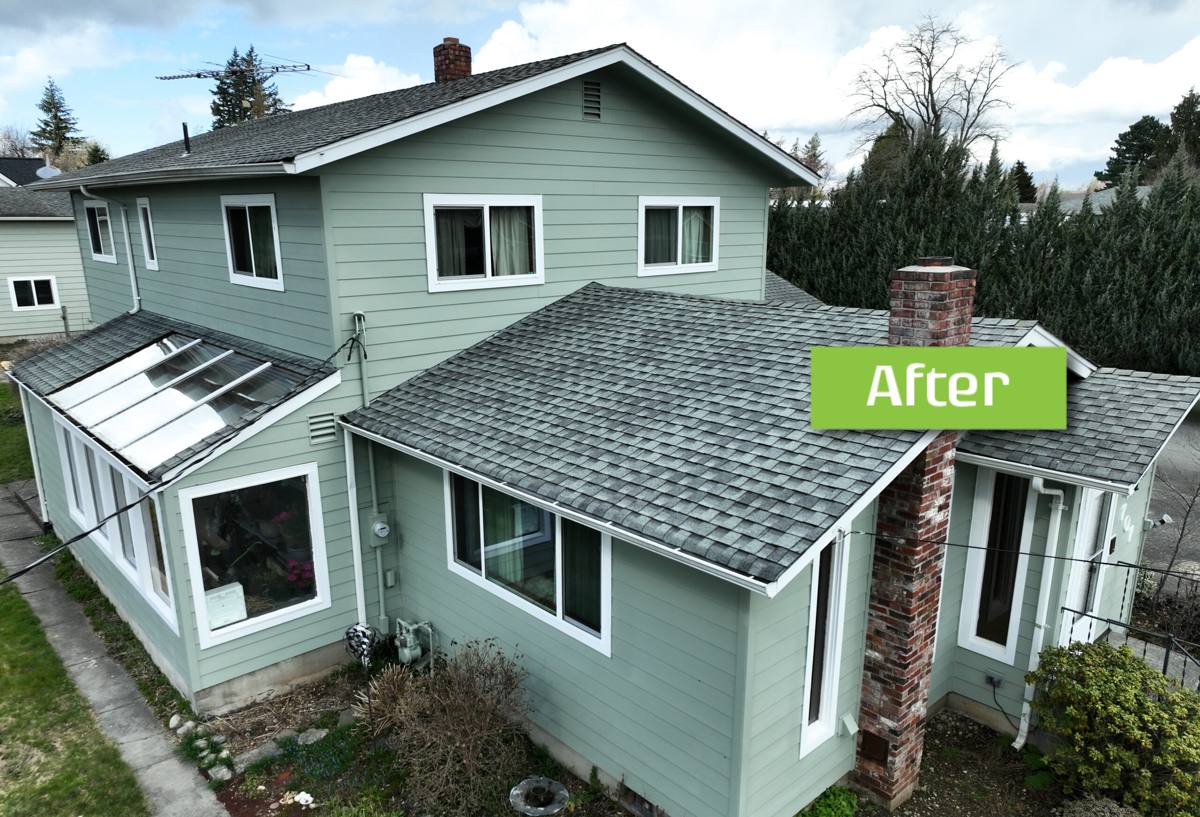
Signs a Wallingford Home Needs a New Roof, Not Another Repair
Repairs make sense when the damage is isolated. A full replacement makes sense when the roof's underlying systems — decking, underlayment, ventilation — are failing as a whole. Here's how to tell which situation you're in:
- Granule loss heavy enough that you're finding grit in gutters and downspouts every season
- Shingles curling, cupping, or cracking across multiple slopes, not just one sun-exposed side
- Soft or spongy decking felt underfoot in the attic, especially near valleys and eaves
- Moss that keeps coming back within a year of cleaning, no matter how carefully it's removed
- Daylight visible through the roof deck from inside the attic
- Interior water stains that show up after wind-driven rain specifically, not steady rain
- A roof that's 20+ years old and has never had underlayment or flashing upgraded
If you're only seeing one or two of these and the roof is under 15 years old, a repair is often the right call. Once several of these stack up together, patching individual spots usually costs more over a few years than doing the job right once.
What a Correct Installation Actually Involves
A new roof is more than laying down new shingles over what's there. Done correctly, it's a full rebuild of the water-management system, and skipping steps here is where most future leaks come from.
Tear-Off and Decking Inspection
We remove the existing roofing down to the deck rather than layering over it. This lets us actually see the plywood or plank decking underneath, catch any rot or delamination from years of moisture intrusion, and replace only the sections that need it — not the whole deck, and not none of it.
Underlayment and Ice-and-Water Protection
In a climate with this much sustained rain, the underlayment matters as much as the shingles themselves. We use synthetic underlayment across the full roof and self-adhering ice-and-water membrane at the eaves, valleys, and around every penetration — the spots where wind-driven rain is most likely to get pushed backward under the shingle layer.
Flashing Details
Chimneys, skylights, sidewalls, and roof-to-wall transitions fail more often at the flashing than at the field of the roof. We install new metal flashing at every one of these points rather than reusing old flashing, since corroded or improperly bedded flashing is one of the most common causes of a "new roof that still leaks."
Ventilation
Proper intake and exhaust ventilation keeps the attic dry and temperature-balanced, which slows moss regrowth on the roof surface and protects the decking from the inside. A lot of older Wallingford homes were built with minimal or blocked ventilation, and we address that as part of the installation rather than leaving it as a separate problem.
Roofing Materials: What Actually Holds Up Here
There's no single "best" roofing material — the right choice depends on your home's style, your budget, and how much long-term maintenance you're willing to take on. Here's an honest comparison for this specific climate:
| Material | Typical Lifespan | How It Handles Wallingford's Climate |
|---|---|---|
| Architectural asphalt shingles | 25–30 years | Best balance of cost and performance; modern algae-resistant granules slow moss and moisture staining significantly |
| Standing seam metal | 40–50+ years | Sheds rain fast and resists moss best of any option, but requires careful fastener and flashing work to manage the marine air's corrosive effect on metal |
| Cedar shake | 20–30 years with upkeep | Traditional look that suits many Wallingford homes, but needs regular treatment and inspection since sustained moisture is exactly what shortens wood roofing's life |
| Synthetic/composite shingles | 30–50 years | Mimics wood or slate appearance with far less moisture sensitivity; a solid option where style matters but upkeep needs to stay low |
We don't push cedar shake as a default in this climate — not because it's a bad product, but because its maintenance schedule (annual treatment, careful moss management, more frequent inspection) is a real commitment homeowners should go in with eyes open about. If you want that look with less ongoing work, synthetic shake products are worth a conversation.
Our Installation Process
- On-site inspection and estimate — we walk the roof and attic, document existing conditions, and give you a written scope before any work starts
- Material selection — we walk through options based on your home's style, budget, and how the roof will actually perform in this climate
- Permitting — we pull the required Seattle permit for the reroof so the job is documented and inspected properly, not just done quietly
- Tear-off and deck repair — full removal of old roofing, deck inspection, and replacement of any compromised sheathing
- Underlayment, flashing, and ventilation installation — the systems that actually keep water out, done before a single shingle goes down
- Roofing installation — new material installed to manufacturer spec, which matters for both performance and warranty coverage
- Final walkthrough — we review the finished roof with you, gutters and downspouts included, before calling the job done
Moss, Moisture, and Keeping a New Roof Performing
A correctly installed roof still needs some basic upkeep in this climate, especially the first few years. This is the routine we recommend to every Wallingford homeowner after installation:
- Clear gutters and downspouts at least twice a year — clogged gutters back water up under the eaves
- Have moss growth removed gently in early spring before it spreads, rather than waiting until it's established
- Trim back overhanging branches that keep the roof surface shaded and damp
- Walk the attic once a year (or have it checked) for any sign of moisture, especially after a hard winter storm
- Avoid pressure washing the roof surface — it can strip granules and shorten shingle life; a soft wash or manual moss removal is safer
What Drives the Cost of a New Roof
Every roof is different, so we don't quote a number until we've actually seen yours, but the main cost factors are consistent:
Roof size and pitch, the number of valleys and penetrations (chimneys, skylights, vents), how much decking needs replacement once we're under the old roofing, the material you choose, and any ventilation or structural upgrades needed to bring an older roof system up to current standards. A straightforward asphalt shingle reroof on a modest single-story home will cost meaningfully less than a steep, multi-valley roof with a metal or synthetic material — and we'll walk you through exactly where your project falls once we've inspected it.
Why a Crew That Already Works in Wallingford Matters
Roofing crews who work across the whole Seattle area learn general roofing skills. Crews who work Wallingford and the surrounding King County neighborhoods regularly learn something more specific — which flashing details actually hold up against this area's driving rain, how aggressive the moss season really is on a given exposure, and how older homes in this part of the city were typically built and vented. That local repetition shows up in fewer callbacks and roofs that perform the way they're supposed to in year eight and year eighteen, not just on install day.
It also means straightforward logistics — permitting through the City of Seattle, scheduling around King County's wetter months, and being reachable if something needs a follow-up look after a big storm.
Get an Honest Look at Your Roof
If your Wallingford roof is showing its age, or you just want a straight answer on whether repair or replacement makes sense, we're glad to take a look. Use the form below to request a free, no-pressure estimate — we'll inspect the roof, explain what we find, and give you options that fit your home and your budget.