 Seattle Siding
 Wallingford's older homes and steep, tree-shaded lots make for a beautiful place to live, but they're tough on an outdoor deck. Between the driving rain off Puget Sound, the shade from mature trees, and a moss season that stretches from fall through spring, a deck here works harder than one in a drier climate ever would. Composite decking has become the go-to answer for homeowners who are tired of stripping, sanding, and re-staining a wood deck every couple of years, and for Wallingford in particular, it solves problems that wood simply can't.
Why Composite Makes Sense in Wallingford
Composite decking is made from a blend of wood fiber and recycled plastic, capped with a protective outer layer that resists moisture, fading, and staining. That combination matters a lot in a neighborhood like Wallingford, where lots are often shaded by mature trees and homes sit close enough together that airflow under and around a deck can be limited. Less airflow means slower drying after rain, and slower drying means more time for moss, algae, and mildew to take hold.
Wood decking depends on a sealed finish to keep water out. Once that finish wears thin — and Seattle's wet season wears it thin fast — the boards start absorbing moisture, swelling, cupping, and eventually rotting from the inside. Composite boards don't have that vulnerability in the same way. The cap layer keeps water from soaking into the board itself, so the freeze-thaw cycles and prolonged damp spells that are normal for King County winters don't cause the same kind of structural breakdown.
What "Moss Season" Does to a Deck
Anyone who's lived in this area for a full year knows what we mean by moss season. From roughly October through March, shaded and low-airflow surfaces stay damp almost continuously, and moss spores that would dry out and die elsewhere get a chance to establish. On a wood deck, moss doesn't just look bad — it holds moisture directly against the board surface, which accelerates rot underneath the growth. On composite decking, moss can still grow on the surface (nothing is completely moss-proof outdoors in this climate), but it isn't feeding on the material or breaking it down. A seasonal cleaning keeps it in check instead of racing against decay.
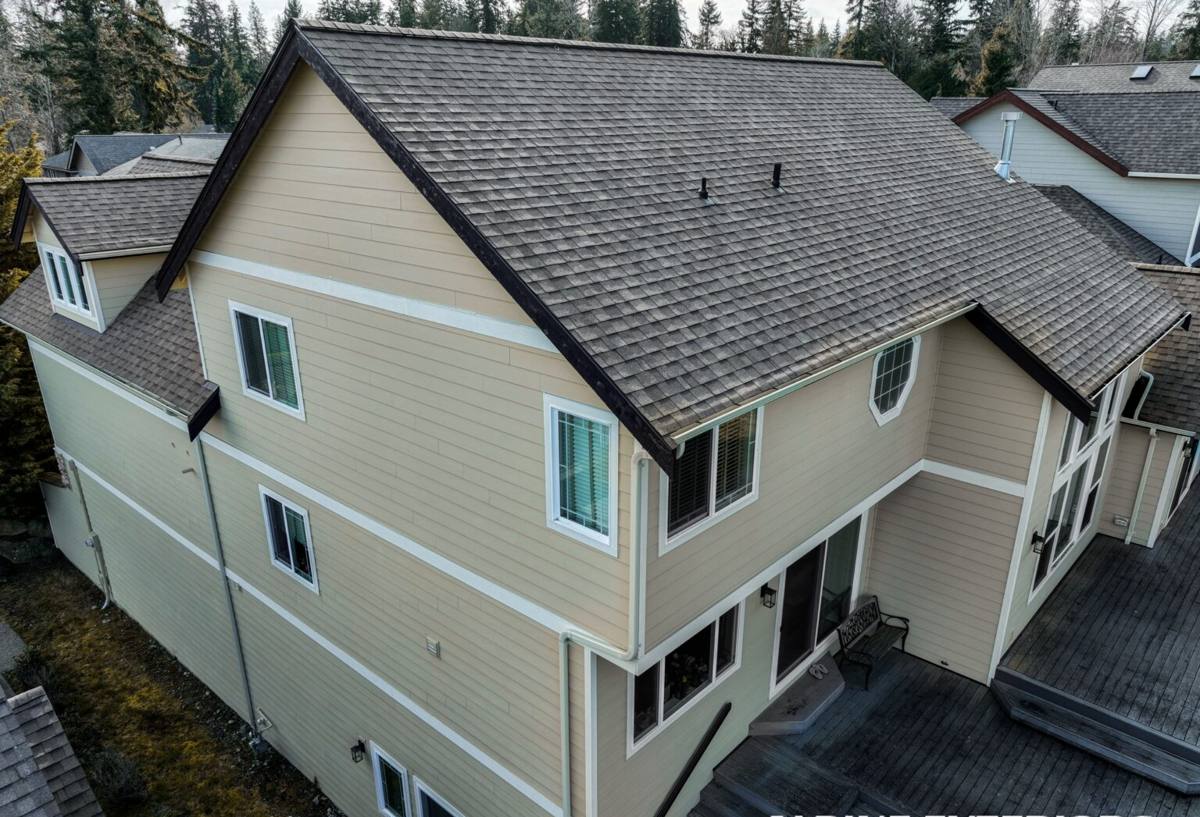
What a Correct Composite Deck Build Involves
A composite deck is only as good as what's underneath it. We see a fair number of decks in this area where the composite boards look fine on top but the substructure was never built to handle our climate, and that's where problems start. A correct build includes:
- Pressure-treated or naturally rot-resistant framing lumber, properly spaced for the specific composite product's load and span ratings
- Joist tape or a comparable flashing membrane over every joist top, so fasteners don't create an open path for water into the wood framing
- Hidden fastener systems or manufacturer-approved screws, spaced correctly for thermal expansion — composite boards move more with temperature swings than wood does
- Proper gapping between boards for drainage and airflow, not just for looks
- Ledger board flashing and proper connection to the house where the deck attaches, sealed against the wall
- Post bases set above grade and connected with proper hardware, not buried directly in soil or concrete
Skipping any of these doesn't show up on day one. It shows up two or three winters later, when water has been finding its way into places it shouldn't for a couple of wet seasons.
Substructure and Drainage Under the Deck
Because so many Wallingford lots have some slope and mature landscaping, drainage under the deck deserves real attention. If water sheets off the deck surface and collects against the house foundation or pools under low-clearance sections, you end up with a damp, shaded microclimate that grows moss and mildew even faster. Where clearance allows, we grade and, when needed, add simple drainage measures under the deck so water moves away from the house rather than sitting there through the winter.
Choosing the Right Composite Board
Not all composite decking is built the same way, and the differences matter more in a wet climate than in a dry one. The two broad categories are capped composite and capped polymer (sometimes called PVC decking). Both hold up well here, but they behave a little differently.
| Factor | Capped Composite | Capped Polymer (PVC) |
|---|---|---|
| Moisture resistance | Very good — cap layer blocks water absorption | Excellent — fully synthetic, no wood fiber core |
| Weight | Heavier, denser feel underfoot | Lighter |
| Heat in direct sun | Moderate | Can run warmer in full sun (less of a factor under Wallingford's tree cover) |
| Typical upfront cost | Mid-range | Higher |
| Long-term maintenance | Occasional wash-down, minimal sealing | Very low — wash-down only |
For most Wallingford homes, especially shaded lots, we lean toward a quality capped composite board — the added density holds up well against the freeze-thaw swings we get most winters, and the price point fits most budgets. On lots with very little shade or a lot of direct afternoon sun, capped polymer is worth considering.
Color and Finish Considerations
Darker composite boards show pollen, tree debris, and water spotting less than very light colors, which is a practical consideration under mature tree canopy. Streaked or multi-tonal color blends also hide the natural variation that comes from leaf litter and seasonal moss more effectively than a single flat color. This is a preference call, not a performance one — but it's worth thinking through before you order material, since colors are hard to change once a deck is built.
Our Installation Process
Every Wallingford composite deck project follows the same basic sequence, adjusted for the specific lot:
- On-site assessment. We look at existing framing (if there's a deck to replace), drainage, sun/shade exposure, and how the deck ties into the house.
- Design and material selection. We walk through board options, railing styles, and layout, factoring in your budget and how the space will actually be used.
- Permitting. Most deck rebuilds and new builds in Seattle require a permit, particularly for elevated structures or anything attached to the house. We handle this as part of the project.
- Demo (if applicable) and framing. Old decking and, where needed, old framing come out; new pressure-treated framing goes in, built to current code and to the composite manufacturer's span requirements.
- Flashing and waterproofing. Joist tape, ledger flashing, and post base protection go in before a single deck board is installed.
- Decking, fastening, and railing installation. Boards are laid with correct gapping and fastened per manufacturer spec; railing is installed to code for height and baluster spacing.
- Final walkthrough. We check the whole deck with you before calling the job done.
Maintenance: What Composite Actually Needs
Composite decking is low-maintenance, not no-maintenance. In a climate like ours, a small amount of seasonal upkeep goes a long way toward keeping a deck looking and performing well for its full service life.
- Sweep off leaves, needles, and debris regularly, especially in fall — trapped organic matter holds moisture against the board
- Wash the deck surface once or twice a year with a soft-bristle brush and mild soap and water; a pressure washer can be used on a low setting but isn't required
- Treat any moss or algae growth promptly with a composite-safe cleaner rather than letting it spread through moss season
- Check gaps between boards each fall and clear out any built-up debris before the wet season sets in
- Keep planters and furniture feet from sitting directly on the deck surface for months at a time without moving them, to allow even drying
What You Won't Need To Do
Unlike a wood deck, you won't be sanding, staining, or sealing a composite deck on any regular schedule. That's the trade-off that makes composite worth the higher upfront material cost for a lot of Wallingford homeowners: the labor and cost of upkeep drop dramatically once the deck is in the ground.
Cost Factors to Expect
Deck pricing depends on size, framing complexity, railing style, and board selection, so we won't quote a number without seeing the site. In general terms, the factors that move the price the most are:
| Factor | Effect on Cost |
|---|---|
| Deck size and shape | Larger and multi-level decks cost more per square foot due to added framing complexity |
| Height off grade | Elevated decks need more structural support and stairs, which adds cost |
| Board tier | Entry-level capped composite costs less than premium capped composite or polymer boards |
| Railing material | Composite or metal railing systems cost more than basic options |
| Site access and demo | Tight lots, sloped yards, or old deck removal add labor time |
Why Hiring a Crew That Works Wallingford Already Matters
A lot of what separates a deck that lasts 25-plus years from one that needs rework in five comes down to details that aren't visible once the project is done — the flashing under the ledger board, the joist tape under the fastener line, the framing spacing matched to the specific board's span rating. Crews that regularly work in Wallingford and the greater Seattle area already know how the local drainage patterns, tree cover, and moss cycle affect a deck over time, because they've seen it firsthand on other jobs in the neighborhood. That local track record means fewer surprises, fewer callbacks, and a build that's already accounted for the conditions your deck will actually face.
It also means we're not guessing at permitting requirements or code details specific to King County jurisdictions — we handle that as a routine part of the job, not a learning curve.
Signs an Existing Deck Needs Attention
If you're not sure whether your current deck needs a repair or a full replacement, a few signs are worth a closer look:
- Soft, spongy spots in wood decking, especially near the house or around post bases
- Persistent moss or algae that comes back within weeks of cleaning
- Visible gaps, rot, or staining at the ledger board where the deck meets the house
- Railing posts that feel loose or wobble under light pressure
- Fasteners that have popped up or rusted through
Any of these can usually be evaluated in a single visit, and it's often possible to tell fairly quickly whether repair or replacement makes more sense for your situation.
If you're weighing options for a deck in Wallingford, we're happy to take a look and walk you through what we'd actually recommend for your lot, your sun exposure, and your budget. Use the form below to request a free, no-pressure estimate.