 Seattle Siding
 Why Capitol Hill Decks Wear Out on Their Own Schedule
Capitol Hill is one of Seattle's oldest and densest neighborhoods, and that shows up in its decks. Many homes here are older craftsman houses, converted rowhouses, and multi-unit buildings with decks that were added or rebuilt at different points over the decades. Lot lines are tight, lots are shaded by mature trees and neighboring structures, and a lot of decks sit close to grade or tuck under overhangs where airflow is limited. That combination of age, shade, and tight siting means Capitol Hill decks often show rot and structural fatigue well before a homeowner expects it, even when the surface boards still look presentable.
A deck that looks fine from the top can be failing underneath. That's the pattern we see most often here: cosmetic wear is minor, but the framing, ledger connection, or footings have already been compromised by years of moisture exposure. Replacement decisions on this kind of deck need to start with the structure, not the decking material.
What Seattle's Climate Actually Does to a Deck
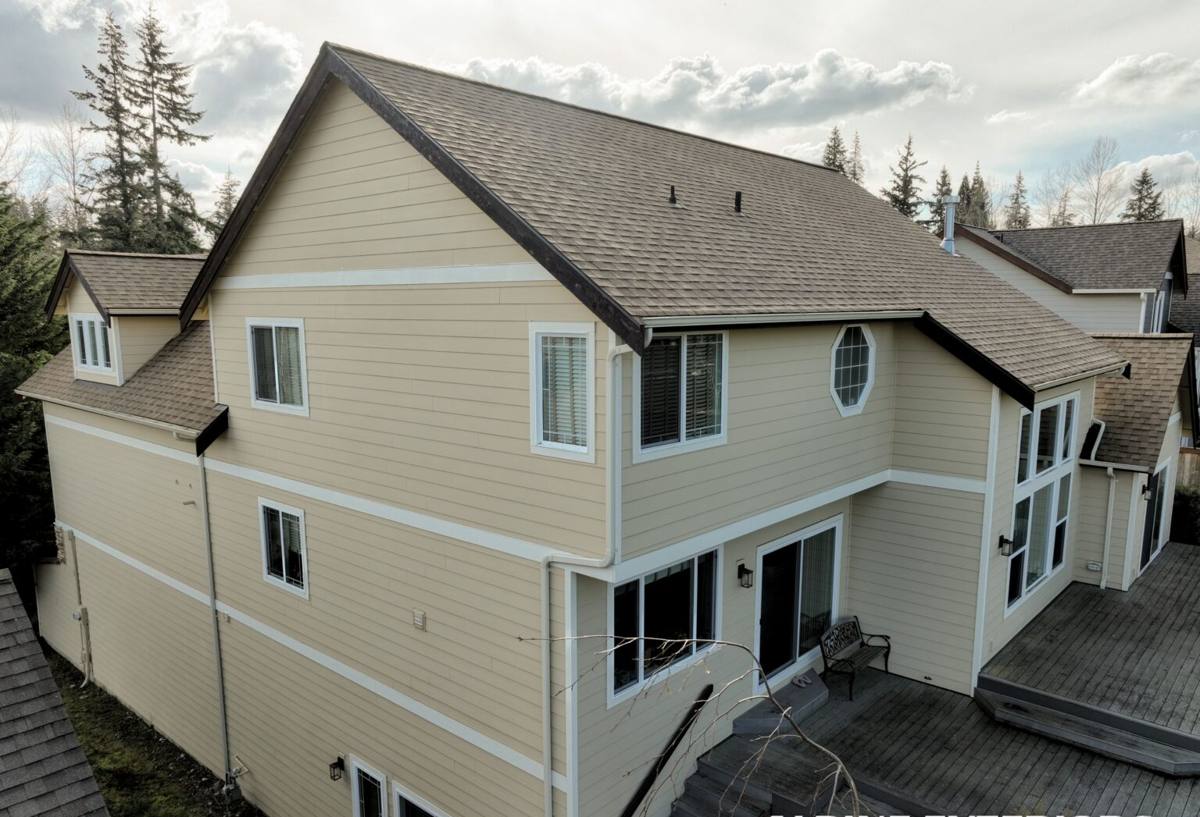
Seattle's marine climate is hard on exterior wood in ways that aren't always obvious until a deck is opened up. Driving rain off Puget Sound drives moisture sideways into ledger boards, railings, and joints, not just straight down onto the deck surface. Salt-laden air moving in off the Sound accelerates corrosion on fasteners, joist hangers, and any exposed metal hardware, which is one of the more overlooked causes of structural failure in older decks. And King County's long, mild, wet stretch from fall through spring gives moss and algae months at a time to establish themselves on shaded boards, stairs, and framing members, holding moisture against the wood far longer than a sunnier climate ever would.
None of this is dramatic or sudden. It's cumulative. A deck built with untreated fasteners, minimal flashing, or tight-to-the-house framing details can look sound for years and then fail all at once when the rot finally reaches a structural member. Replacement is the point where we can correct those original shortcuts, not just repeat them with new boards on top.
Signs a Capitol Hill Deck Needs Replacing, Not Patching
Repair makes sense when the problem is isolated. Replacement makes sense when the problems point back to the structure. Here's how we tell the difference on a walk-through:
- Soft or spongy decking in multiple areas, not just one board
- Rust staining or crumbling around joist hangers and fasteners
- Any give or bounce when walking near the ledger board where the deck meets the house
- Visible gaps, staining, or soft wood at the ledger connection itself
- Moss or algae growth that returns within weeks of cleaning, especially on shaded sections
- Railings that wiggle at the post base rather than just at the top rail
- Footings that are cracked, heaved, or clearly undersized for the deck's height and span
If more than one or two of these show up, the honest answer is usually replacement. Patching a deck with a compromised ledger or failing footings just moves the same problem a few years down the road, and it's money that doesn't carry forward into the new deck.
Choosing a Decking Material for This Climate
There's no single "best" decking material — there's a best material for this house, this amount of sun or shade, and this budget. Here's how the common options actually compare under Seattle's rain-and-moss conditions:
| Material | Moisture & Moss Behavior | Maintenance | Typical Lifespan Here |
|---|---|---|---|
| Pressure-treated wood | Absorbs moisture readily; needs good drainage and airflow to resist moss | Annual cleaning and periodic sealing | 10–15 years with upkeep |
| Cedar | Naturally moisture-resistant but still needs sealing to fight moss in shaded spots | Sealing every 1–2 years | 15–20 years with upkeep |
| Composite decking | Doesn't rot, but shaded boards still need occasional washing to keep moss and algae from staining the surface | Periodic washing, no sealing | 25+ years |
On shaded Capitol Hill lots, we lean toward steering clients away from low-end pressure-treated boards as a primary walking surface, not because the material is bad, but because it demands more upkeep than most homeowners realistically keep up with in a climate this wet. Composite holds up with the least maintenance in shade, though it costs more up front. Whatever surface material you choose, the framing underneath should always be pressure-treated or better, since that's the part that fails first and is expensive to redo later.
Hardware Matters as Much as the Boards
Given the salt air and driving rain this region deals with, we use stainless steel or heavy hot-dip galvanized fasteners and joist hangers on every deck we build, not the standard-grade hardware that's common in drier climates. It costs more per piece. It's not optional here.
What a Correct Deck Replacement Actually Involves
A deck replacement done right is a structural project first and a finish-carpentry project second. Here's what we look at on every job:
The Ledger Connection
This is where the deck attaches to the house, and it's the single most common failure point we find on older Capitol Hill decks. It needs proper flashing that sheds water away from the house framing, correctly sized lag bolts or through-bolts (not just nails), and a gap or flashing detail that keeps water from wicking into the rim joist behind it.
Footings and Posts
Footings need to be sized for the actual load and depth-rated for our frost line, and posts need a base connection that keeps end grain off standing water. On sloped or tight Capitol Hill lots, footing placement often has to work around existing hardscape, property lines, or utility runs, which takes more planning than a flat suburban yard would.
Framing and Airflow
Joist spacing, beam sizing, and clearance underneath the deck all affect how well the structure dries out between rain events. Decks built low to the ground or boxed in tight to the house dry more slowly, so we pay attention to venting and drainage details that a lot of original builds skipped.
Surface and Railings
Once the structure is right, the decking, stairs, and railings go on last — and railings get built to current code height and baluster spacing regardless of what the old deck had, since older Capitol Hill homes often predate the railing codes in place today.
Permits and the Realities of Working on Capitol Hill Lots
Most deck replacements in Seattle require a permit, particularly when the deck is elevated, attached to the house, or being rebuilt rather than simply re-decked at the same footprint and height. We handle that paperwork as part of the job rather than leaving it to the homeowner.
Access is the other Capitol Hill-specific factor. Narrow side yards, shared driveways, on-street parking, and close-set neighboring homes are the norm here, and material staging and demolition debris removal have to be planned around that from day one. A crew that hasn't worked this neighborhood before tends to underestimate how much longer a job takes when there's nowhere to stage a dumpster or run a lift.
Our Process, Start to Finish
- On-site evaluation — we check the ledger, framing, footings, and drainage, not just the surface boards, and tell you honestly whether repair or replacement makes sense.
- Material and layout discussion — we walk through decking options against your sun/shade exposure, budget, and how much upkeep you actually want to do.
- Permit and planning — we pull the necessary permit and plan access and staging around your specific lot.
- Demolition and disposal — the old deck comes out and old fasteners and framing are inspected as they're exposed, not assumed to be fine.
- Structural rebuild — ledger, footings, framing, and hardware go in to current code, sized for this climate.
- Decking, stairs, and railings — final surface materials and railings are installed and finished.
- Final walkthrough — we review the completed deck with you and go over basic maintenance before we consider the job done.
Maintaining a New Deck Through King County Winters
A well-built deck still needs some ongoing attention in this climate. A short annual routine keeps moss and moisture from undoing the work:
- Sweep leaves and debris off the deck surface and out of gaps between boards regularly through fall
- Rinse or gently power-wash shaded areas each spring before moss gets a foothold
- Check and re-seal wood decking on the manufacturer's recommended schedule
- Look at the ledger flashing and any gaps between the deck and the house once a year
- Confirm gutters and downspouts near the deck are draining away from the structure, not onto it
- Check railing posts and stair stringers for movement at the base each year
Why Local Experience in Capitol Hill Matters
A deck built to a generic spec sheet, without accounting for Seattle's rain patterns, salt air, and moss season, tends to show problems within a handful of years. A crew that already works this neighborhood knows which details — ledger flashing, hardware grade, footing depth, drainage under shaded sections — actually matter here versus in a drier part of the country, and knows how to work around tight lots and limited access without turning the job into a two-week disruption. That's the difference between a deck that needs attention again in five years and one that holds up through a couple of decades of King County winters.
If your deck is showing any of the signs above, or you're just not sure whether it needs repair or full replacement, we're happy to take a look. Fill out the form below for a free, no-pressure estimate — we'll give you a straight answer on what your deck actually needs.