 Seattle Siding
 Building a Deck That Actually Holds Up in Wallingford
Wallingford's mix of early-1900s bungalows, Craftsman remodels, and newer infill homes all share one problem when it comes to outdoor living space: Seattle's climate is hard on wood and hard on anything that traps moisture against it. A deck built here has to handle nine months of intermittent rain, a real moss season, and the salt-tinged air that drifts in off Puget Sound and Lake Union. A deck design that works fine in a dry climate can start failing within a few years in King County if it wasn't built with drainage, ventilation, and material choice in mind from the start.
We build and rebuild decks for homes in Wallingford and the surrounding Seattle neighborhoods, and most of the repair calls we get aren't from decks that were poorly built in an obvious way — they're from decks that skipped a few details that don't matter in a dry climate but matter enormously here. This page walks through what a deck actually needs to survive and stay usable in this specific climate, what a correct build looks like, and how we approach the work.
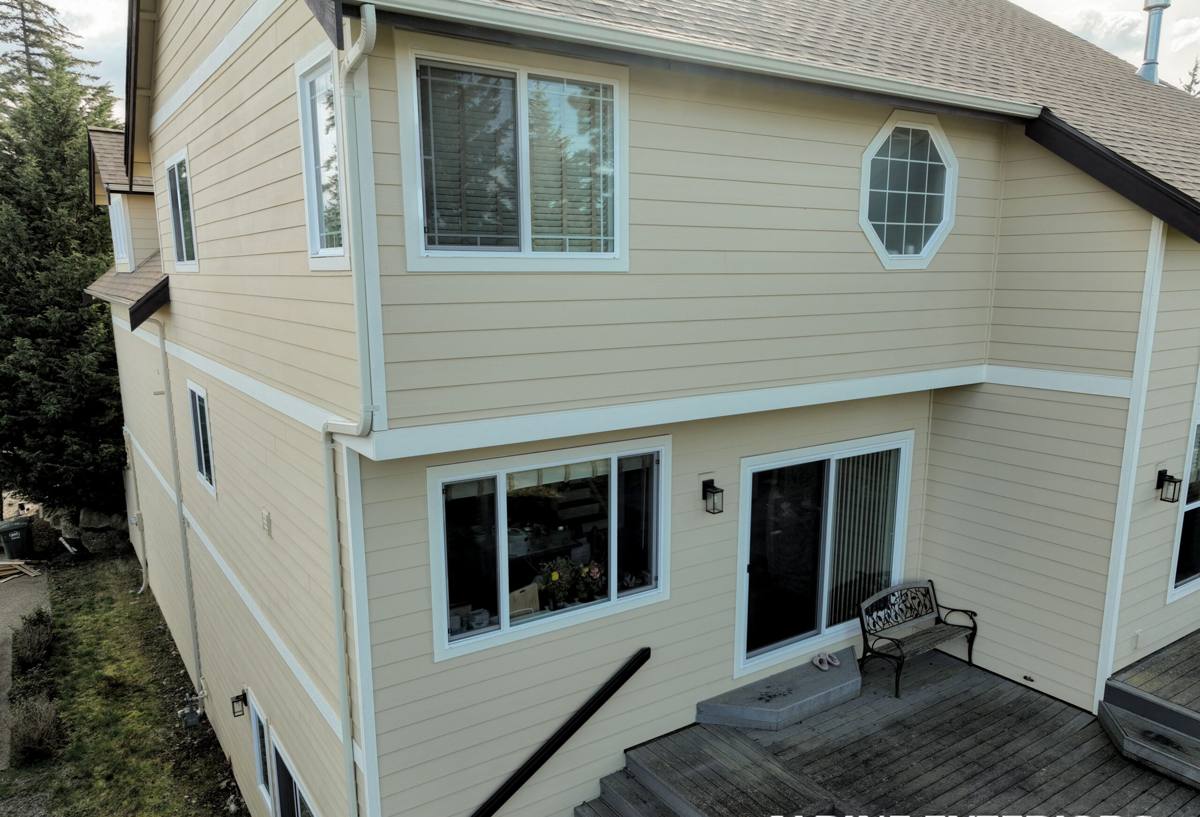
What the Local Climate Does to a Deck
Driving rain and standing water
Seattle doesn't get the heaviest rainfall totals in the country, but it gets frequent, prolonged, wind-driven rain — the kind that gets pushed sideways under railings and into joints rather than falling straight down. Over time, that pattern finds every gap in flashing, every unsealed fastener hole, and every spot where two boards meet without a drainage path. Water that can't shed quickly sits in end grain and connection points, which is where rot starts.
Moss and organic growth
Wallingford's tree canopy and the region's long damp season create ideal conditions for moss, algae, and lichen to take hold on horizontal wood surfaces. Moss isn't just cosmetic — it holds moisture against the decking board like a wet sponge, which accelerates decay in wood and creates a slick, unsafe walking surface long before it looks like a serious problem.
Marine air and metal fasteners
Being close to salt water means the air carries more moisture and mineral content than an inland city would. Standard fasteners, brackets, and hardware corrode faster here than manufacturer literature (often written for a national average climate) would suggest. Under-spec hardware is one of the most common hidden failure points we find on older Seattle decks.
Freeze-thaw cycling, mild but real
King County doesn't get extreme winters, but it does get enough freeze-thaw cycling each year to open up small cracks in improperly sealed wood and concrete footings. Repeated over a decade, that's enough to loosen connections that were only marginally tight to begin with.
What a Correctly Built Deck Needs Here
None of this means a deck in Wallingford has to be over-engineered — it means a handful of specific details need to be right, because this climate won't forgive shortcuts the way a drier one might.
- Footings sized and set below frost depth, on undisturbed or properly compacted soil — Seattle's clay-heavy soils shift more than people expect when saturated
- Structural connections using corrosion-resistant, coated or stainless hardware rated for outdoor and coastal-influenced exposure
- A ledger board attachment with proper flashing that directs water away from the house rim joist, not into it
- Joist tape or a similar moisture barrier on top of framing members so decking fasteners don't create a wick point for water into the joist
- Decking gaps sized correctly for the material, allowing water to shed and air to circulate underneath
- Adequate under-deck ventilation and clearance from grade so the framing can dry out between rain events
- A drainage plan for the ground beneath the deck, so water doesn't pool and stay damp against the posts
Choosing the Right Decking Material for This Climate
There isn't one "correct" decking material for every Wallingford project — it depends on budget, how much upkeep the homeowner wants to do, and how the space will be used. What matters is being honest about the trade-offs each option carries in a wet, mossy climate.
| Material | How it handles our climate | Maintenance reality |
|---|---|---|
| Pressure-treated lumber | Affordable and structurally solid when detailed correctly, but softwood surfaces need protection to resist moss and moisture absorption | Needs periodic cleaning and re-sealing/staining to keep water resistance up |
| Cedar | Naturally more rot- and insect-resistant than most softwoods, ages well outdoors, but still an organic surface moss can colonize if it stays damp | Benefits from occasional cleaning and a protective finish to hold its color and shed water |
| Composite decking | Doesn't absorb water or rot the way wood does, and resists moss better on the surface, though it still needs airflow underneath to manage moisture in the structure below | Low upkeep on the boards themselves; periodic washing to clear surface grime and organic buildup |
| PVC decking | Fully synthetic and highly moisture-resistant on the surface; performance still depends on correct substructure ventilation and drainage | Minimal maintenance, mainly routine cleaning |
Whatever decking material a homeowner chooses, the framing underneath and the drainage details around it matter more to long-term performance than the decking surface itself. A high-end composite deck built on a poorly ventilated, poorly flashed structure will still develop problems in the framing, even if the boards on top look fine.
Our Process for a Wallingford Deck Project
1. On-site assessment
We look at the site's grade, drainage patterns, existing structure if it's a rebuild, sun and shade exposure, and how close the deck sits to mature trees or shrubs that will drop debris and hold moisture. Wallingford's older lots often have established landscaping that affects how a deck needs to be designed for airflow and access.
2. Design and material conversation
We talk through decking material, railing style, and layout based on how the space will actually be used, along with a straightforward look at the maintenance each choice involves. We'd rather set honest expectations up front than have a homeowner surprised by upkeep two years in.
3. Permitting
Most new decks and many substantial rebuilds in Seattle require a permit, particularly when structural framing, footings, or height above grade are involved. We handle the permitting process as part of the project so the work is documented and inspected correctly.
4. Framing and structural work
This is where the climate-specific details we outlined above get built in — footing depth, ledger flashing, hardware selection, joist protection, and ventilation. This stage is the one that's invisible once the deck is finished, and it's the one that determines whether the deck lasts 10 years or 30.
5. Decking, railing, and finish work
Once the structure is sound, we install the decking material, railings, stairs, and any finish work like fascia or skirting, always leaving the airflow paths the substructure needs.
6. Final walkthrough
We walk the finished deck with the homeowner, cover basic care for the specific material installed, and answer questions about what routine maintenance should look like given Wallingford's rain and moss season.
Repair, Rebuild, or Replace: How to Tell
Not every deck problem means starting over. Some issues are isolated and fixable; others are signs the structure needs a full rebuild. A quick way to think about it:
- Soft or spongy decking boards in isolated spots, with a solid structure underneath — usually a decking-only repair
- Persistent moss or slick surfaces even after cleaning — often a sign of poor drainage or airflow, worth a professional look even if the boards seem intact
- Rust staining around fasteners or visibly corroded hardware — a signal the original hardware wasn't rated for this climate, and connections should be inspected
- Soft spots at the ledger board, or gaps where the deck meets the house — a potential flashing failure, which should be addressed quickly since it can affect the house structure itself, not just the deck
- Wobble or movement in railings or posts — a structural issue that needs evaluation before the deck is used again
Maintenance That Actually Extends a Deck's Life Here
A well-built deck in Wallingford still needs some seasonal attention given the local climate. The goal isn't constant upkeep — it's a few well-timed tasks that prevent moisture and organic growth from getting a foothold.
- Clear leaves and debris regularly, especially in fall, so organic material doesn't sit and hold moisture on the decking
- Address moss as soon as it appears rather than letting it establish, since it's much easier to remove early
- Keep gutters and downspouts near the deck functioning properly, so roof runoff isn't adding extra water onto or under the deck
- Check railings, stairs, and visible hardware once a year for looseness or corrosion
- Reapply sealant or finish on wood decking on the schedule appropriate to that specific product, rather than waiting until it visibly fails
Why Local Experience on This Specific Work Matters
A deck built to a generic national spec sheet can still fail here in ways that surprise homeowners, because the spec sheet wasn't written with Puget Sound rain patterns, King County soils, or a real moss season in mind. A crew that already works in Wallingford and the greater Seattle area knows which details are non-negotiable in this climate versus which are optional in drier regions — and builds accordingly, without over-selling unnecessary upgrades or under-building the parts that matter.
If you're planning a new deck, replacing an aging one, or just want an honest opinion on whether your current deck needs repair or replacement, we're glad to take a look. Reach out for a free, no-pressure estimate using the form below.