 Seattle Siding
 Siding Installation Built for Bellevue's Weather, Not Just Its Curb Appeal
Bellevue sits on the Eastside of King County, across Lake Washington from Seattle, and it shares the same marine climate that defines the whole Puget Sound region: mild temperatures, long wet winters, and moisture that lingers in the air for months at a stretch. Homes here don't deal with hard freezes or hurricane-force wind the way other parts of the country do, but they take a slower, steadier kind of punishment — driving rain that finds every gap, humid air that carries salt and moisture off the Sound, and a moss season that can run from fall through spring on anything shaded or north-facing. Siding that isn't installed correctly for this climate doesn't usually fail dramatically. It fails quietly, behind the wall, until a homeowner finds soft trim, a musty smell, or paint that won't stop peeling.
That's the real job of a siding installation in Bellevue: not just covering the house, but managing water. The product matters, but the installation matters just as much — flashing, drainage gaps, fastening patterns, and joint details are what decide whether a house stays dry for the next 30 years or starts showing problems in five.
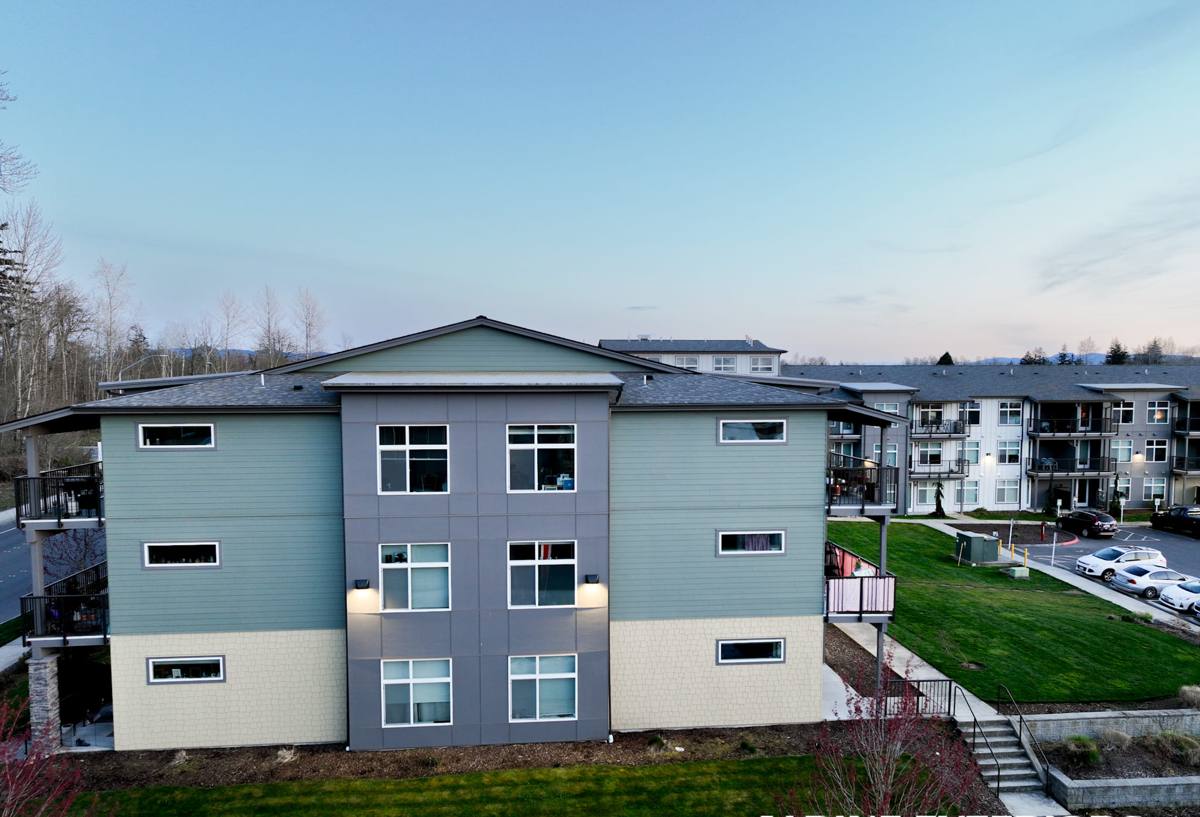
What Bellevue's Climate Actually Does to a House
Understanding the failure modes helps explain why we install the way we do:
- Sustained rain, not just heavy rain. Bellevue gets long stretches of steady, low-intensity rain rather than short violent storms. That means siding and the water-resistive barrier behind it are wet far more days per year than in most of the country — any weak point gets tested repeatedly.
- Moss and algae growth. Shaded walls, north-facing elevations, and areas under tree canopy stay damp long enough for moss and algae to take hold on siding that can't dry out or that has a finish that traps moisture against the substrate.
- Marine air and moisture-laden wind. Air moving inland off the Sound carries humidity and salt content that accelerates corrosion on unprotected fasteners and metal flashing, and keeps wood-based products at a higher moisture content longer than drier climates would.
- Wide grade of sun exposure across a single house. A Bellevue home might have a south wall baking most of the summer and a north wall that barely dries between rains — siding and installation details need to perform in both conditions on the same structure.
None of this is exotic — it's standard Puget Sound weather. But it means a siding installation copied from a drier climate's playbook will underperform here, even if the product itself is good.
What a Correct Siding Installation Involves
The Water-Resistive Barrier and Drainage Plane
Everything starts before the siding goes on. A properly installed weather-resistive barrier, lapped correctly and integrated with window and door flashing, is what actually keeps bulk water out of the wall assembly. In a climate that stays wet as long as Bellevue's does, we also build in a drainage gap behind the siding so any moisture that does get past the outer layer can drain and the wall can dry out between rain events, rather than staying damp against the sheathing.
Flashing at Every Penetration
Windows, doors, vents, hose bibs, light fixtures, and deck ledgers are the places siding installations most often fail — not the flat wall sections. Each penetration needs its own flashing detail, installed in the correct shingle-lap order so water moving down the wall is always directed outward, never trapped behind the siding.
Fastening and Joint Detail
Fiber cement siding has specific fastener spacing, embedment depth, and clearance requirements from the manufacturer. Joints need proper gapping and sealing (or a rain-screen detail that doesn't rely on caulk at all), and cut edges need to be sealed and primed before they're closed up. This is the part of the job that's invisible once the house looks finished, and it's also the part that determines whether the siding is still doing its job in year 20.
Why We Install Only James Hardie Fiber Cement
We don't install vinyl siding, LP SmartSide or other wood-strand composite products, or unfinished cedar and primed spruce. That's a deliberate standard, not a sales pitch, and it's worth explaining honestly.
Vinyl siding is inexpensive and low-maintenance in mild climates, but it's a thin plastic product that can warp with heat, crack in cold snaps, and simply can't be finished in the deep, saturated colors many Bellevue homeowners want — dark colors absorb heat that vinyl isn't rated to handle. Wood-strand composite products like LP SmartSide use engineered wood with a resin binder; they perform reasonably well when kept sealed and dry, but any breach in that seal — a missed caulk joint, a chip at a cut edge — lets moisture into the wood fiber, and in a climate as wet as ours for as long as ours stays wet, that's a real long-term risk. Unfinished wood siding is beautiful but demands a maintenance schedule most homeowners don't keep up with, and it's the material most susceptible to the rot and moss issues this climate is known for.
James Hardie fiber cement is cement, sand, and cellulose fiber — it doesn't rot, it isn't a food source for moss or insects, and it's non-combustible. Hardie's ColorPlus factory finish is baked on under controlled conditions rather than field-painted, which means better adhesion and color consistency over the life of the product than a job-site paint job can match. Hardie also engineers specific product lines (their HZ5 designation) for climates like ours, with formulations suited to the moisture exposure Bellevue actually sees. It's not the cheapest siding option up front, and it's heavier and more particular to install correctly than vinyl — but installed to spec, it's the product we're willing to put our name behind for the next 30 years.
Comparing Siding Options for a Bellevue Home
| Factor | Vinyl | Wood-Strand Composite | James Hardie Fiber Cement |
|---|---|---|---|
| Moisture tolerance | Doesn't absorb, but seams and gaps let water behind it | Vulnerable if the factory seal is breached | Doesn't rot or absorb moisture into a wood substrate |
| Moss/algae resistance | Can host growth on shaded, unwashed surfaces | Moderate; growth risk increases if surface stays damp | Resistant; cement substrate doesn't feed organic growth |
| Fire resistance | Melts/deforms under heat exposure | Combustible | Non-combustible |
| Finish/color options | Limited; dark colors risk warping | Field-applied paint, needs upkeep | Factory-baked ColorPlus finish, wide palette |
| Typical lifespan when installed correctly | 20-30 years | 20-30 years with diligent maintenance | 30-50+ years |
| Warranty structure | Prorated, product-only | Prorated, product-only | Non-prorated product warranty; transferable |
Our Installation Process for Bellevue Homes
- On-site assessment. We look at the existing wall assembly, current siding condition, moisture damage if any, and the specific exposure of each elevation — shaded north walls get treated differently than sun-exposed south walls.
- Tear-off and substrate inspection. We remove the existing siding down to the sheathing and check for hidden rot or moisture damage before anything new goes on. Problems found here get fixed, not covered up.
- Weather-resistive barrier and drainage plane installation. Correctly lapped, sealed, and integrated with window and door flashing before a single piece of siding is hung.
- Flashing at every penetration. Windows, doors, vents, and any wall-mounted fixtures get individual flashing details in the correct order.
- Hardie siding installation to manufacturer spec. Correct fastener type, spacing, and clearance; properly gapped and sealed joints; sealed cut edges.
- Final inspection and cleanup. We walk the job with the homeowner before calling it finished.
What Affects the Cost of a Bellevue Siding Installation
Every home is different, so we won't quote a number without seeing the house, but the main cost drivers are consistent:
| Factor | Why it matters |
|---|---|
| Square footage and wall complexity | More corners, gables, and dormers mean more cutting, flashing, and labor time |
| Condition of the existing substrate | Sheathing repair or rot remediation adds cost but is not optional if found |
| Hardie product line and profile | Lap siding, shingle-style panels, and board-and-batten each price differently |
| Trim and accessory work | Fascia, soffits, and trim boards are often replaced alongside siding for a consistent result |
| Access and site conditions | Multi-story walls, tight lot lines, or landscaping obstacles affect labor time |
Signs a Bellevue Home Needs New Siding
- Visible warping, buckling, or gaps between siding panels
- Persistent moss or algae staining that returns quickly after cleaning
- Paint that's peeling, bubbling, or won't hold on repainted sections
- Soft or spongy spots when pressed, especially near the bottom of walls or below windows
- A musty smell near exterior walls or rising utility bills suggesting lost insulation value
- Visible daylight or drafts around siding seams and trim
Why Hiring a Crew That Already Works in Bellevue Matters
Siding installation isn't a one-size-fits-all trade. A crew that regularly works Eastside homes already understands how sun exposure, tree cover, and elevation vary block to block in Bellevue, and how that changes the details on a given job — where a drainage gap matters most, which walls need extra attention to moss resistance, how local permitting and inspection processes run. That local familiarity shows up in fewer surprises during the job and a longer-lasting result once it's done.
It also matters for accountability. A local, established crew is the one you can call five or ten years from now if a question comes up — not a name from an out-of-area subcontractor list.
If your Bellevue home needs new siding, or you're not sure whether what you have is holding up the way it should, we're happy to take a look. Reach out for a free, no-pressure estimate using the form below — we'll walk the house with you and give you a straight answer, not a sales pitch.