 Seattle Siding
 Why University District Homes Put Extra Demands on Siding
University District sits under one of Seattle's heaviest tree canopies, with mature maples, cedars, and evergreens shading long stretches of the neighborhood's craftsman bungalows, Tudor revivals, and older multi-family rentals near campus. That shade is part of what makes the neighborhood attractive, but it also means siding here dries out slower than siding on an open, sun-exposed lot. Add in King County's wet season, which stretches for months, and you get walls that stay damp longer, moss and algae that establish faster, and older wood or composite siding that shows rot years before it would in a drier part of the region.
We've worked on enough homes in this stretch of Seattle to know the pattern: siding fails first on the north and east-facing walls, behind foundation plantings, and anywhere gutters have been overflowing onto the wall below. A generic siding job that ignores those realities ends up needing repairs again within a few years. A correct job accounts for them from the start.
The Regional Climate Factors That Matter Most
Driving Rain
Seattle's rain rarely falls straight down. Storms moving in off Puget Sound frequently push rain sideways against west and south walls, forcing water up under laps and around trim if the flashing and drainage details aren't right. Siding that looks fine from the street can still be taking on water behind the surface.
Salt Air
Homes throughout the Puget Sound region deal with a low, steady level of salt air moving in off the water, which accelerates corrosion on fasteners, flashing, and any metal trim components. It's a slower process than what you'd see on a beachfront home, but over 15-20 years it adds up, especially where the wrong fastener material was used the first time around.
Moss Season
King County's moss season effectively runs from fall through spring. Combined with U District's shade cover, north-facing and tree-shaded walls can stay damp enough to grow moss and algae for a large part of the year. Moss holds moisture against the siding surface, and on wood-based products that moisture eventually works its way into the substrate.
What a Correct Fiber Cement Installation Involves
Fiber cement siding is only as good as the installation behind it. The board itself resists moisture, fire, and pests, but the assembly around it is what actually keeps a U District home dry through the wet season. A correct installation includes:
- A drainage gap (rainscreen) behind the siding so any moisture that gets past the surface can drain and the wall can dry
- A weather-resistant barrier installed and lapped correctly, shingle-style, so water sheds down and out rather than behind the barrier
- Properly flashed windows, doors, and roof-to-wall intersections — the most common failure points on older Seattle homes
- Corrosion-resistant fasteners, set to the manufacturer's pattern and depth rather than however is fastest
- Correct caulking and paint-grade sealing at butt joints and trim, using products rated for the assembly, not just what's on the truck
- A siding product engineered for the Pacific Northwest's moisture exposure, not a general-climate version
Skipping any one of these doesn't show up on day one. It shows up in year three or four, when moisture that should have drained instead sat behind the boards.
Why We Install James Hardie, Specifically
We install James Hardie fiber cement exclusively. We don't install LP SmartSide, vinyl, Cemplank, Allura, or unfinished wood siding, and we're upfront about why: Hardie's HZ5 product line is engineered specifically for climates like ours, with moisture and impact performance built around Pacific Northwest conditions rather than a one-size-fits-all national spec. The factory-applied ColorPlus finish is baked on and warranted against fading and cracking, which matters on a shaded U District lot where a job-site paint finish would be fighting damp conditions before it even cures.
Hardie is non-combustible, which matters given Washington's more frequent wildfire-season smoke events, and the company backs the product with a strong transferable warranty — useful in a neighborhood with a fair amount of rental and resale turnover. We've seen enough of the alternatives fail in this exact climate that we simply don't offer them anymore. That's a standard we hold across every job, not a sales pitch on this one.
Siding Options Compared for University District's Conditions
| Factor | James Hardie Fiber Cement | Vinyl | Engineered Wood (LP-type) | Cedar / Wood |
|---|---|---|---|---|
| Moss & algae resistance | High — non-porous, cement-based | Moderate — can trap moisture behind panels | Moderate — vulnerable at cut edges | Low — organic material, needs regular treatment |
| Performance in driving rain | Strong when installed with proper drainage plane | Can allow water intrusion at seams over time | Sensitive to prolonged moisture exposure | Sensitive; needs consistent maintenance |
| Finish durability | Factory ColorPlus finish, warranted | Color molded in, can fade/chalk | Field-applied or factory finish varies | Requires repainting/staining every few years |
| Fire resistance | Non-combustible | Combustible | Combustible | Combustible |
| Typical lifespan when installed to spec | Multiple decades | Decades, but fades/warps sooner | Shorter if moisture gets past the coating | Shortest without diligent upkeep |
Our Installation Process for University District Homes
- On-site assessment. We look at the whole envelope — existing siding condition, trim, window flashing, gutter performance, and how much shade and moss exposure each wall actually gets.
- Removal and sheathing check. Old siding comes off and we inspect the sheathing underneath for rot or moisture damage before anything new goes up. On older U District homes, this step sometimes turns up problems that were hidden for years.
- Weather barrier and flashing. We install the water-resistive barrier and flash every penetration — windows, doors, vents, roof lines — correctly the first time.
- Rainscreen installation. A drainage gap goes in behind the siding so the wall assembly can dry rather than trap moisture.
- Hardie siding installation. Boards and trim go up to manufacturer fastening specs, in the profile that fits the home's style.
- Sealing and finish work. Caulking, touch-up, and a final walkthrough so every joint and edge is sealed against driving rain.
- Cleanup and haul-away. Old siding and job-site debris are removed; we don't leave that for the homeowner to deal with.
Matching the Product to U District's Housing Stock
The neighborhood's mix of craftsman bungalows, Tudor-influenced homes, and early-to-mid-century construction calls for different Hardie profiles depending on the house. HardiePlank lap siding is the right fit for most craftsman and traditional homes, giving a clean horizontal reveal that matches the original look. HardieShingle staggered-edge panels suit homes with shingle-style gable accents or Tudor detailing where the original design called for a textured look. HardieTrim handles fascia, corner boards, and window surrounds in a material that won't rot the way the original wood trim often does.
If your home was built before the 1980s, there's also a real chance an earlier layer of siding contains asbestos, which was common in siding products of that era. We handle that assessment and any necessary precautions as part of the removal process rather than treating it as a surprise mid-project.
Signs a University District Home Needs New Siding
- Persistent moss or dark streaking on north- or tree-shaded walls that returns shortly after cleaning
- Soft spots, bubbling, or visible warping, especially near ground level or under windows
- Paint that's failing faster than it should, or won't hold a fresh coat
- Gaps at seams, trim, or corners where caulking has failed
- Rising energy bills that suggest the wall assembly is no longer insulating or sealing the way it should
- Visible rot or a soft, spongy feel when you press on the siding near the foundation
Why Hiring a Crew That Already Works University District Matters
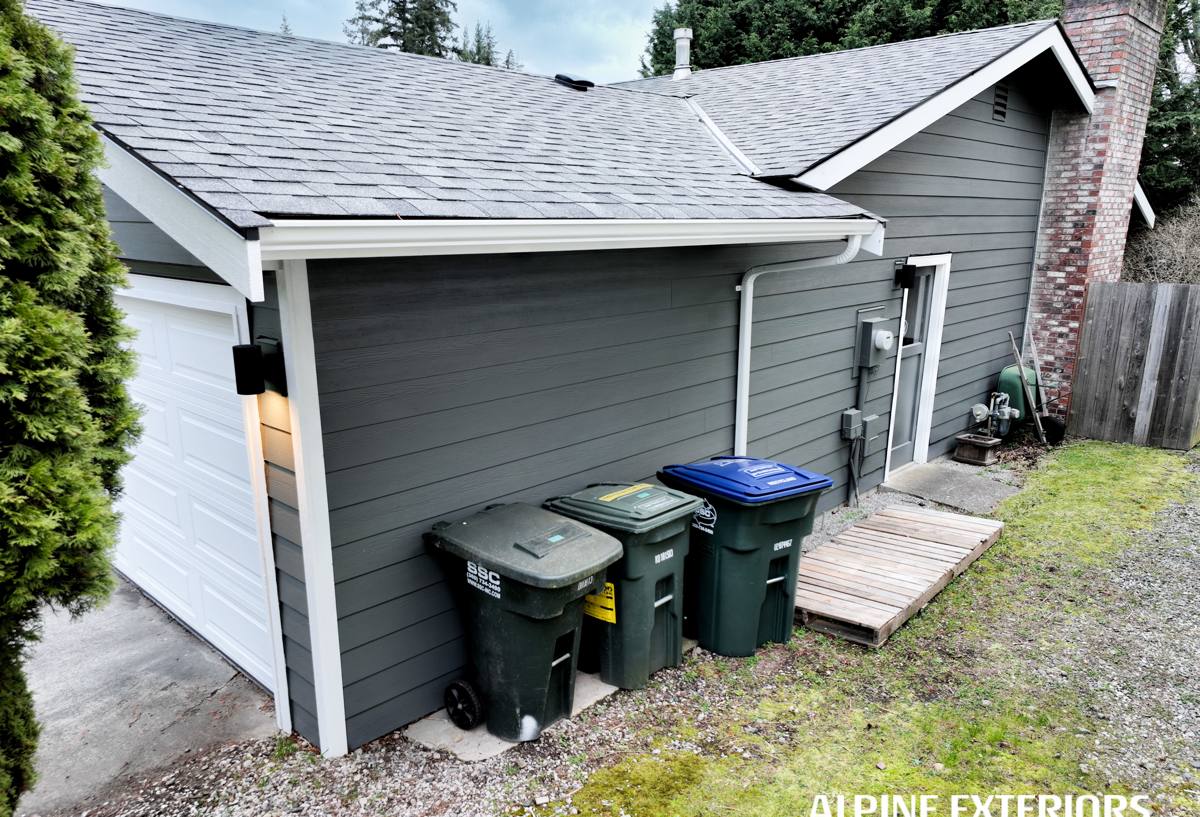
Siding installation isn't identical from neighborhood to neighborhood, even within the same city. A crew that regularly works University District knows which walls tend to hold moisture longest under the tree cover, how Seattle's permitting and inspection process applies to exterior work on older homes, and what to expect once the old siding comes off a house of this age. That familiarity shows up in fewer surprises mid-project and a finished job built for the conditions the house will actually face, not a generic install dropped into a demanding climate.
If you're weighing your options for a home in University District, we're happy to walk the property with you, look at what's actually going on with your current siding, and lay out what a correct James Hardie installation would involve for your specific house. There's no pressure and no cost to have that conversation — just a straight assessment from a crew that knows this neighborhood's conditions well. Fill out the form below to schedule a free estimate.