 Seattle Siding
 Siding Built for How Columbia City Actually Weathers
Columbia City sits in one of Seattle's older, established neighborhoods, with plenty of mature tree canopy shading yards and rooflines for much of the year. That shade is part of what gives the area its character, but it also means siding here deals with less direct sun to dry things out between rain events. Add King County's long wet season, driving rain that comes in sideways off storms, and the low-grade salt air that reaches inland from Puget Sound, and you have a climate that is genuinely hard on exterior materials. Siding in this part of Seattle isn't just cosmetic — it's the first line of defense against moisture that has months, not days, to work on a wall.
We install James Hardie fiber cement siding exclusively, and Columbia City is a good example of why. This is a climate where the wrong material, or the right material installed wrong, shows its weaknesses fast: streaking, soft spots, moss creep at the bottom courses, paint failure at seams. A correct Hardie installation is engineered to handle exactly this kind of exposure.
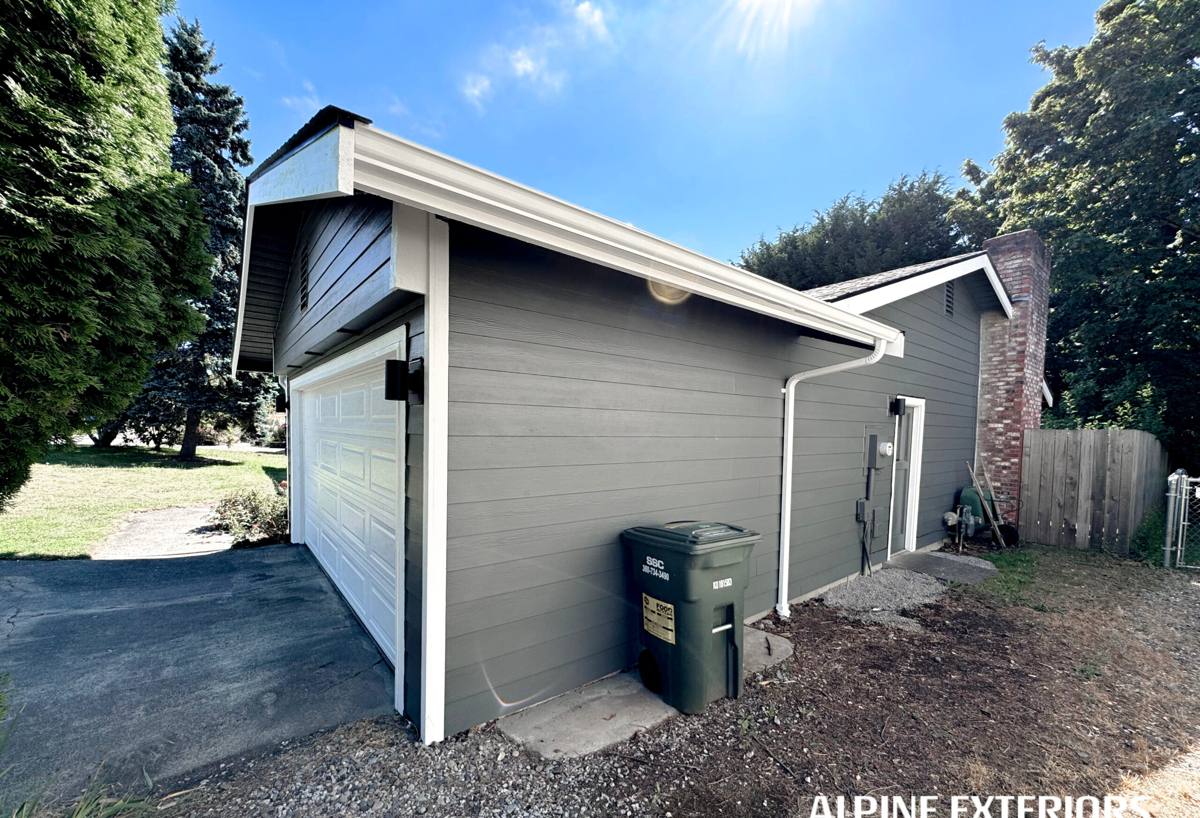
What This Climate Does to Exterior Walls
Moss and Persistent Moisture
Seattle's moss season isn't a few weeks — it's most of the year in shaded, moisture-retaining spots. Moss holds water against a wall long after the rain has stopped, which is exactly the condition that rots wood-based siding and softens weaker composite products. Fiber cement doesn't feed moss growth the way wood fiber products can, and it doesn't swell or degrade from the prolonged dampness moss traps against a wall.
Driving Rain and Wind-Driven Water
Storms off the Sound frequently push rain sideways rather than straight down, forcing water into joints, laps, and penetrations that a calmer climate would never test. This is less about the siding material itself and more about the assembly behind it — flashing, weather-resistive barrier, and lap coverage all have to be right, because wind-driven rain will find any gap in the system.
Salt Air Corrosion
Columbia City isn't waterfront, but Seattle's marine air carries salt further inland than people expect, and it accelerates corrosion on fasteners, trim metal, and lower-quality coatings over time. Hardie's factory-applied ColorPlus finish and the corrosion-resistant fastening details we use are chosen specifically to hold up under that kind of long-term exposure, rather than relying on field-applied paint that has to be maintained to keep working.
Why James Hardie Is the Right System for This Climate
James Hardie fiber cement is cement, sand, and cellulose fiber — it does not have the organic wood content that feeds rot and moss, and it's non-combustible, which matters given Seattle's wildfire-smoke summers and the general fire-safety benefit for any home. For Pacific Northwest exposure, Hardie's HZ5 product line is engineered specifically for moisture-prone, high-humidity climates like ours — different from the HZ10 line built for freeze-thaw regions. Using the climate-matched product line isn't a marketing detail; it changes how the board handles moisture cycling over its life.
The ColorPlus factory finish also matters more here than in drier climates. A factory-baked finish resists fading and moisture intrusion at the surface far better than field-applied paint, and it comes with its own finish warranty separate from the substrate warranty. In a neighborhood where siding sees rain most months of the year, that finish is doing real work, not just providing color.
What a Correct Installation Involves
Most siding failures we get called out to inspect in this climate aren't material failures — they're installation failures. Fiber cement is unforgiving of shortcuts specifically because it's designed to manage water at the assembly level, and every step skipped is a point where water gets in and stays in. A correct job includes:
- A continuous weather-resistive barrier behind the siding, lapped correctly with no gaps at seams or penetrations
- Proper flashing at every window, door, and roof-to-wall intersection — the majority of moisture intrusion starts here, not in the field of the wall
- Correct minimum lap coverage between courses, per Hardie's published installation specs, not shortened to save material
- Fasteners driven to the correct depth and spacing — over-driven or under-driven nails are one of the most common causes of premature siding problems
- Proper clearance from grade, decks, and roof lines so the bottom course isn't sitting in standing water or splash-back
- Factory-cut and factory-primed edges wherever possible, with any field cuts sealed per manufacturer spec
Skip any one of these and the siding itself can be flawless while the wall behind it still takes on water. This is why installation quality matters as much as product choice — arguably more, in a climate that rains as much as this one does.
Our Process for Columbia City Homes
We start with a walk-around assessment of the home — checking existing siding condition, moisture damage at trim and penetrations, and any drainage issues at grade that would undermine a new installation regardless of material. From there we scope the tear-off, sheathing repair if needed, weather barrier installation, and the Hardie install itself, using the HZ5 profile and ColorPlus finish appropriate to the home and the client's preferences.
Because we work this climate regularly, we don't treat the weather barrier and flashing details as an afterthought behind the "real" work of hanging boards — for a Seattle install, that hidden work is the difference between a wall that holds up for decades and one that has problems in five years. We also sequence work around the wet season realistically rather than rushing exposed sheathing through a storm window, since a rushed install in bad weather is how corners get cut without anyone noticing until later.
Comparing Siding Options for This Climate
Homeowners in Columbia City often ask how James Hardie stacks up against the other materials commonly offered in this market. Here's an honest comparison focused on how each performs under Seattle's specific conditions, not generic marketing claims.
| Factor | James Hardie Fiber Cement | Vinyl Siding | Wood-Based / Engineered Wood Siding |
|---|---|---|---|
| Moisture and moss resistance | No organic content to feed moss or rot; engineered HZ5 line for wet climates | Doesn't rot, but can trap moisture behind panels if installed loose or without proper drainage | Organic wood fiber content is more vulnerable to prolonged moisture and moss growth |
| Fire resistance | Non-combustible cement-based material | Combustible; can melt or deform near heat sources | Combustible |
| Finish durability in wet climate | Factory ColorPlus finish resists fading and moisture at the surface | Color is through the material but can fade and become brittle over time | Requires ongoing field paint or stain maintenance to keep water out |
| Installation sensitivity | Requires correct spec (lap, fastening, flashing) — very forgiving once done right | Simpler install but can buckle or warp with temperature swings and poor fastening | Sensitive to moisture during and after install; edges need diligent sealing |
| Typical maintenance | Periodic wash and caulk check; repaint cycle is long due to factory finish | Low maintenance but limited repair options if panels crack or fade unevenly | Regular repainting or staining needed to maintain the moisture barrier |
None of these materials are without trade-offs, and each has legitimate uses. Our decision to install only James Hardie comes down to how the material and its climate-matched product lines perform specifically in wet, moss-prone, marine-air conditions like Columbia City's, combined with a warranty structure that transfers with the home.
Maintenance and What to Expect Long-Term
A correctly installed Hardie system in this climate is low-maintenance, not no-maintenance. Homeowners should still plan on an occasional gentle wash to keep organic buildup from starting in shaded or north-facing areas, a periodic look at caulking around trim and penetrations, and prompt attention to anything that looks like a gutter or drainage issue nearby, since standing water against any siding material eventually causes problems. What homeowners generally don't need to plan on is repainting the field of the siding on a short cycle, since the factory finish is built to hold color and resist moisture far longer than field-applied paint.
Why Hiring a Crew That Already Works Columbia City Matters
Siding installation isn't one-size-fits-all across Seattle, let alone across the broader Puget Sound region. A crew that regularly works this specific climate has already seen where wind-driven rain tends to find weak assemblies, how much clearance really matters given how wet grade stays here, and how shaded, tree-covered lots change moss exposure compared to a more open, sunny lot elsewhere in the same city. That familiarity shows up in the details — flashing choices, sequencing around the wet season, and not treating every home the same regardless of its exposure.
It also matters for follow-through. A local crew is accountable locally: reachable if a question comes up after the job, familiar with local permitting expectations, and not disappearing after the invoice is paid. For a material like James Hardie that depends heavily on correct installation to deliver its full lifespan, that accountability is part of what you're actually paying for.
What to Ask Before Hiring Anyone for Siding Work in This Area
- Are they a certified or experienced James Hardie installer, and can they explain why they chose HZ5 for this climate specifically?
- Will they detail the weather-resistive barrier and flashing plan before the first board goes up, not just describe the siding itself?
- Do they account for existing moisture damage, moss staining, or drainage issues during the initial assessment, rather than siding over problems?
- Is the warranty they describe a manufacturer warranty, a workmanship warranty, or both — and is it transferable if the home sells?
- Do they have a realistic plan for sequencing work around wet-season weather rather than rushing exposed walls through a storm?
Get a Straightforward Estimate
If you're weighing a siding replacement or repair in Columbia City, we're happy to take a look and give you an honest assessment — what your home actually needs, what a correct James Hardie installation would involve, and a clear estimate with no pressure to decide on the spot. Reach out using the form below to schedule a free estimate.