 Seattle Siding
 Building Decks for Kirkland's Climate, Not a Catalog
Kirkland sits on the eastside of Lake Washington in King County, inside the same wet, mild, marine-influenced weather pattern that shapes the whole Puget Sound region. That means a deck here doesn't fail the way a deck fails in Arizona or Ohio. It fails from the ground up and from the top down at the same time: standing moisture at ledger boards and post bases, driving rain that gets pushed sideways by wind off the lake and the Sound, and a moss and algae season that can run eight or nine months out of the year on shaded, north-facing structures. A deck built from a generic national plan, without those specifics in mind, tends to show problems inside two or three winters — soft spots, dark staining, slippery surfaces, and fasteners that bleed rust through the decking. A deck built for this specific climate holds up for decades. That difference is the entire point of this page.
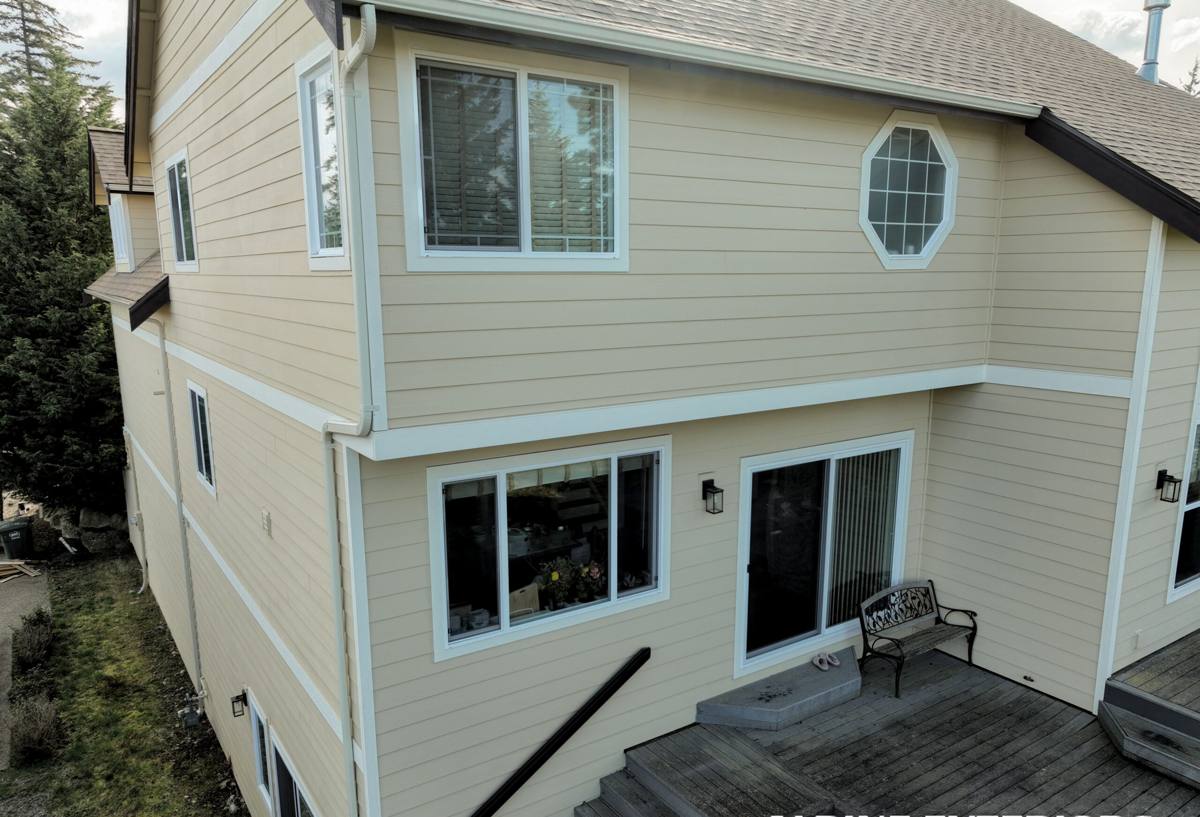
What Kirkland's Weather Actually Does to a Deck
Driving Rain and Constant Dampness
Our rain isn't usually a downpour — it's long, low-intensity, wind-driven rain that finds its way into every horizontal surface, gap, and fastener hole over time. On exposed or elevated decks, wind can push that rain sideways under railings and into ledger connections, which is exactly where rot starts if flashing and waterproofing weren't done correctly the first time.
Moss, Algae, and Shade
Kirkland has plenty of mature tree cover and plenty of homes with decks facing north or tucked under overhangs. Combine that shade with our long damp season and you get moss and algae growth on wood and composite decking alike. Beyond looking bad, moss holds moisture against the surface and creates a genuinely slick, dangerous walking surface for a good chunk of the year.
Freeze-Thaw Cycling
We don't get deep, sustained freezes like the Midwest, but we do get repeated light freezes followed by thaw, especially overnight in late fall and winter. Water that's soaked into end grain, fastener holes, or a poorly sealed post base expands and contracts through that cycle, which slowly opens up cracks and loosens connections in wood that wasn't detailed correctly.
What a Correctly Built Deck Needs Here
None of this is exotic — it's about getting the fundamentals right for our specific conditions, every time, instead of skipping steps that don't show up as a problem until year three or four.
- Ledger board flashing that actually sheds water away from the house rim joist, not just a bead of caulk
- Post bases set above grade with proper drainage beneath them, never buried in dirt or mulch
- Joist tape or a comparable moisture barrier on top of framing lumber before decking goes down
- Corrosion-resistant, code-rated fasteners and structural hardware rated for exterior, wet-climate use
- Decking gaps sized correctly for drainage and for the specific material's expansion behavior
- Grading and drainage planning underneath and around the deck so water has somewhere to go
- Railing and stair connections built to current King County and Kirkland structural requirements
Choosing a Decking Material for This Climate
There's no single "best" decking material — there's a best material for your budget, your home's exposure, and how much maintenance you actually want to do. Here's how the common options actually perform under Kirkland's rain-and-moss conditions.
| Material | How it handles our climate | Maintenance reality |
|---|---|---|
| Pressure-treated lumber | Solid structural performance if detailed well; surface is still wood, so it absorbs moisture and grows moss in shade | Needs cleaning and re-sealing every 1-2 years to look and perform its best |
| Cedar | Naturally more rot- and insect-resistant than most softwoods, but still an organic surface exposed to constant damp | Regular cleaning, occasional sealing, watch for graying and moss in shaded spots |
| Composite decking | Resists rot and moisture absorption much better than solid wood; some early-generation composites were prone to surface mold in constant shade | Low — periodic washing, no staining or sealing required |
| PVC / capped composite | Fully sealed surface handles our wet season very well; least susceptible to moisture-driven damage | Lowest — occasional rinse or wash is typically enough |
For homes with a lot of shade or a north-facing deck footprint — common on many Kirkland lots with mature landscaping — we lean toward recommending composite or capped composite decking, not because wood is a bad product, but because it removes the moss-and-moisture maintenance cycle almost entirely. For sunnier, more exposed decks, quality wood remains a perfectly reasonable choice as long as the owner is realistic about upkeep.
Design Considerations Specific to Kirkland Properties
Slopes and Multi-Level Lots
A lot of Kirkland's terrain rolls toward Lake Washington or sits on hillside lots with a meaningful grade change from the house to the yard. That often means taller support posts, additional footings, and sometimes a multi-level deck design rather than a single flat platform. Taller structures need extra attention to bracing and post connections, since wind load and structural load both increase with height.
Permits
Most new decks and significant deck rebuilds in Kirkland require a permit through the City of Kirkland, and the threshold is usually tied to deck height above grade and whether it's attached to the house. We handle the permit and inspection process as part of the build rather than leaving it to the homeowner to figure out.
Views and Privacy
Where a deck faces open water or a view corridor, railing choice matters — cable or glass rail systems preserve sightlines but require different hardware and maintenance planning than a standard wood or composite baluster railing. Where privacy from close neighbors is the priority, we can plan screening or partial walls into the design from the start rather than bolting something on afterward.
Our Process for a Custom Deck Build
- On-site assessment. We walk your yard, look at grade, drainage, sun and shade exposure, and how the deck will connect to the house.
- Design and material selection. We talk through layout, decking material, and railing options based on your budget and how much upkeep you want going forward.
- Permitting. We prepare and submit what the City of Kirkland requires and schedule inspections at the right points in the build.
- Site prep and framing. Footings, posts, and framing go in with the flashing, drainage, and hardware details this climate demands.
- Decking, railing, and finish work. Surface material, railings, stairs, and any lighting or built-ins are installed and inspected.
- Final walkthrough. We go over care and maintenance specific to the material you chose so there are no surprises down the road.
Keeping a Kirkland Deck in Good Shape Year-Round
A well-built deck still needs some seasonal attention in a climate this wet. This isn't a sales pitch for a maintenance contract — it's honestly just what keeps any deck material performing the way it's supposed to.
- Sweep leaves and debris off the surface regularly in fall, especially between deck boards where they trap moisture
- Wash the deck surface at least once or twice a year to remove moss, algae, and organic buildup before it stains or gets slick
- Check railing posts and stair connections annually for looseness — a sign moisture may be working on the hardware beneath
- Keep gutters and downspouts near the deck clear so roof runoff isn't dumping extra water onto or under the structure
- Reseal wood decking on the manufacturer's recommended schedule rather than waiting until it visibly grays
- Trim back overhanging branches to cut down on shade-driven moss growth and leaf litter
What Drives the Cost of a Custom Deck
Every deck is different, so we're not going to hand you a fake per-square-foot number that doesn't mean anything until we've seen your yard. What we can tell you is what actually moves the price up or down.
| Factor | Why it affects cost |
|---|---|
| Decking material | Pressure-treated lumber costs less upfront than composite or PVC, but has a different long-term maintenance cost |
| Height and number of levels | Taller structures and multi-level designs need more framing, footings, and stair work |
| Site access and grade | Steep or hard-to-access lots take more labor to get materials and equipment where they need to be |
| Railing type | Standard railing costs less than cable, glass, or custom architectural railing systems |
| Permit and structural complexity | Larger footings, engineered connections, or unusual spans add design and inspection time |
Why It Matters That We Already Work in Kirkland
A crew that regularly builds and repairs decks across Kirkland and the greater Seattle area already knows how King County and City of Kirkland permitting actually works in practice, not just in theory. We know how this specific climate — the moss, the driving rain, the long damp stretches between May and October when it feels like it should be dry but isn't quite — actually behaves on a finished deck a few years out, because we've gone back and seen it. That's different from a crew that builds mostly in a drier climate and treats Pacific Northwest weather as an afterthought. Local experience shows up in the small decisions: how flashing gets lapped, how post bases get drained, which decking gaps hold up to our specific rain pattern, and which shaded corners of a lot are going to need a lower-maintenance material regardless of what the homeowner originally had in mind.
If you're planning a new deck or need to replace one that's showing its age, we're glad to come take a look and walk you through honest options for your property — no pressure, no obligation. Use the form below to request a free estimate.