 Seattle Siding
 Kirkland's Climate Puts Real Demands on Exterior Siding
Kirkland sits along Lake Washington in King County, and that setting shapes what siding has to survive here. Homes get a steady dose of marine air moving through the Puget Sound region, long stretches of overcast wet weather in fall and winter, and shade from mature trees that keeps siding damp longer than it would stay in a drier climate. None of this is dramatic on any single day. It's the accumulation over years that separates a siding job that holds up from one that starts failing at the seams.
Lake Effect Humidity and a Long Moss Season
Proximity to Lake Washington keeps humidity elevated on many Kirkland lots, especially on north-facing walls and anywhere tree canopy blocks direct sun. That combination is exactly what moss, algae, and mildew need to establish themselves on an exterior wall. Once organic growth gets a foothold on siding, it holds moisture against the surface far longer than bare material would, which accelerates whatever the siding is prone to in the first place — swelling, delamination, or paint failure, depending on the product. A siding material and installation detail that sheds water quickly and dries fast is not optional in this environment; it's the baseline requirement.
Wind-Driven Rain and Marine Air
Storms coming off the Sound don't just fall straight down — wind pushes rain sideways into wall assemblies, particularly on exposed second stories and gable ends. Regional marine air also carries a low but steady salt content that, over enough years, contributes to corrosion on fasteners and trim that weren't specified for coastal-influenced conditions. Siding installation in Kirkland has to account for both: water that's actively being driven into the wall, not just falling on it, and hardware that won't quietly corrode behind the cladding where nobody can see it happening.
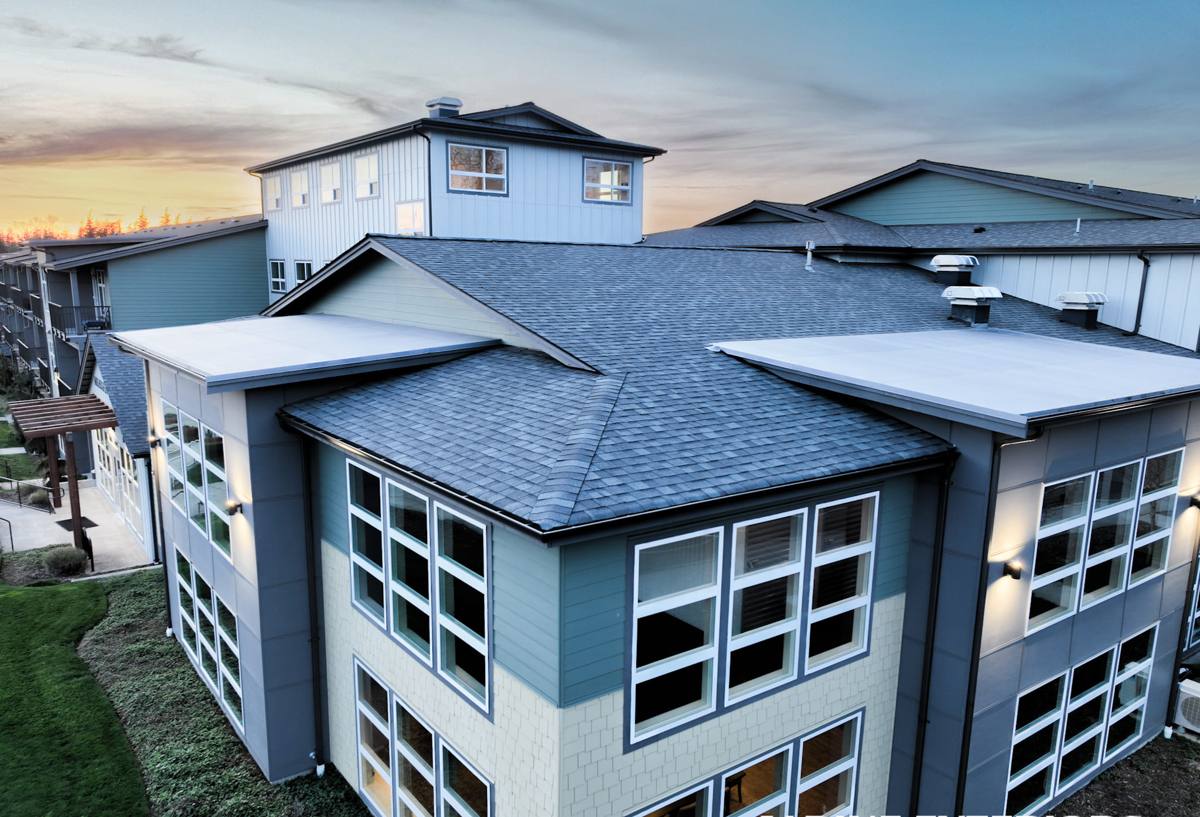
What Correct Siding Installation Actually Involves
The siding itself only gets half the job done. The other half is everything behind it — the parts of the wall assembly a homeowner never sees again once the project is finished, but that determine whether the siding lasts 10 years or 40.
Weather-Resistive Barrier and Flashing Details
Every wall needs a continuous weather-resistive barrier (WRB) installed correctly — lapped shingle-style so water always drains outward and down, never into a seam. Flashing at windows, doors, decks, and roof-to-wall transitions has to integrate with that barrier in the right sequence. This is where the majority of real-world water intrusion problems start: not because the siding failed, but because a flashing detail behind it was skipped, reversed, or sealed with caulk instead of properly lapped.
Rainscreen Gap for Drainage and Drying
In a climate as wet as King County's, a ventilated rainscreen gap between the WRB and the siding makes a measurable difference. That small air gap — created with vertical furring strips — lets any moisture that does get past the outer layer drain out and lets the wall assembly dry from both sides instead of just one. On a lot with heavy shade or lake-effect humidity, that drying capacity is often what determines whether a wall assembly stays healthy for decades or develops hidden rot behind siding that still looks fine from the curb.
Fastening, Clearances, and Joint Treatment
Fastener type, spacing, and depth all affect long-term performance, and they're frequently rushed on production-schedule installs. Siding also needs proper clearance from grade, roofing, decks, and hardscape — usually a minimum of several inches — so it isn't sitting in a moisture trap. Butt joints and trim seams need to be treated with the manufacturer's specified sealant and technique, not whatever caulk happens to be in the truck that day.
Why We Install Only James Hardie Fiber Cement
We don't install vinyl, LP SmartSide, primed spruce, cedar, or other fiber cement brands. That's a deliberate standard, not a sales preference. Vinyl expands and contracts significantly with temperature swings and can warp or crack in the wind exposure some Kirkland lots see. Wood-based products, including engineered wood siding, depend on an unbroken paint film to keep moisture out — and in a climate with this much sustained dampness and moss pressure, any gap in that film becomes an entry point for swelling and rot. Cedar is a beautiful, legitimate material, but it demands a maintenance commitment — refinishing, sealing, moss treatment — that most homeowners underestimate going in.
James Hardie fiber cement is non-combustible, dimensionally stable, and doesn't rely on a paint film to keep water out the way wood-based sidings do — moisture that reaches the surface doesn't cause the material itself to swell or rot the way it would with wood. Hardie's ColorPlus finish is factory-applied and baked on under controlled conditions, which gives more consistent, longer-lasting color than field-applied paint, and it holds up to UV and the Pacific Northwest's wet-dry cycling better than most site-painted finishes. Hardie also engineers specific product lines by climate zone — the HZ10 line is built for regions like ours with sustained moisture exposure. Combined with a strong transferable warranty, it's the product we're willing to put our name behind on King County homes.
Our Siding Installation Process for Kirkland Homes
Every project follows the same sequence, whether it's a full re-side or a single wall repair:
- On-site assessment. We inspect existing siding, sheathing, and any visible moisture damage before quoting anything, so the estimate reflects what your wall actually needs.
- Tear-off and sheathing check. Old siding comes off and we inspect the sheathing underneath. Any soft, rotted, or damaged sheathing gets flagged and replaced before anything new goes up — covering a compromised wall with new siding just hides the problem.
- Weather-resistive barrier and flashing. A continuous WRB goes on with correct shingle-lap sequencing, and flashing is integrated at every window, door, and penetration.
- Rainscreen furring. Vertical strapping creates the drainage and drying gap between the barrier and the new siding.
- Hardie installation. Panels or lap siding go on to manufacturer fastening specs, with correct clearances from grade, roofing, and trim.
- Caulking and paint touch-up. Joints are sealed with the specified sealant, and any field-cut edges are treated per Hardie's finishing requirements.
- Final walkthrough and cleanup. We walk the job with you, and the site is cleared of old material and debris before we call it done.
Cost Factors for a Kirkland Siding Project
Every home is different, but the same handful of factors drive most of the cost variation we see on siding projects in this area:
| Factor | Why It Matters |
|---|---|
| Home size and wall complexity | More square footage and more corners, gables, and dormers mean more material and labor time |
| Existing siding removal | Tear-off of old vinyl, wood, or fiber cement adds labor beyond a bare-sheathing install |
| Sheathing condition | Rot or moisture damage found underneath old siding requires repair before new siding goes on |
| Siding profile and trim detail | Lap siding, panel systems, and custom trim packages carry different material and labor costs |
| Access and site conditions | Slopes, tight side yards, and multi-story walls affect scaffolding and staging needs |
| Color and finish selection | Factory ColorPlus finishes versus field-painted trim affect both cost and long-term upkeep |
Signs Your Kirkland Home's Siding Needs Attention
Given the climate here, it's worth checking your siding at least once a year — more often on north-facing or shaded walls. Watch for:
- Green or black staining that reappears soon after cleaning, especially on shaded or north-facing walls
- Soft spots, bubbling, or a spongy feel when you press on the siding
- Visible warping, cupping, or panels that no longer sit flat against the wall
- Paint that's peeling, chalking heavily, or failing well before it should
- Gaps opening up at seams, trim, or around windows and doors
- A musty smell or visible moisture damage on interior walls that back up to exterior siding
- Siding sitting close to grade, roofing, or hardscape with little to no clearance
Any one of these on its own isn't necessarily an emergency, but a few of them together usually mean moisture has been getting past the surface for a while.
Why Hiring a Crew That Already Works Kirkland Matters
Local experience shows up in details that are easy to miss otherwise. A crew that regularly works King County jobs knows to plan installation timing around the wetter months rather than fighting them, knows what moisture damage from lake-effect humidity actually looks like when they open up a wall, and is familiar with the permitting process the city and county use for exterior work. It also matters for accountability — a contractor based in the area and reachable after the job is done is a very different arrangement than a crew that installed your siding and then moved on to the next region. For a product like Hardie, where installation quality drives most of the long-term outcome, that local familiarity is part of what you're actually paying for.
If you're weighing a full re-side or want an honest read on what your current siding needs, we're happy to take a look. Reach out for a free, no-pressure estimate — we'll walk the exterior with you, explain what we see, and give you a straight answer on what it would take to do the job right.