 Seattle Siding
 Roofing on Capitol Hill: A Different Set of Conditions
Capitol Hill sits up on a ridge with dense tree cover, a mix of early-to-mid-century houses and multi-family buildings, and roofs that see more weather exposure than people expect from a "city" neighborhood. Between the hill's elevation, the surrounding tree canopy, and Puget Sound's marine air moving through the area, roofs here age differently than roofs in drier inland climates. A new roof installation on Capitol Hill isn't just a tear-off and reshingle job — it's a chance to correct whatever the last roof got wrong and build one that's actually suited to how this neighborhood weathers.
What We See Most Often
Steep-pitched roofs on older homes, lower-slope sections over additions and porches, dormers, and roofs shaded for a good part of the day by mature trees. Each of those conditions changes how a roof should be built — pitch affects material choice, shaded sections need extra attention to moss and moisture, and additions often have flashing details that were never done correctly the first time.
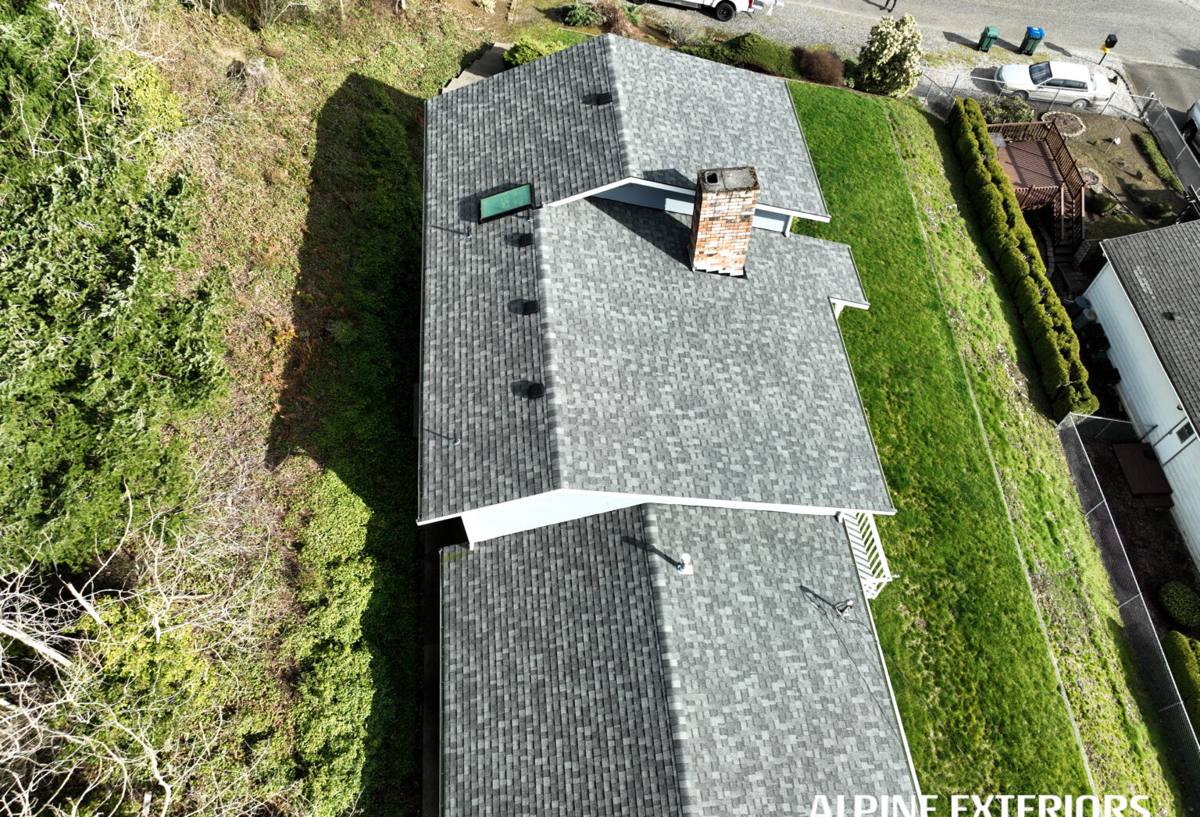
What Seattle's Climate Does to a Roof Over Time
Three things drive most of the roofing problems we find in this area, and they compound each other.
Driving Rain
Seattle's rain isn't just frequent — a lot of it comes in sideways during winter storms, pushed by wind off the Sound. That kind of wind-driven rain finds every weak seam, under-lapped shingle, and poorly flashed penetration. A roof that would hold up fine somewhere with straight-down rain can leak here if the underlayment and flashing weren't installed with that wind direction in mind.
Moss and Organic Growth
King County's long, cool, damp season is close to ideal growing conditions for moss, and Capitol Hill's tree cover only adds to it — falling needles, leaves, and constant shade keep roof surfaces wet longer than they'd otherwise stay. Moss isn't just cosmetic. It holds moisture against the roofing material, lifts shingle edges as it grows, and over years can shorten the life of an otherwise sound roof.
Salt Air and Metal Fatigue
Being close to Puget Sound means a low but steady level of salt air moves through the area. It's not as aggressive as a beachfront property, but over the life of a roof it does contribute to faster corrosion on unprotected fasteners, flashing, and metal roofing components. It's one more reason material selection and hardware quality matter more here than in a dry inland climate.
Signs a Capitol Hill Roof Needs Replacement, Not Another Repair
Not every roof problem calls for a full replacement, but there's a point where patching stops making financial sense. Here's what tells us a roof has reached that point:
- Granule loss heavy enough that you're finding grit in gutters and downspouts every season
- Shingles that are cupping, curling at the edges, or cracking when walked on
- Moss growth that comes back within months of cleaning, especially on shaded or north-facing slopes
- Daylight visible through the roof deck from inside the attic
- Soft or spongy spots underfoot, which usually means the deck itself has taken on moisture damage
- Repeated leaks around the same penetration or valley despite prior repairs
- A roof that's at or past the manufacturer's expected service life for its material and exposure
What a Correct New Roof Installation Actually Involves
A roof is a system, not a single layer of material. Skipping or shortcutting any part of it is where most premature failures come from, especially in a climate that gives water this many chances to find a way in.
The Deck
Every square foot of decking gets inspected once the old roofing is off. Soft, delaminated, or water-damaged sheathing gets replaced before anything new goes down — installing new roofing over a compromised deck just hides the problem and shortens the life of the new roof.
Underlayment
Given how much wind-driven rain this area gets, underlayment choice matters. Ice-and-water shield at eaves, valleys, and penetrations, paired with a synthetic underlayment across the rest of the deck, gives the roof a real second line of defense if wind ever pushes water past the surface layer.
Flashing
Chimneys, skylights, dormers, sidewalls, and valleys are where roofs actually fail — the field of the roof rarely leaks on its own. Flashing gets formed and installed to shed water correctly at every one of these transitions, not just caulked and hoped for.
Ventilation
Proper intake and exhaust ventilation keeps the attic space at the right temperature and moisture level, which protects the deck from the inside and helps prevent the ice-damming and condensation issues that under-ventilated roofs run into during our wetter, colder stretches.
Comparing Roofing Materials for a Capitol Hill Home
There's no single "best" material — the right choice depends on your roof's pitch, how much shade and moss exposure it gets, and how long you want to go before your next major roofing decision.
| Material | Moss & Moisture Resistance | Typical Lifespan | Relative Cost | Notes for This Area |
|---|---|---|---|---|
| Architectural asphalt shingle | Good, especially with algae-resistant granules | 25–30 years | Lower to mid-range | Most common choice locally; performs well when installation detail is right |
| Standing seam metal | Excellent — sheds moisture and resists moss buildup | 40–50+ years | Higher upfront | Strong option for steeper roofs and shaded lots; needs corrosion-resistant hardware near the Sound |
| Cedar shake | Requires regular maintenance to resist moss and rot | 20–30 years with upkeep | Mid to higher | Traditional look, but the highest maintenance burden in a damp, shaded climate |
| Low-slope membrane (TPO/modified bitumen) | Good when seams are properly sealed | 15–25 years | Mid-range | Common on additions, porches, and low-pitch sections rather than full roofs |
We'll walk through these trade-offs with you directly rather than steering you toward whatever's easiest for us to install — the right material is the one that fits your roof's pitch, your budget, and how much upkeep you actually want to take on.
Our Process for a New Roof Installation
- On-site inspection — we look at the existing roof, deck condition, ventilation, and any problem areas before quoting anything
- Material selection — we go over options and trade-offs based on your roof's pitch, sun/shade exposure, and budget
- Tear-off — full removal of old roofing so the deck can be properly inspected, not just covered over
- Deck repair — any damaged sheathing gets replaced before underlayment goes down
- Underlayment and flashing — ice-and-water shield, synthetic underlayment, and properly formed flashing at every penetration and transition
- Installation — roofing material installed to manufacturer spec, with attention to nailing pattern and exposure, since both affect wind and rain performance
- Ventilation check — intake and exhaust confirmed or corrected as part of the job, not treated as an afterthought
- Final walkthrough and cleanup — site cleared of debris, magnetic sweep for nails, and a final review with you before we consider the job done
Permits, Access, and Practical Considerations on Capitol Hill
Capitol Hill's housing stock is dense and lots tend to be tighter than in more suburban parts of King County, which affects how a roofing job gets staged — dumpster placement, material delivery, and street access all need to be planned before work starts, not figured out on the fly. Depending on the scope of work and your specific building, permitting requirements can also come into play; we handle that coordination as part of the job rather than leaving it on the homeowner to sort out. If your home falls within any special review area, that's something we'll flag and work through with you up front rather than after materials are already ordered.
Why a Local Crew Matters for This Job
A roofing crew that works Capitol Hill regularly already knows what the tree canopy does to a north-facing slope, how wind comes off the Sound during a winter storm, and what access on a tight urban lot actually requires. That's not something you get from a crew that mainly works flatter, drier parts of King County or the broader region. It shows up in the small decisions — where extra ice-and-water shield goes, how flashing gets detailed around a shaded valley, which fasteners hold up against salt air over decades — that a generic installation doesn't account for.
After Installation: Keeping a New Roof Performing
A correctly installed roof still benefits from basic upkeep, especially in a neighborhood with this much tree cover. Keeping gutters clear of leaves and needles, having moss growth addressed before it spreads, and getting an occasional visual check after major storms will get you the full service life out of the materials you invested in. None of this is intensive work — it's just worth staying ahead of rather than catching up on.
If your roof is showing its age or you're planning ahead rather than reacting to a leak, we're happy to take a look and walk you through what we're seeing — no pressure, no upsell, just a straight assessment. Use the form below to request a free estimate for your Capitol Hill home.