 Seattle Siding
 Why Decks in Renton Wear Out Faster Than Homeowners Expect
Renton sits in the wettest stretch of a wet region. Between the marine air moving in off Puget Sound, the long stretch of fall and winter rain, and the shoulder seasons where everything stays damp for weeks at a time, a deck here is under more sustained moisture load than the same structure would see almost anywhere outside the coastal Northwest. Add in a moss season that can run from October through April, and you have the two biggest enemies of a wood deck — standing moisture and organic growth — working on your deck for more than half the year.
Most decks don't fail because the wood was bad. They fail because water found a way in and stayed there: under a ledger board bolted to the house, inside a post base sitting in a puddle, or trapped beneath boards that were never spaced to drain and dry. Salt-laden air off the Sound accelerates corrosion on fasteners and metal connectors too, which is a big part of why so many "solid-looking" older decks in this area turn out to have compromised hardware once you pull a few boards.
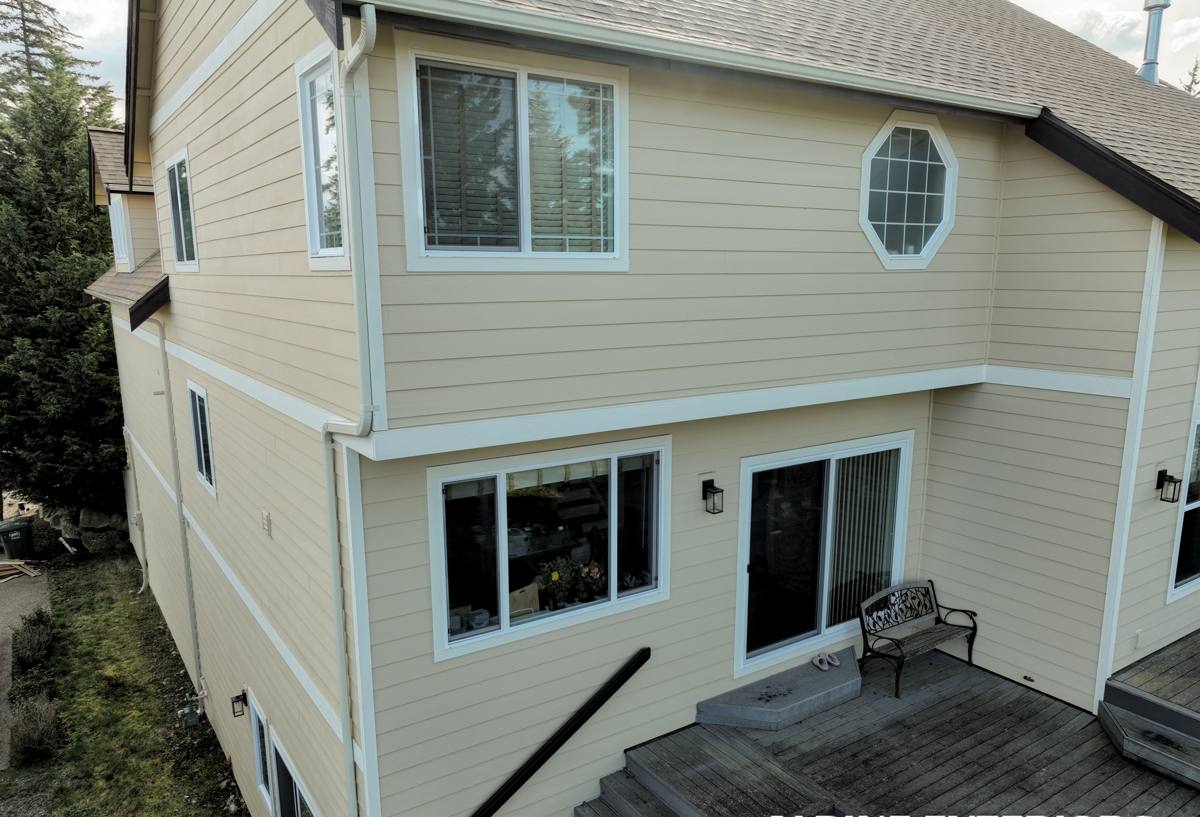
Signs a Deck Needs Replacing, Not Just Patching
Homeowners often call us about a soft board or a wobbly rail and expect a quick repair. Sometimes that's all it takes. But in King County's climate, surface problems are frequently a symptom of something deeper. Here's how we tell the difference during an inspection.
- Soft or spongy decking in more than a couple of isolated spots usually means moisture has been sitting under the boards long enough to start rot, not just weathering the surface.
- Any give or bounce where the deck meets the house is a ledger board concern — this connection carries a large share of the structure's load and is the single most common failure point we find on older Renton decks.
- Rust streaking from screws, nails, or joist hangers tells us the fasteners are corroding, which is a structural issue, not a cosmetic one.
- Persistent black or green staining that comes back within weeks of cleaning means moss and algae have gotten into the wood fibers, not just the surface.
- Gaps or cracking around post bases, especially where a post sits directly on concrete without a proper standoff, point to years of wicking moisture from below.
If a deck is showing two or more of these signs, repair is usually a short-term fix that costs money now and again in a year or two. A full replacement, done correctly for this climate, is the more honest recommendation.
What a Correct Deck Replacement Actually Involves
A deck replacement isn't just swapping old boards for new ones. The parts of a deck that actually determine how long it lasts in western Washington are the parts you don't see once it's finished.
Ledger and Flashing
Where the deck attaches to the house is the highest-risk area for water intrusion in our climate. A correct installation uses proper flashing that directs water away from the house sheathing, lag bolts or through-bolts sized for the load, and a small air gap or drainage path so moisture doesn't get trapped between the ledger and the wall.
Footings and Posts
Footings need to sit below frost depth and bear on solid, undisturbed soil — something we confirm rather than assume, given how much clay and fill soil shows up around King County lots. Posts should sit on standoff bases that keep the wood end grain off concrete, since end grain is where wood absorbs water fastest.
Framing and Fasteners
Joists, beams, and hardware all need to be rated for exterior, ground-contact-adjacent use, with corrosion-resistant fasteners suited to treated lumber. This matters more here than in drier climates — the wrong fastener metal against treated lumber in a wet environment corrodes noticeably faster.
Decking and Drainage
Board spacing, direction, and any under-deck drainage system all affect how fast the structure dries out between storms. A deck that can't shed and dry quickly is a deck that's already aging faster than it should.
Guardrails and Stairs
Height, baluster spacing, and graspable handrail requirements are code items, not style choices. We build to current code regardless of what the old deck had, since older decks in this area were often built — or added onto — before current guardrail rules existed.
Material Options for a Wet, Mossy Climate
There's no single "best" decking material — there's a best material for your budget, your maintenance appetite, and how much shade and moisture your particular yard sees. Here's how the common options actually perform around Renton.
| Material | How it handles our climate | Maintenance | Typical lifespan here |
|---|---|---|---|
| Pressure-treated lumber | Good rot resistance when properly installed and sealed; still needs drainage and airflow to perform well | Annual cleaning, re-sealing every 2-3 years | 15-20 years with upkeep |
| Cedar | Naturally rot- and insect-resistant, but softer and needs consistent finish maintenance in wet, shaded yards | Cleaning and re-staining every 1-2 years | 15-20 years with upkeep |
| Composite decking | Doesn't absorb water or rot; resists moss staining better than wood, though moss can still grow on the surface film | Periodic cleaning, no sealing or staining | 25-30+ years, warranty-backed |
Composite has become the more common choice for full replacements in shaded, moisture-heavy yards simply because it removes rot risk from the equation. Wood is still a reasonable choice on sites with good sun exposure and airflow, and for homeowners who prefer the look and are willing to keep up with sealing. We'll give you an honest read on which fits your specific lot during the estimate — a deeply shaded, north-facing yard behaves very differently than one that gets afternoon sun.
Why We Don't Push Cheap Composite Blends
Not all composite is equal. Lower-grade capped composites and older-generation wood-plastic blends can be more prone to moisture absorption at cut edges and fastener points than premium composites — which matters in a climate where those edges are wet more often than not. Our standard is to use products with a full cap on all sides and manufacturer-rated performance for high-moisture climates, even if it costs more upfront than the cheapest board on the shelf.
Permits and Code in Renton
Most deck replacements in Renton and unincorporated King County require a building permit, especially when the deck is elevated, attached to the house, or being rebuilt rather than resurfaced. Permit review typically looks at footing depth and size, ledger attachment, guardrail and stair compliance, and overall structural sizing. Skipping this step is one of the more common problems we find when we're called in to fix someone else's deck — an unpermitted rebuild can complicate a home sale later, even if the work looks fine on the surface.
We handle the permit application and inspection scheduling as part of the job. Because we work in Renton and the surrounding area regularly, we already know what the local building department expects to see on a submittal, which keeps the process from stalling out on paperwork.
Our Replacement Process
- On-site assessment — we inspect the existing deck, ledger, and framing to confirm whether replacement is the right call and identify any hidden rot or drainage issues.
- Design and material selection — we walk through layout, decking material, and railing options based on your budget and how the space gets used.
- Permit submittal — we prepare and submit the permit package and schedule required inspections.
- Demolition and disposal — the old structure comes out, including hauling away debris.
- Framing and structural work — footings, posts, ledger, and joists go in to current code, built to shed water rather than trap it.
- Decking, rails, and stairs — final surfaces and guardrails are installed and inspected.
- Final walkthrough — we go over the finished deck with you, including any maintenance notes specific to the material you chose.
Questions Worth Asking Before You Sign a Contract
- Is the ledger board attachment and flashing detail specified in writing, or just assumed?
- Are footings being poured to code depth, or reused from the old deck without inspection?
- Who is pulling the permit, and is that cost included in the estimate?
- What fastener and hardware grade is being used, and is it rated for treated lumber in a wet climate?
- Is there a written warranty on labor, separate from the manufacturer's material warranty?
- What's the realistic timeline given current weather, and how are rain delays handled?
Why a Crew That Already Works Renton Matters
Deck framing and flashing details that work in a dry climate don't automatically work here. A crew that builds decks regularly around King County knows to plan footing pours and framing around our rain patterns, knows which drainage details actually keep moss and rot from coming back, and knows what Renton's permit reviewers expect on a submittal the first time — instead of after a rejected application. That local familiarity shows up in fewer surprises during the build and a deck that's actually built for the weather it has to survive, not a generic spec sheet.
If your deck is showing its age, or you just want an honest opinion on whether repair or replacement makes sense, we're happy to take a look. Reach out for a free, no-pressure estimate using the form below — we'll walk the deck with you and give you a straight answer.