 Seattle Siding
 Rainier Valley's Climate and What It Means for Your Siding
Rainier Valley sits in south Seattle, and like the rest of King County, it lives under a marine climate that never fully lets up. The salt-tinged air drifting off Puget Sound reaches every neighborhood in the city, and it doesn't take a waterfront lot to feel its effects — that airborne salt slowly works on fasteners, trim, and any siding material that isn't built to shrug it off. Layer on Seattle's driving rain, the kind that comes in sideways during a fall or winter storm and finds every gap a wall has to offer, and you've got a climate that's genuinely hard on exteriors.
Then there's moss. Rainier Valley's mature tree canopy and gently rolling terrain mean a lot of homes sit in partial shade for much of the day, especially on north- and east-facing walls. Shade plus near-constant moisture equals a long moss and algae season — realistically eight or nine months of the year in a typical King County winter-to-spring stretch. Siding that holds moisture, or that has seams and edges where moss can gain a foothold, ages faster here than it would in a drier climate. None of this is exotic weather. It's just relentless, and it's exactly the kind of exposure that separates siding systems that hold up for decades from ones that start showing problems in year eight or ten.
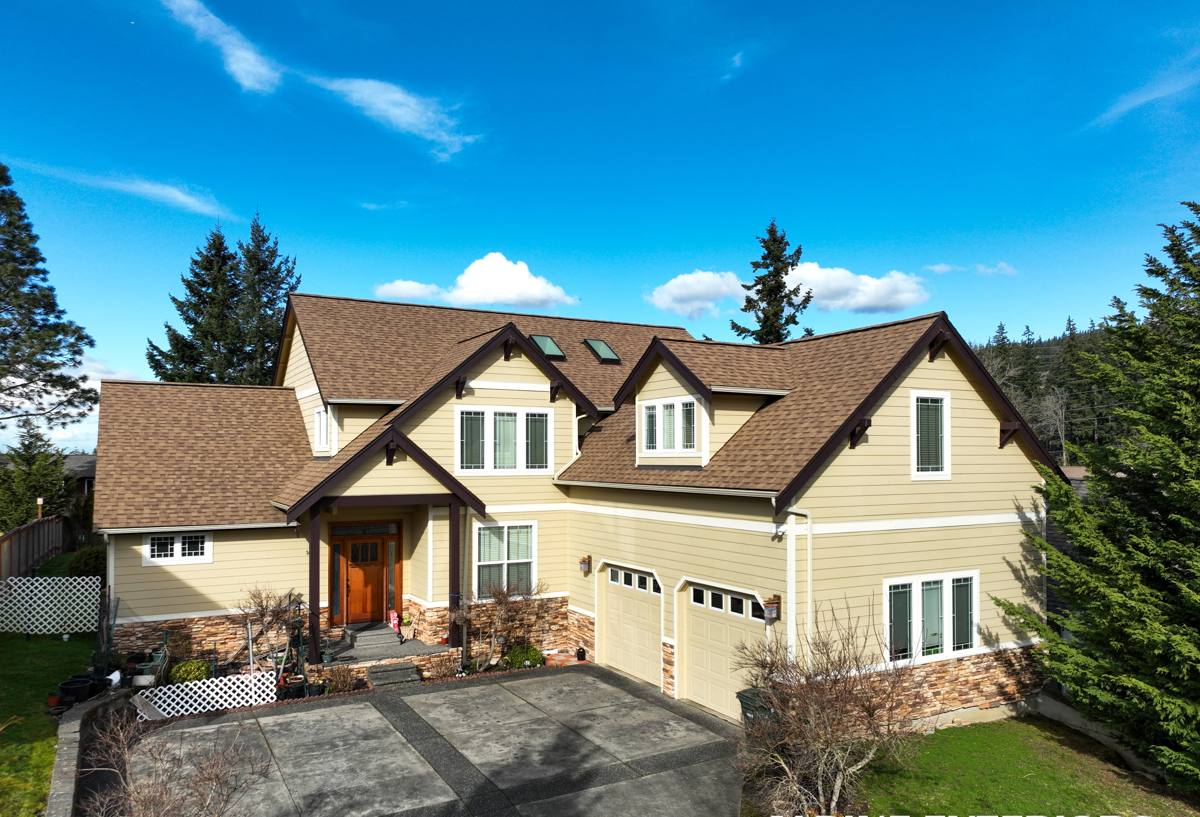
What We See on Rainier Valley Homes
A Mix of Eras and Exteriors
Rainier Valley has one of the more varied housing stocks in Seattle — early-1900s and 1920s bungalows, mid-century ramblers, postwar infill, and a steady wave of newer construction filling in lots across the neighborhood. That mix means we run into just about every exterior material out there: old wood lap siding painted over more times than anyone can count, aluminum and vinyl from various remodel eras, and a fair amount of engineered wood product installed during the building boom years. Each of those has its own failure pattern, and knowing what we're likely to find under the surface before we open up a wall saves time and surprises once a job is underway.
Lots With Shade and Slope
A lot of Rainier Valley properties sit on sloped ground with mature landscaping, which affects more than curb appeal. Grading that pushes water toward a foundation, gutters that dump runoff too close to a wall, and shaded siding that never fully dries between rains are all common issues we account for during an assessment. Fixing the siding without addressing how water moves around the house is a half-measure — we look at the whole picture, not just the cladding.
Signs Your Siding Has Reached the End of Its Life
Most homeowners call us because something specific caught their eye, not because they were tracking the calendar. Here's what typically signals it's time to stop patching and start planning a full replacement:
- Soft or spongy spots when you press on the siding, especially near the bottom courses or window trim
- Paint that won't hold anymore — it's blistering, peeling, or needs repainting every two to three years
- Persistent moss or dark streaking that comes back within weeks of cleaning
- Visible cracking, warping, or bowing panels, particularly on shaded or north-facing walls
- Gaps opening up at seams, corners, or where siding meets trim, window frames, or the foundation
- A musty smell or signs of moisture inside on an exterior wall
- Siding that's simply original to a home built decades ago and has never been replaced
Any one of these on its own might be a repair. Several at once, especially on a home that's original from an earlier building era, usually means the underlying material is past the point where patching makes financial sense.
Why We Install Only James Hardie Fiber Cement
We made a deliberate decision as a company to install James Hardie fiber cement siding and nothing else — not vinyl, not LP SmartSide, not primed spruce or cedar, not other fiber cement brands. That's a narrower lineup than most contractors offer, and we think that's the point. Fiber cement itself is not a new idea, but Hardie's version has a specific set of properties that matter a lot in a climate like ours.
It's non-combustible, which matters more each year given how wildfire smoke and regional fire risk have become part of Pacific Northwest summers. It comes with a factory-applied ColorPlus finish, which is baked on under controlled conditions rather than field-painted, and that finish is what actually resists the fading, chalking, and repeated repainting that field-applied paint struggles with here. Hardie also engineers its product by climate zone — the HZ5 line sold in our region is formulated for cold, wet conditions, which is a meaningful difference from a one-size-fits-all siding product. And Hardie backs it with a strong, transferable limited warranty, which protects the value of the work if a home changes hands.
None of that means other products are junk. Vinyl is inexpensive and low-maintenance in the sense that it doesn't need painting, but it can warp in temperature swings and doesn't offer the same fire performance. LP SmartSide and other engineered wood products perform well when installed and maintained exactly to spec, but they're wood-based, and wood-based products are more sensitive to the kind of sustained moisture exposure Rainier Valley delivers for most of the year. Primed spruce and untreated cedar require ongoing maintenance that a lot of homeowners don't sign up for once they see the real cost of keeping up with it. We'd rather stand behind one product system we trust completely than offer a menu of materials we'd have reservations about installing on our own homes.
What Correct Siding Installation Actually Involves
Siding installation is one of those jobs that looks simple from the curb and is unforgiving in the details. A wall that looks finished the day it's installed can start failing within a few years if the water management underneath it was done wrong — and by the time you can see the problem from outside, there's usually already damage behind the siding.
Weather-Resistive Barrier and Flashing
Before a single piece of siding goes up, the wall needs a continuous weather-resistive barrier, properly lapped so water sheds downward and outward rather than working its way in. Every penetration — windows, doors, hose bibs, electrical fixtures, vents — needs flashing that integrates with that barrier. This is the step that determines whether a wall stays dry for thirty years or starts rotting from the inside in five, and it's also the step that's easiest to rush if a crew is trying to move fast.
Fastening and Clearances
James Hardie has specific fastening patterns, nail types, and spacing requirements, and following them isn't optional if you want the manufacturer's warranty to actually apply. Just as important are the clearances: siding needs a gap above rooflines, decks, and grade so it isn't sitting in standing water or wicking moisture up from the ground. We see plenty of older installations around Rainier Valley where siding was run right down to grade or butted tight against a deck — those are the spots that rot first.
Ventilation and Drainage
A modern installation should give water a way out if it ever gets behind the cladding, whether through a rainscreen gap or properly detailed drainage plane. In a climate that stays damp as much of the year as ours does, this isn't a luxury upgrade — it's the difference between a wall that can dry out and one that can't.
Trim, Caulking, and Finish Work
The finish details are what a homeowner actually sees day to day: clean trim lines, properly sealed joints, and touch-up paint on cut edges so no raw fiber cement is exposed to weather. Sloppy trim work isn't just cosmetic — an open seam at a window or corner is a direct path for wind-driven rain to get behind the siding.
Our Installation Process, Start to Finish
- On-site assessment. We walk the whole exterior, check for soft spots and moisture damage, and look at drainage, grading, and roofline details that affect siding performance.
- Written estimate. You get a clear scope of work and pricing before anything is scheduled — no vague allowances that turn into surprise change orders.
- Tear-off and inspection. Old siding comes off and we inspect the sheathing underneath. If there's rot or water damage, we address it before anything new goes up — covering damaged sheathing with new siding just hides the problem.
- Weather barrier and flashing. A continuous, properly lapped barrier goes on, with flashing detailed at every window, door, and penetration.
- James Hardie installation. Panels or planks go up following Hardie's fastening and clearance specifications, with attention to proper gaps at rooflines, decks, and grade.
- Trim and finish work. Corners, trim boards, and joints get sealed and finished, with factory-cut edges touched up so no unfinished material is exposed.
- Final walkthrough. We go over the finished job with you before calling it done, not after.
What Affects the Cost of a Siding Installation in Rainier Valley
Every home is different, so we won't quote a number here that doesn't apply to your actual house — but these are the factors that consistently move the price up or down on a Rainier Valley job:
| Factor | Why It Matters |
|---|---|
| Home size and wall area | More square footage means more material and labor hours, the biggest single driver of total cost |
| Tear-off complexity | Multiple old layers, hidden rot, or asbestos-era siding add time and sometimes special handling |
| Sheathing repair | Water damage found during tear-off has to be fixed before new siding goes on — cost depends on how much is affected |
| Number of stories and roof lines | Steep, multi-story, or cut-up rooflines mean more staging, cutting, and flashing detail |
| Trim and architectural detail | Bungalow-style trim, gables, and dormers common in older Rainier Valley homes take more labor than a simple flat wall |
| Product line and profile | Lap siding, shingle-style panels, and different Hardie textures carry different material costs |
| Access and site conditions | Sloped lots, mature landscaping, and tight setbacks affect staging and scaffolding needs |
Why Hiring a Crew That Already Works Rainier Valley Matters
A siding job isn't just about the product — it's about who's installing it and whether they understand the conditions it has to survive. A crew that regularly works Rainier Valley and the rest of Seattle already knows how local drainage patterns, shade cover, and storm exposure tend to play out on the homes here. They know what to expect when they open up a wall on a 1930s bungalow versus a 1990s infill build, and they're not learning King County permitting requirements for the first time on your project.
There's also a plain accountability argument. A local crew has a reputation in the neighborhood to protect and isn't disappearing after the final payment clears. If a flashing detail needs a second look two years down the road, you're calling a business that's still down the street, not chasing a phone number that no longer works. That matters more with siding than with almost any other exterior trade, because siding problems are often invisible until they've been quietly causing damage for years.
Ready for a No-Pressure Estimate
If your siding is showing its age or you're just trying to figure out what a real replacement would involve, we're happy to take a look and give you honest answers — no pressure, no obligation. Fill out the form below and we'll get in touch to schedule a free estimate for your Rainier Valley home.