 Seattle Siding
 Beacon Hill's Climate Puts Real Stress on Siding
Beacon Hill sits on high ground south of downtown Seattle, and that elevation cuts both ways. Homes up here catch more wind-driven rain than sheltered valley lots, and in the wetter months that rain doesn't just fall straight down — it gets pushed sideways into siding, trim, and window edges by storms rolling in off Puget Sound. Add in the salt-laden air that reaches inland across King County and a moss season that can stretch from October well into spring, and you have a combination that wears out the wrong siding material faster than most homeowners expect.
Moss and algae aren't just cosmetic problems. On wood and engineered wood siding, sustained moisture trapped under moss growth softens fibers, feeds rot, and accelerates paint failure. On vinyl, trapped moisture behind panels promotes mold you can't see until it's already spread into sheathing. Salt air adds a slow corrosive edge to fasteners and metal trim that isn't part of the conversation in drier inland climates. None of this means Beacon Hill is a uniquely brutal place to own a home — it means the siding has to be chosen and installed with this specific weather pattern in mind, not a generic one.
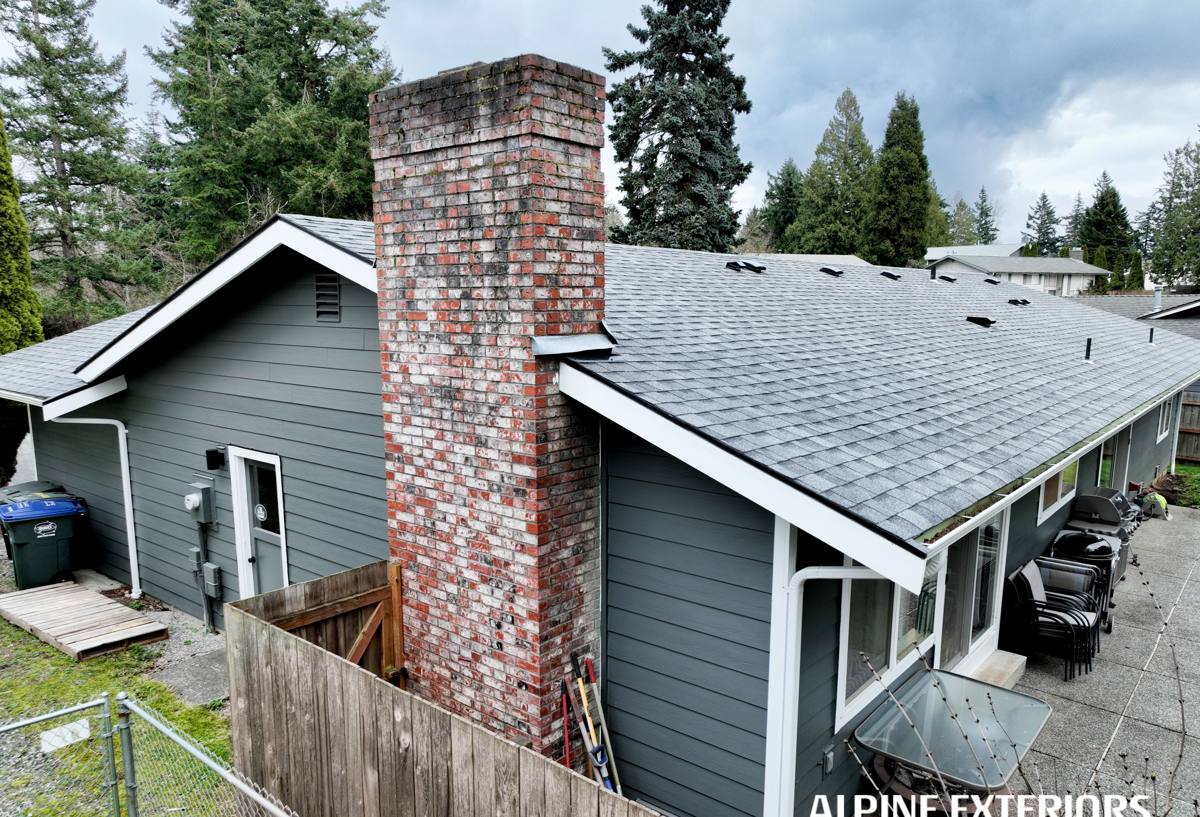
Signs Your Beacon Hill Home Needs Siding Replacement
Because moisture damage on the Pacific Northwest coast tends to hide behind paint and caulk before it shows up as an obvious problem, it pays to know what to look for before a small issue becomes a sheathing repair.
- Soft or spongy spots when you press on the siding, especially near the bottom courses and around windows
- Persistent moss or dark streaking that comes back within weeks of cleaning
- Paint that's peeling, bubbling, or chalking heavily rather than just fading
- Visible warping, cupping, or separation at panel seams
- Rising heating bills or drafty rooms that point to a compromised weather barrier
- Cracked caulk lines at corners, trim, and penetrations that keep reopening after resealing
- Siding that's original to a home built decades ago and has never been fully replaced
Any one of these on its own might just need a repair. Several at once, or damage that keeps recurring in the same spots, usually means the siding system itself has reached the end of what it can protect against.
Why Older Beacon Hill Homes Are Especially Worth Checking
Beacon Hill's housing stock spans early-1900s bungalows through mid-century construction to newer infill homes, and a lot of that older stock still carries wood or early engineered wood siding that was never designed for the moisture cycling this neighborhood sees year after year. If your home hasn't had its siding evaluated in the last decade, a straightforward inspection is worth doing before winter's rains arrive, not after.
Why We Only Install James Hardie Fiber Cement Here
We install James Hardie fiber cement siding exclusively. We don't install vinyl, LP SmartSide, Cemplank, Allura, primed spruce, or cedar, and that's a deliberate standard, not a limitation on what we're capable of installing.
Vinyl siding is affordable and low-maintenance in the sense that it doesn't need painting, but it's a petroleum-based product that expands and contracts with temperature swings, can crack in impacts, and — critically for this climate — traps moisture against the sheathing behind it if installation isn't perfect. Wood and engineered wood products like LP SmartSide use wood strand cores that are vulnerable at cut edges and fastener penetrations; once moisture gets past the factory coating, rot can spread inside the panel before it's visible from outside. Cedar is a genuinely beautiful natural material, but it demands a maintenance schedule — restaining, resealing, moss treatment — that most homeowners underestimate until they're several years in.
James Hardie fiber cement is cement, sand, and cellulose fiber. It doesn't absorb moisture the way wood-based products do, it's non-combustible, and it holds paint and factory finish far longer than wood siding because the material itself doesn't swell and contract the same way. Hardie also engineers specific product formulations for different climate zones through its HardieZone system, and the Pacific Northwest falls into the HZ5 zone — a moisture-focused engineering spec that accounts for exactly the kind of driving rain and prolonged damp weather Beacon Hill gets. That's not a marketing detail; it's the reason we standardized on this one manufacturer instead of offering a menu of options.
What Correct Siding Replacement Actually Involves
Siding replacement done right is mostly invisible once it's finished — the parts that matter most are underneath the panels, not the panels themselves.
Tear-Off and Sheathing Inspection
Old siding comes off in full, not patched over. That's the only way to actually see the sheathing underneath, which is where rot damage from years of trapped moisture usually shows up first. Any compromised sheathing gets identified and addressed before anything new goes on — covering over a damaged substrate just hides the problem for the next owner to find.
Weather-Resistive Barrier and Flashing
A correctly installed weather-resistive barrier, properly lapped and taped, is what actually keeps wind-driven rain from reaching the sheathing — the siding itself is the first line of defense, not the only one. Flashing at windows, doors, and every roof-to-wall intersection has to be integrated with that barrier correctly, since these transition points are where the vast majority of moisture intrusion actually starts.
Fastening and Clearances
James Hardie specifies exact nailing patterns, fastener types, and minimum clearances from grade, roofing, and decks. Skipping these specs is the single most common cause of premature siding failure on jobs that use the right material but install it wrong — the product only performs to its engineered standard when it's installed to that standard.
Finish and Sealant Details
ColorPlus factory-finished panels arrive with the color and coating baked on, which means field-applied caulk and touch-up need to be done carefully at cut edges and seams to preserve that finish and the warranty behind it.
Cost Factors for Beacon Hill Siding Replacement
There's no single price that applies to every home, but the variables that actually move the number are consistent. Understanding them helps you evaluate any estimate you receive, from us or anyone else.
| Factor | Why It Matters |
|---|---|
| Home size and wall area | More square footage of siding and trim directly increases material and labor |
| Existing siding condition | Rotten sheathing or extensive hidden damage adds repair work before new siding can go on |
| Number of stories and access | Steep Beacon Hill lots and multi-story homes often require more scaffolding or lift time |
| Trim and architectural detail | Corner boards, window trim, and detailing complexity affect labor hours |
| HardieZone product line chosen | Panel, lap, and shingle-style profiles carry different material costs |
| Tear-off and disposal | Full removal of old siding adds labor and haul-away costs versus a bare wall |
Any honest estimate should walk through these factors specifically for your home rather than quoting a flat per-square-foot number sight unseen.
Our Process, Start to Finish
We start with an on-site inspection so we can actually see what's under the current siding before quoting anything — this is especially important on Beacon Hill's older homes, where you can't always tell the extent of moisture damage from the outside. From there we walk you through a written scope that covers tear-off, any sheathing repair needed, weather barrier and flashing work, the specific James Hardie product line and color we're recommending for your home, and a realistic timeline. We pull the required City of Seattle permits, protect your landscaping and driveway during tear-off, and keep the site reasonably contained for the duration of the job. When it's done, you get a walkthrough before we consider the job finished, not after.
Choosing a Contractor Who Actually Works Beacon Hill
A lot of siding problems on this hill trace back to installation shortcuts, not the product itself. A crew that's worked this neighborhood before understands the wind exposure on higher lots, the moss cycle, and how Seattle's permitting and inspection process works — that familiarity shows up in fewer surprises during the job.
- Verify active Washington State contractor licensing and bonding, and ask to see it, not just hear about it
- Confirm they carry liability insurance and workers' compensation coverage
- Ask specifically how they handle sheathing repair if it's found during tear-off — vague answers are a red flag
- Ask which manufacturer's installation specs they follow and whether their crews are factory-trained on that system
- Get the scope of work and product line in writing before signing anything
- Ask how they handle permitting — a contractor unfamiliar with Seattle's process can cause delays
Caring for Your New Siding
Fiber cement siding is genuinely low-maintenance, but "low" isn't "none." A yearly rinse to clear moss spores before they take hold, prompt attention to any caulk that starts to crack at seams or trim, and keeping gutters clear so water isn't sheeting down the wall will keep a correctly installed Hardie system performing for decades. Compared to the yearly restaining a cedar exterior demands, or the crack-and-fade cycle common to vinyl in temperature swings, it's a meaningfully lighter lift for the homeowner.
If your Beacon Hill home is showing any of the warning signs above, or it's simply due for an honest look, we're happy to come out, inspect the siding in person, and give you a straightforward assessment. There's no pressure and no obligation — just fill out the form below to schedule a free estimate.