 Seattle Siding
 Storm Damage in University District: What Makes It Different
University District sits close to the Ship Canal and Lake Washington, and that proximity shapes how storms hit local roofs. Wind off the water tends to arrive at an angle rather than straight down, which means driving rain gets pushed sideways under shingle tabs, around chimney flashing, and into any gap that's already loose. Add in Seattle's long, wet moss season and the salt-tinged air that drifts in from Puget Sound, and you get roofs that age differently than they would in a drier inland climate. A storm doesn't have to be dramatic to cause damage here — a few hours of sideways rain on a roof that already has minor wear can be enough to start a leak that shows up weeks later as a stain on a bedroom ceiling.
We work on U District roofs regularly, from the older craftsman bungalows near the core of the neighborhood to the mix of small multiplexes and rental conversions that surround the university. Each of those roof types fails differently in a storm, and knowing which failure pattern to expect saves time and money when we show up to assess damage.
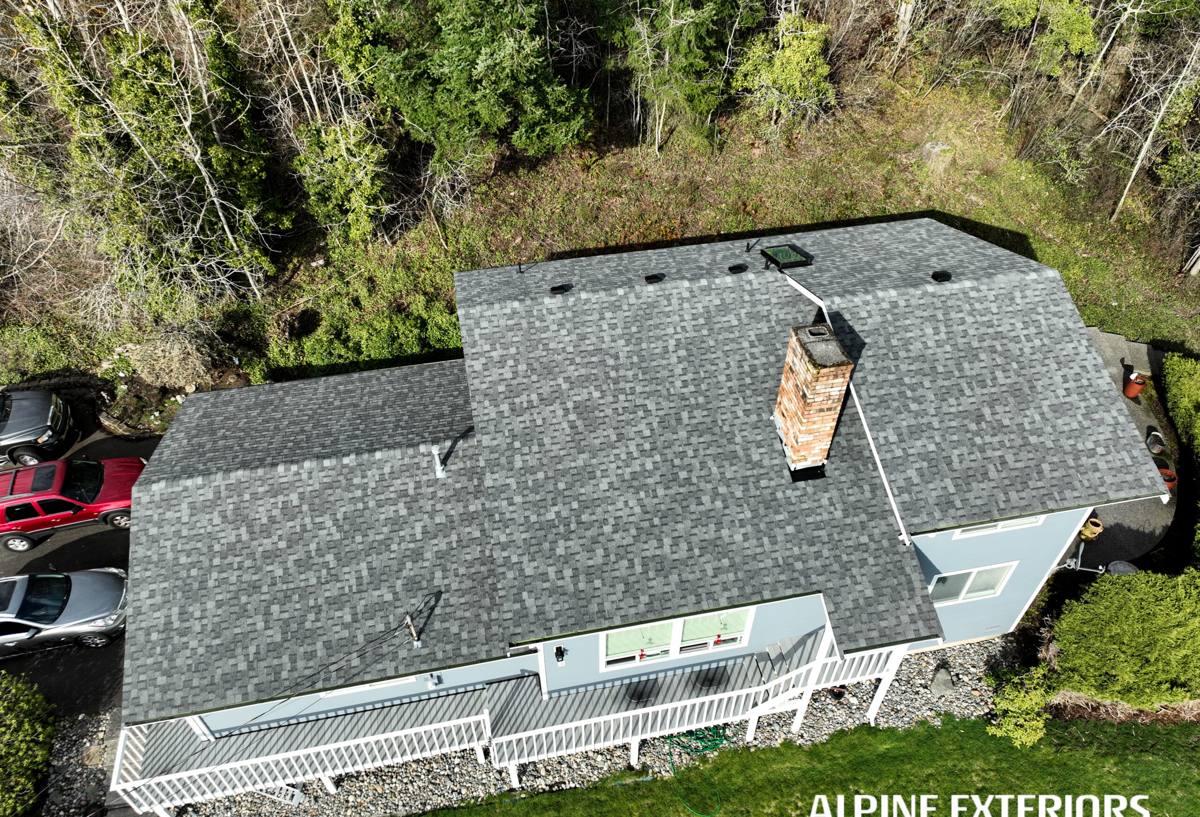
Common Storm Damage We See on U District Roofs
Wind-Lifted and Torn Shingles
Composition shingle is the most common roofing material in the neighborhood, and wind damage almost always starts at the tab edges. Once wind gets under a shingle corner, it can peel back the adhesive strip and leave that shingle — and the ones around it — vulnerable to the next storm even if nothing looks obviously wrong from the ground.
Moss-Weakened Sections
Big-leaf maples and conifers shade a lot of U District streets, and the roofs beneath them hold moisture longer after a storm than roofs in more open, sunny spots. Moss that's been left to grow doesn't just look bad — it holds water against the roofing material and works its way under shingle edges, so what starts as a cosmetic issue often turns into the weak point a storm exploits.
Flashing Failures Around Chimneys and Dormers
Older U District homes often have chimneys, dormers, and roof-to-wall transitions where the original flashing has been patched more than once over the decades. Driving rain finds these spots first. A storm rarely damages a well-flashed roof but will reliably expose a flashing detail that was already failing.
Impact Damage From Falling Limbs
Mature street trees are part of what makes the neighborhood attractive, but they also mean storm winds bring down branches and limbs onto roofs more often than in newer, less-treed developments. Limb strikes can crack shingles, dent metal flashing, or in worse cases puncture the roof deck itself.
Why Older U District Homes Need a Careful Eye
A lot of the housing stock in this part of Seattle predates modern roofing standards. That doesn't mean the roofs are bad — it means an accurate repair depends on understanding what's actually under the surface layer before doing any work. We commonly find:
- Multiple layers of old roofing material stacked under the current layer, which changes how a patch or replacement section needs to be tied in
- Roof decking with soft spots from long-term moisture exposure, not just the recent storm
- Ventilation that was adequate when the home was built but is now undersized for how the attic space is used today
- Rental properties where deferred maintenance has masked how much storm damage actually occurred
None of this is a reason to assume the worst. It's a reason to have someone look closely rather than patching from the ground with binoculars, which is unfortunately how some storm damage gets "assessed" before it gets worse.
What a Correct Storm Damage Repair Involves
Storm damage repair isn't just replacing what's visibly torn. A repair that's done right accounts for what the storm exposed, not just what it broke.
Full Inspection, Not Just the Damaged Spot
We check the area immediately around any visible damage, because wind-driven rain rarely limits itself to one shingle or one section. We also check the attic side when access allows, since water staining on the underside of the deck tells us more about how far moisture has traveled than what's visible from the roof surface.
Matching Materials, Not Just Covering the Hole
A patch that doesn't match the surrounding shingle profile, color, or exposure will shed water differently than the rest of the roof, which can create a new weak point right at the patch line. We source materials that integrate with the existing roof system rather than sitting on top of it as an obvious repair.
Flashing and Underlayment Checked, Not Assumed
If the storm exposed a section of roof, that's also the moment to check the underlayment and flashing underneath, since those layers are what actually keep water out once the surface shingle is compromised. Replacing shingles over damaged flashing just delays the next leak.
Moss and Debris Cleared Before Repair, Not After
Given the neighborhood's tree cover, we clear moss and debris from the repair area and its surroundings before closing up the work, so the new material isn't sealed in against moisture that's already sitting there.
Our Process for University District Storm Repairs
- Assessment — We walk the roof (or use a ladder and camera where pitch or access doesn't allow safe walking) and document the actual extent of damage, including areas that may not be visible from the ground.
- Explanation — We walk you through what we found in plain terms: what's storm damage, what's pre-existing wear the storm exposed, and what can wait versus what needs attention now.
- Documentation — If you're planning to file an insurance claim, we provide photos and a written description of the damage that your adjuster can use.
- Repair plan — We give you a clear scope: what's being repaired, with what materials, and roughly how long it will take.
- Repair work — We complete the repair, matching materials and correcting any underlying flashing or decking issues found along the way.
- Cleanup and walkthrough — We clear debris, including moss and branch material from the storm itself, and walk the finished work with you before we consider the job done.
Repair vs. Replace: What Actually Drives the Decision
Not every storm-damaged roof needs full replacement, and not every roof that looks fine after a storm should be left alone. The honest answer depends on a few factors working together.
| Factor | Leans Toward Repair | Leans Toward Replacement |
|---|---|---|
| Extent of damage | Isolated to one section or slope | Spread across multiple sections or the whole roof |
| Roof age | Well within expected service life | Already near or past typical lifespan for the material |
| Decking condition | Solid, no soft spots found | Soft or water-damaged decking discovered during inspection |
| Layers of roofing | Single layer, room to patch cleanly | Multiple old layers making a clean patch impractical |
| Moss/moisture history | Minor, addressed with cleaning and maintenance | Long-term moss growth has caused widespread material breakdown |
We'll tell you honestly which category your roof falls into rather than defaulting to the more expensive option. A lot of U District storm calls end up being straightforward repairs, and we'd rather earn the next job by being accurate now than oversell a replacement you don't need.
Preventing Repeat Storm Damage
Once a repair is done, a little seasonal upkeep goes a long way toward keeping the next storm from causing the same problem again. This matters more in University District than in less shaded parts of Seattle, simply because of how much tree cover and moisture the neighborhood holds onto through the wet months.
- Clear gutters and downspouts before the fall rains start, since clogged gutters back water up under the roof edge during driving rain
- Remove moss buildup on north-facing and shaded slopes before it spreads, rather than waiting until it's visibly thick
- Trim back tree limbs that overhang the roofline, especially from mature maples that shed heavily in wind
- Have flashing around chimneys and dormers checked periodically, since these are the first points to fail in wind-driven rain
- Address minor shingle lifting or cracking promptly instead of waiting for the next storm to make it worse
Why a Crew That Already Works University District Matters
Storm repair work in this neighborhood comes with practical realities that a crew unfamiliar with the area can miss. Street parking and access can be tight around the denser blocks near campus. A lot of properties are rentals, which means coordinating timing with tenants and property managers rather than a single homeowner. And King County's building and permitting requirements apply the same way here as anywhere else in Seattle, so repairs — especially anything involving decking replacement — need to be done to code, not just patched to look fine from the street.
We've worked enough U District roofs to know which blocks tend to hold moss longer, which older homes are likely to have layered roofing underneath, and how to schedule around the tree debris that follows a real windstorm. That familiarity doesn't replace a careful inspection of your specific roof, but it does mean we're not guessing at what we'll find when we get up there.
Get a Free, No-Pressure Estimate
If a recent storm has left you with a leak, missing shingles, or just some peace of mind you'd like to check on, we're glad to take a look. Use the form below to request a free estimate — no pressure, no obligation, just an honest read on what your roof needs.