 Seattle Siding
 Why Bellevue Roofs Wear Differently Than a Catalog Photo Suggests
Bellevue sits in a part of King County where mature tree canopy, long wet winters, and marine air moving in off Puget Sound combine to put more stress on a roof than most manufacturers' warranty language accounts for. A shingle rated for a dry climate can perform very differently here once it's shaded by fir and cedar most of the day, soaked by driving rain for weeks at a stretch, and never quite given the time to fully dry out between storms. That combination is exactly what drives moss growth, granule loss, and premature aging on asphalt shingle roofs across the Eastside.
None of that means asphalt shingles are the wrong choice for a Bellevue home — they remain one of the most practical, cost-effective roofing materials available, and the majority of homes in this area use them for good reason. What it means is that the installation details matter more here than in a drier climate. A roof that's correctly ventilated, flashed, and underlaid will hold up for its full rated life. One that skips those details will show problems years before it should.
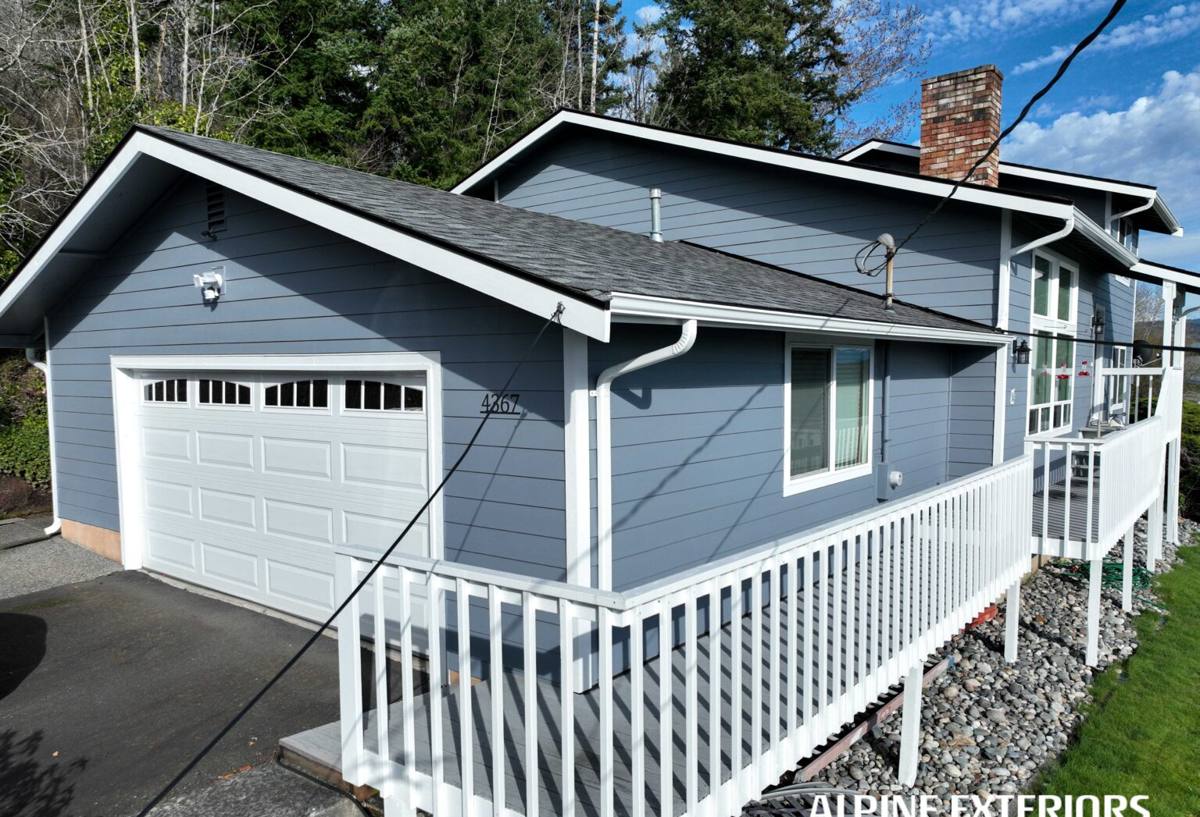
What a Correct Asphalt Shingle Installation Actually Involves
A roof replacement is more than laying shingles in rows. In a wet climate like ours, the layers underneath the shingles do most of the real work of keeping water out. We treat each of the following as non-negotiable on every Bellevue roof we install:
Underlayment and Ice/Water Protection
A synthetic underlayment provides a secondary water barrier beneath the shingles, and self-adhering ice-and-water membrane goes in at eaves, valleys, and other vulnerable transitions where wind-driven rain is most likely to work its way backward under the shingle edge. This detail matters more in the Pacific Northwest than in regions that market "standard" underlayment packages, because our rain events are long-duration rather than short and heavy.
Flashing at Every Penetration
Chimneys, skylights, plumbing vents, and roof-to-wall transitions are where the majority of roof leaks actually start — not in the open field of shingles. Properly formed and sequenced metal flashing, tied correctly into the underlayment layers, is what keeps these spots dry through years of freeze-thaw cycling and wind-driven rain.
Nailing Pattern and Fastening
Manufacturer nailing patterns exist for a reason — shingles fastened too high, too low, or with too few nails are far more likely to blow loose in a windstorm or allow water intrusion at the tab. We follow manufacturer specification on nail placement and count rather than treating it as a shortcut area.
Starter Strips and Edge Detail
The first course at the eaves and rakes is what seals the roof's most exposed edges. Skipping a proper starter strip is a common corner-cut that shows up later as edge lifting and premature wear exactly where wind and rain hit hardest.
Choosing the Right Shingle for a Bellevue Home
Not every asphalt shingle product is built the same, and the right choice depends on your roof's exposure, shade level, and how long you plan to stay in the home. Here's how the common tiers compare for a house in this climate:
| Shingle Type | Typical Lifespan | Best Fit For |
|---|---|---|
| 3-Tab Asphalt | 15–20 years | Budget-conscious re-roofs, simpler rooflines, lower profile |
| Architectural (Laminate) | 25–30+ years | Most Bellevue homes — better wind resistance, thicker construction, dimensional look |
| Impact-Resistant Architectural | 25–30+ years | Homes wanting extra durability against falling limbs from mature tree canopy |
For most homes in shaded, tree-heavy parts of Bellevue, we steer homeowners toward algae-resistant (AR) shingles regardless of tier. These use copper-containing granules to slow the growth of the blue-green algae responsible for the dark streaking common on Pacific Northwest roofs — it's a cosmetic issue rather than a structural one, but it's one of the most visible signs of an older or lower-grade shingle in this climate.
Ventilation: The Detail Most Homeowners Never See
Attic ventilation doesn't show up in a curb-appeal photo, but it has more to do with how long your roof lasts than almost any other factor. A balanced system of intake vents at the eaves and exhaust vents near the ridge keeps moist, warm air from stacking up under the roof deck. Without it, trapped moisture condenses on the underside of the sheathing, which can lead to rot, mold, and premature shingle failure from the inside out — a problem that's more common here than in drier climates precisely because outside humidity rarely gives the attic a chance to dry out on its own.
When we replace a roof, we evaluate the existing ventilation rather than assuming the old setup was adequate. Many older Bellevue homes were built before current ventilation standards were common practice, and correcting it during a re-roof is far cheaper than doing it as a standalone project later.
How Our Roofing Process Works
- Inspection and assessment — we walk the roof (or use a lift/drone where pitch or access requires it) and check the deck, flashing, ventilation, and shingle condition, not just what's visible from the ground.
- Written estimate — you get a clear scope of work and pricing before any work begins, with material options explained in plain terms.
- Tear-off and deck inspection — old roofing is removed down to the deck, and any soft, rotted, or delaminated sheathing is identified and replaced before new material goes down.
- Underlayment, flashing, and ice/water barrier installation — the layers that do the real waterproofing work, installed to manufacturer and code specification.
- Shingle installation — following correct nailing pattern, starter strip, and manufacturer sequencing for your chosen product.
- Ventilation correction — intake and exhaust balanced where the existing system falls short.
- Cleanup and magnetic sweep — job site and surrounding yard cleared of debris and stray fasteners.
- Final walkthrough — we review the completed work with you before calling the job done.
Signs Your Bellevue Roof Needs Attention
Because Bellevue's tree cover keeps a lot of roofs partially hidden from the ground, problems often develop before they're easy to spot from the driveway. Watch for these signs:
- Dark streaking or green-black patches on shingles, especially on north-facing or shaded slopes
- Moss buildup at ridge lines, valleys, or shingle edges
- Granules collecting in gutters or at downspout outlets
- Curling, cracking, or cupped shingle tabs
- Daylight visible through the roof deck from inside the attic
- Water stains on interior ceilings, especially after a heavy rain stretch
- Sagging areas anywhere on the roof plane
- Shingles missing entirely after a windstorm
Any one of these on its own isn't necessarily an emergency, but they're worth a professional look before the next wet season rather than after.
Maintenance in a Moss-Prone Climate
A long moss season is close to unavoidable for a shaded roof in this part of King County, but it can be managed. Moss holds moisture against the shingle surface and, left unchecked, works its way under tabs and lifts them over time. We recommend periodic moss removal using methods that don't damage the granule surface — no aggressive pressure washing, which strips granules and shortens shingle life faster than the moss itself would. Zinc or copper control strips near the ridge are a low-maintenance option that helps slow regrowth between cleanings on shaded roofs.
Keeping gutters clear and overhanging limbs trimmed back also does more for roof longevity than most homeowners expect — both reduce the standing debris and shade that give moss the conditions it needs to take hold in the first place.
What Affects the Cost of a Roofing Project
Every roof is different, and we won't quote a number without seeing the job, but these are the factors that typically move a project's price up or down:
| Factor | Effect on Cost |
|---|---|
| Roof size and number of stories | More material and more complex access increase cost |
| Roof pitch and complexity | Steep or highly cut-up rooflines take longer to work safely |
| Existing deck condition | Rotted sheathing found during tear-off adds material and labor |
| Shingle tier chosen | 3-tab costs less upfront; architectural costs more but lasts longer |
| Ventilation corrections needed | Adding or rebalancing vents adds modest cost but protects the investment |
| Layers of existing roofing | Multiple old layers requiring removal add disposal and labor time |
Why Hiring a Crew That Already Works Bellevue Matters
Roofing work in this part of King County isn't the same job as roofing in a dry, low-canopy climate, and a crew that mostly works elsewhere doesn't always account for that. A contractor familiar with Bellevue's mix of mature tree cover, sustained wet-season rainfall, and the local permitting process is going to make different, better-informed calls on ventilation, underlayment, and moss-resistant material selection than one applying a generic playbook. Local experience also means faster response when weather windows are tight — knowing how to sequence a tear-off around an incoming rain system is a real skill in a climate where a dry afternoon isn't guaranteed for long.
We also carry the licensing and insurance a homeowner should expect from any roofing contractor working in Washington, and we're happy to provide that information as part of any estimate conversation — you shouldn't have to take a contractor's word for it.
If your Bellevue roof is showing its age, dealing with persistent moss, or you're simply due for a straightforward inspection, we're glad to take a look. Reach out using the form below for a free, no-pressure estimate — we'll walk the roof, explain what we find in plain terms, and give you honest options either way.