 Seattle Siding
 Board & Batten in a Neighborhood Built on Character
Columbia City's housing stock runs from early-1900s bungalows and foursquares to newer infill construction tucked between them, and board & batten shows up on both ends of that spectrum. On an older home it reads as a period-appropriate accent — porch gables, dormers, a garage face — without pretending to be historic clapboard it never had. On newer builds it's often the whole envelope, paired with clean trim and a modern color scheme. Either way, the vertical lines and shadow depth of board & batten are a specific look, and getting that look to hold up in Seattle's weather is a different job than installing it in a dry climate.
We install board & batten siding throughout Seattle and King County, and Columbia City jobs come with the same baseline conditions as the rest of the city: long stretches of low-intensity rain, humidity that rarely lets up, and a marine-influenced climate that keeps wood-framed walls damp longer than homeowners moving from drier regions expect.
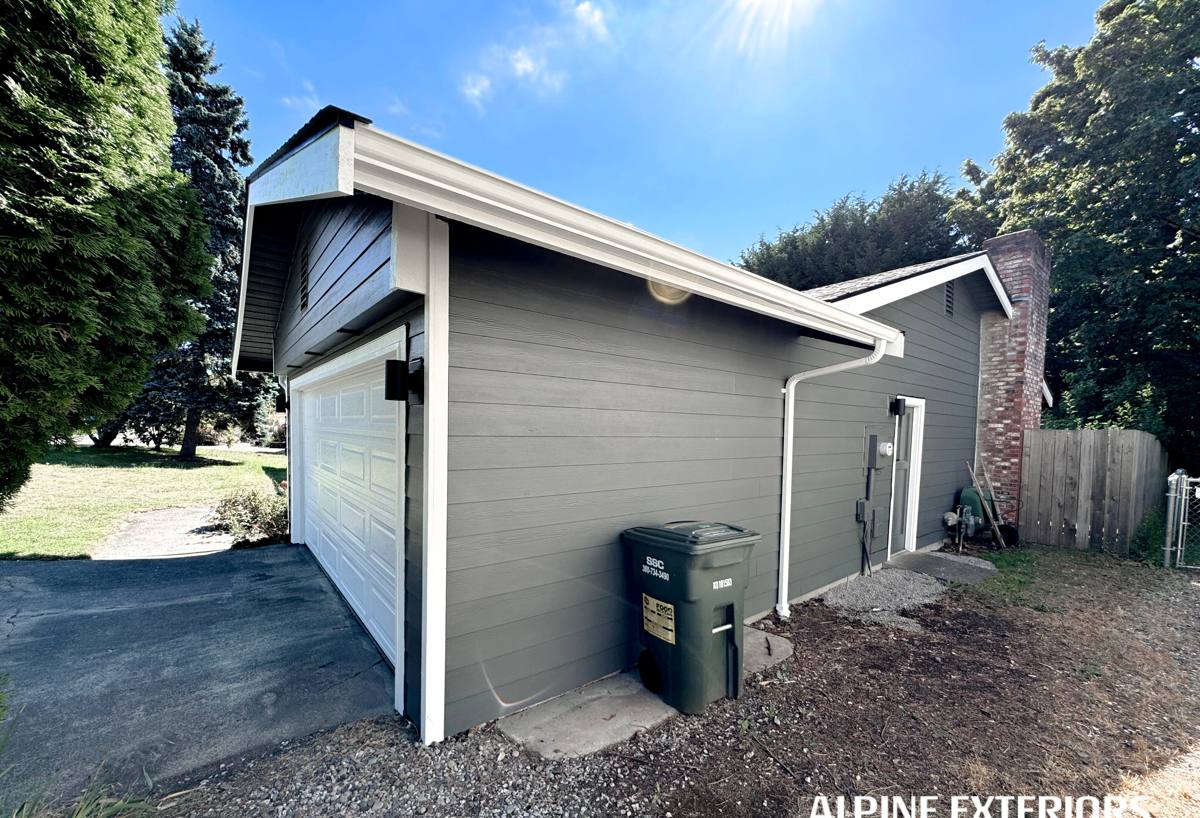
What Seattle's Climate Does to This Siding Style
Board & batten has more seams than lap siding — every board edge and every batten strip is a joint, and every joint is a place water can find a way in if the installation isn't right. In a region with salt-tinged marine air, driving rain that comes in sideways during fall and winter storms, and a moss season that can run half the year on north- and west-facing walls, those seams matter more than they would somewhere dry.
The three things that do the damage
- Standing moisture: Seattle's rain isn't usually heavy, but it's persistent — walls stay wet for days at a time rather than drying quickly between storms.
- Moss and algae: shaded, north-facing board & batten walls in neighborhoods with mature tree cover hold moisture and grow moss faster than sun-exposed walls, which accelerates any underlying rot.
- Wood movement: humidity swings make wood-based products expand and contract, which opens caulk joints and nail holes over time — exactly the gaps board & batten depends on staying sealed.
None of this means board & batten is a bad choice for a Columbia City home. It means the material and the installation both have to be matched to the climate, not just the look.
What a Correct Board & Batten Installation Actually Involves
Board & batten fails in wet climates almost exclusively because of installation shortcuts, not because the style itself is flawed. The details that separate a siding job that lasts decades from one that needs rework in five to eight years are mostly invisible once the job is done:
Rainscreen gap
A drainage gap behind the siding — furring strips that create an air space between the water-resistive barrier and the siding panel — lets any moisture that does get past the surface drain and dry out instead of sitting against the sheathing. In a climate this wet, we treat this as standard practice, not an upgrade.
Fastening and batten spacing
Battens need consistent spacing and fastening into framing, not just into sheathing, so they don't work loose as the wall assembly moves seasonally. Fastener placement and count matter more with board & batten than with horizontal lap siding because each batten is carrying more of the weather-sealing job.
Flashing at every transition
Window and door heads, roof-to-wall intersections, and the bottom termination at the foundation are where board & batten installations most often fail. Proper flashing at each of these — installed in the correct shingle-lap order so water is always directed outward and down — is non-negotiable in a region with this much sustained rainfall.
Sealant as backup, not primary defense
Caulk has a service life, and a wall system that depends on caulk staying perfect for 20+ years will eventually leak. Correct installation uses flashing and drainage as the real defense, with sealant as a secondary line, not the other way around.
Board & Batten with James Hardie
We install James Hardie fiber cement exclusively, and board & batten is one of the styles where that decision matters most. Hardie offers true board & batten profiles as well as vertical panel systems finished with separate battens, both engineered specifically for wet, variable climates like ours under the HZ5 product line.
| Feature | Why it matters for board & batten in this climate |
|---|---|
| Fiber cement composition | Doesn't rot, delaminate, or feed moss the way wood-based products can when walls stay damp for extended periods |
| ColorPlus factory finish | Baked-on finish resists the fading and peeling that field-painted board & batten seams are prone to |
| Engineered for moisture | Manufactured to hold dimension in humidity swings instead of swelling and opening joints |
| Non-combustible | Fiber cement doesn't burn, which matters regardless of siding style |
| Transferable warranty | Backed by the manufacturer when installed to spec, not just a contractor's word |
Why We Don't Install Board & Batten in Other Materials
Board & batten can be built in wood, engineered wood, vinyl, or fiber cement, and each has real trade-offs worth understanding rather than dismissing.
Cedar or primed wood board & batten
Real wood board & batten has genuine appeal — it's what the style originally was, and it can look excellent. But it needs a consistent repaint and reseal schedule to keep water out of end grain and joints, and Seattle's humidity shortens that schedule compared to drier climates. We've found the long-term maintenance burden doesn't match what most homeowners actually want to sign up for.
Vinyl board & batten
Vinyl is affordable and low-maintenance in the sense that it doesn't need painting, but it's a thinner product that can show waviness, and its seams and end joints rely heavily on installation precision to stay weathertight. It also doesn't hold up as well to impact or UV exposure over decades as fiber cement does.
LP SmartSide
LP SmartSide is an engineered wood product with real strengths, but it's still wood-based at its core — treated to resist moisture, but not immune to it the way fiber cement is. In a climate where walls stay wet for days at a stretch, we'd rather put a non-organic material on the wall.
These aren't knocks on any of these products in the abstract — they're the reasons we standardized on one material and stopped installing the others.
Our Process for Columbia City Projects
- On-site assessment: we look at the existing wall assembly, any current moisture damage, sun/shade exposure on each elevation, and how board & batten will interact with your home's trim and rooflines.
- Detailed proposal: profile width, batten spacing, color, and a scope that spells out drainage plane, flashing, and fastening details — not just "siding replacement."
- Prep and tear-off: removal of existing siding, sheathing inspection and repair where needed, and correction of any water-resistive barrier issues found underneath.
- Installation to manufacturer spec: rainscreen, flashing at every penetration and transition, and fastening per James Hardie's published requirements — which is also what keeps the manufacturer warranty intact.
- Final walkthrough: we go over the finished job with you, including what routine maintenance to expect.
What Affects the Cost of a Board & Batten Job
| Factor | Why it changes the price |
|---|---|
| Full re-side vs. accent areas | Whole-house board & batten costs more than using it on gables or a porch as an accent |
| Wall condition underneath | Sheathing repair or rot remediation adds labor before siding can go on |
| Wall height and complexity | Multiple stories, dormers, and cut-ins increase labor time and material waste |
| Batten spacing and profile | Narrower spacing uses more material and more fastening labor per square foot |
| Color | Standard ColorPlus colors vs. custom finishes affect material cost |
What to Ask Before You Hire Anyone for Board & Batten
- Will there be a rainscreen/drainage gap behind the siding, or is it going straight over the existing barrier?
- How is flashing handled at windows, doors, and roof-to-wall intersections?
- What's the fastening pattern, and is it into framing?
- Is the manufacturer's installation instructions being followed closely enough to keep the warranty valid?
- What's included in the written scope versus what might come up as a change order?
Living with Board & Batten in This Climate
A correctly installed James Hardie board & batten system in Seattle needs less upkeep than wood alternatives, but "less" isn't "none." Expect to rinse off accumulated moss and grime on shaded elevations periodically, keep gutters and downspouts clear so water isn't sheeting down the wall face, and have caulked joints checked every few years even though they're a backup system rather than the primary one. None of that compares to the repaint and reseal cycle wood-based board & batten requires here.
If you're weighing board & batten for a home in Columbia City, we're glad to come take a look, walk the exterior with you, and put together a straightforward estimate — no pressure, no obligation.