 Seattle Siding
 Composite Decking for University District Homes
University District sits in one of Seattle's older, more established pockets — mature street trees, tight lots, and homes that range from early-1900s bungalows to newer infill construction. Whatever the age of the house, the deck attached to it lives outside year-round in a King County climate that doesn't do decks any favors: long stretches of steady rain, low winter sun angles blocked by tree canopy, and humidity that never fully lets up between storms. Composite decking has become the go-to choice for a lot of homeowners here precisely because it handles that combination better than wood does, but "composite" isn't a single product — and installing it wrong cancels out most of the advantage.
This page covers what composite decking actually needs to hold up in this specific environment, what a correct installation looks like, and how we approach these projects from estimate to final walkthrough.
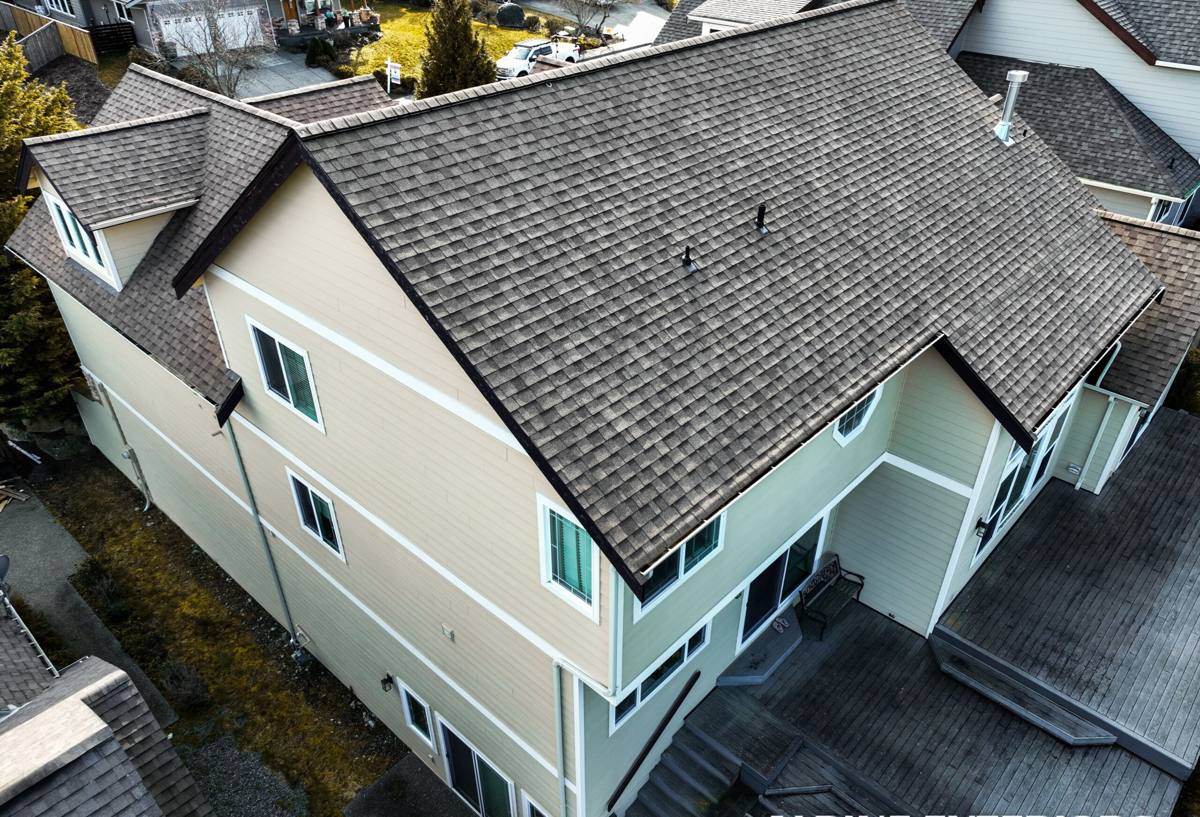
What Seattle's Climate Actually Does to a Deck
Seattle's marine climate brings a mix of moisture sources that all end up at the same place — your deck boards, joists, and ledger board. Driving rain gets pushed sideways by wind and finds its way under railings and against house walls. A long moss season, often running from fall through spring, coats any shaded or north-facing surface that doesn't get regular sun and airflow. And the broader Puget Sound region's salt-tinged air, even at a modest distance from open water, accelerates corrosion on unprotected metal fasteners and hardware over time.
In a neighborhood like University District, where many lots have mature trees shading part or all of a deck, the practical effect is that some boards stay damp far longer after a storm than others just a few feet away. That uneven drying is where problems start — not usually with the composite board material itself, but with what's underneath it and how it was fastened.
Where Problems Actually Show Up
- Moss and algae building up on shaded boards, making them slippery underfoot
- Moisture trapped between the decking and framing when there's no airflow gap
- Fastener corrosion or staining where the wrong screws were used
- Warped or squeaking boards from expansion and contraction that wasn't planned for
- Rot in the wood substructure hidden beneath decking that looks fine on top
Composite Decking vs. Other Materials
Composite isn't automatically the right call for every deck, but for a wet, shaded environment like this one, it solves problems that wood and other materials struggle with. Here's how the common options actually compare in this climate.
| Material | How It Handles Rain & Moss | Maintenance | Typical Lifespan |
|---|---|---|---|
| Pressure-treated wood | Absorbs moisture, needs sealing to resist moss and swelling | Annual cleaning, periodic staining/sealing | 10–15 years |
| Cedar | Naturally moisture-resistant but still grays and hosts moss without upkeep | Regular cleaning and oiling | 15–20 years |
| Capped composite | Sheds water, resists moss buildup on the surface, doesn't absorb moisture | Occasional wash-down | 25–30+ years |
| Uncapped/first-gen composite | Can absorb moisture at the core, more prone to mold in shaded areas | More frequent cleaning | 15–20 years |
| PVC decking | Fully moisture-resistant, sheds water well | Low | 25–30+ years |
We install capped composite as our standard recommendation for shaded, damp lots like the ones common in University District. The cap layer is what keeps water from soaking into the board core — without it, a composite deck in a shady spot can actually hold moisture longer than a well-maintained wood deck.
What a Correct Composite Deck Installation Involves
The composite boards themselves get most of the attention, but the framing and details underneath them determine whether the deck performs well for the next twenty-plus years. A rushed or generic installation is where most of the complaints about composite decking actually originate.
Framing and Drainage
Joists need to be spaced correctly for the specific composite product being used — composite boards often require tighter joist spacing than wood, especially at angles or on stairs, because the material behaves differently under load and temperature swings. We also make sure the framing has a slight slope away from the house and that there's a real airflow gap beneath the decking, not just a flush layer sitting on top of solid framing. Without that gap, moisture gets trapped and has nowhere to evaporate.
Fasteners and Hardware
Given the salt content in the regional air and the amount of rain King County sees, we use fasteners rated for coastal and marine environments — stainless steel or coated hardware designed to resist corrosion, along with hidden fastener systems where the product allows it. Cheaper, uncoated screws are a common source of streaking and premature hardware failure on decks in this area.
Board Layout and Ventilation
Where a deck sits partly under tree cover, board direction and gapping matter more than usual. We account for expected drying time in shaded zones and, where the site allows it, adjust layout or add ventilation at the perimeter so damp areas aren't left to sit.
Ledger and Flashing Details
Where the deck attaches to the house, proper flashing is what keeps driving rain from working its way behind the siding and into the wall structure. This is one of the most commonly skipped steps on lower-cost deck jobs, and it's invisible once the deck is finished — which is exactly why it needs to be done right the first time.
Our Process for a University District Deck Project
- On-site assessment: We look at sun exposure, tree cover, existing framing condition, drainage, and how the deck ties into the house.
- Material selection: We walk through composite board options with you based on your budget, the amount of shade the deck gets, and your maintenance preferences.
- Framing and structural work: Any deteriorated joists, ledger issues, or drainage problems get addressed before decking goes down — not covered up.
- Installation: Boards, fasteners, and hardware are installed to the manufacturer's specifications for this climate, including expansion gaps and proper attachment.
- Final walkthrough: We go over care basics with you and point out anything specific to your deck's exposure that's worth knowing.
Maintaining a Composite Deck in a Wet, Shaded Climate
Composite decking cuts down on maintenance significantly compared to wood, but "low-maintenance" doesn't mean "no maintenance" — especially under tree cover in a neighborhood that stays damp for months at a time.
- Sweep leaves and debris off the deck regularly, especially in fall — trapped organic matter is what feeds moss and mildew
- Rinse the deck surface periodically to prevent algae and moss from getting established, particularly in shaded corners
- Check and clear gaps between boards so water and debris don't build up
- Keep gutters and downspouts near the deck clear so runoff isn't draining directly onto it
- Trim back overhanging branches where practical to let more light and airflow reach the deck surface
- Inspect railings and stair connections annually for movement or corrosion at fastener points
What Affects the Cost of a Composite Deck
| Cost Factor | Why It Matters |
|---|---|
| Deck size and shape | More square footage and complex angles or curves increase board waste and labor |
| Composite product tier | Capped, higher-end boards cost more upfront but hold up better in shade and moisture |
| Framing condition | Existing rot or undersized joists mean structural work before decking can go down |
| Elevation and stairs | Multi-level decks and stairs add framing, railing, and labor complexity |
| Railing style | Composite or metal railing systems cost more than basic wood but match the deck's lifespan |
| Site access | Tight lots or limited access for materials and equipment can add labor time |
Composite decking generally costs more up front than pressure-treated wood, but the gap narrows over the life of the deck once you account for wood's recurring sealing, staining, and repair costs. We'll walk through actual numbers for your specific project during an estimate — broad ranges online rarely reflect site-specific factors like framing condition or access.
Why a Crew That Already Works University District Matters
A deck built to a generic spec sheet doesn't account for the fact that a lot in University District might sit in near-constant shade from a neighbor's tree, or that an older home's framing may not match current lumber sizing. Crews who work regularly in this part of Seattle get a feel for which lots dry out slowly, which older homes tend to have ledger or flashing issues from prior work, and how to plan drainage and board layout around real conditions instead of assumptions. That local familiarity shows up in fewer surprises during the job and a deck that's built for the site it's actually on, not a average-case version of it.
If you're planning a new composite deck or replacing an aging one in University District, we're happy to take a look and give you a straightforward, no-pressure estimate — just fill out the form below and we'll go from there.