 Seattle Siding
 What Fremont's Weather Actually Does to Siding
Fremont sits close to the Ship Canal and Lake Union, which means homes here get a steady diet of moist, salt-tinged air on top of everything else the Puget Sound climate throws at a house. That combination matters more than most homeowners realize when it comes time to re-side. Salt-laden moisture accelerates corrosion on fasteners and trim, driving rain off the water finds every gap in a wall assembly that wasn't detailed correctly, and Seattle's long, mild, wet stretch from fall through spring gives moss, algae, and mildew months to colonize any siding surface that holds moisture at the surface.
None of this is exotic information to anyone who has walked Fremont's streets and looked closely at older homes. You'll see north-facing walls with persistent green staining, sills and trim boards that have gone soft, and paint that's failed years ahead of schedule on the shaded, wind-exposed sides of houses. That's not bad luck — it's what happens when a siding material or an installation detail wasn't built for this specific climate. Fixing it means choosing a product that resists moisture at the material level and installing it in a way that keeps water moving out, not in.
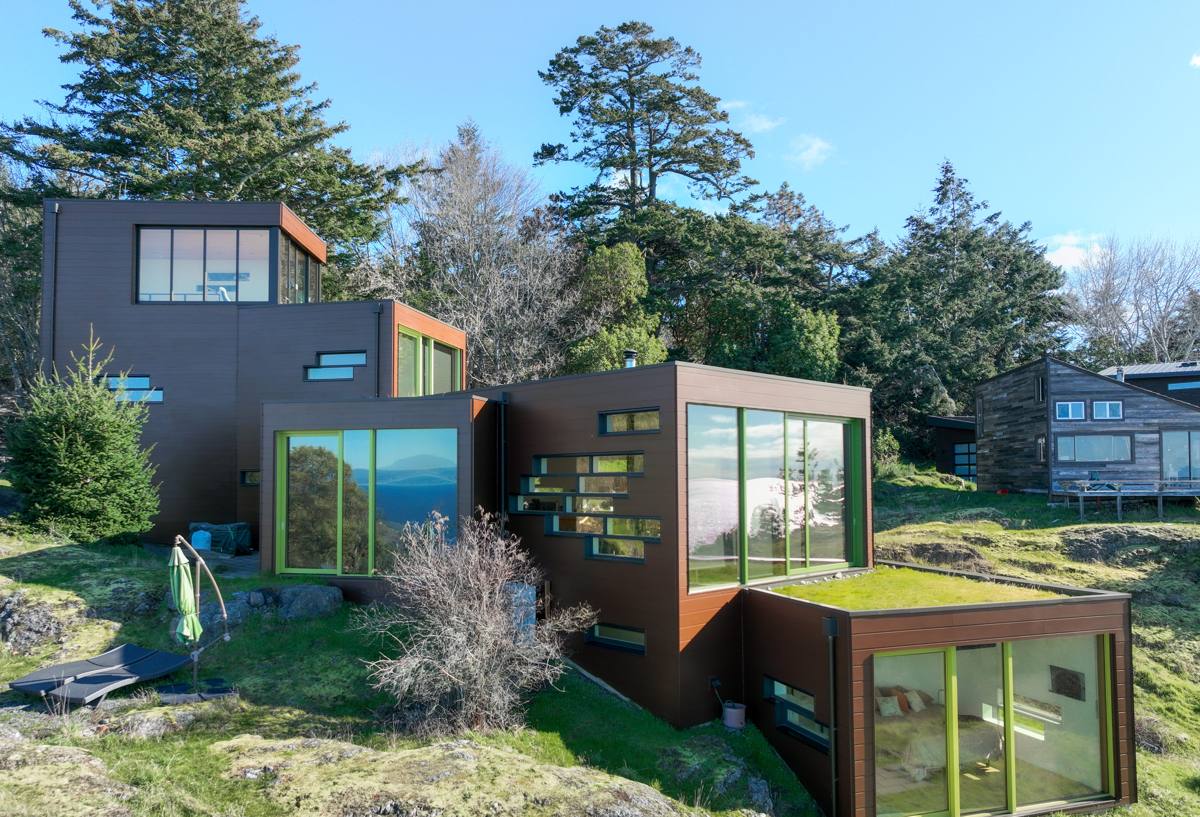
Why We Only Install James Hardie in Fremont
We install James Hardie fiber cement exclusively. We don't install vinyl, LP SmartSide, primed spruce or cedar lap, or other fiber cement brands like Cemplank or Allura. That's a deliberate standard, not a sales preference, and it comes down to what actually holds up through a King County wet season year after year.
Fiber cement as a material category is non-combustible and dimensionally stable in a way wood-based and engineered-wood products aren't — it doesn't swell, split, or take on water at cut edges the way OSB-core siding can if a joint fails. Within fiber cement, James Hardie's ColorPlus factory finish and HZ5 climate-engineered product line are built specifically for the Pacific Northwest's moisture profile, and Hardie's transferable warranty structure is the strongest we've found in the category. We'd rather install one product exceptionally well and stand behind it than offer a menu of options with different failure modes. If you want the longer version of that reasoning — including where competing products genuinely get things right — our general siding pages cover the comparison in detail. This page is about what correct Hardie installation looks like on a Fremont house specifically.
HZ5 Matters More Here Than the Marketing Suggests
James Hardie engineers its lap and panel products in different HZ ("Hardie Zone") formulations for different climates. HZ5 is the version built for regions with sustained damp cold and freeze-thaw cycling — it's the correct product zone for Seattle and King County, and it's what we install. Using an HZ product engineered for a drier or hotter climate on a Fremont home is the kind of shortcut that shows up as problems five or ten years down the road, not on move-in day.
What Correct Installation Involves — Not Just the Siding Itself
The siding board is only part of the system. Most premature siding failures we see in Fremont trace back to installation details, not the material. A correct job addresses moisture management as its own discipline, separate from just nailing boards to the wall.
Moisture Management Comes First
- A continuous weather-resistant barrier (housewrap or building paper) installed shingle-style so every seam sheds water downward
- A drainage plane — typically a furring strip or drainable house wrap system — that lets any moisture that gets behind the cladding drain and dry out instead of sitting against the sheathing
- Properly flashed and head-flashed window and door openings, with the flashing integrated into the weather barrier in the correct shingle-lap order, not caulked over as an afterthought
- Kickout flashing at every roof-to-wall intersection, directing roof runoff away from the wall instead of letting it run down behind the siding
- Correct clearance between the bottom of the siding and grade, decks, or roofing — Hardie specifies minimum gaps precisely because ground-level moisture wicking is one of the most common causes of early siding failure
Fastening and Joint Treatment
James Hardie publishes exact fastener type, spacing, and placement specs for lap and panel siding, and following them is what keeps the warranty valid and the wall performing. Butt joints need to be treated correctly — typically backed with flashing or an approved joint system rather than just butted and caulked — because a joint that's only caulked will eventually crack and let water in behind the board. Fasteners themselves matter too: in a salt-air-influenced environment like Fremont's, corrosion-resistant fasteners aren't optional upgrades, they're the baseline.
Choosing the Right Product and Finish for This Neighborhood
Fremont's housing stock runs from early-1900s bungalows and Craftsman-style homes to newer infill construction, so there isn't one universal answer on profile or color — but there are a few decisions worth walking through before ordering material.
| Product Line | Best Fit For | Why It Fits |
|---|---|---|
| HardiePlank Lap Siding | Bungalows, Craftsman homes, most single-family Fremont houses | Traditional lap profile matches the existing streetscape; wide texture and width options |
| HardiePanel Vertical Siding | Gable accents, modern infill, mixed-material facades | Clean vertical lines pair well with board-and-batten trim details common on newer builds |
| HardieTrim Boards | Window/door surrounds, corner boards, fascia | Matches siding durability so trim doesn't become the weak point in the wall assembly |
On finish, ColorPlus factory-applied color is worth the small premium over field-painting for a Fremont project specifically because it comes with a baked-on finish warranty and holds color and sheen through repeated wet-dry cycling far better than a job-site paint coat exposed to Seattle's UV-thin but moisture-heavy conditions. Smooth and cedar-texture finishes are both available; smooth tends to show less staining in shaded, moss-prone areas over time.
Our Process, Start to Finish
- Walk-through and assessment — we inspect existing siding, sheathing condition, flashing details, and moisture evidence before quoting anything
- Written scope and product selection — you get a specific plan: which HardiePlank or panel product, trim details, and any sheathing repair needed, not a vague allowance
- Tear-off and sheathing check — old siding comes off and we inspect the sheathing underneath for rot before closing anything back up
- Weather barrier and drainage plane installation — this is the step that determines how the wall performs for the next 30+ years, and we don't skip or shortcut it
- Flashing at every penetration — windows, doors, roof lines, and utility penetrations get flashed to shed water outward
- Siding installation to Hardie fastener and joint spec — correct nail placement, joint treatment, and clearances throughout
- Trim, caulking, and final finish check — every joint and transition gets reviewed before we call the job done
- Final walkthrough with you — we go around the house together before we consider the job complete
Signs of a Rushed Job vs. a Correct One
If you're getting quotes from more than one contractor, here's what actually separates a durable installation from one that looks fine on day one and fails early:
- Rushed: siding nailed directly over old siding or straight to sheathing with no drainage plane. Correct: full tear-off with a proper weather barrier and drainage gap installed underneath
- Rushed: butt joints just caulked. Correct: joints flashed or backed per Hardie spec, with caulk as a finishing detail, not the only defense
- Rushed: siding run tight to grade, decking, or roofing. Correct: manufacturer-specified clearance maintained everywhere
- Rushed: standard fasteners used everywhere. Correct: corrosion-resistant fasteners appropriate for a marine-influenced climate
- Rushed: no kickout flashing at roof-wall intersections. Correct: kickout flashing installed at every one
Why a Crew That Already Works Fremont Matters
Fremont's mix of older original-construction homes and newer infill means the right approach genuinely differs house to house — a century-old bungalow with original sheathing needs a different inspection eye than a fifteen-year-old build. A crew that already works this neighborhood recognizes common Fremont-area framing and moisture patterns on sight, which shortens the assessment phase and reduces surprises once tear-off starts. There's also a practical side: Seattle permitting and inspection requirements apply to siding replacement scope in ways that vary by project, and familiarity with how the City of Seattle handles these jobs keeps a project moving instead of stalling on paperwork.
Local presence also means accountability. If a warranty question or a joint needs a second look two years after installation, you're calling a crew that's still working three streets over, not chasing down a company that only showed up for one job and left the area.
What This Typically Costs — and What Drives the Range
We don't publish fixed prices because every Fremont home is a different scope, but these are the factors that actually move the number, in roughly the order of impact:
| Factor | Why It Matters |
|---|---|
| Sheathing condition underneath old siding | Rot repair discovered at tear-off is the single biggest variable on any re-side quote |
| Total wall square footage and home height | Larger and taller homes mean more material, more staging, and more labor hours |
| Number of window/door openings and trim details | Every opening needs flashing and trim work, which adds labor beyond flat wall area |
| Product selection (lap vs. panel, ColorPlus vs. field paint) | ColorPlus carries a material premium but removes a paint job and its recurring cost |
| Access and site conditions | Tight lot lines, fencing, or limited staging space common in older Fremont blocks can add labor time |
The only way to get an accurate number is a walk-through, because the sheathing condition alone can shift a quote significantly once old siding comes off.
If you're planning a siding project in Fremont and want a straight answer on scope and cost, we're happy to walk the house with you. The estimate is free, there's no pressure, and you'll get a specific plan for your home rather than a generic quote — just fill out the form below to get started.