 Seattle Siding
 Magnolia's Marine Climate Is Tougher on Siding Than It Looks
Magnolia sits on a peninsula with water close on multiple sides, which means homes here take on weather that inland Seattle neighborhoods simply don't see as often. Salt-laden air off Puget Sound, wind-driven rain that hits walls sideways instead of falling straight down, and a shaded, moisture-heavy tree canopy on many interior streets all combine to put real stress on exterior siding. A product that performs fine in a drier part of King County can fail years early here if it isn't built and installed for this specific exposure.
We've worked on enough homes in Magnolia to know the pattern: siding problems rarely show up as one dramatic failure. They show up as slow, quiet damage — a soft spot behind a downspout, moss creeping up a north-facing wall, paint that won't hold past a few years on a wind-exposed elevation. By the time it's visible, the substrate underneath has often been wet for a while.
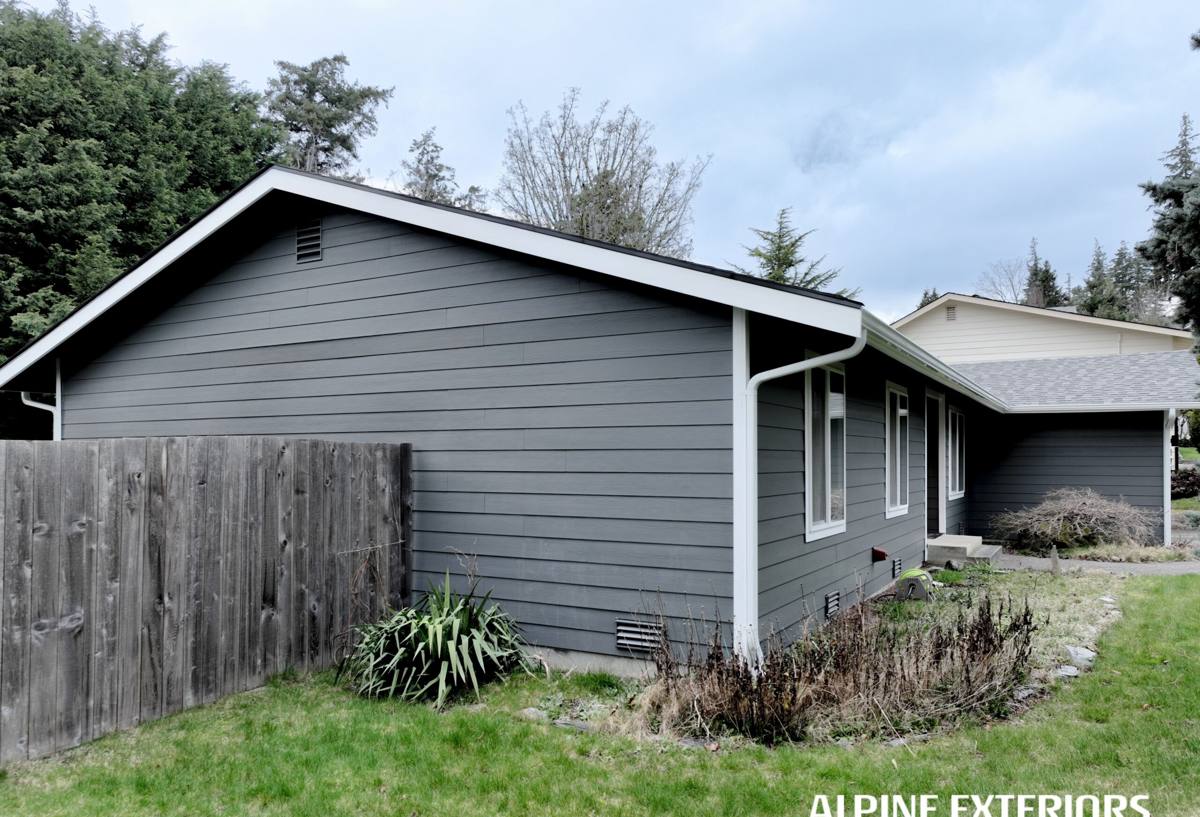
What Salt Air, Driving Rain, and a Long Moss Season Actually Do to a Wall
Salt Air and Marine Exposure
Airborne salt accelerates the breakdown of fasteners, trim, and any siding material that isn't engineered to resist it. Over time it also degrades cheaper paint films faster than inland exposure would, leaving a chalky, faded surface that needs repainting sooner than the label promised.
Driving Rain
Seattle's rain isn't usually heavy in volume, but it's frequent, and Magnolia's exposed bluff-top and view lots regularly catch wind-driven rain that pushes water sideways into laps, seams, and trim joints. Siding that relies on face-sealing alone — caulk and paint doing all the work — eventually lets water behind the cladding, where it has nowhere to evaporate.
The Moss Season
Many Magnolia lots carry mature tree cover, and shaded, north- and east-facing walls stay damp for extended stretches through fall, winter, and spring. That's exactly the environment moss, algae, and mildew need to take hold. On porous or absorbent siding materials, moss doesn't just sit on the surface — it holds moisture against the wall and keeps it wet longer between rain events.
Why We Only Install James Hardie Fiber Cement Siding
We made a deliberate decision years ago to install one siding system, not several. We don't install vinyl, LP SmartSide, Cemplank, Allura, or primed spruce or cedar siding — not because those products have no merit, but because none of them hold up as consistently as James Hardie fiber cement does under the specific combination of salt air, driving rain, and moss exposure that Magnolia homes deal with year after year.
Fiber cement is non-combustible, dimensionally stable in wet-dry cycling, and doesn't feed mold or insects the way wood-based products can. James Hardie backs its siding with a strong transferable warranty and a factory-applied ColorPlus finish that's baked on under controlled conditions — a meaningfully different process than field-applied paint, which is where a lot of siding failures in this climate actually start.
The HardieZone System Built for This Region
James Hardie engineers its products by climate zone, and the Pacific Northwest falls under HZ5 — formulated for regions with sustained moisture exposure rather than extreme heat or freeze-thaw cycling. That's a meaningful distinction: a siding product engineered for a hot, dry climate is not the same product performing well in a marine, rain-heavy one. For Magnolia specifically, that means:
- HardiePlank lap siding for standard walls, available in several exposure widths and profiles
- HardieShingle siding for a traditional Pacific Northwest look on gables or accent areas
- HardiePanel vertical siding for modern facades, porch ceilings, or accent walls
- HardieTrim boards for corners, fascia, and window and door casing that won't rot or absorb water the way wood trim can
All of it is engineered to resist moisture intrusion, hold paint or factory finish longer, and resist the freeze-thaw and wet-dry cycling that's routine for a King County winter.
What a Correct Installation Involves
Fiber cement siding is only as good as the wall assembly behind it. James Hardie's own installation instructions — and honestly, basic building science for this climate — call for a drainage plane, not a face-sealed system. In a place like Magnolia, skipping this step is where most premature siding failures start.
Correct installation, at minimum, includes:
- A weather-resistive barrier installed shingle-style, lapped correctly at every seam
- A rainscreen gap (furring or a drainage mat) so any water that does get behind the siding can drain and the wall can dry
- Properly flashed windows, doors, and any wall penetrations, with kick-out flashing where rooflines meet walls
- Correct nail placement and fastener spacing per the Hardie fastening schedule — over- or under-driven nails are a common source of cracking and water entry
- Proper clearance at grade, decks, and roof lines so siding never sits in standing water or constant splash-back
- Caulked and painted (or factory-finished) cut edges, since raw fiber cement edges are the most vulnerable point on the wall
Skip any one of these and you can still end up with moisture problems behind Hardie siding — the product isn't the whole story, the installation is.
Our Process, Start to Finish
We start every Magnolia project with an on-site assessment of the specific exposure that elevation faces — a bluff-facing wall dealing with direct wind and salt air is treated differently than a shaded, tree-covered wall dealing with prolonged dampness and moss. From there:
- Tear-off and inspection — removing existing siding and checking sheathing, framing, and any prior water damage before anything new goes up
- Repair and prep — replacing any compromised sheathing or framing, correcting existing flashing mistakes rather than covering them over
- Weather barrier and rainscreen installation — building in the drainage plane the wall needs for this climate
- Flashing at every window, door, and penetration, with particular attention to roof-to-wall intersections
- Hardie siding installation to manufacturer fastening specs, sized and profiled for the home
- Trim, caulking, and finish work, including sealing all field-cut edges
- Final walkthrough so you understand what was done and what maintenance, if any, to expect
Comparing Siding Options for a Magnolia Home
| Option | How It Handles Salt Air & Driving Rain | Moss/Algae Resistance | Our Position |
|---|---|---|---|
| Vinyl siding | Can warp or crack under temperature swings and wind exposure; seams are a common water-entry point | Moderate — surface doesn't feed moss, but panels trap moisture behind them | Not installed — long-term moisture management doesn't hold up to our standard |
| Cedar / primed spruce | Absorbs moisture directly; needs consistent refinishing to stay protected | Poor in shaded, damp locations without regular maintenance | Not installed — maintenance burden is too high for this climate |
| LP SmartSide | Engineered wood strand product; edges and cuts are vulnerable if not sealed and maintained precisely | Moderate, dependent on coating upkeep | Not installed — we standardized on a non-wood-based product for wet climates |
| James Hardie fiber cement | Engineered for HZ5 marine/rain climates; dimensionally stable | Strong — factory finish resists moss and algae growth better than absorbent materials | What we install exclusively |
Maintenance Through a Long Moss Season
No siding is truly maintenance-free, but the goal is to minimize what a homeowner has to think about. With correctly installed James Hardie siding, upkeep in Magnolia's climate generally comes down to:
- An occasional gentle wash to keep shaded walls from building up surface moss or algae
- Checking caulking at trim joints and penetrations every year or two, since caulk is the one component that wears out before the siding does
- Keeping gutters clear and downspouts directed away from the wall, since concentrated water is the single biggest cause of localized siding damage
- Trimming back vegetation and tree limbs that keep a wall shaded and damp longer than it needs to be
ColorPlus factory-finished siding holds its color considerably longer than field-applied paint under this kind of sun, salt, and moisture cycling, which reduces how often repainting comes up at all.
Why a Crew That Already Works Magnolia Matters
Siding work here isn't generic exterior carpentry. A crew that regularly works Magnolia's bluff-top, view, and tree-shaded lots already understands how wind exposure changes from one elevation of a house to the other, where moss tends to establish first, and how to sequence a job around Seattle's rain patterns instead of fighting them. That local pattern recognition is what keeps a flashing detail from becoming a callback two winters later.
It also matters for permitting and code compliance — Seattle and King County have their own permitting processes and inspection expectations, and a crew that's pulled permits in this jurisdiction before doesn't have to learn that process on your project.
Questions to Ask Before Hiring a Siding Contractor in Magnolia
- Do you install a rainscreen or drainage gap behind fiber cement siding, or face-seal it?
- Are you a licensed, bonded, and insured contractor in Washington State?
- Will you correct existing flashing issues you find during tear-off, or install over them?
- What is James Hardie's fastening schedule for this specific product, and will you follow it?
- What does the manufacturer's warranty actually cover, and does it transfer if the home is sold?
If your Magnolia home's siding is showing early wear, holding moss longer than it should, or you're planning ahead for a full replacement, we're happy to take a look and walk you through what correct James Hardie installation looks like for your specific exposure. Reach out using the form below for a free, no-pressure estimate.