 Seattle Siding
 Building Decks That Actually Hold Up in Fremont
Fremont's mix of craftsman bungalows, mid-century houses, and newer infill homes all share one thing in common once you get outside: a backyard or rooftop deck that has to survive Seattle's wet season year after year. A deck here isn't just a carpentry project. It's an exterior structure that sits exposed to driving rain, standing moisture, and the kind of low, gray humidity that never fully dries out between storms. Build it like it's going in Arizona and you'll be repairing it in three years. Build it for this climate, and it'll outlast the trends in decking color that come and go.
We build and repair decks across Seattle and King County, and Fremont has its own quirks worth understanding before you sign off on a design. Lots here tend to be tight, grades can be uneven between the street and the backyard, and many homes sit close enough to the Lake Washington Ship Canal that the air carries more moisture and salt than homeowners further from the water expect. None of that makes a deck impossible to build well. It just means the details matter more than they would in a drier climate.
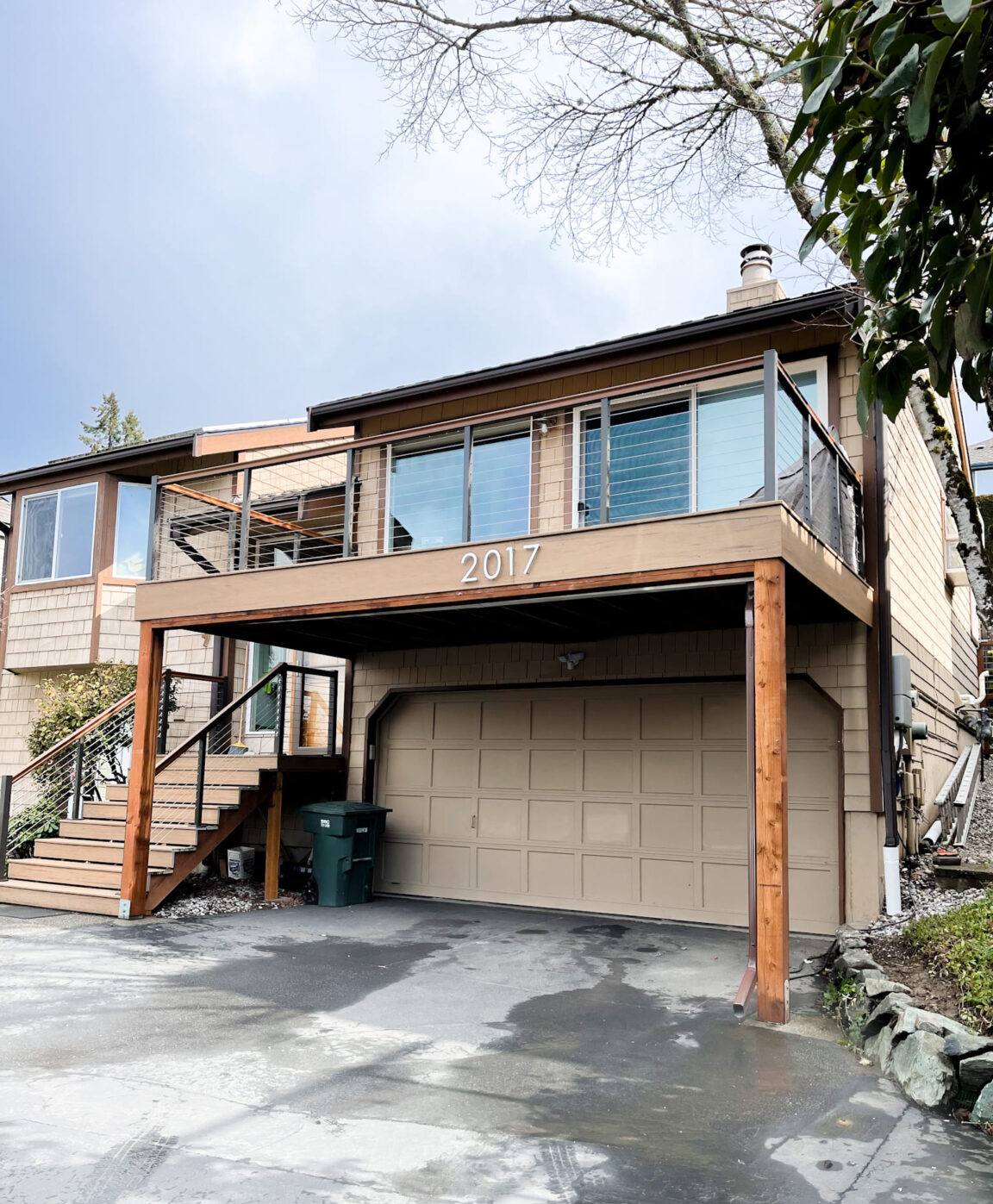
What Seattle's Climate Does to an Unprotected Deck
Driving Rain and Standing Water
Seattle rain rarely falls straight down. Wind off the Sound and the canal pushes it sideways, which means it gets up under fascia boards, behind ledger connections, and into any gap that wasn't properly flashed. Over time, water that can't shed or drain becomes water that sits, and wood that sits wet stays wet long after the sun comes back out.
Moss and Algae Growth
Our moss season runs long, and a deck surface that stays shaded and damp for weeks at a stretch is exactly the environment moss and algae like best. Beyond looking bad, moss holds moisture against the decking material and creates a genuinely slick, dangerous walking surface, especially on stairs.
Salt Air and Corrosion
Homes closer to the ship canal and the water deal with a steady low-level exposure to salt-laden air. That air is hard on unprotected metal. Fasteners, brackets, and hardware that aren't rated for coastal or marine-adjacent exposure will corrode faster here than the same hardware would inland, and corroded fasteners are one of the most common hidden causes of deck failure.
Freeze-Thaw Cycling
Seattle winters aren't brutal, but we do get repeated cold snaps that freeze water trapped in wood fibers or in cracks in aging boards. That expansion and contraction, repeated over several winters, is what turns small cracks into split boards and loose connections.
Choosing the Right Decking Material for a Fremont Home
There's no single "best" decking material for every house. The right choice depends on your budget, how much upkeep you want to do, and how exposed the deck is to sun, rain, and salt air. Here's how the common options actually compare in this climate.
| Material | Moisture Performance | Maintenance | Typical Lifespan Here |
|---|---|---|---|
| Pressure-Treated Pine | Good if properly sealed and re-sealed | Annual cleaning, re-sealing every 1-2 years | 10-15 years |
| Western Red Cedar | Naturally rot- and insect-resistant, still needs sealing | Cleaning and oil/sealer every 1-2 years | 15-20 years |
| Composite Decking | Excellent, does not absorb water like wood | Occasional washing, no sealing or staining | 25-30+ years |
| PVC Decking | Excellent, fully moisture-proof surface | Occasional washing only | 25-30+ years |
We install all of the above, and we'll walk you through the honest trade-offs for your specific project rather than pushing whatever's easiest to install. Cedar looks and smells the part and takes stain beautifully, but it demands a real maintenance commitment in a climate this wet. Composite and PVC cost more upfront but largely remove moisture and moss as ongoing problems, which matters a lot on a shaded, north-facing deck that never gets a full day of sun to dry out. Pressure-treated lumber remains a solid budget option as long as you're realistic about the sealing schedule it needs.
The Framing Underneath Matters More Than the Boards on Top
Ledger Attachment and Flashing
Where a deck attaches to the house is the single most common failure point we see on older decks in this area. If the ledger board isn't properly flashed with the flashing correctly lapped over the house's water-resistive barrier, water gets channeled directly into the rim joist and the wall framing behind it. This is a slow, hidden kind of damage — you often don't see it until siding or interior finishes are already compromised.
Joist Spacing and Fastener Selection
We use fasteners and structural hardware rated for exterior and, where relevant, coastal exposure — not standard interior-grade hardware that will corrode faster given the salt content in the air near the water. Joist spacing gets set based on the decking material you choose, since composite and PVC boards often call for tighter spacing than solid wood to prevent flexing.
Footings and Post Bases
King County soil conditions vary block to block, and Fremont's terrain includes some real grade changes between the house and the yard. Footings need to be sized and set at the correct depth for the load and soil type, and post bases should hold the post above the deck surface so wood isn't sitting in a puddle every time it rains, which is exactly the kind of detail that gets skipped on a rushed or underbid job.
How Our Deck Building Process Works
1. On-Site Assessment
We start at your property, not over the phone. We look at grade, drainage, sun exposure, existing structure if there is one, and how the deck will tie into the house.
2. Design and Material Selection
We talk through layout, railing style, stairs, and decking material based on your budget and how much maintenance you actually want to take on long-term.
3. Permitting
Most new decks and many significant repairs or rebuilds in Seattle require a permit. We handle that process so you're not stuck deciphering it yourself.
4. Demolition and Site Prep
If we're replacing an existing deck, we remove it carefully to protect landscaping and check the condition of the house connection point before framing begins.
5. Framing and Flashing
This is where the structural work happens: footings, posts, beams, joists, ledger flashing, and hardware, all built to handle sustained wet-weather exposure.
6. Decking, Railing, and Stairs
Surface material goes down last, along with code-compliant railings and stairs, finished to the standard we'd want on our own home.
7. Final Walkthrough
We walk the finished deck with you, point out anything you should know for upkeep, and make sure you're satisfied before we call it done.
Permits, Setbacks, and Code in Seattle
Seattle and King County have specific requirements around deck height, guardrail height, stair geometry, and setbacks from property lines, and those requirements can affect what's actually buildable on a given lot. Fremont's smaller and irregularly shaped lots make this worth checking early rather than after a design is already picked out. A deck that's more than a certain height off grade typically triggers guardrail requirements, and any deck attached to the house structurally usually needs a permit and inspection regardless of size. Skipping this step doesn't just risk a fine — it can create real problems when you go to sell the house and a buyer's inspector flags unpermitted work.
Keeping a Seattle Deck Healthy Year-Round
Even a well-built deck needs some seasonal attention in this climate. A little consistent upkeep goes a long way toward avoiding expensive repairs down the road.
- Sweep debris and standing leaves off the surface regularly, especially in fall when they trap moisture against boards
- Rinse or lightly scrub moss and algae off the surface and stairs before it builds up and gets slick
- Check that gaps between boards stay clear so water can drain through rather than pooling
- Inspect the ledger board area and flashing once a year for any signs of water staining or soft wood
- Re-seal or re-stain wood decking on the schedule appropriate to the product, don't wait until it looks obviously worn
- Look over railings, stair connections, and any visible hardware for rust or looseness each spring
- Trim back vegetation that's shading the deck and keeping it damp longer than necessary
Why Hiring a Crew That Works Fremont Regularly Matters
A contractor who mostly works drier climates, or who's never dealt with Seattle's permitting process, King County soil conditions, or the specific corrosion risks that come with proximity to the water, is more likely to miss a detail that only shows up as a problem years later. We work this neighborhood and the surrounding Seattle area regularly, which means we already know what tends to go wrong with decks here and we build to prevent it rather than treating this climate as an afterthought. That local familiarity shows up in the flashing details, the hardware we spec, and the way we grade and drain the area under and around the deck.
Get a Straightforward Estimate
If you're planning a new deck or need to replace one that's showing its age, we're happy to come take a look and give you an honest, no-pressure estimate. Fill out the form below and we'll get in touch to talk through what your home and your budget actually need.