 Seattle Siding
 Green Lake Homes Face a Specific Kind of Wear
Green Lake sits inland from Puget Sound, but that doesn't spare the neighborhood from the salt-tinged marine air that moves through Seattle on a west wind. Add in rain that rarely falls straight down here, and a shade-heavy, tree-lined streetscape that keeps plenty of walls damp long after a storm has passed, and you get a climate that's genuinely hard on exterior materials — even ones that look fine for the first few winters. Siding installed correctly can handle all three of those stresses for decades. A lot of what's currently on Seattle homes wasn't installed with any of them specifically in mind.
We install James Hardie fiber cement siding exclusively, and we work the Green Lake area regularly enough to know which details on a given house matter in year one and which ones matter in year fifteen. This page is specifically about James Hardie siding on Green Lake homes: what the neighborhood's climate and housing stock actually demand, what a correct installation looks like, and why it matters who's doing the work.
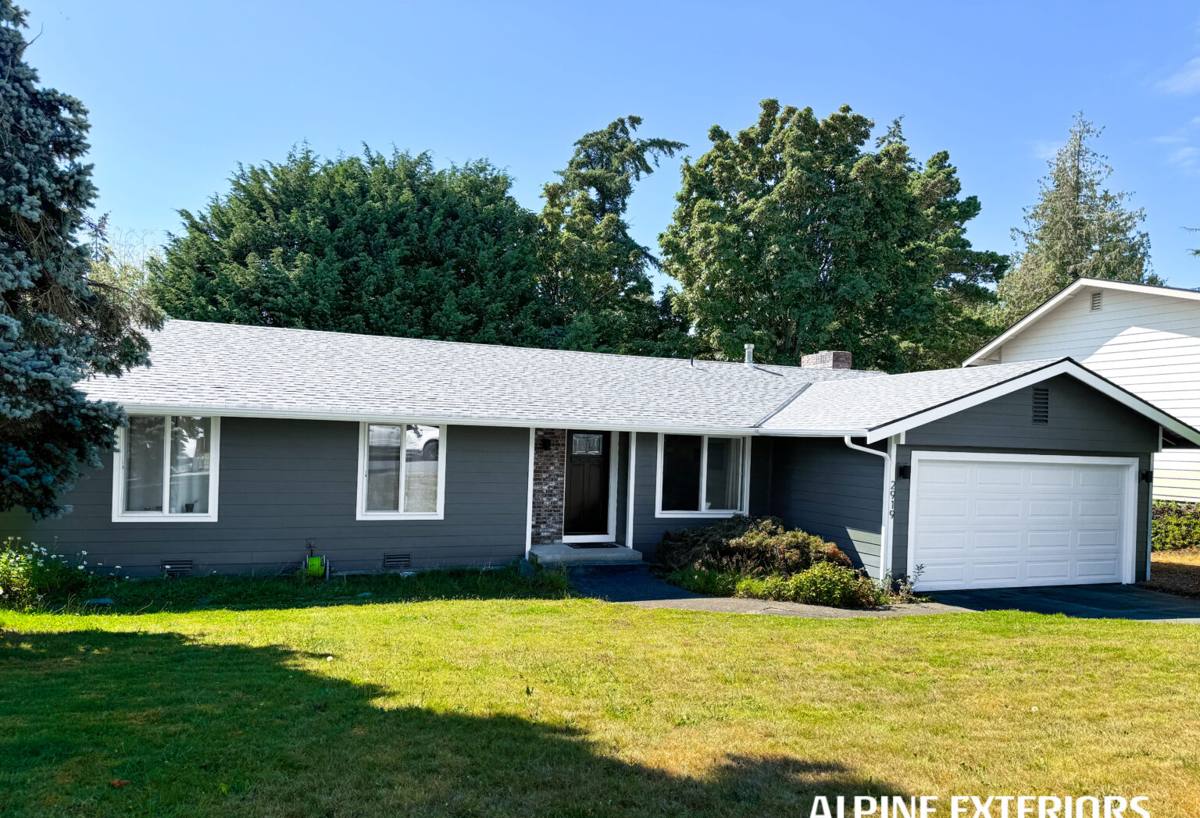
What This Climate Does to a Wall
Salt Air, Even This Far Inland
Green Lake isn't waterfront property in the Puget Sound sense, but Seattle as a whole sits in a marine weather pattern that carries salt-laden air well past the shoreline on prevailing winds. That exposure accelerates corrosion in fasteners, flashing, and trim hardware, and it breaks down lower-grade finishes faster than a drier inland climate would. It's a slow, cumulative effect rather than a dramatic one, which is exactly why it tends to get ignored until a wall shows problems that trace back to the hardware behind the siding, not the siding itself.
Driving Rain
Seattle rain is rarely a gentle straight-down drizzle for an entire season — wind pushes plenty of it sideways into lap joints, trim returns, and anywhere a wall assembly has a seam. That's a harder test than an annual rainfall total suggests, and it's the reason installation details like lap spacing, caulking, and flashing carry as much weight as the siding product itself.
A Long Moss Season
Mild temperatures and consistent moisture give King County a moss and algae season that runs most of the year on shaded or north-facing walls. Any siding material that holds even a little moisture against its surface eventually becomes a growth surface. It tends to show up first in spots nobody looks at often — behind shrubs, under eaves, on the side of the house that never gets direct sun.
What the Neighborhood Itself Adds to the Job
Mature Trees and Close-Set Lots
Green Lake is one of Seattle's older, more established residential neighborhoods, and it shows in the tree canopy: mature street trees and established yard trees shade a lot of these homes for a good part of the day, which keeps siding, trim, and roof edges damp longer after rain than they would be on a more open lot. It also means moss and algae growth can be heavier and more persistent here than on newer, more open subdivisions elsewhere in the city.
Lots in the neighborhood also tend to be tighter than newer construction, with homes set closer to their neighbors and to property lines. That affects a project practically — narrower side-yard access for staging material and equipment, more care needed around established root systems and landscaping, and more coordination with neighbors during a tear-off. None of that is a reason to cut corners; it's a reason to plan the job around the actual property instead of a generic install checklist.
Older Housing Stock
A good share of Green Lake's homes date to the early-to-mid twentieth century, in the bungalow and craftsman styles common to that era of Seattle building. Homes that age often carry layers of siding history — an original wood siding, maybe a later re-side over it — and what's actually behind the current exterior isn't always obvious until it's opened up. That's a reason to treat every re-side as a chance to genuinely inspect the sheathing and framing underneath, not just swap the visible layer and move on.
Why We Only Install James Hardie Siding
We don't offer a menu of siding brands and let price steer the decision. We install James Hardie fiber cement, full stop, and the reasoning is practical rather than promotional:
- Non-combustible core: fiber cement doesn't feed a fire the way wood-based or wood-fiber siding products can, which matters for both household safety and homeowners insurance.
- Factory-applied ColorPlus finish: color is baked on under controlled factory conditions rather than brushed on in the field, so it resists fading, chalking, and moisture damage far longer than site-applied paint holds up under Seattle's wet-season conditions.
- Climate-engineered HZ5 formulation: Hardie's HZ5 product line is built for regions with heavy, sustained moisture exposure, which describes King County's climate more accurately than the drier-climate formulations sold in other parts of the country.
- Dimensional stability: fiber cement doesn't swell, cup, or warp the way engineered wood siding can after repeated wet-season moisture cycling.
- A strong, transferable warranty: Hardie backs its products with one of the more substantial warranty structures in the industry, provided the installation follows spec — and that "provided" is doing real work in that sentence.
We won't install LP SmartSide, vinyl siding, Cemplank, Allura, primed spruce, or cedar. Each has a legitimate place in the market and plenty of satisfied owners elsewhere. But after years of tear-offs and service calls on Seattle homes, we made a professional call: in a climate that punishes moisture-sensitive materials this consistently, standing fully behind one system beats offering a cheaper option that quietly shifts maintenance risk onto the homeowner a few winters down the road.
What a Correct Installation Actually Involves
The material is only part of the equation. A James Hardie installation performs the way it's engineered to only when the details behind the boards are done right: correct fastener patterns and spacing, proper clearance from grade, roof lines, and decks, lapped and sealed joints, and a house wrap and flashing system that's actually integrated with the siding rather than just tucked behind it. Skipping any of those steps is one of the more common ways a genuinely good product ends up with failures that get blamed on the material instead of the install.
Repair vs. Full Replacement
Not every siding problem on a Green Lake home calls for a full tear-off. A storm-damaged section, failed trim around a window, or isolated moisture damage can often be repaired and matched into existing Hardie siding without redoing the whole house. But when water has been tracking behind the wall for a while, or the existing siding is an older product that's reached the end of its service life, patching it usually just postpones a bigger job at a higher eventual cost. We'll tell you honestly which situation you're actually in.
How Our Process Works
We start with an in-person walk of the property rather than a phone quote, since every Green Lake lot has its own mix of shade, drainage, tree cover, and access that a generic estimate can't account for. From there:
- We inspect the current siding and, where accessible, check for signs of moisture damage behind it before scoping the job.
- We remove the existing siding down to the sheathing rather than installing over a questionable substrate, and flag any rot or framing damage before covering it back up.
- We install house wrap and flashing engineered for wind-driven rain, then the Hardie boards themselves, following manufacturer fastening and clearance specs rather than a generic pattern.
- We walk the finished job with you before calling it done, and clean up the site so the yard and any neighboring property look untouched by the process.
Siding Cost Factors for Green Lake Homes
| Factor | What It Affects | Why It Matters Here |
|---|---|---|
| Home age and siding history | Scope discovered during tear-off | Older Green Lake homes may have layered siding history and hidden substrate damage |
| Tree cover and shade | Drying time and long-term moss risk | Heavily shaded walls stay damp longer and need extra attention to flashing and clearances |
| Lot size and access | Staging and labor time | Tighter, close-set lots common in the neighborhood can slow material staging and require extra care around neighboring property |
| Tear-off vs. overlay | Labor scope and substrate access | Tear-off is the only reliable way to find and fix moisture damage hidden under older siding |
| Trim and color selection | Material cost and finish longevity | ColorPlus factory finishes outlast field-applied paint against this region's UV and moisture exposure |
Exact numbers depend on the specific house, which is why we give real estimates after walking the property rather than quoting off a price sheet over the phone.
Signs Your Green Lake Home's Siding Needs Attention
- Moss or dark staining that returns quickly after cleaning, especially on shaded or tree-covered walls
- Soft or spongy siding, particularly near grade or around window and door trim
- Paint that's peeling, bubbling, or alligatoring on older wood or engineered wood siding
- Visible warping, cupping, or separation at seams and corners
- Gaps at trim joints or corners where wind-driven rain can track behind the wall
- A noticeable jump in heating bills that may point to a wall assembly that's no longer sealing properly
Why a Crew That Already Works Green Lake Matters
A contractor who works this specific part of Seattle regularly learns things a spec sheet can't teach: which wall orientations in the neighborhood stay wet longest under the tree canopy, how tight lot lines change staging and cleanup, and which older Green Lake homes are more likely to be hiding moisture damage behind a decades-old re-side. That kind of pattern recognition shapes real decisions on install day — where extra flashing attention is worth the time, and where a shortcut that might pass elsewhere would cause a callback here. It's the difference between a crew that installs Hardie siding and a crew that installs it correctly for this particular neighborhood's conditions.
If your Green Lake home needs new siding, a repair, or an honest opinion on what's actually happening behind an aging wall, we're glad to take a look. Fill out the form below to schedule a free, no-pressure estimate.