 Seattle Siding
 Why New-Construction Windows Matter in Kirkland
Kirkland sits along Lake Washington in King County, inside the greater Puget Sound climate zone — moisture-laden marine air, driving rain off the water, and a long stretch of gray, damp months where moss and mildew get a real foothold on anything that stays wet too long. For a home under construction or going through a full exterior remodel, the windows you choose and how they're installed set the tone for how that structure handles the next 30-plus years of Pacific Northwest weather.
New-construction windows are a different product category from replacement windows, and the distinction matters more here than in drier climates. Get the installation wrong — a missing sill pan, a flashing lap in the wrong order, house wrap that doesn't tie into the window flange correctly — and you're not looking at a cosmetic problem. You're looking at water intrusion behind the siding, which in a climate that rains as often as ours does, can rot sheathing and framing long before anyone notices a stain on the drywall.
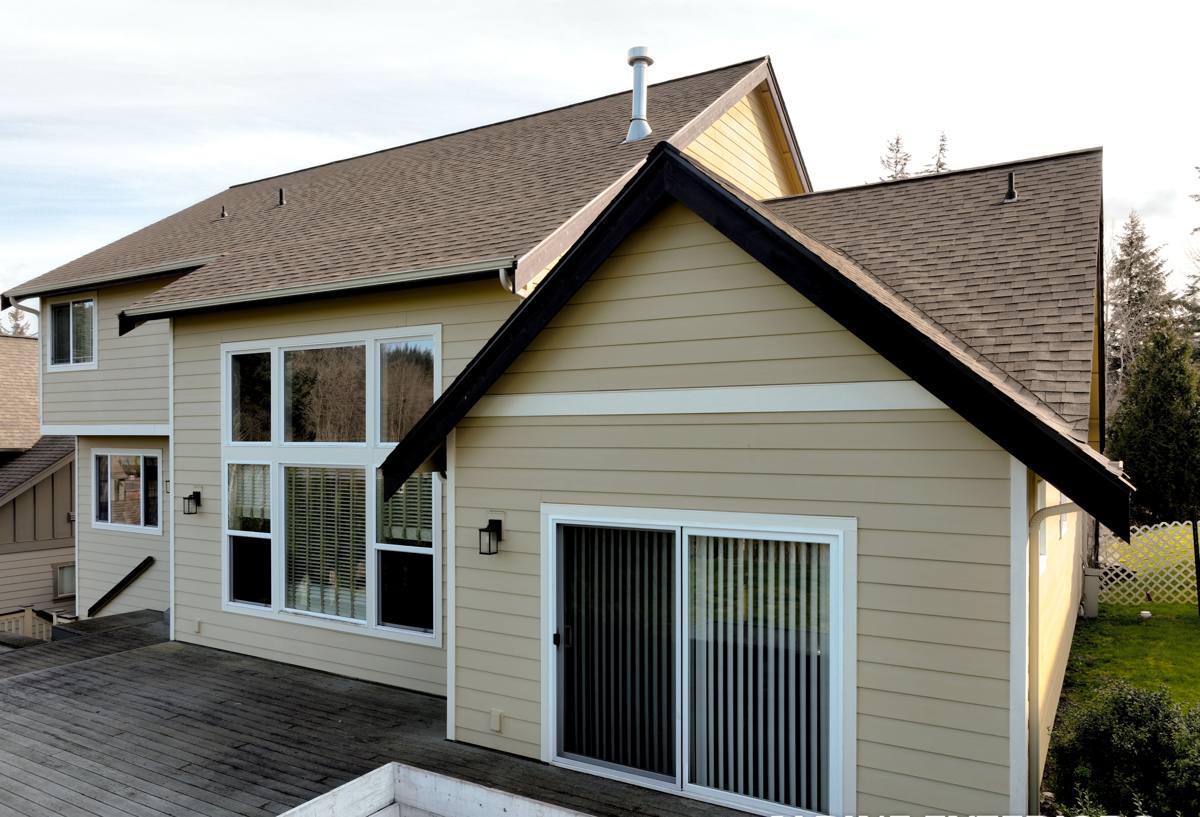
New-Construction vs. Replacement Windows: Know the Difference
Homeowners and even some contractors use these terms loosely, but they describe two different products installed two different ways.
| Feature | New-Construction Window | Replacement (Pocket) Window |
|---|---|---|
| Nailing fin | Yes — fastens directly to sheathing | No — fits inside existing frame |
| Best used for | New builds, additions, full siding tear-off remodels | Swapping a window without disturbing siding/trim |
| Flashing integration | Full integration with house wrap and weather barrier | Relies on the condition of the existing frame |
| Exterior trim | Installed fresh, sized to the new window | Existing trim usually reused |
| Long-term moisture control | Best-in-class when installed correctly | Only as good as what's already behind the wall |
If a Kirkland project involves opening up the wall to the studs — new construction, an addition, or a siding replacement where we're already stripping down to sheathing — new-construction windows with a proper nailing fin are almost always the right call. They let us build a continuous, correctly lapped water management system around every opening instead of working around whatever's already there.
What Correct Installation Actually Involves
A window opening is one of the highest-risk spots on a house for water intrusion, because it's a hole cut into your weather barrier. Doing it right isn't complicated, but it is sequence-dependent — skip a step or do it out of order and the whole assembly stops working the way it's designed to.
The core sequence we follow
- Rough opening checked for square, level, and correct dimensions before the window ever shows up
- Sloped sill pan installed at the bottom of the opening so any water that gets past the window drains back out, not into the wall
- Window set, shimmed level and plumb, and fastened through the nailing fin per the manufacturer's schedule
- Flashing tape applied in proper shingle-lap order — sides first, then top — so water always sheds downward and outward
- House wrap integrated over the top flashing, never tucked behind it
- Interior and exterior sealed with low-expansion foam and backer rod plus sealant, not foam alone
- Exterior trim and siding tied back in around the finished opening
That sill pan step is one we treat as non-negotiable in this climate. Even a well-installed window will occasionally see wind-driven rain work past the glazing during a strong Puget Sound storm. A sill pan means that water has somewhere to go besides your framing.
Material and Glass Choices That Hold Up Here
Kirkland's climate is temperate compared to a lot of the country, but it's relentlessly wet for months at a time, and homes here also get real summer sun exposure on west and south-facing walls. That combination shapes what we recommend.
Frame materials
Vinyl new-construction windows remain the most common choice for good reason — they don't rot, they don't need repainting, and quality vinyl holds up well against our rain cycle. Fiberglass frames cost more but resist expansion and contraction better across our seasonal temperature swings and hold paint if you want a custom color. Wood-clad windows look great and perform well when detailed correctly, but they demand more disciplined flashing and finish maintenance — in a climate this wet, we're honest with clients that wood exposed to the elements is a higher-upkeep choice, not a lower-risk one.
Glass packages
Double-pane with a Low-E coating and argon fill is standard-issue for good reason, cutting both heat loss in winter and solar gain in summer. For west-facing rooms that take direct afternoon sun, or for homes near busier Kirkland streets, we'll talk through triple-pane or upgraded Low-E coatings — the added cost buys better comfort and some sound dampening, though it's not always necessary on every elevation of every home.
Our Installation Process
We keep this straightforward and communicate at each stage, since new-construction window work is usually happening alongside other trades on an active job site.
Step by step
- Site walk and measure — we confirm rough openings against approved window schedules and catch framing issues before they become installation problems
- Product selection — we walk through frame material, glass package, and grille or hardware options based on the home's design and exposure
- Ordering and lead time — we give a realistic timeline rather than guessing, since window lead times shift with the supplier and season
- Installation — sill pans, flashing, and fastening handled in the sequence above, with every opening inspected before siding closes it in
- Weatherproofing sign-off — a final check of flashing, sealant lines, and trim before we consider an opening finished
Because we're also a siding contractor, we're used to coordinating window installation with the weather barrier and siding install as one connected system rather than three separate trades that don't talk to each other. That matters more than people expect — a lot of window leaks trace back to a handoff gap between whoever set the window and whoever wrapped the wall.
Common Mistakes We See on Kirkland Job Sites
Most window problems we get called out to inspect on older or poorly built additions come down to a short list of repeat offenses:
- Flashing tape applied out of shingle-lap order, so water gets funneled behind it instead of over it
- No sill pan, leaving bare wood sheathing as the only thing standing between rainwater and the framing
- Caulk used as the sole air and water seal instead of proper backer rod and sealant
- House wrap cut too tight around the opening or not lapped over the top flashing
- Windows fastened before the opening was confirmed square, leading to operational problems down the road
None of these show up on day one. They show up two, five, or ten winters later, after enough Kirkland rain seasons have found the gap. That's exactly why installation quality matters more than which brand of window sits in the opening.
What Drives Cost on a New-Construction Window Job
| Factor | How It Affects Price |
|---|---|
| Frame material | Vinyl is typically the most affordable; fiberglass and wood-clad cost more |
| Glass package | Standard Low-E double-pane vs. triple-pane or upgraded coatings |
| Window size and count | Larger openings and multi-window combinations (bays, sliders) add cost |
| Opening condition | Framing repairs or resizing before install add time and material |
| Access and site conditions | Upper stories, tight lots, or scaffolding needs affect labor |
| Trim and finish work | Custom exterior trim profiles cost more than standard |
We give a firm, itemized quote after seeing the actual openings — new-construction window pricing swings too much on site-specific factors for a number to mean much without that walk-through.
Keeping New-Construction Windows Performing Long Term
Once the windows are in and the siding is closed up around them, upkeep is minor but worth doing:
- Rinse exterior sills and tracks a couple of times a year to clear pollen, debris, and the moss spores that thrive in our climate
- Check exterior sealant lines annually, especially after a hard winter, and have any cracked or separated caulk redone before the next rainy season
- Keep gutters and downspouts clear so roof runoff isn't sheeting down across window heads
- Operate hardware periodically through the year so weatherstripping seats properly and doesn't develop a permanent set
None of this replaces correct installation — it just protects the investment once the hard part is already done right.
Why a Local Crew Makes the Difference
A contractor who works Kirkland regularly has already seen how this specific stretch of Puget Sound weather treats window openings that were installed a little too casually. We know which elevations take the worst of the driving rain, how fast moss and algae establish themselves on north-facing walls in the shoulder seasons, and what a properly sequenced flashing detail needs to look like to hold up through repeated wet-dry cycles year after year. That local, repeated experience is what separates a window that performs for decades from one that starts causing problems the first rough winter.
If you're planning new construction, an addition, or a full remodel in Kirkland and want windows installed the way this climate actually demands, we're happy to walk the site with you. Reach out using the form below for a free, no-pressure estimate.