 Seattle Siding
 Roofing in Beacon Hill: A Neighborhood With Its Own Set of Challenges
Beacon Hill sits up on a ridge above the rest of Seattle, and that elevation cuts both ways. Homes here often get more open exposure to wind and driving rain than houses tucked into lower, more sheltered parts of the city, while the tree cover on the west-facing slopes and in the older residential pockets keeps roofs shaded and damp for long stretches of the year. Add in the mature housing stock — a mix of early-to-mid-century bungalows, post-war ramblers, and newer infill construction — and you get a neighborhood where roof age, roof pitch, and roof exposure vary block to block. There isn't one "Beacon Hill roof." There's a range of conditions that all point to the same conclusion: whatever goes on next needs to be installed correctly for King County's climate, not just installed fast.
When we talk about new roof installation for this area, we're not selling a generic replacement. We're talking about matching the roofing system to how Seattle weather actually behaves — long wet seasons, persistent moss pressure, salt-tinged air moving in off Puget Sound, and the occasional windstorm that finds every weak point in an aging roof.
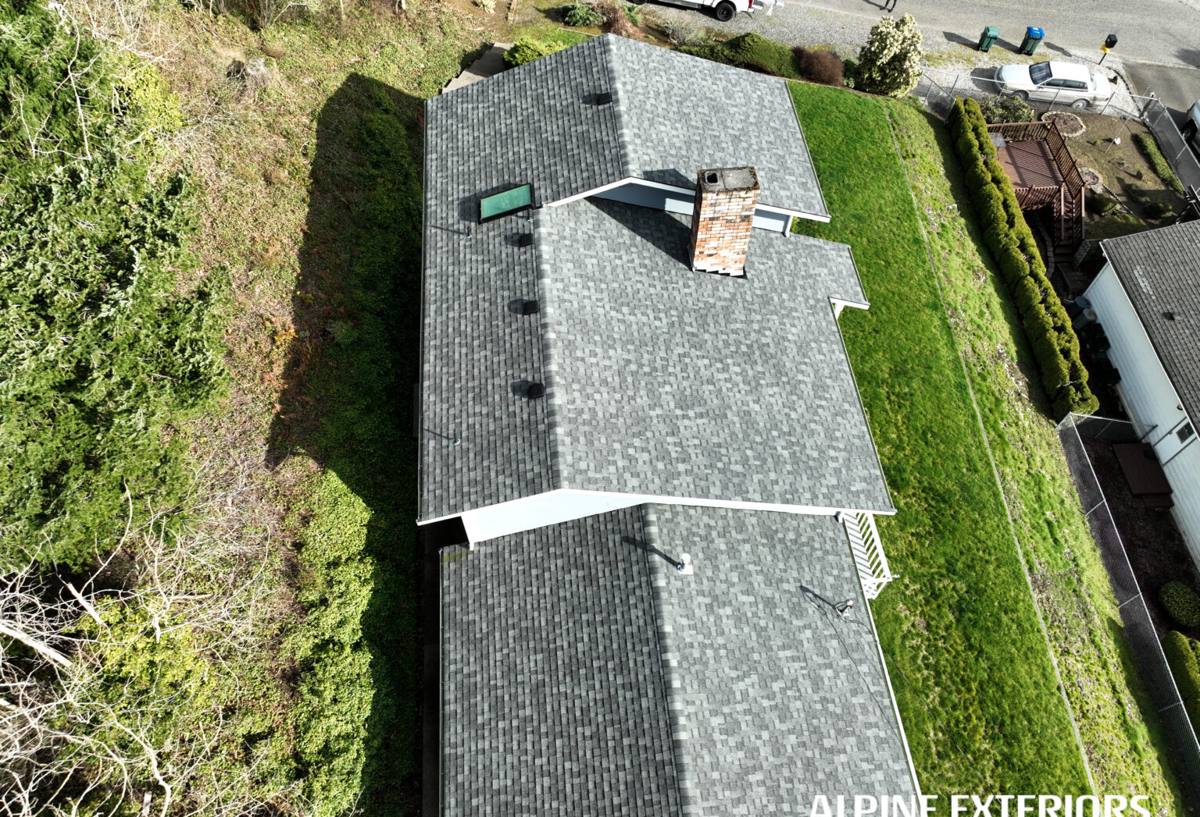
What Seattle's Climate Actually Does to a Roof
If you've lived in the Pacific Northwest for any length of time, you already know the basics. But it's worth spelling out exactly how our climate wears down a roof, because it explains almost every decision we make during an installation.
Moss and Organic Growth
Western Washington's moss season runs long — realistically most of the fall through spring, with shaded and north-facing slopes staying damp even longer. Moss isn't just cosmetic. It holds moisture against the roofing surface, works its way under shingle tabs and shake edges, and accelerates granule loss and wood decay. A roof installed without moss-resistant materials or without attention to airflow and drainage will show moss again within a few seasons, no matter how clean it looks on install day.
Driving Rain
Seattle rain is rarely a straight-down soaking; wind-driven rain pushes moisture sideways and up under laps, flashing, and fastener lines. This is where installation detail matters more than material choice. Underlayment selection, flashing sequencing, and proper overlap at valleys and penetrations are what keep wind-driven rain from finding its way into the deck.
Salt Air
Beacon Hill's elevation and proximity to Puget Sound mean homes here get some exposure to salt-laden air, which can accelerate corrosion on unprotected metal — fasteners, flashing, and vents in particular. We account for this with corrosion-resistant hardware and flashing choices rather than standard-grade components that are fine inland but wear faster here.
Temperature Swings and UV
Compared to hotter climates, Seattle's UV load is moderate, but the freeze-thaw cycles in winter combined with summer dry spells still stress roofing materials over time, especially at seams and transitions.
Signs a Beacon Hill Home Needs a New Roof, Not a Repair
Not every roofing problem calls for full replacement. But there are clear signals that a repair is just delaying the inevitable:
- Granule loss heavy enough that you're finding grit in gutters and downspouts every season
- Moss or algae staining that returns within months of cleaning, even after treatment
- Soft spots, sagging, or visible deck movement when walked
- Curling, cracking, or missing shingles across multiple slopes rather than one isolated area
- Daylight visible through the roof deck from the attic, or water staining on interior ceilings
- A roof that's approaching or past the manufacturer's expected service life for our climate
- Repeated repair visits to the same areas without the underlying issue resolving
If a roof is showing two or more of these, a full installation is usually the more honest recommendation — patch repairs on a roof that's structurally or materially near the end of its life tend to cost more over time than they save.
What a Correct New Roof Installation Involves
A new roof is only as good as what's underneath it. We walk every Beacon Hill project through the same sequence, because skipping steps is exactly how roofs fail early in this climate.
1. Tear-Off and Deck Inspection
We remove the old roofing down to the deck and inspect for rot, delamination, or soft spots — common in older Beacon Hill homes where a previous roof may have trapped moisture over the years. Any compromised decking gets replaced before anything new goes down; installing new roofing over a weak deck just hides the problem.
2. Ventilation Check
Poor attic ventilation is one of the biggest hidden contributors to premature roof failure in our climate — trapped moisture condenses against the underside of the deck and accelerates rot from the inside. We assess intake and exhaust airflow as part of every installation, not as an upsell.
3. Underlayment
Given how much of the year King County spends under active or recent rainfall, we use underlayment systems built for wet-climate performance, with particular attention to ice and water shield at eaves, valleys, and other vulnerable transitions.
4. Flashing
Flashing is where the majority of roof leaks actually originate — not the field of the roof itself. Chimneys, skylights, valleys, and wall transitions all get new, properly lapped and sealed flashing, matched to a metal that will hold up against salt-air exposure.
5. Roofing Material Installation
Installed to manufacturer spec with attention to nailing pattern, exposure, and overlap — details that matter more in wind-exposed spots on the hill than they would in a sheltered valley lot.
6. Final Inspection and Cleanup
We walk the finished roof, check every penetration and edge, and do a full property cleanup, including a magnetic sweep for stray fasteners.
Choosing a Roofing Material for Beacon Hill Conditions
There's no single "best" roofing material for every home — it depends on the roof's pitch, the home's style, budget, and how much long-term maintenance the homeowner wants to take on. Here's how the common options compare for this specific climate:
| Material | Moss Resistance | Wind/Rain Performance | Typical Maintenance |
|---|---|---|---|
| Architectural Asphalt Shingle | Good with algae-resistant granules | Strong when properly nailed and sealed | Periodic moss removal recommended |
| Standing Seam Metal | Excellent — sheds moisture, little for moss to grip | Excellent, especially in wind-exposed spots | Low; occasional fastener/seam check |
| Cedar Shake | Requires diligent upkeep in our climate | Good when properly ventilated | Higher — regular treatment and inspection |
| Synthetic/Composite Shingle | Very good | Strong, consistent performance | Low to moderate |
We'll walk through these trade-offs honestly during an estimate rather than steering every homeowner toward the same product — a shaded, moss-prone slope on the west side of a Beacon Hill lot calls for a different conversation than a sun-exposed south-facing roof on the same block.
Why a Crew That Already Works Beacon Hill Matters
Roofing crews that mainly work drier climates or interior regions of the country often under-detail flashing and underlayment because their local weather doesn't punish shortcuts the way ours does. A crew that regularly works Seattle neighborhoods like Beacon Hill knows:
- Which slopes and orientations on the hill tend to hold moisture longest
- How to sequence a tear-off and dry-in around our unpredictable rain windows so the deck isn't left exposed
- What ventilation gaps are common in the area's older housing stock
- How salt air and elevation exposure affect metal component longevity here specifically
- Local permitting and inspection expectations for King County and the City of Seattle
That local familiarity shows up less in the sales pitch and more in the details you don't see once the roof is finished — the flashing lap that's an inch longer than code minimum, the extra vent baffle, the fastener grade chosen for salt exposure.
Our Process, Start to Finish
- On-site assessment — we inspect the existing roof, deck condition, ventilation, and any problem areas specific to your home's exposure and slope.
- Written estimate — a clear scope of work and material options, with honest trade-offs explained rather than a single upsell pushed hard.
- Scheduling around weather — we plan tear-off and dry-in timing to minimize deck exposure to rain, which matters more here than in drier climates.
- Installation — deck repair as needed, ventilation correction, underlayment, flashing, and material installation to spec.
- Final walkthrough — we review the finished work with you before calling the job complete.
What Affects the Cost of a New Roof in This Area
Every roof is priced individually, but a few factors consistently move the number for Beacon Hill homes:
| Factor | Why It Matters |
|---|---|
| Roof pitch and access | Steeper slopes and hillside lots can add labor and safety requirements |
| Deck condition | Rot or delamination found during tear-off adds repair scope |
| Material choice | Metal and composite products cost more upfront than asphalt but need less upkeep |
| Ventilation corrections | Older homes often need intake or exhaust vents added or upgraded |
| Roof size and complexity | Valleys, dormers, and multiple penetrations add flashing work |
We give straightforward, itemized estimates so you know exactly what you're paying for and why — no vague lump-sum numbers that hide what's actually being done.
Ready for an Honest Look at Your Roof?
If your Beacon Hill home is showing signs of wear, moss buildup that keeps coming back, or you're simply planning ahead before the next wet season, we're happy to take a look. Fill out the form below for a free, no-pressure estimate — we'll assess your roof's actual condition and give you a straight answer on what it needs.