 Seattle Siding
 Queen Anne's Climate Is Harder on Siding Than It Looks
Queen Anne sits high above the rest of Seattle, and that elevation is a mixed blessing for the homes up here. The views are real, but so is the wind exposure, and homes closer to the water pick up salt-laden air drifting off Puget Sound and Elliott Bay. Add in Seattle's long, wet winters, driving rain that comes in sideways during a storm, and the deep shade thrown by mature trees on the hill's north- and west-facing lots, and you have a siding environment that punishes anything less than a correctly installed, climate-appropriate product. This isn't a generic "it rains a lot in Seattle" problem. It's a specific combination of salt exposure, wind-driven moisture, and prolonged shade that determines how long a siding job actually lasts.
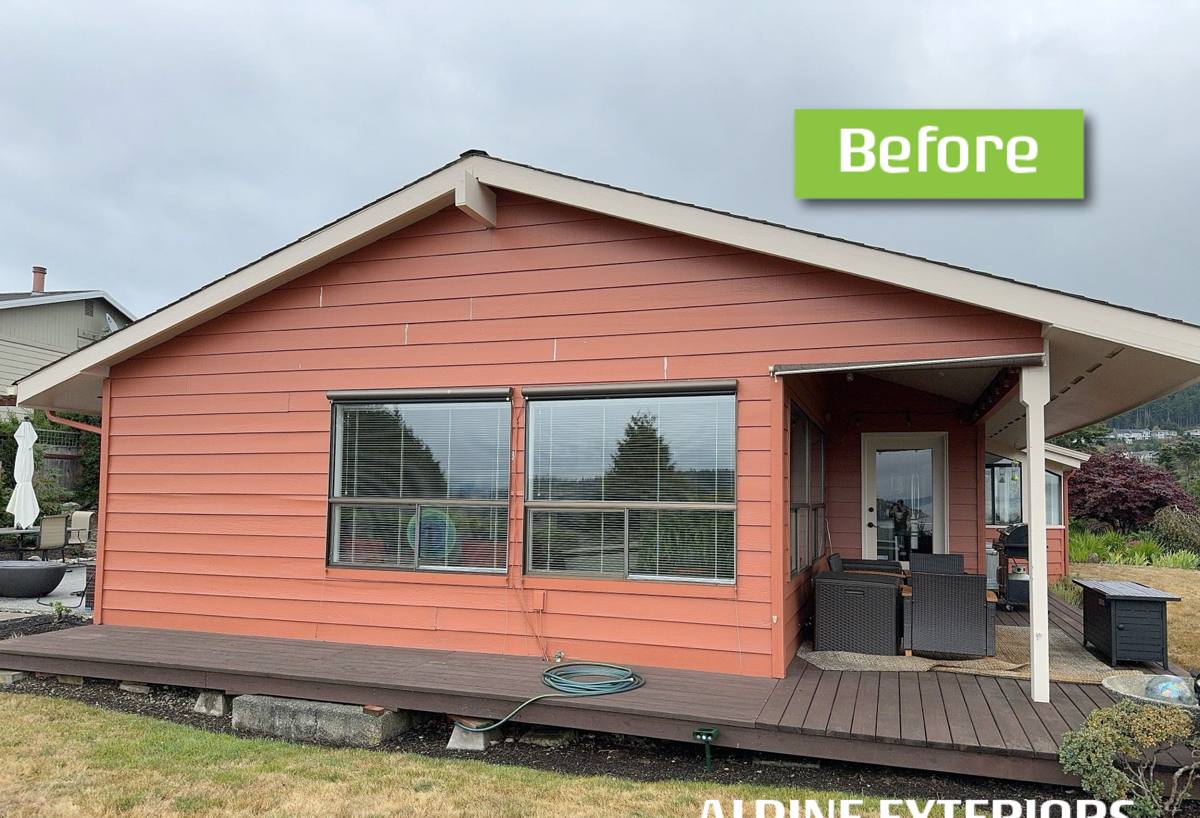
What Salt Air, Driving Rain, and Moss Actually Do to a House
Salt Air and Wind Exposure
Homes on Queen Anne's western and southern slopes are more exposed to wind coming off the water than homes tucked into Seattle's inland neighborhoods. Salt-laden air accelerates corrosion on fasteners, flashing, and any exposed metal trim, and it can degrade lower-quality paint finishes faster than manufacturers advertise. Over years, that shows up as chalking, fading, and rust bleed at seams and nail heads.
Driving Rain
Seattle rain is rarely a hard downpour, but it's frequent, sustained, and often pushed sideways by wind — which means it finds its way into laps, joints, and butt seams that a fair-weather installation would never expose. Siding on a hill neighborhood like Queen Anne needs a water-resistive barrier and flashing detail that assumes rain will hit the wall at an angle, not just fall straight down.
The Long Moss Season
Shaded, north-facing walls under tree canopy stay damp for months at a stretch. That's exactly the environment moss, algae, and mildew thrive in. Siding that absorbs moisture, or paint that can't stand up to constant damp, will show green and black staining years before it should — and once moss gets a foothold in a seam or a cracked board, it holds water against the wall long after the surface looks dry.
Why James Hardie Is the Right Fit for These Conditions
We install James Hardie fiber cement exclusively, and Queen Anne's climate is a good illustration of why. Hardie's HZ5 product line is engineered specifically for climates with heavy moisture exposure and freeze-thaw cycling — the Pacific Northwest is one of the regions it's built for. Fiber cement doesn't absorb water the way wood does, so it doesn't swell, cup, or rot from prolonged dampness the way an unpainted or poorly maintained wood or composite product can. It's also non-combustible, which matters given how many homes on the hill sit close together on smaller lots. And Hardie's ColorPlus factory-applied finish is baked on under controlled conditions, giving it better resistance to fading and moisture intrusion at the surface than most field-applied paint jobs — which matters directly for salt air exposure and the UV that does break through Seattle's cloud cover in summer.
None of that means Hardie is maintenance-free. It means the material itself isn't the weak link — the installation is what determines whether the wall stays dry for the next 30-plus years.
What a Correct Installation Actually Involves
Most siding failures we get called out to investigate aren't material failures — they're installation shortcuts. On a neighborhood like Queen Anne, where wind-driven rain and long damp seasons are the norm, these details aren't optional extras:
- A continuous, properly lapped water-resistive barrier behind the siding, with no gaps at penetrations
- Correct flashing at every window, door, and roofline intersection, integrated with the barrier — not just caulked over
- Manufacturer-specified clearances at grade, decks, and roof lines so the bottom edge of the siding never sits in standing water or snow
- Proper fastener type, spacing, and placement — Hardie is unforgiving of over-driven or improperly located nails, which can crack the board or void the warranty
- Correctly sized gaps at butt joints and trim, caulked with a product rated for the exposure, not just whatever's on the truck
- Rainscreen or drainage gap detailing on walls with heavier moisture exposure, so any water that does get behind the cladding can drain and dry
On older Queen Anne homes — and there's a lot of early-1900s and mid-century housing stock on the hill — this often means dealing with wall assemblies that were never designed with a modern drainage plane in mind. That's not a reason to cut corners; it's a reason to slow down at tear-off and address what's underneath before the new siding goes up.
Siding Options Compared for This Climate
| Material | Moisture / Salt Air Performance | Fire Rating | Typical Maintenance | Long-Term Cost Outlook |
|---|---|---|---|---|
| James Hardie Fiber Cement | Engineered for wet, coastal-adjacent climates; doesn't rot or swell | Non-combustible | Occasional wash; factory finish resists fading and moisture | Higher upfront, strong transferable warranty, low lifetime repair cost |
| Vinyl | Won't rot, but can warp in temperature swings and doesn't stop moisture at seams | Combustible, can melt/deform | Low, but color can't be renewed once faded | Lower upfront, shorter realistic lifespan |
| Untreated / Primed Wood | Absorbs moisture, prone to rot and moss in shaded, damp areas | Combustible | Frequent repainting and moisture inspection | Lower upfront, high ongoing maintenance cost |
| LP SmartSide (engineered wood) | Treated to resist moisture but still wood-based; edge and seam exposure is a known vulnerability | Combustible | Moderate; caulking and touch-up matter more here | Mid-range upfront, moderate lifetime maintenance |
We only install the first row of that table. We're not going to pretend the other products don't have a place in the market — but for a hill neighborhood with salt exposure, wind-driven rain, and long damp shade seasons, we think the trade-offs on the rest of that list aren't worth it, and we've built our business around not installing them.
How We Approach a Queen Anne Job
Every Queen Anne property we look at starts with the same question: what is this specific wall exposed to? A south-facing wall with full sun and wind is a different problem than a shaded north wall under a tree canopy, even on the same house. Our process is:
- On-site assessment — we look at existing siding condition, moisture staining, moss patterns, and where the house is most exposed to wind and rain
- Tear-off and inspection — once the old siding is off, we check sheathing, framing, and existing flashing for hidden moisture damage before anything new goes up
- Weather barrier and flashing correction — we fix what's underneath, not just what's visible, before installing the new water-resistive barrier
- Hardie installation to manufacturer spec — correct fasteners, clearances, and joint treatment for the specific HZ product and exposure
- Final detailing — trim, caulking, and touch-up finished to match ColorPlus factory color
Queen Anne's terrain also means access and staging matter more than on a flat lot — steep driveways, retaining walls, and tight side yards are common, and a crew that's worked the neighborhood before knows how to plan around that instead of improvising on the day of the job.
What to Look For When Hiring a Siding Contractor Here
- Ask whether the crew installs the weather-resistive barrier and flashing themselves, or subcontracts that step out
- Ask how they handle grade clearance and drainage detailing on sloped or view lots
- Confirm they're a Hardie-experienced installer, not just someone who's handled a few boards of it
- Ask what happens if they find rot or moisture damage during tear-off — get that answer before the contract is signed, not after
- Get the warranty terms in writing, including what's covered by the manufacturer versus the installer
A contractor who's worked on Queen Anne before should be able to talk specifically about wind exposure, moss, and drainage on this hill without prompting — that's a reasonable way to tell a crew that knows the neighborhood from one reading off a script.
What to Expect Long-Term
Correctly installed James Hardie siding in this climate should need very little from a homeowner beyond periodic washing to keep moss and grime from building up in shaded areas, and an occasional check of caulking at trim and penetrations. It won't need repainting on the same cycle wood does, and it won't develop the soft spots or seam rot that come from years of trapped moisture. The material is built for exactly the conditions Queen Anne throws at it — the installation is what makes sure it performs that way for the decades it's designed to last.
If you're planning a siding project in Queen Anne, we're happy to take a look and give you an honest, no-pressure estimate — including what we'd do differently if your home's exposure calls for it. The form below gets that conversation started.