 Seattle Siding
 Why Renton Windows Take More Punishment Than People Expect
Renton sits in the wet, marine-influenced climate that defines western King County. Homes here deal with long stretches of driving rain, damp marine air moving in off Puget Sound, and a moss season that can run from fall through spring. None of that is dramatic weather in the way of a hurricane or a hard freeze, but it's relentless. Water finds every gap, every degraded seal, every place where flashing was skipped or installed backwards. A window that would hold up fine in a dry climate can fail here in a few years if it wasn't installed correctly the first time.
Most window problems we find in Renton homes aren't caused by bad windows. They're caused by installations that didn't account for how much water this region throws at a house, year after year, for decades.
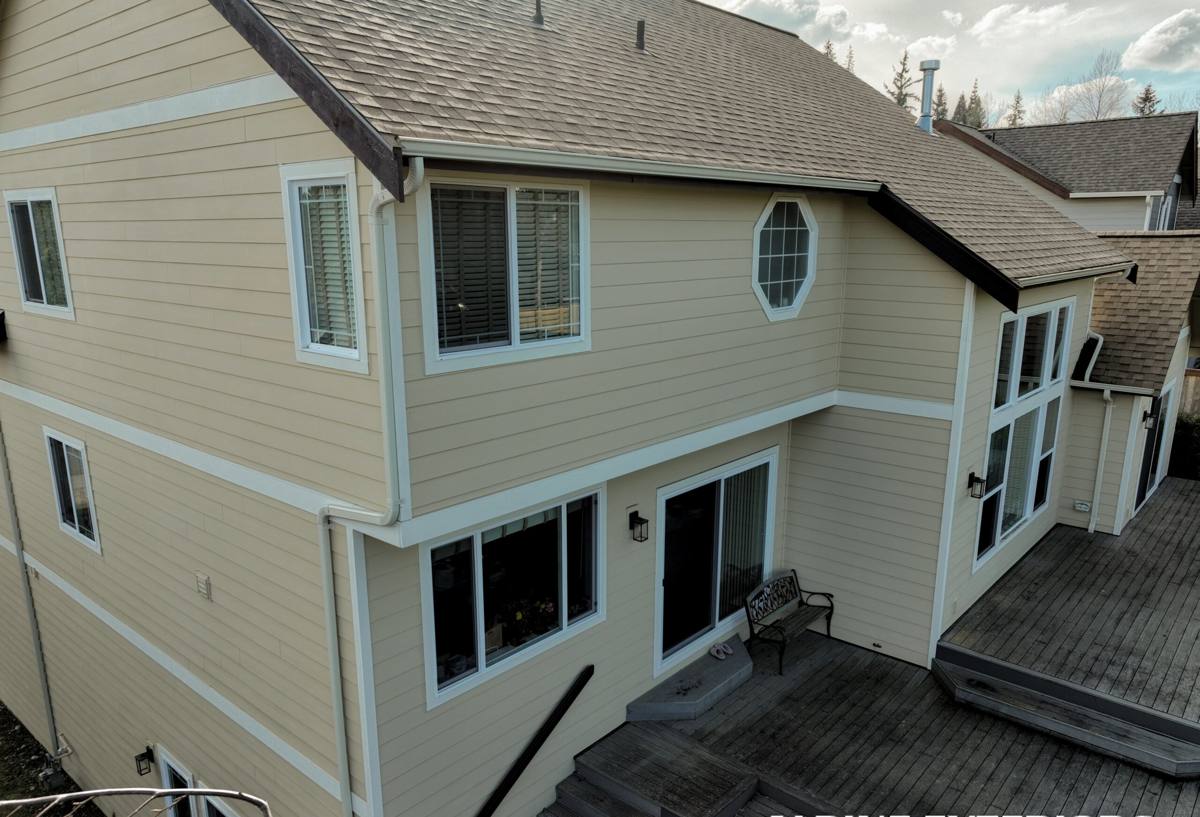
What Constant Moisture Actually Does to a Window Opening
It's rarely the glass or the sash that fails first. It's the opening around it.
- Wood trim and sills absorb moisture and start to soften, especially on west and south-facing walls that catch the most wind-driven rain.
- Moss and organic buildup on nearby roofing or siding hold moisture against the wall longer than open, dry surfaces would.
- Old or missing flashing lets water get behind the siding and track down into the wall cavity, where it does damage you can't see until it's advanced.
- Caulk that was used as the primary water barrier — instead of proper flashing — dries out, cracks, and stops working, usually silently.
- Single-pane or older double-pane windows fog between the panes once the seal fails, which is a sign the unit itself has reached the end of its service life.
By the time you can see soft trim, peeling paint at the corners, or a musty smell near a window, water has usually been getting in for a while.
Signs a Renton Home Needs Window Attention
Homeowners usually notice one or two of these before calling anyone:
- Drafts you can feel near the frame, even with the window fully latched
- Wood trim or sills that feel soft, spongy, or show dark staining
- Fogging or moisture trapped between panes of double-pane glass
- Windows that are hard to open, close, or lock — often a sign the frame has shifted or swelled
- Paint that's bubbling or peeling at the corners of the frame, a classic sign of trapped moisture
- Visible gaps between the window unit and the siding or trim
Any one of these on its own might be minor. Several at once, especially on the same wall, usually points to a water intrusion problem that a new window alone won't fix unless the surrounding flashing and trim are corrected too.
What a Correct Installation Actually Involves
Replacing a window is straightforward in concept and easy to do poorly in practice. The difference between a window that lasts fifteen years and one that fails in three usually comes down to a handful of steps that don't show up in the finished look of the job.
Before the old window comes out
We check the rough opening for rot, soft framing, or prior water damage. If the sheathing or framing underneath is compromised, that gets addressed before a new window ever goes in — installing a new unit over damaged framing just hides the problem for a while.
Sill pan and flashing
A sloped sill pan at the bottom of the opening gives any water that does get past the window a way out instead of a place to collect. Flashing tape and building paper get integrated in the correct shingle-lap order — each layer overlapping the one below it — so water is always directed outward and down, never trapped behind the siding.
Setting the window
The unit gets shimmed level, plumb, and square, then fastened per the manufacturer's schedule. A window that's slightly out of square will bind, won't seal evenly, and puts uneven stress on the frame over time.
Insulation and air sealing
The gap between the window frame and the rough opening gets filled with a low-expansion foam or backer rod and sealant — not stuffed with fiberglass, which does nothing to stop air movement.
Exterior trim and sealant
Trim goes back on over correctly lapped flashing, and sealant is used at the joints it's meant for — not as a substitute for flashing that was left out.
Choosing the Right Window for a Renton Home
There's no single "best" window material — the right call depends on the home's exposure, budget, and how much upkeep you want to take on.
| Material | How it handles our climate | Maintenance | General price position |
|---|---|---|---|
| Vinyl | Won't rot, doesn't need repainting, performs well in wet climates | Low — occasional cleaning | Most affordable |
| Fiberglass | Very stable in temperature and moisture swings, holds paint well if you want a custom color | Low | Mid to upper range |
| Aluminum-clad wood | Good look, but the wood interior is sensitive to any seal failure at joints or corners | Higher — depends on maintaining exterior cladding seams | Upper range |
| All-wood | Requires the most diligence in a climate this wet; we're honest that this is a harder product to keep ahead of moisture long-term | Highest | Upper range |
For most Renton homes, vinyl or fiberglass gives the best balance of long-term moisture performance and manageable upkeep. If you want the look of wood, aluminum-clad options give you that appearance with a more moisture-resistant exterior shell — we're upfront that the tradeoff is more attention to the seams where the cladding meets the frame.
Our Process, Start to Finish
- On-site assessment — we look at each window opening, not just the glass, including trim, sill condition, and any signs of past water intrusion.
- Honest scope — if an opening needs framing or sheathing repair before a new window goes in, we tell you before work starts, not after we've already opened the wall.
- Material selection — we walk through options based on your budget, the wall's sun/rain exposure, and how the home is used.
- Installation — sill pan, flashing, shimming, insulation, and trim done in the correct order, every time, not just on the openings that are easy to get to.
- Walkthrough — every window gets opened, closed, and checked for level and smooth operation before we consider the job done.
What Drives the Cost of a Window Project
| Factor | Why it matters |
|---|---|
| Number of windows | Per-unit cost usually drops as the total count on a project goes up |
| Existing damage | Rotted framing or sheathing found during removal adds repair scope before the new window can go in |
| Window size and type | Large picture windows, bays, and custom shapes cost more than standard double-hung or slider units |
| Material | Vinyl is generally the most budget-friendly; fiberglass and clad-wood cost more up front |
| Access and story height | Second-story or hard-to-reach windows add labor and equipment time |
| Trim and siding tie-in | Matching existing trim profiles or siding after the swap can add finish work |
We give straightforward, itemized estimates so you can see what you're paying for — and where the money's going toward the parts that actually keep water out, not just the parts you can see.
Why It Matters That We Already Work in Renton
Water problems in this region aren't generic — they're specific to how a particular home sits relative to prevailing wind and rain direction, how much shade and moss buildup a wall gets, and what the typical construction looked like when that part of Renton was built. A crew that works this area regularly has already seen how these homes tend to fail, which means we're checking the right things the first time instead of learning on your project. We're not guessing at how King County's rain behaves against a wall — we deal with it on a job site every week.
What to Ask Any Contractor Before You Hire
- Do you install a sill pan and properly lapped flashing on every window, or only when asked?
- What happens if you find rotted framing once the old window is out — is that a change order or part of the plan?
- Can you explain, in plain terms, how water is directed away from this specific opening?
- What's the manufacturer's warranty, and what's your labor warranty separately?
- Will the same crew that gives the estimate be doing the installation?
A contractor who can answer these clearly, without hedging, is one who actually understands the moisture side of the job — not just how to set a window in an opening.
If you're noticing drafts, soft trim, or foggy glass on a Renton home, we're happy to take a look and give you a straightforward, no-pressure estimate. Use the form below to get started.