 Seattle Siding
 Why Ballard Roofs Wear Differently Than Roofs Inland
Ballard sits close enough to Puget Sound and the Ship Canal that homes here take a different kind of weather beating than roofs a few miles east. The combination of salt-laden air, wind-driven rain off the water, and deep shade from mature trees on some blocks creates conditions that shorten roof life if the original install wasn't done with this specific exposure in mind. We've replaced enough roofs in this part of Seattle to know the failure patterns aren't random — they follow the climate.
Salt air accelerates corrosion on exposed metal fasteners, flashing, and vents. Driving rain, especially in wind events off the Sound, finds any weak point in a roof's water-shedding system and pushes moisture sideways and upward, not just down. And King County's long, wet moss season — often eight or nine months of favorable growing conditions — means organic growth is a constant maintenance factor, not an occasional nuisance. A roof replacement here has to be engineered for all three at once.
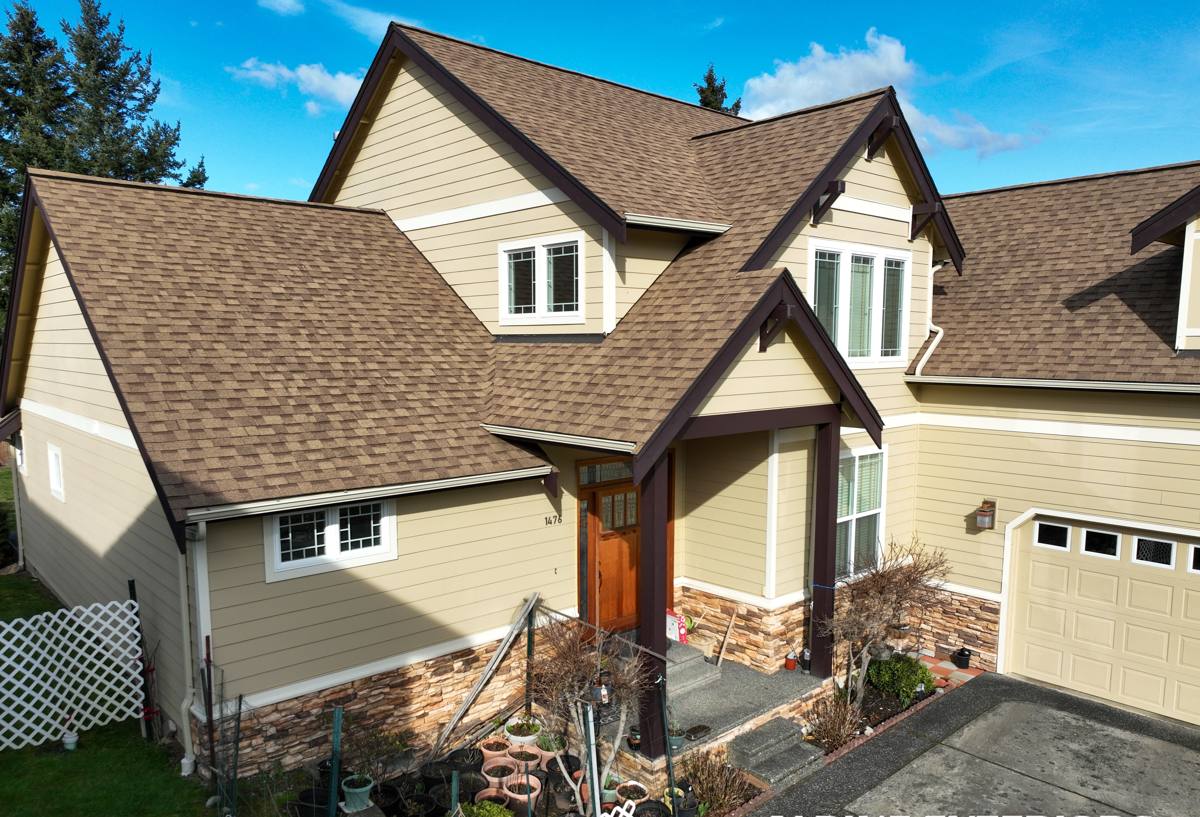
What "Correct" Looks Like for a Ballard Roof Replacement
A roof replacement is more than stripping old shingles and nailing down new ones. Done right, it's a system: deck inspection, underlayment strategy, flashing detail, ventilation, and material selection all working together against the specific weather Ballard sees. Skipping any one of these is how homeowners end up with a roof that looks fine for two years and then leaks at a valley or chimney.
Deck Inspection Before Anything Else
Once the old roofing is off, we inspect the sheathing for soft spots, delamination, or rot — common in older Ballard homes where a roof may have been re-covered once already without addressing what was happening underneath. Any compromised decking gets replaced before a single new shingle goes down. Roofing over a bad deck just hides the problem for the next owner or the next storm.
Underlayment That Handles Wind-Driven Rain
Standard felt underlayment is not enough for a home exposed to driving rain off the Sound. We use synthetic underlayment with self-adhered ice-and-water membrane at vulnerable zones — eaves, valleys, penetrations, and low-slope transitions — because these are the spots where wind can push water backward under the shingle line. This is a detail that's easy to shortcut and impossible to see once the roof is finished, which is exactly why it matters who's installing it.
Flashing That Won't Corrode
Given the salt air, we pay close attention to flashing material and fastener choice around chimneys, skylights, and roof-to-wall intersections. Cheap or mismatched metals corrode faster near the water, and corroded flashing is one of the most common sources of hidden leaks on older homes in this neighborhood. Getting flashing right is a small line item that prevents a large, recurring problem.
Moss: The Slow, Steady Threat
Moss doesn't cause a roof to fail overnight — it works slowly, which is why so many homeowners underestimate it until the damage is done. On shaded lots, especially north-facing slopes and roofs under tree canopy, moss holds moisture against the roofing material for months at a time. Over years, that trapped moisture degrades shingle granules, softens decking, and lifts shingle edges, giving wind and rain an entry point they wouldn't otherwise have.
A roof replacement is the right time to address moss proactively rather than reactively:
- Zinc or copper strips installed near the ridge, which release trace metal ions that inhibit moss growth as rain washes over them
- Material selection that resists organic growth better in shaded, damp conditions
- Attention to ventilation so the roof deck dries out between rain events instead of staying damp
- Honest guidance on which areas of your roof will need periodic moss removal regardless of material, because heavy shade will always need some maintenance
We'll tell you upfront if a section of your roof is going to need occasional attention no matter what we install — that's a maintenance conversation, not a sales pitch.
Material Options for This Climate
There's no single "best" roofing material for every home — the right choice depends on your roof's pitch, sun/shade exposure, budget, and how long you plan to stay in the house. Here's how the common options compare for a Ballard-area install:
| Material | Typical Lifespan | Moss/Moisture Behavior | Considerations |
|---|---|---|---|
| Architectural asphalt shingle | 25-30 years | Good with zinc strips and proper ventilation; moderate resistance | Best value, wide color range, easiest to repair or match later |
| Standing seam metal | 40-50+ years | Excellent — moss struggles to hold on smooth metal | Higher upfront cost; needs correct fastener/coating spec near salt air |
| Composite/synthetic shake | 30-50 years | Good, does not absorb moisture like wood | Mimics traditional shake look without the maintenance burden of real wood |
| Cedar shake (traditional) | 20-30 years with upkeep | Poor in shaded, damp spots without diligent maintenance | We can install it, but recommend it only for well-ventilated, sun-exposed roofs |
On cedar specifically: it's a beautiful, traditional look for Pacific Northwest homes, but in shaded or low-airflow sections it holds moisture and grows moss faster than other materials. If you want that look, we'll talk through where on your roof it will hold up and where a composite alternative will save you maintenance headaches down the road — that's an honest trade-off conversation, not a reason to steer you away from what you want.
Our Roof Replacement Process
Homeowners want to know what actually happens once they hire a crew, so here's the sequence, start to finish.
- On-site inspection and estimate. We walk the roof (or use a drone/ladder assessment when pitch or access requires it), check the attic for ventilation and moisture signs, and give you a written scope and price — no guesswork after the fact.
- Material selection and scheduling. We go over the options above in the context of your specific roof, budget, and how long you're planning to stay in the home, then lock in a start date.
- Protection setup. Landscaping, gutters, and siding near the work area get covered or protected before tear-off starts.
- Tear-off and deck inspection. Old roofing comes off, the deck gets inspected, and any rot or damage is repaired before moving forward.
- Underlayment and flashing installation. Synthetic underlayment, ice-and-water membrane at vulnerable zones, and corrosion-resistant flashing go in first — this is the part of the job that determines whether the roof actually stays watertight.
- Roofing installation. New material goes down to manufacturer spec, including proper nailing patterns and ventilation components.
- Cleanup and magnetic nail sweep. Full site cleanup, including a magnetic sweep for stray nails in the yard and driveway.
- Final walkthrough. We review the finished roof with you, explain any maintenance recommendations specific to your property, and answer questions before we consider the job done.
Ventilation: The Detail That Protects Everything Else
Proper attic ventilation doesn't get much attention from homeowners, but it directly affects how long a new roof lasts — especially in a climate as wet as ours. Without balanced intake and exhaust airflow, moisture from daily living (showers, cooking, laundry) gets trapped in the attic, condenses on the underside of the roof deck, and creates the exact damp conditions that invite rot and moss from the inside out. We evaluate ventilation as part of every replacement and correct it when it's inadequate, rather than just replacing the roofing on top of a poorly ventilated attic.
Signs Your Ballard Home May Need a Roof Replacement Soon
Not every roof problem means a full replacement, but these are signs worth having looked at:
- Granule loss showing up in gutters or downspouts, especially after wind or rain events
- Shingles that are curling, cupping, or missing at the edges
- Moss that returns quickly after cleaning, or has spread across a large section of the roof
- Daylight visible through the roof deck from inside the attic
- Water stains on interior ceilings, particularly near chimneys, skylights, or valleys
- A roof that's approaching or past the expected lifespan of its material
- Previous repairs in multiple spots — a sign the roof is failing broadly, not just locally
If you're only seeing one or two of these, a repair may still make sense. If you're seeing several at once, replacement is usually the more cost-effective path, since repeated repairs on an aging roof rarely stop the underlying deterioration.
Why Local Experience in Ballard Matters
Roofing crews who don't regularly work this specific part of Seattle can miss things that are obvious to someone who does. Knowing which streets sit closest to prevailing wind off the Sound, which lots run shadier for longer stretches of the year, and how older Ballard homes were typically originally roofed all shape decisions we make on your project — from underlayment strategy to where we recommend zinc strips. That local pattern recognition is built from doing this work in King County, not from a general roofing checklist.
We're also a crew you can reach after the job is done. If a question comes up six months or two years later — a spot of moss regrowth, a question about a warranty claim — you're calling a local company that already knows your roof, not starting over with someone new.
What Affects Your Roof Replacement Cost
Every roof is different, so we don't quote sight-unseen prices, but these are the main factors that move the number up or down:
| Factor | Why It Matters |
|---|---|
| Roof size and pitch | More surface area and steeper pitches increase material and labor time |
| Material choice | Asphalt, metal, and composite options carry different material and installation costs |
| Deck condition | Rot or soft decking found during tear-off adds repair work before roofing can proceed |
| Number of penetrations | Chimneys, skylights, and vents each require flashing work that adds time |
| Access and layout | Tight lots, tall roofs, or landscaping that limits staging can affect labor and protection needs |
| Ventilation upgrades | Correcting inadequate attic ventilation adds scope but protects the new roof's lifespan |
We walk through these factors with you during the estimate so you understand exactly what you're paying for and why, not just a bottom-line number.
If your roof is showing wear, or you just want an honest read on how much life it has left, we're happy to come take a look. Fill out the form below for a free, no-pressure estimate — we'll tell you what we actually see, not what's easiest to sell.