 Seattle Siding
 Shoreline's Climate Puts Real Stress on Exterior Siding
Shoreline sits right along Puget Sound, and that location cuts both ways. It's part of what makes the area desirable, but it also means homes here take on a combination of weather stresses that inland King County neighborhoods don't deal with in the same way. Salt-laden air drifts in off the water and accelerates corrosion on fasteners, trim, and anything with a weak factory finish. Wind-driven rain off the Sound doesn't just fall straight down — it drives sideways into west- and south-facing walls, working its way behind poorly flashed joints and undersized overhangs. And the long Pacific Northwest wet season, stretched out by tree cover and cooler shaded exposures common in Shoreline's older residential streets, gives moss and algae months at a time to take hold on any surface that stays damp.
None of this is unique to one street or one house style. It's a function of being a Puget Sound community in the greater Seattle area, and it's the same set of pressures we plan around on every siding job we take in this part of King County. Siding that isn't matched to that reality doesn't fail dramatically — it fails slowly, through swelling, delamination, paint breakdown, and hidden moisture damage that shows up as a soft spot or a stain years after the original installation.
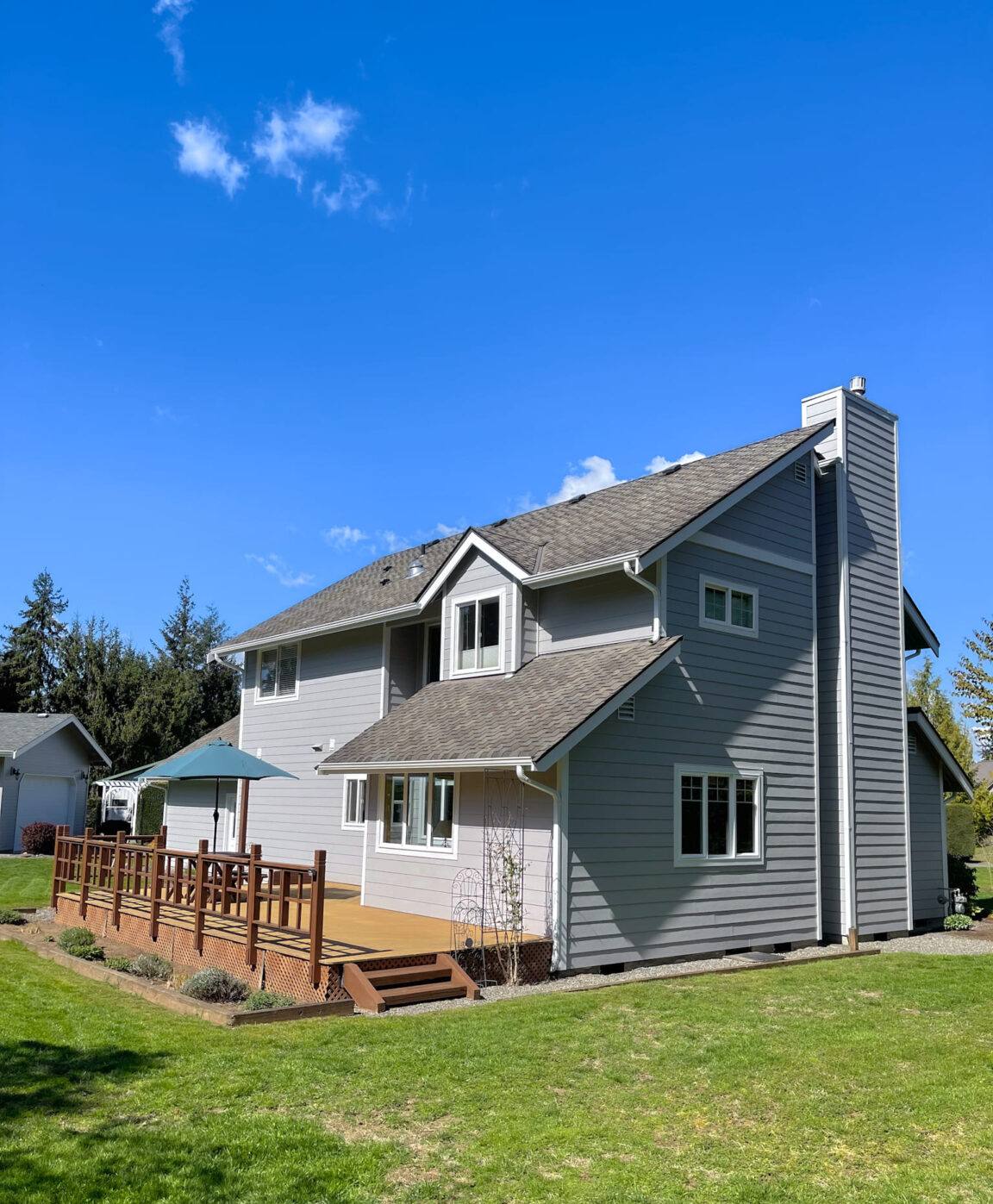
Why We Standardized on James Hardie for This Climate
We install James Hardie fiber cement siding exclusively, and a big part of that decision comes down to how it performs in exactly the conditions Shoreline sees every year. Fiber cement is made from cement, sand, and cellulose fiber — it doesn't absorb water the way wood-based products do, and it isn't a food source for the organic growth that thrives in a shaded, damp Puget Sound yard. It's also non-combustible, which matters more each year as regional wildfire smoke seasons stretch longer, even on the wet side of the state.
James Hardie also builds region-specific products through its HZ5 line, engineered for climates that see extended wet weather and moisture cycling rather than deep freezes. That's the right engineering target for western Washington. On top of that, ColorPlus factory-applied finish is baked on and cured under controlled conditions, which holds up dramatically better against UV and constant damp than a field-applied paint job — a real advantage in a climate where paint is fighting condensation and shade for most of the year.
What Correct Installation Looks Like in a Marine Climate
James Hardie siding is a durable product, but its real-world performance depends almost entirely on installation detail. This is true everywhere, but it matters more here because a mistake that might go unnoticed in a drier climate gets tested by rain and damp for eight or nine months a year.
Drainage Plane and Rain Screen Gap
Correct installation starts behind the siding, not at it. A weather-resistive barrier and a drainage gap between that barrier and the back of the siding let any moisture that gets past the cladding drain and dry out instead of sitting against the wall sheathing. Skipping or shortcutting this step is one of the most common causes of hidden rot behind siding that looks fine from the street.
Flashing at Every Horizontal Joint and Penetration
Every horizontal seam, window, door, and roofline intersection needs proper flashing to shed water outward instead of letting it track behind the panel. Wind-driven rain off the Sound will find any gap in this detailing over time — it's not a corner that tolerates being cut.
Fastening and Caulk Joints
James Hardie specifies exact fastener types, spacing, and placement for each product line and exposure. Over-driven nails, wrong fastener material, or caulk used to cover a gap instead of proper flashing all shorten the life of an otherwise good product.
Clearance From Grade, Decks, and Roof Lines
Manufacturer specs call for minimum clearance between the bottom of the siding and grade, roofing, and decking. In a climate with as much standing moisture and splash-back as Shoreline sees, that clearance is what keeps the bottom courses from staying wet longest and failing first.
Our Process for a Shoreline Hardie Siding Job
We run every job the same disciplined way, adjusted for the specific exposure of the house:
- Assessment. We walk the exterior, checking which elevations take the most wind-driven rain, where existing moss and algae growth points to persistent damp areas, and where trim or flashing has already started to fail.
- Tear-off and sheathing check. Once old siding is off, we inspect the sheathing underneath for rot or moisture damage before anything new goes up — this is the step that catches problems old siding was hiding.
- Weather barrier and drainage plane install. This gets done to spec before any Hardie product touches the wall, not treated as an afterthought.
- Installation to manufacturer spec. Fastening, flashing, and clearances follow James Hardie's published requirements for the specific product line and exposure.
- Final walkthrough. We go over the finished job with the homeowner and flag anything — trim, gutters, downspouts — that should be addressed to protect the new siding going forward.
Product Lines That Make Sense for Shoreline Homes
Most Shoreline homes we work on end up using one or a combination of these:
- HardiePlank lap siding — the standard horizontal lap look, available in several exposures and textures, and the most common choice for full re-sides.
- HardiePanel vertical siding — used for modern facades or as an accent panel on gables and entry features.
- HardieShingle siding — a shingle-profile option for homes going for a more traditional Pacific Northwest look without the moisture drawbacks of real wood shingle.
- HardieTrim — matching trim boards that hold paint and shape better around windows, corners, and fascia than dimensional lumber exposed to the same conditions.
All of these are available with ColorPlus factory finish in a range of colors, which keeps the color-matching and touch-up conversation simple compared to field-painted trim.
How Siding Materials Compare in This Climate
| Factor | James Hardie Fiber Cement | Vinyl | Cedar / Wood |
|---|---|---|---|
| Moisture absorption | Very low | Not absorbent, but seams and gaps can trap water behind it | High — prone to swelling and rot if finish fails |
| Moss / algae resistance | Good, especially with factory finish | Fair — surface growth is common in shaded areas | Poor — organic material feeds growth |
| Repainting needs | Rare with ColorPlus finish | Not paintable in the traditional sense; fades over time | Frequent — every few years in this climate |
| Fire resistance | Non-combustible | Combustible, can warp near heat sources | Combustible |
| Installation sensitivity | Moderate — detail-dependent | Low — but limits design options | High — relies heavily on finish maintenance |
This isn't a knock on every alternative product across the board — it's why, specifically for the moisture, salt air, and moss exposure that Shoreline and the wider Puget Sound area deal with, fiber cement installed correctly gives homeowners the best long-term balance of durability and low maintenance.
Choosing a Siding Contractor Who Actually Works in Shoreline
Not every contractor licensed in King County has real experience with the specific exposure conditions along the Sound. Before hiring anyone for a Hardie siding project here, it's worth checking:
- They can describe their fastening and flashing approach in specific terms, not just "we install it to code."
- They talk about drainage planes and rain screen gaps without being prompted.
- They can point to Hardie product training or manufacturer-recognized installation experience.
- They'll register the manufacturer warranty on your behalf and explain what it covers.
- They give you a written scope naming the specific Hardie product lines, not a vague "fiber cement siding" line item.
- They're familiar with local permitting requirements for exterior work in Shoreline and King County.
Why Local Experience in Shoreline Matters
A crew that already works this area knows which elevations on a typical Shoreline lot take the worst of the wind-driven rain off the Sound, which yards hold shade and damp long enough to grow moss fastest, and which older homes are likely to have sheathing issues hiding under the existing siding. That local pattern recognition doesn't replace following manufacturer spec — it's what tells a crew where to pay extra attention before problems start, rather than reacting after a homeowner notices a stain or soft spot.
If you're planning a siding project in Shoreline and want to talk through what correct installation should look like for your specific home, we're happy to walk the exterior with you and give you a straightforward, no-pressure estimate using the form below.