 Seattle Siding
 Siding Installation in West Seattle: A Different Climate Test
West Seattle sits on a peninsula with water on more sides than most Seattle neighborhoods, and that geography changes what siding has to survive out here. Homes closer to Puget Sound deal with a steady drift of salt-laden air, wind-driven rain that comes in sideways off the water during winter storms, and long stretches of shade under mature trees that keep siding damp for days after a storm passes. None of that is unique to West Seattle by itself, but the combination — salt exposure, wind-driven moisture, and a moss season that can run from fall through spring — is more demanding here than in drier, more inland pockets of King County.
Siding that's installed correctly and made from the right material shrugs this off for decades. Siding that's installed with shortcuts, or built from a material that wasn't engineered for a marine climate, tends to show problems years earlier than a homeowner expects: swelling at the bottom edges, streaking and staining, fasteners that bleed rust, and moss that keeps coming back no matter how many times it's scrubbed off.
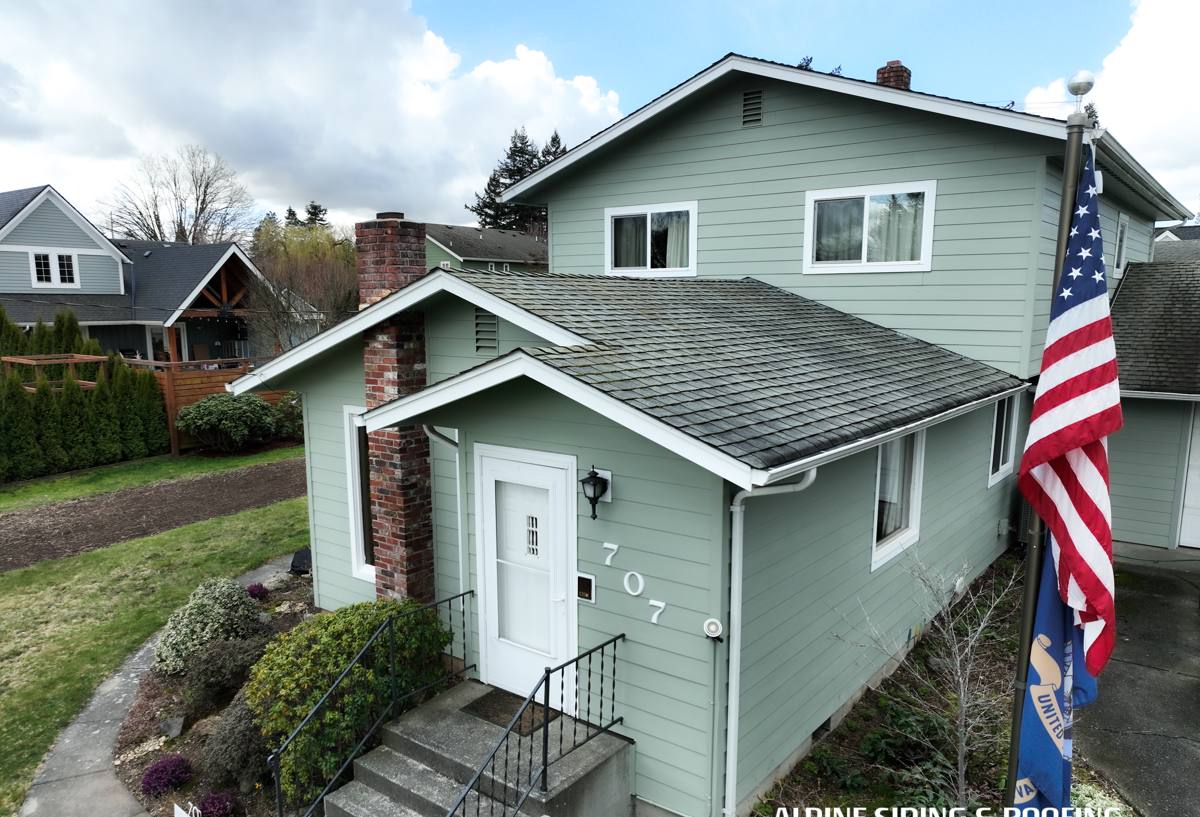
What West Seattle's Climate Does to Siding Over Time
Salt Air
Airborne salt from the Sound doesn't just affect boats and railings. It settles on exterior surfaces and accelerates corrosion in exposed metal — trim flashing, fasteners, and hardware — especially on homes with a more direct line to the water. Over years, corroding fasteners can loosen siding panels or leave rust streaks bleeding down the face of the wall.
Wind-Driven Rain
Seattle's rain is rarely a hard downpour, but it's frequent, and West Seattle's exposure means storms often drive that rain sideways into walls rather than straight down. Siding systems depend on lapped joints, flashing, and a drainage path behind the cladding to shed that water. When those details are rushed or skipped, wind-driven rain finds its way behind the siding rather than off of it.
Moss, Algae, and Shaded Exposures
Shaded, north-facing, or tree-covered walls stay damp longer after every rain, which is exactly the environment moss and algae need to take hold. On some siding materials that's mostly cosmetic; on others, sustained moisture against the surface can contribute to swelling, delamination, or rot over time, particularly at butt joints and lower courses near grade.
What a Correct Siding Installation Actually Requires
A siding job that's going to hold up to West Seattle's weather is won or lost in the details most homeowners never see once the wall is closed up. The visible panel is only part of the system — everything behind it does the real work of keeping water out.
- A drainage gap or rainscreen behind the siding so any moisture that gets past the cladding can drain and dry rather than sit against the sheathing
- A continuous, properly lapped weather-resistive barrier installed shingle-style so water always sheds downward and outward
- Correctly flashed windows, doors, and any wall penetrations, with flashing that integrates with the weather barrier rather than just caulked over it
- Manufacturer-specified fastener type, length, and placement — under- or over-driven fasteners are one of the most common causes of early siding failure
- Proper clearance between the bottom of the siding and grade, decks, and roof lines so splash-back and standing water don't sit against the material
- Correctly sized gaps at butt joints and trim, sealed with the right product rather than relying on caulk to make up for a bad fit
Skipping any one of these doesn't usually cause an immediate, visible problem — it shows up two, five, or ten years later as staining, soft spots, or moisture intrusion that's far more expensive to fix than it would have been to do right the first time.
Why We Install Only James Hardie Fiber Cement Siding Here
We standardized on James Hardie fiber cement for every job we do, including West Seattle, and the local climate is a big part of why. Fiber cement doesn't absorb and swell with moisture the way wood-based products can, and it isn't vulnerable to the UV and thermal cycling that shortens the life of vinyl. Hardie's HZ5 product line is specifically engineered for climates like the Pacific Northwest's — cold, wet winters and a long damp season — and its ColorPlus factory finish is baked on under controlled conditions, which holds color and resists the fading and chalking that field-applied paint jobs are prone to. It's also non-combustible, which matters more each year as regional wildfire smoke and dry-season fire risk become a bigger part of Western Washington's summers.
None of that means other siding materials are without merit — they're just not what we're willing to put our name behind in this climate.
| Factor | James Hardie Fiber Cement | Vinyl | Wood / Engineered Wood |
|---|---|---|---|
| Moisture / swelling resistance | Engineered cement composite, does not swell | Doesn't absorb water, but seams and edges can trap it | Vulnerable to swelling and rot if moisture gets in |
| Salt air / coastal exposure | Stable, factory-finished surface | Can become brittle over time | Finish and fasteners more prone to weathering |
| Moss / algae resistance | Dense surface resists growth, cleans easily | Textured surface can hold moisture and growth | Porous surface is more hospitable to growth |
| Fire resistance | Non-combustible | Combustible | Combustible |
| Finish maintenance | Factory finish, long repaint interval | Color molded in, can fade/chalk | Requires regular repainting or resealing |
Our Installation Process for West Seattle Homes
The steps don't change much from house to house, but the details we pay closest attention to are shaped by what we see in this neighborhood specifically.
- Assessment and tear-off. We evaluate the existing wall assembly, remove the old siding, and check the sheathing underneath for hidden moisture damage before anything new goes up.
- Sheathing repair. Any soft, stained, or rotted sheathing gets replaced — covering a compromised wall with new siding just hides the problem.
- Weather barrier and drainage plane. We install a continuous weather-resistive barrier with a rainscreen gap behind the siding, which is especially important on the more wind- and rain-exposed sides of a West Seattle home.
- Flashing and trim. Every window, door, and penetration is flashed to shed water outward before the siding panels ever go on.
- Hardie panel installation. Panels are installed to manufacturer fastening specifications, with correct joint spacing and clearance from grade, decks, and roofing.
- Finish detailing and cleanup. Caulking, touch-up, and a full site cleanup close out the job.
Permits, Codes, and Local Requirements
Exterior work in Seattle typically requires coordination with the Seattle Department of Construction and Inspections, and requirements can vary depending on the scope of the project, the age of the home, and whether the work touches structural sheathing or just the cladding. We handle that coordination as part of the job rather than leaving it for the homeowner to sort out, and we build our installation details to meet the wind and moisture exposure standards that apply to homes in this part of King County.
Keeping Your New Siding Looking Right Through the Wet Season
Correctly installed Hardie siding needs very little upkeep, but a few habits go a long way in a climate like this one.
- Keep gutters and downspouts clear so water isn't overflowing and running down the wall face
- Trim back tree branches and shrubs that keep siding shaded and damp longer than necessary
- Rinse off moss or algae buildup on shaded walls before it has a chance to spread
- Walk the exterior once a year and note any caulking that's cracked or pulled away from a joint
- Keep an eye on areas near grade, decks, and roof-to-wall intersections, where moisture tends to concentrate first
Why Hiring a Crew That Already Works in West Seattle Matters
West Seattle has a mix of older homes with additions and renovations layered on over the decades, along with newer construction, and each brings its own quirks — different sheathing types, different levels of prior weatherproofing, different exposure depending on how close a home sits to the water or how much tree cover surrounds it. A crew that regularly works in this specific area has already seen how those variables play out and knows what to check for before the first panel comes off the wall. That local pattern recognition is worth more than it sounds like — it's the difference between a crew that follows a generic checklist and one that knows exactly where West Seattle homes tend to have problems and builds the new siding system to address them.
If you're weighing a siding project on a West Seattle home, we're happy to walk the exterior with you, look at what's there now, and talk through what a correctly installed James Hardie system would involve for your specific house. Reach out for a free, no-pressure estimate using the form below.