 Seattle Siding
 Siding Repair Built for Capitol Hill's Housing Stock
Capitol Hill is one of Seattle's older, denser neighborhoods, with a mix of century-old craftsman and Victorian homes standing shoulder to shoulder with newer infill construction. Lots tend to be narrow, houses sit close to their neighbors, and mature street trees shade large stretches of siding for much of the year. That combination changes how siding ages here compared to a home on an open lot with full sun exposure. Repair work on Capitol Hill has to account for tight access, older wall assemblies that may not match modern construction, and moisture patterns that are different block to block depending on tree cover and hillside orientation.
This page focuses specifically on siding repair for Capitol Hill homes — not a general overview, and not a sales pitch for full replacement when a targeted repair will do the job correctly. We'll walk through what the local climate does to siding, how to tell when repair is the right call versus replacement, and what a repair actually needs to include to hold up.
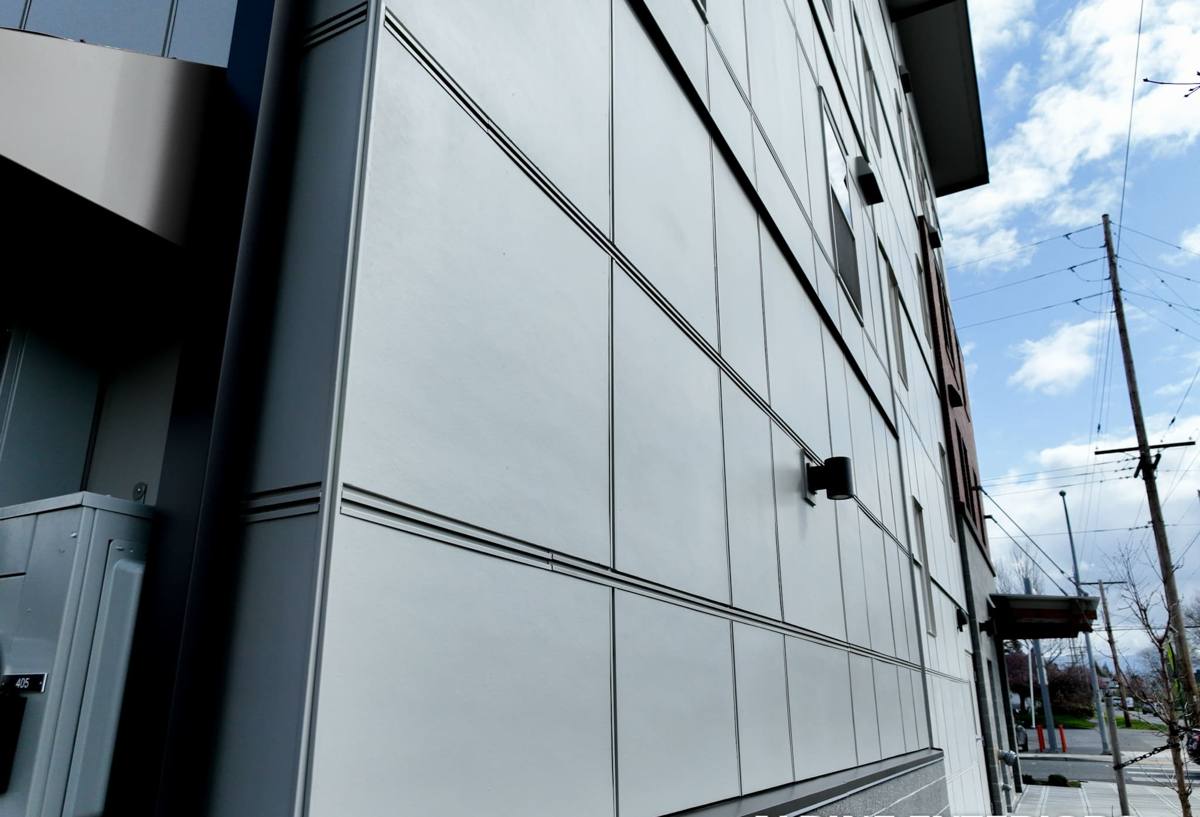
What Seattle's Climate Does to Siding on Capitol Hill
Seattle's marine climate is generally mild, but it is also relentless. King County sees long stretches of low-intensity rain rather than short heavy storms, and that steady moisture exposure is harder on siding than people expect. On Capitol Hill specifically, three climate factors show up again and again in the repair calls we get.
Driving Rain and Wind-Driven Moisture
Wind off the Sound and through the elevated terrain around Capitol Hill can push rain sideways into wall assemblies, not just straight down onto roofs. Siding that isn't properly lapped, flashed, or caulked at joints and penetrations lets that wind-driven moisture behind the surface, where it can sit against sheathing and framing for weeks between dry spells.
A Long Moss and Mildew Season
Shaded, tree-lined streets and consistently damp conditions give moss, algae, and mildew a long growing season on Capitol Hill — often close to year-round on north-facing walls and anywhere siding stays damp under tree canopy. Beyond the cosmetic staining, sustained moss and algae growth holds moisture against the siding surface, which accelerates paint failure, wood rot, and fiber cement delamination if the product wasn't built for it.
Salt Air and Corrosion
Seattle's proximity to Puget Sound means a degree of salt air exposure citywide, and Capitol Hill's elevation means it catches wind carrying that moist, salt-tinged air. Over years, that exposure contributes to corrosion of exposed fasteners, trim flashing, and metal accessories — a slow process, but one that shows up as rust streaking and loosened boards on older homes that used untreated or under-rated hardware.
Signs Your Capitol Hill Home Needs Siding Repair
Most siding problems don't announce themselves as an emergency. They show up as small visual or physical changes that get worse the longer they're ignored. On a Capitol Hill inspection, we're typically looking for:
- Cracked, split, or bowed boards, especially near ground level or under windows
- Soft or spongy spots when pressed, which usually mean moisture has reached the substrate
- Peeling, bubbling, or repeatedly failing paint in the same spots
- Persistent moss, algae, or black staining that returns shortly after cleaning
- Gaps opening up at trim, corners, or butt joints
- Visible rust streaking below nail heads or metal flashing
- Warping or separation of boards from the wall plane
- Musty smell or visible staining on interior walls that back up to exterior siding
Any one of these on its own may be a simple, contained repair. Several appearing together, especially on the same wall, is usually a sign that moisture has been getting behind the siding for a while and the repair needs to include what's underneath, not just the visible surface.
Repair or Replace? How We Help You Decide
Homeowners often assume any siding damage means a full re-side, and just as often assume a quick patch will handle something that's actually much deeper. Neither assumption is safe without an actual inspection. Here's the general framework we use to make that call honestly.
| Factor | Points Toward Repair | Points Toward Replacement |
|---|---|---|
| Extent of damage | Isolated to one or two boards or a small section | Spread across multiple walls or the whole elevation |
| Sheathing condition | Dry, solid substrate found once siding is opened up | Soft, rotted, or delaminated sheathing behind the siding |
| Age of existing siding | Siding is otherwise sound and mid-life | Siding is at or past its expected service life |
| Underlying material | Material still performs well when properly maintained | Original material (e.g., untreated wood, old composite) is chronically problem-prone |
| Cost pattern | First or infrequent repair on this wall | Repeat repairs to the same area over recent years |
A well-run inspection should be able to tell you, with reasons, which side of this table your situation falls on — not just quote a number. If a contractor recommends full replacement without opening up any siding to check the sheathing first, that's worth questioning.
What a Correct Siding Repair Actually Involves
Diagnosing the Cause, Not Just the Symptom
A cracked board or a moss-stained section is a symptom. The cause might be a missing kick-out flashing above a lower roofline, a caulk joint that failed years ago, a downspout dumping water against a wall, or simply a shaded, poorly ventilated section of wall that never dries out between rains. Repairing the visible damage without addressing the cause means the same failure comes back within a season or two.
Checking What's Behind the Siding
Any time we open up a damaged section, we check the condition of the water-resistive barrier and sheathing underneath before closing it back up. If moisture has reached the framing, that needs to be dried out and repaired properly — sometimes replacing a section of sheathing — before new siding goes back on. Covering a wet wall with new material just traps the problem.
Matching Material, Profile, and Finish
A repair that's structurally sound but visually mismatched — wrong reveal, wrong texture, slightly different color — is still a bad repair on a home you have to look at every day. Where an exact match to older existing siding isn't realistic, we talk through the honest options with you rather than quietly installing something that will stand out.
Our Siding Repair Process, Step by Step
- Inspection and diagnosis — we identify not just the damaged area but the likely cause of the moisture or wear
- Opening the affected section — removing damaged siding to expose the sheathing and framing underneath
- Assessing hidden damage — checking for rot, delamination, or compromised water-resistive barrier
- Structural repair if needed — replacing damaged sheathing or framing before anything goes back over it
- Correcting water management — fixing or adding flashing, drip caps, and sealant details so the original cause doesn't repeat
- Installing new material — matched to the existing siding where practical, or James Hardie fiber cement where we're rebuilding a section
- Finish work — trim, caulking, and paint or factory-finish matching so the repair reads as part of the wall
- Walkthrough — reviewing the completed repair and what caused it, so you know what to watch for going forward
Why We Rebuild With James Hardie Fiber Cement
When a repair goes beyond a small patch and a section of siding needs to come off and be replaced, the material that goes back on matters as much as the workmanship. We install James Hardie fiber cement exclusively — we don't install LP SmartSide, vinyl, Cemplank, Allura, primed spruce, or cedar — and that standard applies to repair and rebuild sections too, not just full re-sides.
Fiber cement is non-combustible and dimensionally stable, so it doesn't expand, contract, warp, or absorb water the way wood-based products can in a climate that stays damp as long as Seattle's does. Hardie's ColorPlus factory finish is baked on under controlled conditions, which holds color and resists the peeling and re-painting cycle that field-painted wood trim and siding fall into on shaded, damp walls. Hardie also builds region-specific HZ product lines engineered for climates like the Pacific Northwest's, and backs the product with a strong transferable warranty when it's installed to spec. For a homeowner who's already dealing with a repair, the last thing you want is to patch a problem area with material that's likely to need the same repair again in a few years. We'd rather tell you honestly why we won't do that than take the easy patch and leave you with a recurring issue.
What Capitol Hill's Density and Older Housing Stock Mean for Repair Work
Working on Capitol Hill comes with logistics that don't apply everywhere in King County. Narrow side yards and closely spaced houses mean staging materials and equipment takes more planning, and we're mindful of neighboring properties throughout the job. Many homes here are older craftsman or Victorian-era construction, which sometimes means wall assemblies, trim details, or siding profiles that differ from what you'd find in a newer suburban build — a repair crew needs to recognize those differences rather than treating every wall like modern platform framing. Mature street trees and shaded lots, common throughout the neighborhood, also mean certain walls stay damp longer after rain and are more prone to the moss and mildew issues covered earlier. All of that shapes how we plan and sequence repair work on a Capitol Hill home compared to a job elsewhere in the city.
What Affects the Cost of a Siding Repair
Repair costs vary enough job to job that a flat number isn't honest. What we can tell you is what actually drives the cost up or down, so a quote makes sense when you get one.
| Cost Factor | Why It Matters |
|---|---|
| Size of the damaged area | More boards or wider sections mean more material and labor |
| Hidden damage extent | Rotted sheathing or framing found once the wall is opened adds scope |
| Accessibility | Tight side yards, second-story work, or limited street access affect staging and labor time |
| Material match | Matching older or discontinued siding profiles can take more sourcing and labor than a straightforward Hardie section |
| Underlying cause | Fixing the water-management problem that caused the damage (flashing, drainage) adds scope but prevents repeat repairs |
A trustworthy estimate should walk through which of these apply to your specific repair, not just hand you a number with no explanation behind it.
Why Hiring a Crew That Already Works Capitol Hill Matters
Siding repair on Capitol Hill benefits from a crew that has already worked through the neighborhood's older construction types, tight-lot access challenges, and the specific way this part of Seattle holds onto moisture between the driving rain, the tree cover, and the elevated exposure to wind. That familiarity shows up in small but real ways — recognizing an older siding profile on sight, knowing which wall orientations tend to hide the worst moss and rot problems, and planning access and staging around narrow side yards without it turning into a hassle for you or your neighbors. It also means fewer surprises once a wall is opened up, because the patterns of damage in this neighborhood are ones we've already seen before.
If you're noticing cracked boards, persistent staining, or soft spots on your Capitol Hill home's siding, we're happy to take a look and give you an honest read on what's actually going on — repair, partial rebuild, or otherwise. Reach out for a free, no-pressure estimate using the form below.