 Seattle Siding
 Why Siding Repair Looks Different on Queen Anne Hill
Queen Anne sits up on one of Seattle's highest points, with a mix of older homes and newer builds spread across a hillside that catches weather other King County neighborhoods are partly sheltered from. That elevation and exposure matter more than most homeowners realize when it comes to siding. A wall facing the wind and open sky on top of the hill takes on moisture and wear differently than a similar wall tucked into a low, tree-shaded lot a few miles away, and a repair plan that ignores that difference tends to under-scope the actual problem.
Siding repair done right here starts with understanding which symptoms are cosmetic and which point to something more serious happening behind the surface, because those two categories get handled very differently. This page covers what actually damages siding on Queen Anne, how a correct repair is diagnosed and carried out, and why hiring a crew that already works this neighborhood — rather than one treating it like any other Seattle address — makes a real difference in the outcome.
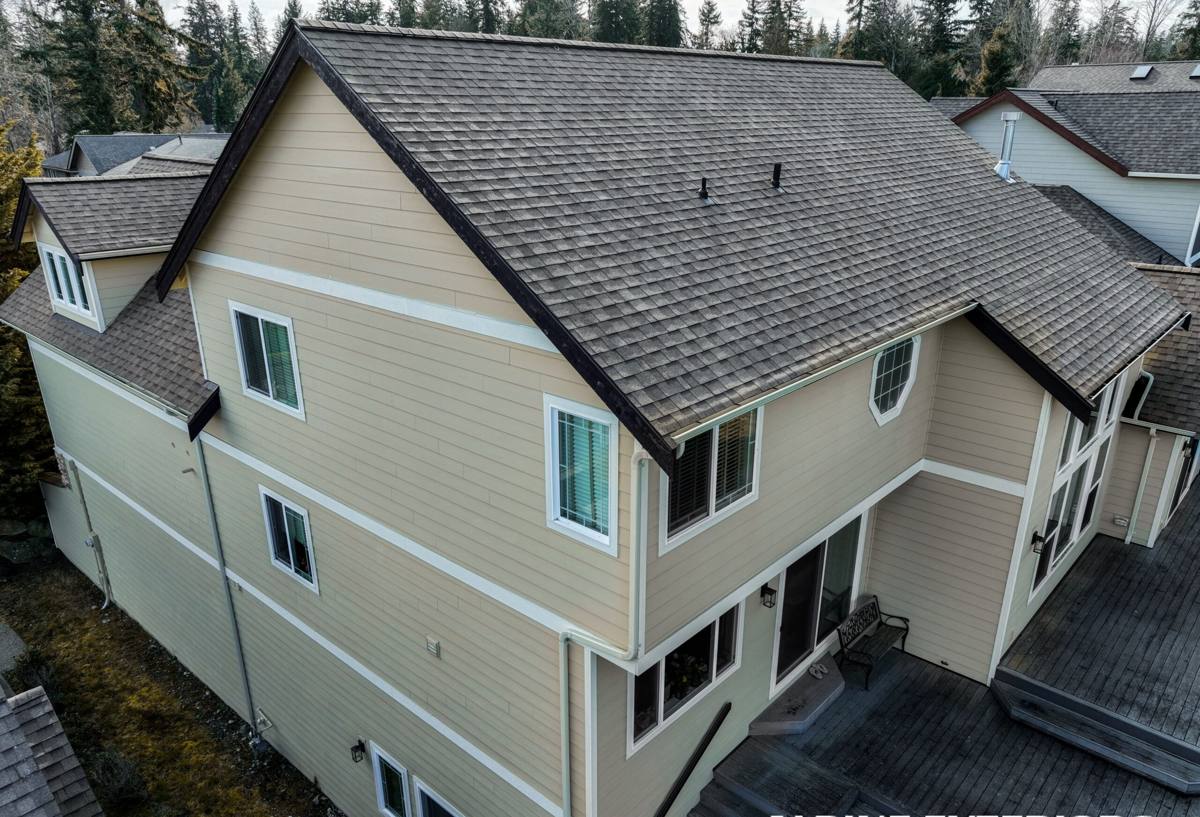
What Actually Damages Siding on Queen Anne
Salt Air Off the Sound
Queen Anne's elevation puts many homes in direct line of air moving in off Puget Sound and Elliott Bay, and that salt-laden air works on metal continuously, not just during storms. Fasteners, flashing, and trim hardware corrode faster under that steady exposure, and a corroding fastener rarely announces itself — it shows up later as a slightly lifted board, a gap at a butt joint, or a fastener head that's started to work loose. On exposed, hill-facing walls, this is one of the most common root causes behind siding problems that look minor from the ground.
Wind-Driven Rain
Straight-down rain is relatively easy for siding to shed. Wind-driven rain isn't, because it hits the wall at an angle and gets pushed into laps, seams, and trim lines that were only designed to handle water moving downward. Queen Anne's exposed position means walls here take a disproportionate share of that wind-driven rain compared to more sheltered parts of the city, particularly on faces oriented toward the water or open to prevailing storm direction. Every seam, corner, and penetration gets tested each time a system moves through.
A Long Moss Season
Seattle's mild, damp climate keeps moss and mildew active across most of the year on shaded and north-facing siding, and Queen Anne's tree cover and hillside microclimates give moss plenty of places to take hold. Organic growth isn't just a cosmetic issue — it holds moisture against the siding surface longer than it would otherwise sit there, which extends every wet cycle the material underneath goes through and accelerates whatever damage is already in progress.
Cosmetic Wear vs. Structural Damage
Not every mark or imperfection on aging siding needs the same response, and telling the difference correctly is the real job of a repair estimate — before any work is scoped.
| Symptom | Usually Cosmetic | Often Points to a Bigger Problem |
|---|---|---|
| Surface staining or moss on shaded walls | Yes — routine cleaning usually resolves it | Only if the surface underneath feels soft when pressed |
| Hairline cracking at a cut edge | Sometimes, if caught early | Often, once water has been wicking in for a while |
| Soft or spongy board | No | Yes — moisture has likely reached the sheathing |
| Gap opening at a butt joint or corner | Rarely | Usually — a sign of movement or a failed seal |
| Rust streaking near a fastener | Cosmetic if isolated and shallow | Can mean the fastener itself has lost holding strength |
| Peeling or bubbling paint film | Yes, on older painted materials | Only if it's tracking with moisture intrusion, not just age |
Cosmetic issues can usually be addressed on a routine maintenance timeline. Anything involving softness, movement, or a fastener that's lost its grip needs attention sooner, since those are the signs that water has already gotten past the surface layer.
How We Diagnose Before Recommending Repair
A repair estimate that's actually useful starts with a real inspection, not a guess from the sidewalk. On a Queen Anne home, that typically includes:
- Pressing along suspect boards and joints to check for soft spots that indicate moisture has reached the material underneath
- Checking fastener condition on exposed and hill-facing walls, where salt air accelerates corrosion faster than on sheltered elevations
- Looking at flashing around windows, doors, and any wall penetration for gaps or sequencing errors that let water bypass the drainage plane
- Assessing moss and organic growth patterns to see whether they're purely surface-level or sitting over a wall section that's staying wet longer than it should
- Checking clearance between the bottom of the siding and grade, decks, or roof lines, where water tends to collect on sloped hillside lots
- Confirming whether the existing siding is fiber cement, wood, or another material, since that changes what a correct repair looks like
We walk through what we find honestly — what needs attention now, what can be monitored, and what's purely cosmetic — before recommending a scope of work.
Repair vs. Full Re-Side: How That Decision Gets Made
Homeowners often assume any siding problem means a full re-side, or the opposite — that a patch will always be the cheaper, equally good option. Neither assumption holds up consistently. The honest factors that actually drive this decision:
- How far the damage has spread. A few affected boards around a single window or corner is usually a straightforward repair. Damage showing up across multiple elevations often means the underlying moisture problem is bigger than any one section.
- What's happening behind the siding. If an inspection turns up wet sheathing or framing beyond an isolated spot, patching the visible boards without addressing what's behind them just delays the same failure.
- Age and condition of the material overall. Siding nearing the end of its practical life may only have a repair cycle or two left before a re-side becomes the more cost-effective path.
- Whether the original installation was detailed correctly. Some older installations weren't flashed or sequenced to hold up against Puget Sound exposure the way current best practice calls for, and repairing those in place without fixing the flashing just resets the clock on the same problem.
We'll give a straight answer about which category a given home falls into, including when a repair is genuinely the right call, rather than defaulting to whichever job is bigger.
What a Correct Siding Repair Involves
Matching Material and Finish
A repair that doesn't match the existing siding's profile, reveal, and finish ends up looking like a patch rather than a completed job. On homes already sided in James Hardie fiber cement with a ColorPlus factory finish, matching color and sheen at a repair seam is far more reliable than trying to field-match a painted or stained material, because the factory finish is consistent from batch to batch in a way hand-applied paint rarely is over time.
Fixing the Cause, Not Just the Symptom
A soft board or a cracked corner is a symptom. A missing flashing detail, a failed seal at a joint, or moss that's been holding moisture against a wall for a season or two is usually the cause. A repair that swaps out the visible damage without correcting what caused it tends to fail again in the same spot — often faster the second time, because the underlying issue was never addressed.
Getting Flashing and Drainage Right
Repairs around windows, doors, and butt joints need the same flashing sequencing and water-resistive barrier detailing that a correct new installation gets. On a hillside property with real wind-driven rain exposure, skipping this step on a "small" repair is exactly how a small repair becomes a repeat visit within a year or two.
Repairing Homes That Aren't Already Hardie
We only install James Hardie fiber cement, and that includes the repair work we do — it's what we know how to detail correctly, it carries a strong transferable warranty when installed to spec, and it holds up to Queen Anne's salt air, driving rain, and moss exposure better than the wood-based and vinyl products it's replaced on most of the homes we work on. If your home is already sided in Hardie, a repair is usually a clean, color-matched fix. If it isn't, we'll still take an honest look and tell you what's realistic: some damage on other materials can be patched in a way that holds up reasonably well, and some can't be repaired without it showing or without the same failure recurring nearby. In those cases, we'll say so plainly, including when a full re-side in fiber cement is genuinely the more sensible long-term answer rather than a repeated cycle of patches on a material that's reaching the end of what it can realistically be repaired.
Maintenance That Extends a Repair's Lifespan
- Rinse siding periodically to remove salt residue and organic buildup before it works into joints and fastener lines
- Trim back branches and landscaping that shade walls and trap moisture, since that's where moss takes hold fastest on Queen Anne lots
- Check caulk joints and trim seals a couple of times a year, especially after fall and winter storm systems
- Address soft spots, gaps, or movement right away rather than waiting for the next scheduled inspection
- Keep gutters and downspouts clear so roof water isn't adding extra volume against a wall section during heavy rain
Why It Matters That We Already Work Queen Anne
A crew that mostly works flatter, more sheltered parts of Seattle can still do competent siding repair here, but a hillside property in this neighborhood has variables that come up more often on this kind of lot than elsewhere in King County — wind exposure tied to elevation, drainage patterns on sloped ground, and moss growth that behaves differently depending on tree cover and which direction a wall faces. Working this neighborhood regularly means we're not guessing at those conditions on your project. We know what a Queen Anne repair actually needs to hold up through another wet Puget Sound winter, because we've diagnosed and fixed that same pattern of damage on homes like yours before.
That familiarity also means a more accurate first estimate, with less back-and-forth once work is underway, because the inspection already accounts for how this hill behaves rather than applying a generic checklist built for a different kind of lot.
Get an Honest Look at Your Siding
Whether you're dealing with a specific issue — a soft spot, a cracked corner, a joint that's opened up — or just want a straight assessment of where your siding stands, we're glad to take a look and explain what we find plainly, including if the answer is "this doesn't need much yet." Reach out below for a free, no-pressure estimate.