 Seattle Siding
 Why Ravenna Homes Wear Out Their Siding Faster Than the Label Says
Ravenna sits inside one of the wettest residential climates in the country. Homes here don't get hit by one big weather event a year — they get hit by hundreds of small ones. Driving rain off Puget Sound blows sideways into wall assemblies for months at a stretch. Shade from mature trees keeps siding damp long after a storm passes. And a moss season that can run from fall through spring means organic growth is constantly working into seams, laps, and fastener points. None of that shows up on a siding sample board at a home improvement store, but it's the actual environment your siding has to survive, year after year, in King County.
Older siding products were rarely engineered with this specific combination of moisture load and moss pressure in mind. That's why so many Ravenna homes end up needing a full siding replacement well before the original material's expected lifespan — not because the homeowner did anything wrong, but because the product wasn't matched to the climate it was installed in.
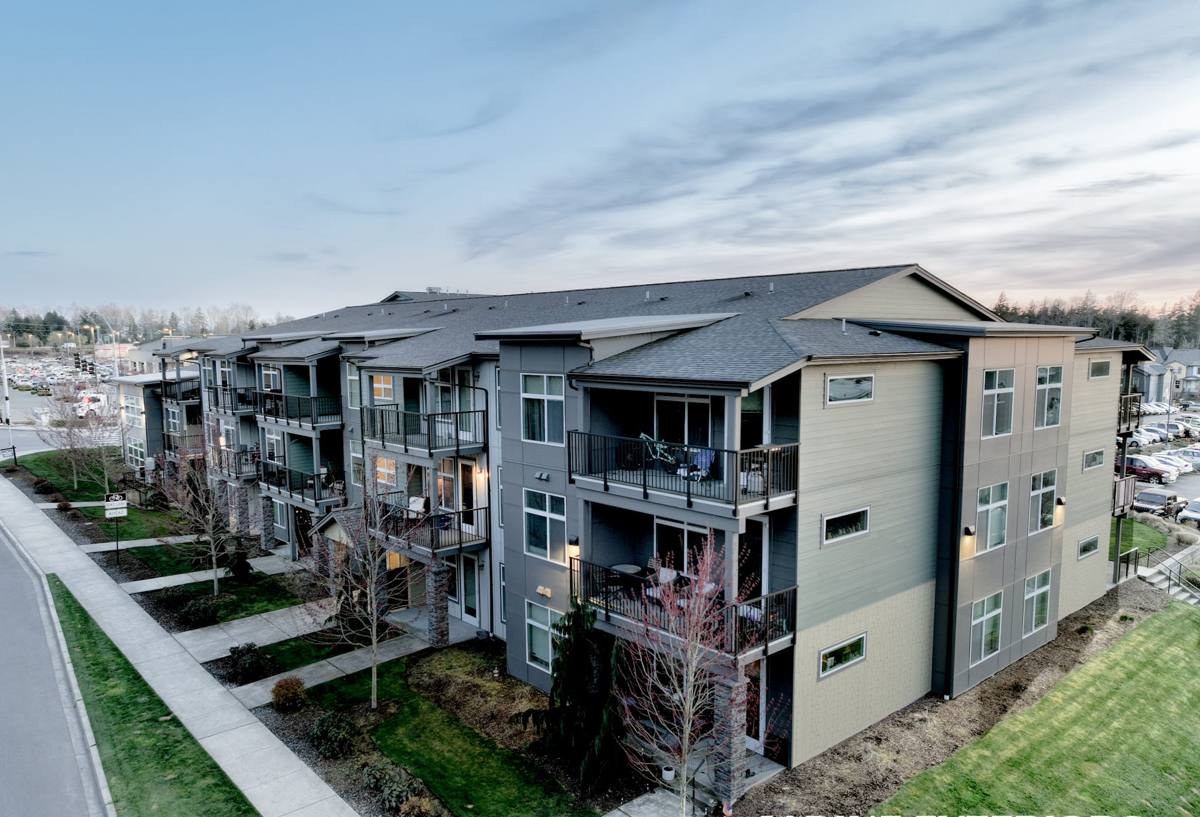
What Constant Moisture and Moss Actually Do to Siding
It helps to understand the failure pattern, because it's consistent across almost every older home we look at in this neighborhood:
- Moisture wicking: Water gets pulled up into the bottom edge of siding boards through capillary action, especially where boards sit close to grade, decks, or hardscaping.
- Trapped dampness: Shaded north and west-facing walls dry slowly. Siding that stays damp for days at a time is far more vulnerable to swelling, delamination, and rot than siding that dries out within hours.
- Moss and organic buildup: Moss holds moisture directly against the siding surface and can work into laps, seams, and caulk joints, accelerating whatever moisture damage is already underway.
- Fastener and seam failure: Repeated wet-dry cycling loosens fasteners and opens hairline gaps at seams, which then become new entry points for water.
Once moisture gets behind the siding — not just on it — the damage moves to the sheathing, framing, and insulation, and a cosmetic problem becomes a structural one. That's the real cost of ignoring early warning signs.
Signs a Ravenna Home Needs Siding Replacement, Not Just a Patch
Some siding problems can be repaired locally. Others are signs the whole system has reached the end of its useful life. Look for:
- Soft or spongy spots when you press on the siding, especially near the bottom courses
- Visible warping, cupping, or buckling boards
- Paint that won't hold anymore, even after a fresh coat — a sign moisture is moving through the material from behind
- Persistent moss or algae staining that returns within a season of cleaning
- Gaps opening at seams, corners, or trim that weren't there a few years ago
- Rising energy bills that track with drafty, uninsulated wall cavities behind the siding
One or two of these can sometimes be addressed with targeted repair. Several at once, especially combined with soft sheathing underneath, usually means it's time to replace rather than patch.
What a Correct Siding Replacement Actually Involves
A siding replacement is only as good as what happens before the new material goes up. In a climate like Seattle's, the water-management details matter more than the siding brand on the invoice. A correct job includes:
Tear-Off and Inspection
Removing the old siding down to the sheathing and actually looking at what's underneath — not assuming it's fine. This is where hidden rot, damaged sheathing, or old moisture damage gets found and addressed before it's covered up again.
Weather-Resistive Barrier and Flashing
A properly lapped weather-resistive barrier, correctly integrated flashing at windows, doors, and penetrations, and attention to how water is meant to drain down and out of the wall assembly rather than pooling behind it.
Proper Fastening and Clearances
Siding installed with the manufacturer's specified fastener pattern, correct nail depth, and proper clearance from grade, decks, and roof lines — details that directly determine whether the wall can dry out between rain events.
Trim, Caulking, and Detail Work
The seams and transitions are where most siding failures start. Correct trim work and sealing at the right (and only the right) joints is what keeps water from finding its way behind the field of the siding.
Why We Install Only James Hardie Fiber Cement
We don't install vinyl, LP SmartSide, primed wood, or other fiber cement brands, and it's a deliberate standard, not a sales pitch. In a climate defined by driving rain and long wet-to-dry cycles, the material has to hold up to conditions that are tough on almost everything else on the market:
- Non-combustible material that doesn't feed a fire the way wood-based products can.
- Engineered for climate — Hardie's HZ product lines are specifically formulated for wet, humid regions like ours, rather than a one-size-fits-all national product.
- Factory-applied ColorPlus finish, baked on under controlled conditions rather than field-painted, which holds color and resists the fading and peeling that constant moisture accelerates.
- Dimensional stability — fiber cement doesn't swell, cup, or rot the way wood-based siding can when it stays damp for days at a time.
- Strong transferable warranty backed by a manufacturer with a long track record in exactly this climate.
We're not saying every other product is worthless — plenty of them have real strengths. But we've made a professional call that in the Pacific Northwest, and specifically in a wet, moss-heavy neighborhood like Ravenna, James Hardie fiber cement gives homeowners the best combination of moisture resistance, finish durability, and long-term value. It's the one product we're willing to put our name behind.
Our Process for Ravenna Siding Replacement Projects
- Free on-site assessment — we walk the exterior with you, check for soft spots and moisture damage, and give you an honest read on repair vs. replacement.
- Detailed scope and estimate — what's being removed, what the sheathing inspection may reveal, and a clear breakdown of materials and labor.
- Tear-off and sheathing check — old siding comes off, damaged sheathing is identified and addressed before anything new goes up.
- Weather barrier and flashing installation — the part of the job that determines whether the new siding actually performs.
- James Hardie installation to manufacturer spec — correct fastening, clearances, and joint treatment throughout.
- Final walkthrough — we go over the finished work with you before calling the job done.
What Drives the Cost of a Siding Replacement
Every home is different, but the same handful of factors drive most of the cost variation we see on Ravenna projects:
| Factor | Why It Matters |
|---|---|
| Extent of hidden damage | Rotted sheathing or framing found during tear-off adds repair scope beyond the siding itself |
| Home size and wall complexity | More corners, dormers, and trim details mean more labor and cut waste |
| Siding profile and accessories | Lap width, trim style, and accent details affect material cost |
| Access and site conditions | Tight lot lines, mature landscaping, or multi-story walls affect staging and labor time |
| Existing paint or finish removal | Additional prep is sometimes needed to prepare adjacent surfaces and trim |
We give firm, itemized estimates after an on-site look — not a ballpark over the phone — because the honest cost of a job depends on what's actually behind your old siding.
A Quick Checklist Before You Hire
- Do they inspect the sheathing during tear-off, or just cover it up?
- Do they explain their flashing and weather-barrier approach, or gloss over it?
- Are they installing to the manufacturer's actual fastening and clearance specs?
- Do they carry proper licensing and insurance for exterior work in Washington?
- Do they regularly work in your specific neighborhood and know its conditions?
- Is the estimate itemized, or a single vague lump sum?
Why Local Experience in Ravenna Matters
A crew that regularly works in and around Ravenna already knows what this neighborhood's homes tend to run into — where moss builds up fastest, which wall exposures stay damp longest, and how older Seattle-area homes were typically built and flashed the first time around. That familiarity shows up in fewer surprises during tear-off and a faster, more accurate estimate up front. It's a different starting point than a crew seeing King County's driving-rain, moss-heavy climate for the first time on your house.
If your siding is showing its age, we're happy to take a look and give you a straightforward, no-pressure assessment of what's going on and what it would take to fix it right. Use the form below to request a free estimate for your Ravenna home.