 Seattle Siding
 Storm Damage Roof Repair for Columbia City Homes
Columbia City sits in southeast Seattle's Rainier Valley, close enough to Lake Washington and the broader Puget Sound air mass that roofs here take a specific kind of beating year-round. It isn't usually a single dramatic storm that does the damage. It's the accumulation: wind-driven rain that finds its way under lifted shingles, a long wet season that keeps roof surfaces damp for months, and mature tree canopy that drops limbs and needles onto roofs during fall and winter windstorms. By the time a homeowner notices a stain on the ceiling, the underlying damage has often been building for a while.
We repair storm-damaged roofs as part of our exterior work in this neighborhood, and the approach we take here is shaped by what actually happens to roofs in this part of King County, not by a generic checklist written for a different climate.
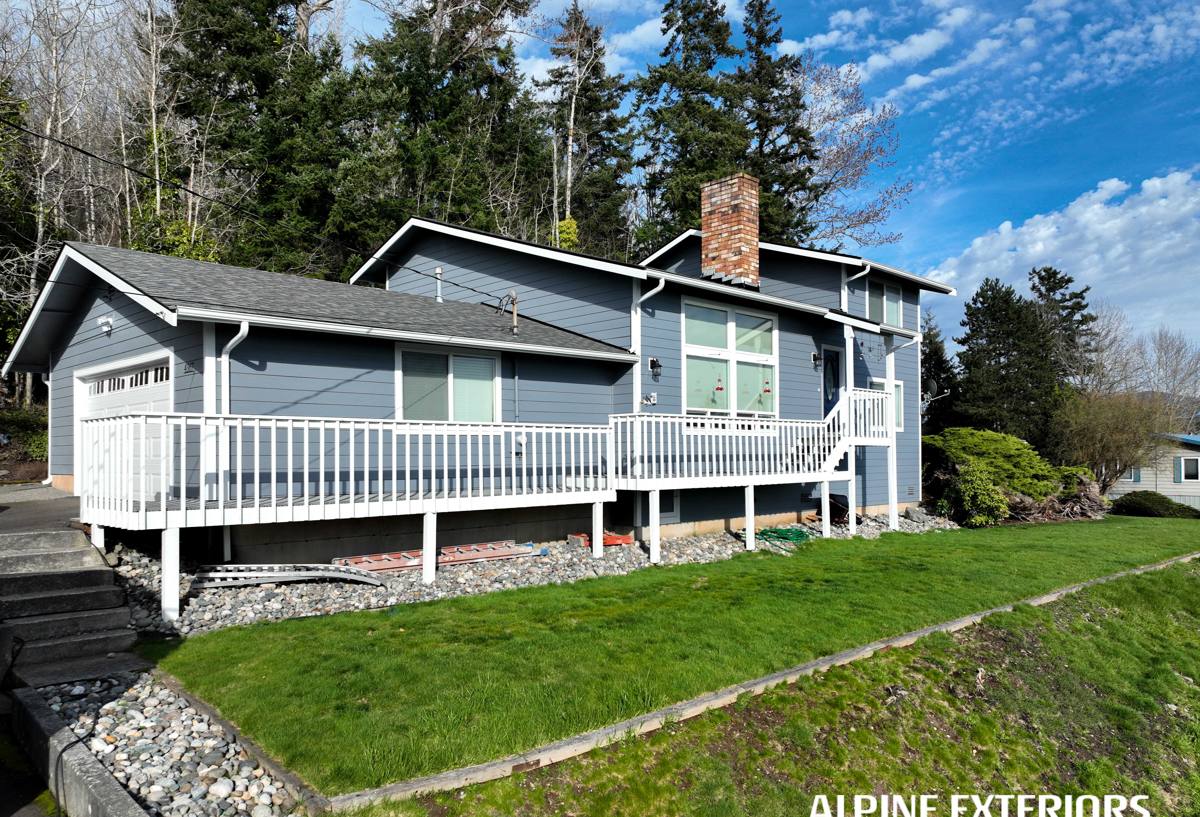
What Storm Damage Actually Looks Like Here
"Storm damage" covers more than a single wind event tearing shingles off. In Columbia City, the damage we're most often called out for falls into a few categories:
- Wind-driven rain intrusion — rain pushed sideways under shingle tabs or around flashing during a windstorm, rather than falling straight down onto a roof designed to shed it.
- Impact damage from falling limbs and debris — Columbia City's tree-lined streets mean storms bring down branches, and even a moderate limb strike can crack shingles, dent metal flashing, or punch through underlayment.
- Wind uplift — gusts that lift shingle edges and either tear them off outright or loosen the seal, leaving the roof vulnerable the next time it rains.
- Prolonged moisture and moss intrusion — not a single storm, but the cumulative effect of a long wet season on a roof that was already holding moss or debris.
The last category is easy to overlook because it doesn't announce itself with a loud crack. Moss holds water against the roof surface, and over a wet Pacific Northwest winter that moisture works its way under shingle edges and into fastener holes, which is exactly where a storm's wind and rain will find the weakest point.
Signs Your Roof Has Storm Damage
Some damage is obvious from the ground. Some isn't. A quick walk around your property after a windstorm, plus a look in the attic if you have access, catches most of what matters:
- Missing, cracked, or curled shingles, especially near ridges and edges
- Granules collecting in gutters or at downspout outlets
- Water stains or discoloration on interior ceilings or upper walls
- Soft or sagging spots when you look across the roof plane
- Bent, lifted, or separated flashing around chimneys, vents, or wall intersections
- Dented or cracked roof vents and pipe boots
- Visible daylight through the attic roof deck
- Heavy moss or debris buildup that wasn't there before the storm season
Any one of these on its own might not be urgent. Several at once, or a fresh interior water stain after a windstorm, means it's worth getting looked at before the next rain event.
What a Correct Storm Damage Repair Involves
Assessment Before Action
A repair that starts with a real inspection ends up cheaper and more durable than one that starts with a patch. We look at the full roof plane around the visible damage, not just the spot that's obviously broken, because wind and water damage often extends past what's visible from the ground or from inside the attic. A dented section of shingles can be sitting on underlayment that's already compromised a few feet further out.
Stabilizing First, Repairing Second
If a roof has active leaking or exposed decking, the first job is stopping water intrusion — securing loose material, covering exposed areas, and making sure the interior of the home isn't taking on more damage while the permanent repair is planned. Rushing straight to a finished repair on a roof that's still actively leaking usually means redoing work.
Matching Materials and Technique
Storm repairs on an otherwise intact roof need to match the existing material — not just the shingle color and style, but the underlayment and flashing details underneath. A patch that looks fine from the street but uses different flashing technique than the rest of the roof just creates a new weak point.
Flashing and Underlayment, Not Just Shingles
Most roof leaks that people blame on "bad shingles" actually trace back to flashing — around chimneys, skylights, vent pipes, and wall-to-roof transitions. A storm repair that replaces shingles but ignores compromised flashing underneath is a repair that leaks again within a season or two.
Repair Options: Matching the Fix to the Damage
| Damage Level | Typical Repair | What It Addresses |
|---|---|---|
| Isolated wind or impact damage | Spot repair — replace affected shingles, flashing, or underlayment | Localized leaks or missing material without wider roof deterioration |
| Repeated storm exposure on an aging roof | Section repair or partial re-roof | A roof plane where age and storm wear compound each other |
| Widespread wind uplift or long-term moisture damage | Full roof replacement | Underlayment and decking damage extensive enough that patching isn't cost-effective long-term |
| Emergency exposure (active leak, missing material) | Temporary tarp or dry-in, followed by permanent repair | Stops interior damage while the right fix is scheduled and materials are matched |
We'll tell you honestly which category your roof falls into. A roof that only needs a spot repair doesn't need to be sold a full replacement, and a roof with widespread underlayment failure doesn't get well served by another round of patching.
Cost Factors Worth Understanding
| Factor | Why It Matters |
|---|---|
| Extent of damage | A single damaged section costs far less than a roof plane with distributed wind or moisture damage |
| Roof material | Standard composition shingle repairs are generally more straightforward than repairs involving specialty or older roofing materials |
| Roof pitch and access | Steeper roofs and limited access (tight lots, mature landscaping) affect labor time |
| Age of the existing roof | An older roof nearing the end of its service life may make replacement more cost-effective than repeated repairs |
| Insurance involvement | Documented storm damage may be covered under a homeowner's policy, which changes the timeline and paperwork but not the physical scope of the work |
Our Process
When we're brought in for storm damage in Columbia City, the process is straightforward:
- Inspection. We look at the damaged area and the surrounding roof plane, plus attic access where available, to understand the real scope.
- Documentation. We photograph and note the damage clearly enough to support an insurance claim if you're pursuing one — this is your record to use, whether or not you file.
- A clear recommendation. We explain what level of repair the damage actually calls for, and why, before any work starts.
- The repair itself. Matched materials, correct flashing detail, and a roof plane that's structurally and visually consistent when we're done.
- A final check. We confirm the repair holds under close inspection, not just from the ground.
Insurance and Storm Claims
Many homeowner policies cover sudden storm damage — wind, falling limbs, and similar events — though coverage details vary by policy and insurer, and we're not the ones who make that determination. What we can do is document the damage clearly and factually so you have what you need if you choose to file a claim. We don't inflate scope or pad estimates to fit an insurance number; we report what the roof actually needs.
Why a Crew That Already Works Columbia City Matters
Roof repair advice that works in a dry climate, or even in a different part of the Pacific Northwest, doesn't always translate to Columbia City's conditions. A crew that regularly works this neighborhood already knows how the tree canopy affects moss growth and debris accumulation, how the housing stock's age tends to correlate with certain roofing details, and how quickly wind-driven rain off the Sound direction can turn a small gap into an active leak. That local pattern recognition means fewer surprises mid-repair and a faster, more accurate first assessment — which matters most when a storm has already left your roof exposed.
Preventing the Next Round of Storm Damage
A repair is a good moment to address the conditions that made the damage worse than it needed to be. That usually means:
- Clearing moss and organic debris before it holds moisture against the roof surface through the wet season
- Trimming back tree limbs that overhang the roof and pose an impact risk in wind
- Checking flashing and seals annually rather than only after visible damage appears
- Keeping gutters clear so water isn't backing up under roof edges during heavy rain
None of this prevents every storm from causing damage — wind and falling limbs are outside anyone's control — but it removes the conditions that turn a minor storm event into a major repair.
If a recent storm has left your roof damaged, or you're not sure whether what you're seeing needs attention, we're happy to take a look. Reach out using the form below for a free, no-pressure estimate.